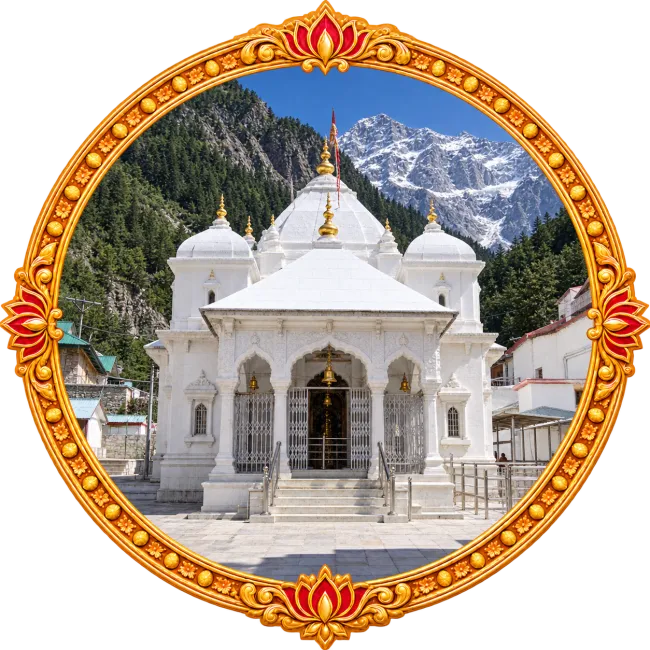
Gangotri Temple
Visit Gangotri Temple in Uttarakhand, one of the four sacred shrines of the Himalayan Char Dham pilgrimage. Dedicated to Goddess Ganga, the temple stands beside the Bhagirathi River amidst the mountains of the Garhwal Himalayas.
Its white-stone architecture, sacred riverfront and connection with King Bhagirath’s penance make Gangotri an important destination for Hindu devotees. Pilgrims visit to worship Maa Ganga, attend Aarti and experience the spiritual traditions associated with the river’s descent to earth.
About Gangotri Temple
Gangotri Temple is situated in Uttarkashi district at an elevation of approximately 3,100 metres. The principal deity is Goddess Ganga, revered as a divine mother and a symbol of purity.
Gangotri forms part of Uttarakhand’s Char Dham circuit alongside Yamunotri, Kedarnath and Badrinath. The town is accessible by road, with the final approach to the shrine made on foot.
The temple was originally built by Gorkha commander Amar Singh Thapa and later renovated under the patronage of the Maharaja of Jaipur. Its location beside the Bhagirathi connects the worship of the goddess with the river that bears her sacred identity.
History of Gangotri Temple
The construction of Gangotri Temple is credited to Amar Singh Thapa, a Gorkha military commander associated with the history of Garhwal.
The religious importance of the site extends beyond the temple building. Nearby Bhagirath Shila is traditionally identified as the place where King Bhagirath performed penance to bring the celestial Ganga to earth.
This connection makes Gangotri both a temple pilgrimage and a sacred landscape. Worship at the shrine, reverence for the river and remembrance of Bhagirath’s devotion are closely connected parts of the experience.
Legend of King Bhagirath and Goddess Ganga
According to Hindu tradition, King Bhagirath undertook intense penance so that the waters of Ganga could descend from heaven and liberate his ancestors.
When the goddess agreed to descend, the force of her waters threatened to overwhelm the earth. Lord Shiva received Ganga in his matted locks, controlling her powerful flow before releasing her towards the world.
Gangotri is associated with this sacred descent. The legend celebrates perseverance, devotion and divine compassion.
For devotees, Bhagirath’s efforts also represent a person’s responsibility towards their ancestors and the power of sincere spiritual discipline.
Religious Significance of Gangotri Temple
Goddess Ganga is worshipped as a source of purification and spiritual renewal. Devotees approach Gangotri with prayers for peace, family well-being and the blessings of their ancestors.
The pilgrimage brings together several expressions of faith:
Darshan of Goddess Ganga.
Prayer beside the Bhagirathi.
Participation in temple Aarti.
Remembrance of King Bhagirath’s penance.
Gratitude for the life-sustaining importance of water.
In Hindu belief, the Ganga’s sacredness extends through the stages of life, from birth ceremonies to ancestral remembrance. Gangotri gives this relationship a particularly powerful Himalayan setting.
Gangotri and Gaumukh
Gangotri Temple and Gaumukh have related but distinct significance.
Gangotri is the principal shrine dedicated to Goddess Ganga in this region. Gaumukh, upstream at the Gangotri Glacier, is the glacial source of the Bhagirathi River.
The river flows as the Bhagirathi until it meets the Alaknanda at Devprayag. Downstream of that confluence, it is known as the Ganga.
Gaumukh requires a separate trek from Gangotri and should be planned as an additional journey rather than a short extension of temple darshan.
Architecture of Gangotri Temple
Gangotri Temple is recognised for its white-stone exterior and compact structure. Its pale appearance stands out against the surrounding mountains and forested slopes.
The shrine rises approximately twenty feet and is situated close to Bhagirath Shila. The architectural emphasis is on the sanctum and worship of the goddess, while the surrounding Himalayan landscape contributes much of the setting’s grandeur.
The combination of the white shrine, river and mountain backdrop gives Gangotri its distinctive appearance.
Gangotri Temple Timings
The following schedule applies to the 2026 pilgrimage season.
The daytime session continues until 4:00 PM. The temple reopens for evening Aarti, followed by night darshan.
Morning Puja and Darshan
Morning worship begins the temple’s daily devotional routine. General darshan starts at 6:00 AM during the 2026 pilgrimage season.
An early visit allows pilgrims to offer prayers before continuing with other activities in Gangotri. Carry warm clothing, as the high-altitude setting can remain cold even during the pilgrimage months.
Keep offerings ready before reaching the shrine and move through the darshan area without obstructing other worshippers.
Evening Puja and Aarti
Evening Aarti takes place at 7:45 PM under the 2026 schedule.
The ceremony is an important opportunity to worship Goddess Ganga at the close of the day. Devotees arriving for evening worship can receive darshan after Aarti, with the temple remaining open until 10:00 PM.
Visitors staying outside Gangotri should plan their return journey before choosing a late-evening visit.
Important Religious Occasions
Akshaya Tritiya
Akshaya Tritiya marks the beginning of the temple’s annual pilgrimage season. The return of Goddess Ganga’s ceremonial procession from her winter abode forms an important part of the opening traditions.
Annual Opening Ceremony
The opening celebrations include worship and ceremonial preparations before devotees receive darshan. The goddess’s procession travels from Mukhba towards Gangotri, connecting the winter and summer places of worship.
Winter Departure
The departure towards Mukhba marks the seasonal transition in worship. Although the Gangotri shrine closes, devotion to the goddess continues at the winter temple.
Offerings and Devotional Etiquette
Keep offerings modest and easy to carry. Present them only in the designated worship areas, allowing space for others waiting for darshan.
Avoid leaving flowers, food, plastic bags or packaging on the riverbank. Respect for Maa Ganga also includes protecting the cleanliness of the river and its surroundings.
A quiet prayer, participation in Aarti and considerate behaviour towards fellow pilgrims can make the visit meaningful without elaborate arrangements.
How to Reach Gangotri Temple
By Air
Jolly Grant Airport in Dehradun is the nearest airport serving the Gangotri journey. Continue towards Gangotri by road.
By Train
Haridwar, Rishikesh and Dehradun provide railway access for travellers continuing towards Gangotri.
By Road
Common approach routes include:
From Dehradun: Mussoorie – Uttarkashi – Harsil – Gangotri.
From Haridwar or Rishikesh: Chamba – Dharasu – Uttarkashi – Harsil – Gangotri.
Gangotri town is connected by motorable road. Plan mountain travel during daylight and allow additional time for road conditions.
Nearby Places to Visit
Bhagirath Shila: The sacred rock associated with King Bhagirath’s penance.
Harsil: A Himalayan village known for mountain scenery and apple orchards.
Mukhba: The winter seat of Goddess Ganga.
Bhairon Ghati: A religious stop associated with Bhairav worship.
Gaumukh: The glacial source reached through a separately planned trek.
Important Visitor Guidelines
Carry warm layers and suitable walking shoes.
Keep your identification and Yatra registration details accessible.
Follow weather-related travel restrictions.
Walk at a comfortable pace.
Avoid stepping into the fast-flowing river.
Respect restrictions on phones and photography inside the temple.
Keep the darshan queue orderly.
Carry essential medicines and drinking water.
Do not litter the riverbank or mountain paths.
Follow temple entry and security instructions.
Conclusion
Gangotri Temple brings together devotion to Goddess Ganga, the legend of King Bhagirath and the natural beauty of the Garhwal Himalayas.
Its riverfront setting, seasonal pilgrimage traditions and continuing winter worship at Mukhba make it an important part of Uttarakhand’s religious heritage. A visit offers time for prayer, gratitude and reflection on the sacred relationship between water, nature and human life.