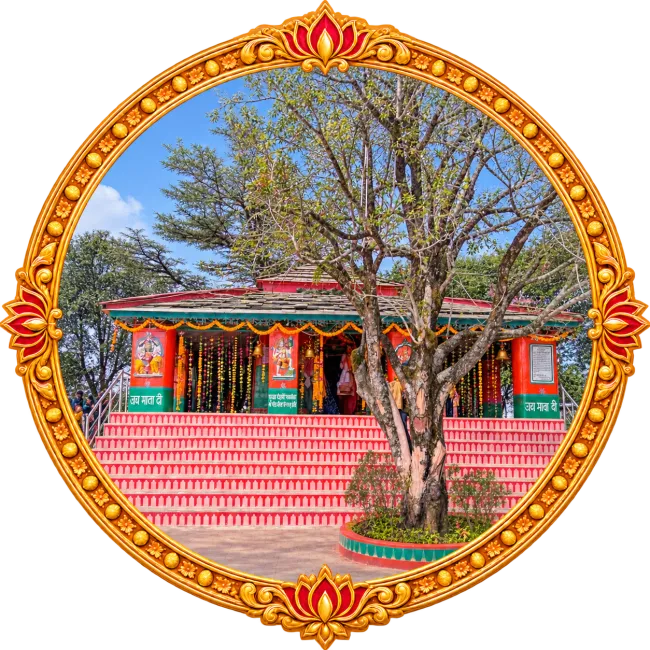
Dunagiri Temple, Dwarahat
Visit Dunagiri Temple near Dwarahat, a sacred hilltop shrine dedicated to Maa Dunagiri, worshipped as a form of Goddess Vaishnavi. Situated in the Almora district of Uttarakhand, the temple is an important centre of Shakti worship in the Kumaon region.
Also known as Dronagiri Temple, the shrine is associated with Himalayan spiritual traditions, the Sanjeevani legend and the worship of the Divine Mother. Its stepped approach, mountain surroundings and continuously burning sacred flame give the pilgrimage a distinctive character.
About Dunagiri Temple
Dunagiri Temple is located approximately 14 kilometres from Dwarahat. The final approach involves climbing a long flight of steps to reach the hilltop shrine.
The principal deity is Maa Dunagiri, revered as Vaishnavi Mata. Naturally formed sacred pindis are worshipped as manifestations of the goddess.
An important feature is the Akhand Jyoti, a sacred flame maintained continuously within the temple’s devotional tradition.
The shrine is cared for by the Aadi Shakti Maa Dunagiri Mandir Trust and its working committee. Devotees visit for darshan, prayer and participation in morning and evening Aarti.
History of Dunagiri Temple
Dunagiri’s temple history extends into the medieval period. Historical accounts associate the shrine with 1181 CE and the Katyuri rulers of Kumaon.
A later restoration is attributed to King Dharmadev in 1318 CE. The temple’s historical tradition connects this phase with further development of the shrine and the installation of religious images.
These dates represent stages in the temple’s development. The religious traditions surrounding the hill also include stories of sages, meditation and the sacred geography of the Himalayas.
Over generations, Dunagiri has continued as a place of worship for local communities and pilgrims travelling through the Dwarahat region.
Legend of Lord Hanuman and the Sanjeevani Mountain
A local tradition connects Dunagiri with the Ramayana.
When Lakshmana was gravely wounded during the battle in Lanka, Lord Hanuman was sent to obtain the life-restoring Sanjeevani herb. Unable to identify the required herb, he carried the mountain containing it.
According to the local legend, a fragment of the mountain fell in this region during Hanuman’s journey. Dunagiri’s sacred identity is linked with this account.
The story expresses the importance of devotion, service and the healing associations of Himalayan medicinal plants. It is a religious tradition connected with the site rather than a geological explanation of the hill.
Religious Significance of Dunagiri Temple
Maa Dunagiri is worshipped as a protective and compassionate manifestation of the Divine Mother.
Devotees approach the goddess with prayers for courage, family welfare and spiritual progress. The pilgrimage also provides an opportunity to step away from everyday distractions and devote time to worship.
Visitors pray for:
Peace and harmony within the family
Strength during difficult circumstances
Clarity in important decisions
Protection and well-being
Growth in devotion
Patience and self-discipline
Gratitude for blessings received
The climb to the shrine forms part of the pilgrimage experience. Walking at a steady pace allows time for prayer and reflection before reaching the sanctum.
Main Deity and Akhand Jyoti
The goddess is worshipped through sacred Siddha Pindis, regarded within the temple tradition as naturally manifested forms of Mata Bhagwati.
The Akhand Jyoti represents the continuity of worship. For devotees, the flame symbolises divine presence and the enduring light of spiritual knowledge.
Visitors should respect the space around the sacred flame and avoid disturbing lamps, offerings or ritual materials.
Architecture and Temple Approach
Dunagiri Temple stands above the surrounding settlement and is reached by a stepped ascent. The approach is commonly described as having 365 steps.
The hilltop location contributes much of the shrine’s character. On clear days, the surrounding landscape offers broad mountain views.
The complex centres on the goddess’s sanctum, with additional shrines associated with its development. The site is best experienced at an unhurried pace, allowing time for the ascent, darshan and descent.
Visitors travelling with elderly family members should keep extra time for rest stops. Comfortable footwear is useful for the approach and should be removed at the designated point.
Dunagiri Temple Timings
Dunagiri Temple follows separate summer and winter schedules.
Summer Timings
Winter Timings
Festival arrangements may affect the regular schedule. In winter, evening Aarti coincides with the closing period, so devotees should arrive beforehand.
Suggested daytime darshan: 8:00 AM–11:00 AM, allowing time for the climb in daylight. This is a planning recommendation rather than a separate temple session.
Morning Puja and Aarti
Morning Aarti takes place at 4:00 AM in summer and 5:00 AM in winter.
Devotees wishing to attend should allow sufficient time to reach the temple and complete the stepped ascent.
Carry warm clothing for an early visit. Keep offerings ready and follow the worship arrangements without obstructing the sanctum entrance.
Evening Puja and Aarti
Evening Aarti takes place at 7:00 PM in summer and 6:00 PM in winter.
The ceremony offers an opportunity to gather in prayer to Maa Dunagiri at the close of the day.
Those attending should plan their descent and return transport before beginning the visit. Walk carefully on the steps after dark and keep children close.
Offerings at Dunagiri Temple
Devotees may bring simple offerings associated with Devi worship, such as:
Fresh flowers
Fruit
Sweets
Coconut
A chunari
Present offerings in the designated worship area. Avoid leaving packaging on the steps or in the surrounding forest.
Quiet prayer, mantra recitation and respectful participation in Aarti are also meaningful expressions of devotion.
Festivals Celebrated at Dunagiri Temple
Chaitra Navratri
Chaitra Navratri is an important period of worship at Dunagiri. Devotees visit during the nine nights dedicated to the Divine Mother.
Sharad Navratri
Sharad Navratri brings special Puja, decorations and devotional gatherings. Flowers, lights and bhakti singing form part of the celebrations.
Ashtami and Navami
Ashtami and Navami hold particular importance during Navratri. Visitors should allow additional time for the climb and darshan during these busy festival days.
Best Time to Visit
Spring and autumn are suitable for combining temple darshan with travel through the Dwarahat region.
A daytime visit is convenient for those who prefer to climb and descend in natural light. Early mornings and evenings require warmer clothing.
During the monsoon, wet steps and mountain roads need extra care. Winter visitors should allow for cold conditions and possible weather-related travel delays.
How to Reach Dunagiri Temple
By Air
Pantnagar Airport is a practical air gateway for travellers approaching Kumaon. Continue by road towards Ranikhet, Dwarahat and Dunagiri.
By Train
Kathgodam Railway Station provides railway access for the onward road journey through the hills.
By Road
A common approach from the plains passes through Haldwani, Kathgodam, Bhowali, Ranikhet and Dwarahat.
From Dwarahat, continue towards Dunagiri and the temple approach.
Final Ascent
The final section is on foot using the temple steps. Carry only essential belongings and walk at a comfortable pace.
Nearby Places to Visit
Mahavatar Babaji’s Cave: A separate pilgrimage associated with Kriya Yoga traditions.
Pandukholi: A hill destination requiring additional walking and planning.
Yogoda Satsanga Sakha Ashram, Dwarahat: A spiritual centre associated with the teachings of Paramahansa Yogananda.
Vimandeshwar Temple: A religious stop in the Dwarahat region.
Dwarahat Temple Groups: Historic shrines that can be explored as part of a wider itinerary.
The cave, hill walks and other temples are separate excursions. Keep enough time for their individual approaches.
Important Visitor Guidelines
Wear modest clothing suitable for worship.
Use comfortable footwear for the ascent.
Remove shoes at the designated place.
Take breaks on the steps when needed.
Carry drinking water and warm clothing.
Keep the sanctum entrance clear.
Respect restrictions on photography.
Do not disturb the Akhand Jyoti or ritual materials.
Avoid littering the forest and stairway.
Supervise children during the climb.
Arrange return transport before evening worship.
Conclusion
Dunagiri Temple brings together devotion to Maa Vaishnavi, medieval temple heritage and the spiritual traditions of the Kumaon Himalayas.
Its sacred pindis, Akhand Jyoti and hilltop approach give the pilgrimage a distinctive identity. A visit offers time for darshan, Aarti and reflection in the mountain surroundings near Dwarahat.