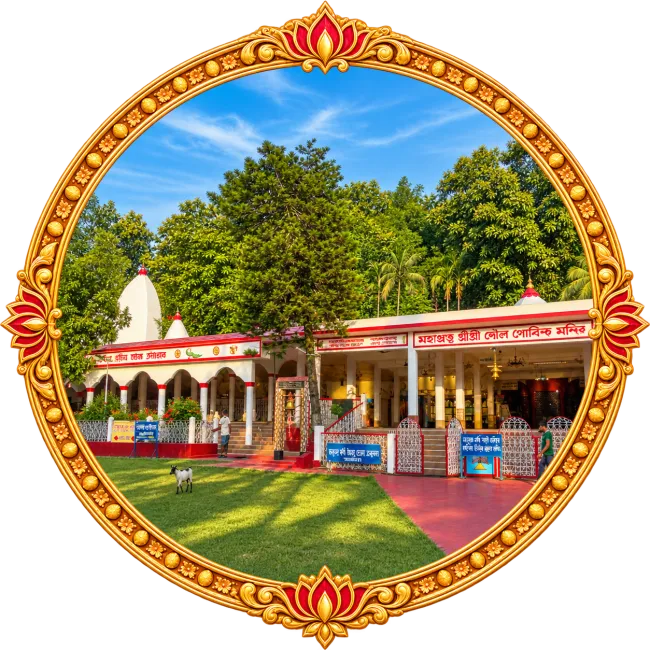
Doul Govinda Temple, North Guwahati
Doul Govinda Temple is one of the most revered Krishna temples in Assam. Situated at Rajaduar in North Guwahati, the shrine stands near the foothills of Chandra Bharati Hill on the northern bank of the Brahmaputra River.
The temple is dedicated to Lord Krishna in his Govinda form. It is especially famous for its colourful Doul Utsav or Holi celebration, daily Bhog and peaceful natural setting. Devotees visit the shrine to pray for happiness, prosperity, family welfare and devotion.
About Doul Govinda Temple
Doul Govinda Temple is located at Rajaduar, directly across the Brahmaputra from central Guwahati. The surrounding hills, trees and river create a calm spiritual atmosphere.
The main deity is Lord Krishna, worshipped as Doul Govinda. The sanctum also contains the image of Goddess Radha. The deities are decorated with colourful clothes, flowers, garlands, jewellery and crowns.
The temple follows Vaishnava worship traditions, with importance given to:
Krishna Naam
Bhajan and Kirtan
Daily Bhog
Aarti
Bhagavata recitation
Community participation
Doul Utsav
The shrine is particularly popular among families and devotees influenced by Assam’s Ekasarana Vaishnava tradition.
When Was Doul Govinda Temple Built and Who Built It?
The exact beginning of worship at the site belongs to local religious tradition. The history of the temple is connected with the discovery of the sacred Krishna image and its installation at Rajaduar.
According to traditional accounts, the image was brought from the Sandhyasar area near Nalbari. A devotee named Ganga Ram Barua played an important role in bringing the deity to Rajaduar and arranging its worship.
A small shrine was established, and local devotees began performing regular Puja, Naam-Kirtan and Bhog. The temple gradually developed into an important centre of Krishna worship.
The present structure emerged through renovations and expansion supported by devotees and temple committees. A major phase of construction and improvement took place during the 20th century, providing a larger prayer hall and improved facilities for festivals.
Legend of the Sacred Idol
According to local tradition, a cow near Sandhyasar regularly released its milk at a particular spot instead of allowing it to be collected normally. The unusual event attracted the attention of local residents.
When the place was examined, a sacred image of Lord Krishna was discovered. The image began to be worshipped locally, and its spiritual importance gradually became widely known.
Ganga Ram Barua later brought the deity to Rajaduar, where a permanent place of worship was established. The Lord came to be known as Doul Govinda because of the grand Doul festival celebrated in his honour.
Religious Significance
Lord Govinda is worshipped as the loving and protective form of Krishna. Devotees believe that sincere prayers at the temple bring peace, devotion and harmony.
People visit the shrine to pray for:
Family happiness
Marriage and harmonious relationships
Children and their well-being
Good health
Success in education
Prosperity
Relief from stress
Protection from difficulties
Spiritual devotion
Fulfilment of wishes
Many devotees attend the daily Aarti and receive temple Bhog as an essential part of their visit.
Architecture of Doul Govinda Temple
The temple displays a combination of Assamese and modern Vaishnava architectural features. The main structure has a simple but elegant appearance with a spacious prayer hall.
The sanctum contains the images of Radha and Krishna. The worship area is decorated with flowers, fabrics, lamps and traditional Assamese religious designs.
The complex includes:
Main Radha-Krishna sanctum
Naamghar-style prayer hall
Kirtan space
Bhog preparation area
Community dining hall
Temple courtyard
Smaller shrines
Offering counters
Pilgrim resting spaces
The temple’s location near Chandra Bharati Hill adds natural beauty to the complex.
Doul Govinda Temple Timings
The temple follows a structured schedule for Puja, Bhog and Aarti. Timings may be extended during Doul Utsav and Janmashtami.
Festival ceremonies can affect ordinary darshan and Bhog timings. Visitors should follow the daily notice displayed at the temple.
Morning Puja and Aarti
The temple opens at 7:00 AM. Priests prepare Radha and Govinda for morning darshan with fresh clothes, flowers and ornaments.
The morning rituals include:
Cleaning and purification of the sanctum
Offering of fresh clothes
Flower and garland decoration
Sandalwood application
Mantra chanting
Naam-Kirtan
Incense and lamp offering
Naivedya
Morning Aarti
Morning Aarti is performed at 8:00 AM. General darshan continues after the ceremony.
Daily Bhog and Prasad
Daily Bhog is an important part of worship at Doul Govinda Temple. Food is prepared in the temple kitchen and offered to Lord Krishna before being distributed as prasad.
Bhog can include:
Rice
Dal
Seasonal vegetables
Kheer
Khichdi
Sweets
Other Satvik preparations
Bhog Puja is performed at 11:30 AM, and distribution begins at 12:30 PM. Visitors wishing to receive cooked prasad should complete the applicable booking or token process within the prescribed time.
Evening Puja and Aarti
The temple reopens after the afternoon interval at 4:00 PM. Evening worship begins at 6:00 PM.
Aarti is performed at 6:30 PM with lamps, incense, devotional songs and Krishna Naam. The ceremony is followed by darshan until the final Shayan Puja.
Doul Utsav
Doul Utsav is the largest festival at Doul Govinda Temple. It is Assam’s devotional celebration of Holi and is dedicated to the divine love of Radha and Krishna.
The festival generally continues for several days and includes:
Special Puja
Naam-Kirtan
Procession of the deities
Traditional music
Faku or coloured powder
Bhog distribution
Cultural programmes
Community celebrations
The ceremonial images of Radha and Krishna are placed on a decorated Doul or swing-like platform. Devotees offer flowers and colours while singing Krishna’s name.
Large numbers of pilgrims travel to North Guwahati during the festival, and special transport and crowd-management arrangements may be introduced.
Other Major Festivals
Janmashtami
Krishna Janmashtami is celebrated with fasting, Bhagavata recitation, Bhajan, Kirtan and special night worship.
Nandotsav
The birth celebration of Lord Krishna continues through Nandotsav with devotional music and prasad distribution.
Rasa Purnima
The divine Rasa Lila of Krishna is remembered through special worship and cultural programmes.
Guru Purnima
Spiritual teachers and the Vaishnava Guru tradition are honoured on Guru Purnima.
Kartik Purnima
Devotees offer lamps and prayers to Radha and Krishna during the sacred month of Kartik.
Puja and Religious Services
Available services may include:
General Radha-Krishna Puja
Special Govinda Puja
Bhog offering
Naam-Kirtan
Bhagavata recitation
Janmashtami Puja
Doul Utsav offerings
Marriage-related prayers
Child-blessing Puja
Family welfare prayers
Thanksgiving ceremony
Puja and Bhog arrangements should be made through authorised temple counters.
Offerings and Prasad
Common offerings include:
Tulsi leaves
Flowers and garlands
Fruits
Coconut
Sweets
Incense
Clarified butter
Clothes for the deities
Monetary donations
Ingredients for Bhog
Non-vegetarian food, alcohol and tobacco are not permitted within the temple premises.
Dress Code and Temple Rules
There is no strict dress code, but devotees should wear clean and modest clothes.
Important rules include:
Remove footwear before entering.
Follow the designated queue.
Maintain silence near the sanctum.
Do not touch the deities.
Follow photography restrictions.
Respect Naam-Kirtan and ongoing rituals.
Keep the hill and temple clean.
Deposit donations only at authorised counters.
Collect Bhog through the official system.
Avoid plastic and food waste.
Entry Fee and Darshan Duration
General entry and darshan are free. Charges may apply to special Pujas, Bhog and ceremonial offerings.
Darshan generally requires 20–40 minutes. Visitors planning to receive cooked Bhog should allow two to three hours.
During Doul Utsav and Janmashtami, waiting time can increase considerably.
Best Time to Visit
October to March is the most comfortable period for visiting North Guwahati. The weather is pleasant, and the Brahmaputra crossing is enjoyable.
Doul Utsav offers the grandest festival experience but attracts very large crowds. For peaceful darshan, visitors should arrive between 8:00 AM and 10:00 AM on a weekday.
Boat services can be affected by heavy rain and high river levels during the monsoon.
How to Reach Doul Govinda Temple
By Air
Lokpriya Gopinath Bordoloi International Airport is approximately 25 kilometres away by road, depending on the route.
By Train
Guwahati Railway Station is the nearest major railhead. From central Guwahati, visitors can travel by ferry or road.
By Ferry
Ferry services operate between Guwahati and North Guwahati. After reaching the northern bank, auto-rickshaws and local vehicles are available for Rajaduar.
By Road
The temple can be reached through the bridge and highway network connecting Guwahati with North Guwahati.
Accommodation and Facilities
Basic guest houses and local accommodation are available in North Guwahati. Guwahati city provides a wider selection of hotels.
Temple facilities include:
Drinking water
Toilets
Shoe-storage area
Bhog distribution hall
Puja counters
Parking
Resting spaces
Local transport
Prasad facilities
Nearby Places to Visit
Dirgheswari Temple: An important Shakti shrine in North Guwahati.
Ashwaklanta Temple: A historic Vishnu temple on the Brahmaputra bank.
Daul Govinda Hill surroundings: Suitable for peaceful walks.
IIT Guwahati campus area: Known for scenic hills and lakes.
Umananda Temple: A Shiva shrine on Peacock Island.
Kamakhya Temple: Guwahati’s principal Shakti Peetha.
Sukreswar Temple: A historic Shiva temple beside the Brahmaputra.
Conclusion
Doul Govinda Temple is an important Krishna shrine known for Vaishnava devotion, daily Bhog and the grand Doul Utsav. Its setting near Chandra Bharati Hill and the Brahmaputra gives the temple a peaceful spiritual character.
The sacred images of Radha and Govinda, Naam-Kirtan traditions and community worship attract devotees throughout the year. Visitors pray to Lord Govinda for happiness, family harmony, prosperity and devotion.