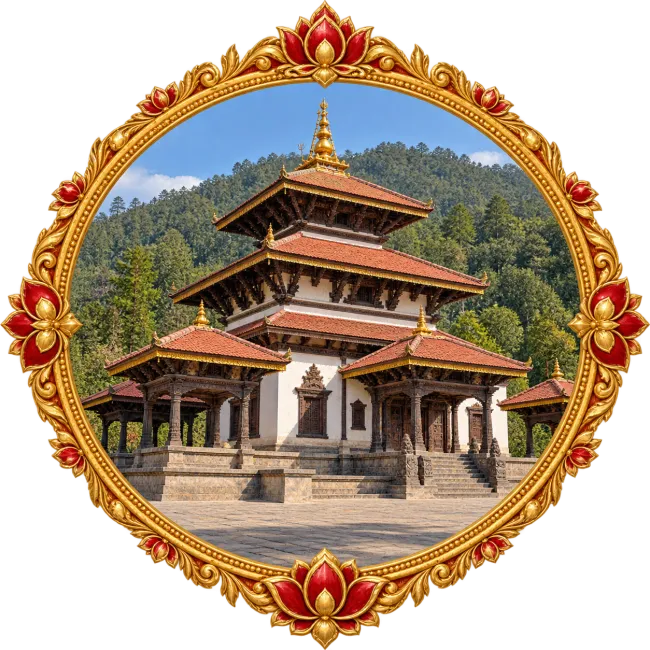
Doleshwar Mahadev Temple, Bhaktapur, Nepal
Visit Doleshwar Mahadev Temple in Bhaktapur, one of Nepal’s most revered Shiva temples and a spiritually important destination for devotees of Kedarnath. Located within the peaceful hills of Sipadol, the temple is worshipped as the sacred head portion of Lord Kedarnath.
According to religious tradition, Lord Shiva took the form of a bull to avoid the Pandavas. When the bull disappeared into the earth, different parts of his body appeared at different sacred places. The hump is worshipped at Kedarnath in Uttarakhand, while the head is believed to have appeared at Doleshwar Mahadev in Nepal.
Devotees believe that a pilgrimage to Kedarnath becomes spiritually complete after receiving the blessings of Lord Doleshwar Mahadev.
About Doleshwar Mahadev Temple
Doleshwar Mahadev Temple is located in Sipadol village of Suryabinayak Municipality in Bhaktapur district, Nepal. The temple is surrounded by green hills, forests and peaceful rural settlements.
The presiding deity is Lord Shiva, worshipped in the form of a sacred Shiva Lingam. The shrine is also called:
Doleshwar Mahadev
Shri Doleshwar Mahadev
Doleshwar Kedarnath
Head of Kedarnath
Kedarnath Shirobhag
The word Shirobhag means the head portion. Devotees therefore worship the deity as the head of Lord Kedarnath.
The temple attracts pilgrims from Nepal and India, particularly those who have completed or are planning the Kedarnath Yatra.
History of Doleshwar Mahadev Temple
Doleshwar Mahadev is an ancient Shiva shrine whose religious traditions have been preserved by local communities for generations.
The temple remained primarily known within the Bhaktapur region until it gained wider recognition in 2009. During that year, Jagadguru Bhimashankarling Shivacharya, associated with the religious tradition of Kedarnath, visited Doleshwar and declared it to be the sacred head portion of Lord Kedarnath.
This recognition strengthened the temple’s connection with the Panch Kedar tradition and brought it to the attention of Shiva devotees from Nepal and India.
After 2009, the temple complex was expanded and renovated. New facilities, pathways, worship areas and pilgrim services were developed while maintaining the shrine’s traditional religious identity.
The original worship of the Shiva Lingam, however, predates this modern recognition. Local residents had revered Doleshwar Mahadev as a powerful form of Lord Shiva for centuries.
Pandava Legend of Doleshwar Mahadev
The main legend associated with Doleshwar Mahadev begins after the Mahabharata war.
The Pandavas were filled with sorrow because many relatives, teachers and warriors had died in the battle. They decided to seek forgiveness from Lord Shiva for the violence and destruction caused during the war.
Lord Shiva did not wish to meet them immediately because he wanted to test their devotion. He left Kashi and travelled towards the Himalayas, where he assumed the form of a bull.
When the Pandavas reached the Himalayan region, Bhima recognized the unusual bull as Lord Shiva. He tried to catch it, but the bull began disappearing into the earth.
Bhima managed to hold part of the bull, but its body separated and appeared at different locations.
The sacred parts are associated with the Panch Kedar temples:
- Hump at Kedarnath
- Arms at Tungnath
- Face at Rudranath
- Navel at Madhyamaheshwar
- Hair at Kalpeshwar
The head of the bull is believed to have appeared at Doleshwar Mahadev in Nepal.
Lord Shiva eventually became pleased with the Pandavas’ devotion and freed them from the burden of their sins. This legend connects Doleshwar directly with Kedarnath and the sacred Himalayan Shiva tradition.
Connection Between Doleshwar and Kedarnath
Doleshwar Mahadev is regarded as the Shirobhag or head of Lord Kedarnath. Kedarnath represents the hump of Shiva’s bull form, while Doleshwar completes the divine form by representing the head.
Many devotees follow this spiritual sequence:
- Visit Kedarnath Temple in Uttarakhand.
- Worship the remaining Panch Kedar shrines when possible.
- Visit Doleshwar Mahadev in Bhaktapur.
- Offer water, Bilva leaves and prayers.
- Seek forgiveness and completion of the pilgrimage.
Devotees who cannot physically travel to Kedarnath because of age, health or weather also visit Doleshwar and worship Lord Shiva with the same devotion.
Religious Significance of Doleshwar Mahadev Temple
Doleshwar Mahadev is believed to forgive sins, remove obstacles and provide spiritual peace. The temple is particularly important for devotees seeking the blessings of Kedarnath without travelling into the high Himalayas.
People visit the temple for:
- Forgiveness for past mistakes
- Spiritual completion of Kedarnath Yatra
- Protection from danger
- Recovery from illness
- Family peace and prosperity
- Blessings for marriage and children
- Relief from planetary difficulties
- Success in education and employment
- Protection during journeys
- Freedom from fear
- Peace for departed ancestors
- Progress on the path of Shiva devotion
Worshipping Doleshwar is also believed to provide courage, patience and the strength required to face difficult situations.
Main Deity of Doleshwar Mahadev Temple
The principal deity is Lord Shiva, worshipped in the form of a naturally revered Shiva Lingam.
The Shiva Lingam is identified with the head of the bull form assumed by Lord Shiva during the Pandavas’ search for him.
Devotees offer:
- Water
- Milk
- Bilva leaves
- Flowers
- Sandalwood
- Sacred ash
- Rudraksha
- Fruits and sweets
- Incense
- Oil lamps
A statue of Nandi, Lord Shiva’s sacred bull, faces the main shrine. Devotees traditionally whisper their wishes into Nandi’s ear before receiving darshan of Mahadev.
Architecture of Doleshwar Mahadev Temple
Doleshwar Mahadev Temple reflects traditional Nepalese religious architecture. The principal shrine stands within a spacious complex surrounded by hills and greenery.
Important architectural features include:
- Traditional pagoda-style shrine
- Sacred Shiva Lingam
- Nandi facing the main temple
- Carved wooden elements
- Stone-paved courtyard
- Prayer bells
- Tridents and Shiva symbols
- Oil-lamp stands
- Smaller shrines dedicated to Hindu deities
- Open spaces for special pujas and festivals
- Dharamshala and pilgrim facilities
The temple complex has been expanded to accommodate the increasing number of pilgrims. Despite the development, the surrounding rural environment remains peaceful.
Doleshwar Mahadev Temple Timings
The schedule may be extended during Maha Shivaratri, Teej, Bala Chaturdashi and Shravan Mondays.
Morning Puja and Aarti
Morning worship begins when the temple opens at 5:00 AM. The priests clean the sanctum, light lamps and prepare the Shiva Lingam for Abhishek.
Morning Aarti is performed at 5:30 AM. Lord Shiva is worshipped with water, milk, Bilva leaves, flowers, sandalwood and sacred ash.
Devotees chant:
- Om Namah Shivaya
- Mahamrityunjaya Mantra
- Shiva Panchakshara Mantra
- Rudrashtakam
The period between 6:00 AM and 9:00 AM is the best time for peaceful darshan and Rudrabhishek.
Rudrabhishek and Special Puja
Rudrabhishek and other special pujas are generally arranged between 6:00 AM and 11:00 AM.
During Rudrabhishek, the Shiva Lingam is ceremonially worshipped with:
- Sacred water
- Milk
- Curd
- Honey
- Ghee
- Sugar
- Bilva leaves
- Flowers
- Sandalwood
- Bhasma
Rudra mantras are recited while the offerings are poured over the Shiva Lingam.
Devotees arrange Rudrabhishek for good health, family prosperity, marriage, children, relief from planetary difficulties and spiritual progress.
Bhog and Afternoon Darshan
Bhog is offered to Lord Shiva at 12:00 PM. It may contain fruits, sweets, rice and simple vegetarian preparations.
Afternoon darshan resumes after the completion of the Bhog ritual. The afternoon period is generally quieter on regular weekdays.
Special pujas should be arranged through authorized priests or temple counters.
Evening Puja and Aarti
Evening Puja begins at 5:30 PM, followed by Aarti at 6:00 PM. Oil lamps are offered before Lord Doleshwar while devotees chant Shiva mantras.
The surrounding hills and peaceful environment create a devotional atmosphere during evening Aarti.
Visitors should reach the temple before 5:30 PM to participate in the complete ceremony. The temple closes at 7:30 PM.
Major Festivals Celebrated
Maha Shivaratri
Maha Shivaratri is the largest festival celebrated at Doleshwar Mahadev Temple. Thousands of devotees visit the shrine to perform Abhishek and seek Lord Shiva’s blessings.
The festival includes:
- Special Rudrabhishek
- Continuous Shiva Mantra chanting
- Night-long prayers
- Bhajans and Kirtans
- Lighting of oil lamps
- Visits by saints and ascetics
- Distribution of prasad
- Religious discourses
Shravan Mondays
Every Monday during Shravan is considered highly auspicious. Devotees carry sacred water and offer it to the Shiva Lingam.
Teej
Women visit Doleshwar Mahadev during Teej to pray for marital happiness, family prosperity and the health of their spouses.
Bala Chaturdashi
Devotees perform prayers for departed family members and scatter sacred seeds according to local traditions.
Janai Purnima
Special worship and sacred thread ceremonies are performed during Janai Purnima.
Pradosh Vrat
Devotees observing Pradosh Vrat visit the temple during the evening to worship Lord Shiva and Goddess Parvati.
Offerings and Prasad
Common offerings made at Doleshwar Mahadev Temple include:
- Water and milk
- Bilva leaves
- Flowers and garlands
- Sandalwood paste
- Sacred ash
- Rudraksha
- Dhatura
- Fruits and sweets
- Incense sticks
- Oil or ghee lamps
- White cloth
- Monetary donations
Devotees should avoid using excessive milk or packaged materials that create waste within the temple.
Prasad may include fruits, sweets, flowers, sacred ash and blessed threads.
Entry Fee and Visit Duration
There is no entry fee for regular darshan at Doleshwar Mahadev Temple. Charges may apply for Rudrabhishek, special pujas and priest-led ceremonies.
A regular visit requires one to two hours. Devotees performing Rudrabhishek or attending Aarti should keep two to three hours.
During Maha Shivaratri and Shravan Mondays, darshan may take several hours because of long queues.
Visitor Guidelines
- Wear modest and respectful clothing.
- Remove footwear before entering the main temple.
- Maintain silence near the sanctum.
- Follow the designated darshan queue.
- Do not touch the Shiva Lingam without permission.
- Ask permission before taking photographs.
- Keep mobile phones on silent mode.
- Do not carry alcohol, tobacco or non-vegetarian food.
- Use authorized priests for special pujas.
- Avoid pouring packaged liquids or harmful materials on the Lingam.
- Keep the temple courtyard and surrounding hills clean.
- Take care while walking on wet stone paths.
- Follow the instructions of temple officials and security personnel.
- Keep children and elderly visitors under supervision during crowded festivals.
Best Time to Visit
October to March is the best period for visiting Doleshwar Mahadev Temple because the weather remains pleasant.
The month of Shravan offers a highly devotional experience, but Mondays remain crowded.
For peaceful darshan, visit on a regular weekday between 6:00 AM and 9:00 AM. Evening visitors should reach between 4:30 PM and 5:30 PM to attend Puja and Aarti.
How to Reach Doleshwar Mahadev Temple
By Air
Tribhuvan International Airport in Kathmandu is the nearest airport. Taxis and private vehicles are available for Doleshwar Mahadev.
From Kathmandu
The temple is located approximately 20 kilometres from central Kathmandu. Visitors can travel through Koteshwar, Bhaktapur and Suryabinayak towards Sipadol.
The road journey generally takes one to two hours, depending on traffic.
From Bhaktapur
Doleshwar Mahadev Temple is located within Bhaktapur district. Taxis, local buses and private vehicles are available from Bhaktapur city and Suryabinayak.
By Bus
Local buses travel from Kathmandu and Bhaktapur towards Suryabinayak and Sipadol. Visitors may need to use a local taxi or shared vehicle for the final section.
From India
Indian visitors can reach Kathmandu by air or enter Nepal through road-border points such as Raxaul–Birgunj and Sunauli–Bhairahawa.
Indian citizens should carry a valid passport or voter identity card and confirm transportation requirements before departure.
Nearby Places to Visit
- Suryabinayak Ganesh Temple
- Bhaktapur Durbar Square
- Nyatapola Temple
- Dattatreya Temple
- Changu Narayan Temple
- Pilot Baba Ashram
- Ghyampe Danda
- Ranikot
- Kailashnath Mahadev Statue
- Nagarkot
- Pottery Square
Conclusion
Doleshwar Mahadev Temple is a sacred Shiva shrine closely connected with Kedarnath and the Panch Kedar tradition. The belief that Doleshwar represents the head of Lord Kedarnath gives the temple exceptional religious significance.
Its connection with the Pandavas, recognition as Kedarnath Shirobhag and peaceful hill setting make it an important pilgrimage destination for Shiva devotees.
Worshipping Lord Doleshwar through Abhishek, Bilva leaves and Shiva mantras is believed to remove sins, provide spiritual strength and complete the blessings of the Kedarnath pilgrimage.