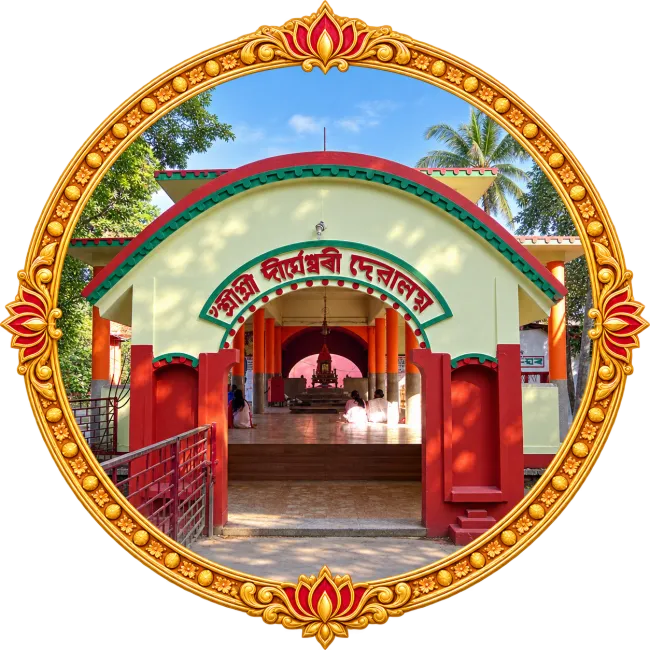
Dirgheswari Temple, North Guwahati
Dirgheswari Temple is an important Shakti shrine situated on the northern bank of the Brahmaputra River in North Guwahati, Assam. Located on Sitachal Hill, the temple is surrounded by rocks, trees and panoramic views of the river.
The existing shrine was developed under Ahom king Siva Singha during the 18th century. However, the sacred site is much older and is associated with Goddess Sati, Sage Markandeya and ancient Shakti worship in the Kamrupa region.
About Dirgheswari Temple
Dirgheswari Temple is located near Rangmahal in North Guwahati. The presiding deity, Goddess Dirgheswari, is worshipped as a powerful manifestation of Goddess Durga.
The name “Dirgheswari” means the supreme or far-reaching Goddess. She is regarded as a compassionate mother who protects devotees from danger and grants courage, prosperity and family welfare.
The shrine stands among natural rocks, and several ancient carvings can be seen around the hill. Its peaceful setting and connection with the Brahmaputra make it an important spiritual destination.
Dirgheswari is especially revered during Durga Puja, Navratri and other Shakti festivals.
When Was Dirgheswari Temple Built and Who Built It?
The sacred site has ancient origins, but the present organised temple was constructed during the 18th century under Ahom king Siva Singha.
The king ruled Assam from 1718 to 1744 and was a major supporter of Shakti worship. He arranged for the construction of a permanent temple at the sacred hill and granted land for its maintenance and daily rituals.
The construction was carried out with the assistance of officials serving the Ahom administration. Existing rock formations and ancient carvings were incorporated into the temple complex.
The structure later underwent repairs because of earthquakes, weather and age. Modern pathways, steps, protective railings and pilgrim facilities were added while preserving the hill’s sacred character.
Dirgheswari as a Shakti Peetha
The temple’s religious importance is connected with Goddess Sati and Lord Shiva.
King Daksha organised a grand yajna but did not invite Sati and Shiva. Sati attended the ceremony, where her father insulted Lord Shiva. Unable to tolerate the humiliation, she entered the sacrificial fire.
Lord Shiva carried Sati’s body and began performing the destructive Tandava. To protect creation, Lord Vishnu divided her body with the Sudarshana Chakra. Its parts fell at different places, which became sacred Shakti Peethas.
According to the regional tradition associated with Dirgheswari, a part of Goddess Sati’s body fell on Sitachal Hill. The site consequently became an important centre of Shakti worship.
Dirgheswari is traditionally included among the sacred Shakti sites of the ancient Kamrupa region.
Legend of Sage Markandeya
According to local tradition, Sage Markandeya visited Sitachal Hill and performed intense meditation for the Divine Mother.
Pleased with his devotion, the Goddess appeared before him and revealed her presence within the hill. A sacred place of worship was established, and the Goddess became known as Dirgheswari.
The tradition of meditation and Shakti worship continued at the site long before the Ahom-period temple was constructed.
Religious Significance
Goddess Dirgheswari is worshipped as a guardian deity who removes fear and negative influences.
Devotees pray for:
Protection from danger
Courage and strength
Good health
Family welfare
Marriage and children
Prosperity
Success in education and employment
Relief from fear
Victory over obstacles
Fulfilment of wishes
The temple is especially important for families undertaking Durga Puja, Navratri fasting and thanksgiving ceremonies.
Architecture and Rock Carvings
Dirgheswari Temple combines Ahom-period architecture with much older rock-cut sculptures.
The principal shrine stands against the natural hill. The Garbhagriha contains the sacred representation of Goddess Dirgheswari, decorated with red cloth, flowers, jewellery and sindoor.
The surrounding rocks contain carvings of Hindu deities and religious symbols. A large rock-cut image of Lord Ganesha is among the complex’s notable features.
The temple complex includes:
Main sanctum of Goddess Dirgheswari
Rock-cut Ganesha image
Ancient sculptures
Smaller shrines
Temple courtyard
Havan area
Stone steps and hill pathways
Brahmaputra viewpoints
Offering and donation counters
The combination of natural rock, historic construction and river scenery gives the shrine a distinctive identity.
Dirgheswari Temple Timings
The temple follows a daily schedule for Puja, Bhog and Aarti. Timings may be extended during Durga Puja and Navratri.
Special ceremonies can temporarily affect general darshan. Visitors should follow the ritual schedule displayed at the entrance.
Morning Puja and Aarti
The temple day begins with Mangal Puja and purification of the sanctum. Morning Aarti is performed at 6:00 AM.
The morning worship includes:
Cleaning of the sanctum
Offering of fresh cloth
Flower and garland decoration
Application of sindoor and sandalwood
Mantra chanting
Incense and lamp offering
Naivedya
Morning Aarti
General darshan continues after completion of the morning Shringar.
Bhog and Evening Aarti
Bhog is offered to Goddess Dirgheswari at noon. The offering can include rice, vegetables, sweets, fruits and other Satvik preparations.
Evening Puja begins at 5:30 PM, followed by Aarti at 6:30 PM. Devotees participate through hymns and the chanting of the Goddess’s name.
Shayan Puja is performed before the temple closes.
Major Festivals
Durga Puja
Durga Puja is the largest festival at Dirgheswari Temple. Special rituals, elaborate Shringar, Aarti, Havan and community worship are organised.
The temple receives large numbers of visitors from Guwahati and nearby districts.
Chaitra Navratri
Special Puja, Durga Saptashati recitation and fasting are observed during Chaitra Navratri.
Sharadiya Navratri
The nine forms of Goddess Durga are worshipped during Sharadiya Navratri. Durga Ashtami and Navami attract particularly large crowds.
Kali Puja
Special worship is offered to the fierce form of the Divine Mother during Kali Puja.
Diwali
The temple is illuminated with lamps, and prayers are offered for prosperity and protection.
Ambubachi
The shrine receives additional devotees during the Ambubachi period because of its connection with the wider Shakti traditions of Kamrupa.
Puja and Religious Services
Available ceremonies may include:
General Puja
Special Dirgheswari Puja
Durga Saptashati Path
Chandi Path
Havan
Navratri Puja
Durga Puja offerings
Family welfare prayers
Marriage-related Puja
Child-blessing ceremony
Thanksgiving worship
Puja arrangements should be completed through authorised priests or designated temple counters.
Offerings and Prasad
Common offerings include:
Red flowers
Red cloth
Sindoor
Coconut
Fruits
Sweets
Incense
Clarified butter
Bangles
Shringar materials
Monetary donations
Animal sacrifice has historically formed part of certain Shakta traditions at the temple, particularly during major festivals. Devotees who prefer symbolic worship may offer coconut, pumpkin, fruits or sweets according to authorised temple practices.
Prasad generally includes sweets, fruits, coconut and blessed flowers.
Dress Code and Temple Rules
There is no strict dress code, but visitors should wear clean and modest clothes. Comfortable footwear is recommended for climbing the steps, although shoes must be removed before entering the shrine.
Important rules include:
Follow the designated queue.
Be careful on uneven hill pathways.
Do not damage rock carvings.
Follow photography restrictions.
Keep the temple and hill clean.
Avoid alcohol and tobacco.
Do not disturb wildlife.
Deposit donations only at authorised counters.
Follow instructions from priests and security personnel.
Entry Fee and Darshan Duration
General entry and darshan are free. Charges apply only to optional Pujas, offerings and ritual materials.
Darshan generally requires 20–40 minutes. Visitors exploring the carvings and viewpoints should reserve one to two hours.
During Durga Puja and Navratri, waiting time can increase significantly.
Best Time to Visit
October to March is the most comfortable period for visiting North Guwahati. The weather is suitable for climbing the hill and exploring the temple complex.
Durga Puja offers the grandest religious experience but attracts the largest crowds. For peaceful darshan, visitors should arrive between 7:00 AM and 10:00 AM on a weekday.
The monsoon makes the hill green but also causes slippery paths.
How to Reach Dirgheswari Temple
By Air
Lokpriya Gopinath Bordoloi International Airport is approximately 30 kilometres away by road.
By Train
Guwahati Railway Station is the nearest major railhead. Visitors can continue to North Guwahati by road or ferry.
By Ferry
Ferry services connect central Guwahati with North Guwahati. Local vehicles are available from the northern ferry points.
By Road
The temple is accessible through the road network connecting Guwahati and North Guwahati.
Accommodation and Facilities
Basic accommodation is available in North Guwahati, while Guwahati city offers a wider range of hotels.
Facilities near the temple include:
Parking
Drinking water
Toilets
Shoe-storage area
Puja shops
Prasad counters
Basic resting spaces
Local transport
Security assistance
Nearby Places to Visit
Doul Govinda Temple: A popular Krishna temple at Rajaduar.
Ashwaklanta Temple: A historic Vishnu shrine on the Brahmaputra bank.
IIT Guwahati surroundings: Known for hills, lakes and scenic views.
Umananda Temple: A Shiva shrine on Peacock Island.
Kamakhya Temple: Guwahati’s principal Shakti Peetha.
Sukreswar Temple: A historic Shiva shrine beside the Brahmaputra.
Madan Kamdev: An archaeological temple complex outside Guwahati.
Conclusion
Dirgheswari Temple is a significant Shakti shrine combining ancient sacred tradition, Ahom-period history and the natural beauty of Sitachal Hill. Developed under King Siva Singha, the temple preserves important rock carvings and religious practices associated with Goddess worship in Kamrupa.
The hilltop sanctum, Brahmaputra views, daily Aartis and grand Durga Puja attract devotees throughout the year. Visitors worship Goddess Dirgheswari for courage, protection, family welfare and fulfilment of their wishes.