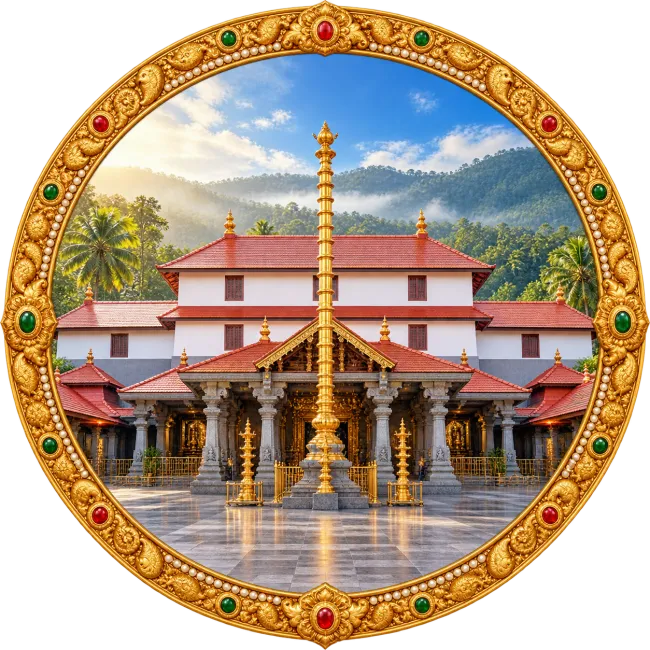
Dharmasthala Manjunatha Temple
Dharmasthala Manjunatha Temple in Karnataka is one of India’s most respected religious institutions and an outstanding symbol of harmony between different faith traditions. The temple is dedicated to Lord Shiva as Sri Manjunatha Swamy and is situated in Dharmasthala on the banks of the Netravati River.
A distinctive feature of the temple is its administration. The hereditary administrator belongs to the Jain Heggade family, while daily worship is conducted by Madhva Vaishnavite priests. The principal deity, however, is Lord Shiva. This unique arrangement represents religious cooperation, service and respect.
Dharmasthala is also famous for its large-scale free meal service, charitable institutions, traditional justice system and commitment to education and healthcare.
About Dharmasthala Manjunatha Temple
Sri Kshetra Dharmasthala Manjunatha Temple is located in Dakshina Kannada district, Karnataka. The principal deity is Lord Shiva, worshipped as Sri Manjunatha Swamy in the form of a Shiva Lingam.
The name “Manjunatha” combines two words: “Manju,” meaning snow or pleasant coolness, and “Natha,” meaning Lord. The name is interpreted as the Lord whose compassionate presence brings peace and relief to devotees.
The temple is also associated with four Dharma Daivas:
Kalarahu
Kalarkayi
Kumaraswamy
Kanyakumari
Annappa Swamy, also known as Annappa Daiva, is another important guardian deity of Dharmasthala.
The spiritual character of Dharmasthala extends beyond ritual worship. Feeding pilgrims, helping the needy, providing education and resolving disputes are treated as forms of Dharma.
When and Who Built Dharmasthala Temple?
The history of Dharmasthala is associated with a Jain chieftain named Birmanna Pergade and his wife, Ammu Ballalthi. They lived in a traditional house called Nelyadi Beedu and were known for their hospitality and generosity.
According to tradition, the Dharma Daivas appeared before the couple and requested them to dedicate their home to the practice of Dharma. Birmanna Pergade and Ammu Ballalthi accepted the divine instruction and established shrines for the guardian deities.
The worship of Lord Manjunatha became central to Dharmasthala during a later period. Annappa Daiva is believed to have brought the Shiva Lingam from Kadri near Mangaluru.
Sri Vadiraja Tirtha, a respected Madhva saint associated with Udupi, visited Dharmasthala during the sixteenth century. He consecrated the Manjunatha Lingam according to Vedic traditions and arranged for regular worship by Madhva Brahmin priests.
The temple complex developed gradually under successive members of the Heggade family. Additional halls, dining facilities, guesthouses, educational institutions and charitable services were established over time.
Legend of the Dharma Daivas
Birmanna Pergade and Ammu Ballalthi were known for welcoming travellers and providing food and shelter to those in need.
One day, the Dharma Daivas appeared in human form and visited their home. Impressed by the couple’s hospitality, they revealed their divine identity and asked them to vacate Nelyadi Beedu so that it could become a sacred centre of Dharma.
The couple obeyed and built a separate residence nearby. The Daivas instructed them to construct shrines and appoint priests to perform regular worship.
They also promised that the family would receive divine guidance in administering the sacred place. This responsibility has continued through the hereditary Heggade lineage.
The title Heggade became associated with leadership, charity, justice and the protection of Dharma.
Legend of Annappa Swamy
Annappa Swamy is regarded as the guardian Daiva of Dharmasthala. He is closely connected with the installation of Lord Manjunatha.
According to tradition, when a suitable Shiva Lingam was required, Annappa Daiva travelled to Kadri near Mangaluru and brought the Lingam to Dharmasthala in a single night.
The Lingam was installed and later consecrated through Vedic rituals by Sri Vadiraja Tirtha. Since then, Lord Manjunatha has remained the principal deity of Dharmasthala.
A shrine dedicated to Annappa Swamy is situated on Annappa Betta. Entry to certain areas of this sacred hill is regulated according to local customs.
Religious Harmony at Dharmasthala
Dharmasthala is famous for the harmonious participation of different Hindu and Jain traditions.
The temple’s religious and administrative arrangement includes:
Lord Manjunatha as the Shaivite principal deity
Madhva Vaishnavite priests performing daily worship
A Jain Heggade family administering the institution
Local Daiva traditions forming part of the sacred heritage
This arrangement has continued for centuries and demonstrates that devotion, service and Dharma can unite different traditions.
The Heggade serves as the Dharmadhikari, or guardian of Dharma. The role includes temple administration, charitable service, cultural preservation and the traditional settlement of disputes.
Religious Significance
Lord Manjunatha is worshipped for health, peace, protection and prosperity. Devotees believe that prayers offered with honesty at Dharmasthala receive special blessings.
People visit the temple to pray for:
Good health and recovery from illness
Peace and unity within the family
Marriage and marital harmony
Blessings for children
Success in education and employment
Business prosperity
Relief from financial problems
Justice in disputes
Protection from negative influences
Courage and mental peace
Forgiveness and spiritual progress
Fulfilment of sincere vows
Dharmasthala is also visited by people seeking moral guidance or a peaceful resolution to family and property disputes.
Main Deity and Sacred Shrines
Sri Manjunatha Swamy
Lord Shiva is worshipped as Manjunatha Swamy in the form of a sacred Lingam. Daily Abhishekam, Archana, Naivedyam and Mahamangalarathi are performed.
Goddess Ammanavaru
The divine mother is worshipped as Ammanavaru. Devotees pray to her for family welfare, prosperity and protection.
Dharma Daivas
The four Dharma Daivas—Kalarahu, Kalarkayi, Kumaraswamy and Kanyakumari—hold an important place in the religious tradition of Dharmasthala.
Annappa Swamy
Annappa Swamy is worshipped as the guardian of the sacred region and the divine servant who brought the Manjunatha Lingam.
Other shrines and sacred figures include:
Lord Ganesha
Lord Subrahmanya
Chandranatha Swamy
Bahubali
Local guardian deities
Naga deities
Architecture of Dharmasthala Temple
The temple reflects the traditional architecture of coastal Karnataka. It has tiled roofs, wooden structural elements, stone foundations and a spacious courtyard.
Main Sanctum
The sanctum houses the Shiva Lingam of Manjunatha Swamy. Traditional oil lamps illuminate the interior, while flowers, bilva leaves and sacred ornaments are used during worship.
The sanctum maintains a simple and deeply devotional atmosphere. Access is regulated according to temple customs.
Temple Entrance
The entrance structure is decorated with traditional designs and religious symbols. Queue arrangements guide devotees from the outer courtyard towards the main sanctum.
Chandranatha Swamy Basadi
The Jain Basadi at Dharmasthala is dedicated to Lord Chandranatha, the eighth Jain Tirthankara. It represents the Jain heritage of the Heggade family.
Bahubali Statue
A monumental statue of Lord Bahubali stands on Ratnagiri Hill near the temple. The monolithic image is approximately 39 feet high and represents meditation, self-control and victory over ego.
Visitors can reach the statue by climbing the hill steps or using available road access.
Dharmasthala Manjunatha Temple Timings
The regular temple and worship schedule is:
The schedule can be reorganised during Laksha Deepotsava, Maha Shivaratri, annual festivals and exceptionally crowded pilgrimage days.
Morning Puja and Mahamangalarathi
The temple opens at 6:30 AM. Morning Abhishekam is performed from 6:30 AM to 8:30 AM. The Shiva Lingam is worshipped with sacred water and other permitted offerings.
Alankaram and morning Puja are conducted from 8:30 AM to 9:00 AM. Lord Manjunatha is decorated with flowers, bilva leaves and sacred ornaments.
Morning Mahamangalarathi is offered at 9:00 AM. The best morning darshan period is from 6:30 AM to 10:00 AM.
Special Puja and Archana continue from 9:00 AM to 11:00 AM. Devotees who have booked a Seva should arrive before the reporting time.
Madhyahna Mahapuja
Madhyahna Mahapuja is performed at 11:00 AM. It includes Vedic chanting, Archana, sacred lamps and ritual worship.
Madhyahna Naivedyam is offered at 12:00 PM. Food is ceremonially presented to Lord Manjunatha before being distributed as part of the sacred meal tradition.
General darshan remains available until 2:00 PM. The temple then closes for the afternoon break.
Evening Puja and Deepa Aradhana
The temple reopens at 5:00 PM. Evening Puja and Deepa Aradhana are performed at 7:00 PM.
The best evening darshan period is from 5:00 PM to 7:00 PM. Devotees who arrive during this period can attend the evening worship without waiting until the final ritual.
Night Mahamangalarathi is offered at 8:00 PM. Final darshan continues until the temple closes at 8:30 PM.
Annadanam at Dharmasthala
Annadanam is one of the most important services provided at Dharmasthala. Thousands of pilgrims receive free vegetarian meals every day without discrimination.
Modern kitchens and large dining halls allow food to be prepared and served efficiently. Rice, sambar, vegetables, buttermilk and other simple vegetarian dishes are commonly included.
Meals are served in organised rows. Devotees should accept the food respectfully, follow instructions given by volunteers and avoid wastage.
Contributing to Annadanam is considered a sacred form of service. Donations should be made only through authorised counters.
The Four Forms of Charity
Dharmasthala is widely respected for four major forms of charitable service:
Anna Dana
Providing free food to pilgrims and those in need.
Aushadha Dana
Supporting healthcare, hospitals and medical treatment.
Vidya Dana
Providing education through schools, colleges and training institutions.
Abhaya Dana
Offering protection, support and moral guidance to people facing difficulties.
These services express the temple’s belief that Dharma must be practised through action rather than ritual alone.
Traditional Justice and the Heggade
The Dharmadhikari traditionally helps people resolve family, social and property disputes. Parties voluntarily present their concerns and agree to follow the guidance given.
This system is based on trust, moral responsibility and the sacred authority of Dharmasthala. It does not replace formal courts but serves as a respected traditional method of reconciliation.
Visitors should approach the designated office for information regarding such matters rather than attempting to contact the Dharmadhikari directly.
Major Festivals
Laksha Deepotsava
Laksha Deepotsava is one of the grandest festivals at Dharmasthala. Thousands of lamps illuminate the temple, streets and surrounding areas.
The celebration includes processions, religious discourses, cultural performances and special worship.
Maha Shivaratri
Special Abhishekam, Rudra chanting, fasting and night worship are organised during Maha Shivaratri.
Annual Rathotsava
The processional deity is carried through Dharmasthala in a decorated temple chariot. Devotees gather to pull the sacred chariot.
Pattanajae Jatre
This traditional festival includes special rituals associated with the Dharma Daivas and local religious customs.
Bahubali Mahamastakabhisheka
At designated intervals, the Bahubali statue is ceremonially bathed with sacred substances. The event attracts Jain devotees and visitors from different regions.
Other observances include Deepavali, Navaratri, Ganesh Chaturthi and Shravan Mondays.
Sevas and Offerings
Important temple Sevas include:
Abhishekam
Rudrabhishekam
Panchamrita Abhishekam
Bilvarchana
Sahasranama Archana
Shata Rudrabhishekam
Deepa Seva
Vahana Puja
Annadanam donation
Special Mahapuja
Festival sponsorship
Flowers, bilva leaves, coconuts, fruits and sacred lamps are common offerings.
Seva tickets and Puja materials should be obtained only through authorised counters.
Prasadam
Sacred ash, kumkum and other blessed items are distributed after worship. Devotees may also receive food prasadam according to the temple schedule.
The free meal served through Annadanam is treated as Manjunatha Swamy’s prasadam. Visitors should not waste food or carry it away without permission.
Netravati River
The Netravati River flows near Dharmasthala. Pilgrims traditionally bathe or wash their hands and feet before visiting the temple.
Visitors should use designated bathing areas and follow all safety instructions. River currents can become strong during the monsoon.
Clean clothing should be worn after bathing. Wet clothes should not be worn inside the main temple.
Dress Code and Temple Rules
Visitors should wear clean and modest traditional clothing. Men may wear a dhoti, kurta-pyjama or full-length trousers with a shirt. Women may wear a saree, salwar kameez or another modest outfit.
Men entering designated inner areas may be asked to remove shirts and upper garments according to temple customs.
Footwear must be removed before entering. Mobile phones, cameras and large bags may be restricted inside the main temple. Photography and videography are prohibited near the sanctum.
Alcohol, tobacco, leather articles and non-vegetarian food must not be carried into the sacred complex.
Entry Fee and Visit Duration
General darshan is available without an entry fee. Separate charges apply to Abhishekam, Archana and other special Sevas.
A regular visit requires 2 to 3 hours, including darshan and Annadanam. Visitors exploring Bahubali Hill, the museum and nearby shrines should keep half a day available.
Waiting times are longer during weekends, public holidays, Laksha Deepotsava and Maha Shivaratri.
Best Time to Visit
October to February is the most comfortable period for visiting Dharmasthala. The weather is suitable for temple darshan and nearby sightseeing.
For peaceful darshan, visit between 6:30 AM and 9:00 AM on a weekday. Evening visitors should arrive between 5:00 PM and 6:30 PM.
The monsoon makes the surrounding Western Ghats beautiful but may cause heavy rain and travel delays.
How to Reach Dharmasthala Temple
By Air
Mangaluru International Airport is the nearest major airport. Taxis and buses are available from Mangaluru to Dharmasthala.
By Train
Mangaluru Junction is the nearest major railway station. Bantwal and Kabaka Puttur are other regional stations, but transport options are more widely available from Mangaluru.
By Road
Dharmasthala is well connected with Mangaluru, Bengaluru, Udupi, Hassan, Mysuru, Kukke Subramanya and other Karnataka destinations.
Government and private buses operate regularly. Taxis and private vehicles can reach the temple town directly.
Nearby Places to Visit
Visitors may also explore:
Bahubali Statue
Chandranatha Swamy Basadi
Manjusha Museum
Car Museum
Annappa Betta
Netravati River bathing ghat
Ram Mandir
Kukke Subramanya Temple
Southadka Mahaganapati Temple
Ujire
Jamalabad Fort
Charmadi Ghat
Visitor Guidelines
Reach early during weekends and festivals. Complete darshan before joining the Annadanam queue.
Deposit footwear, mobile phones and large bags at authorised counters. Keep all deposit tokens and Seva receipts safely.
Wear clean, dry clothes after bathing in the Netravati River. Follow the dress requirements displayed near the entrance.
Respect the customs associated with the Dharma Daivas and Annappa Betta. Do not enter restricted areas.
Use authorised offices if seeking charitable help, dispute resolution or information about the Heggade administration.
Conclusion
Dharmasthala Manjunatha Temple is much more than a place of worship. It is a living institution of Dharma, religious harmony, charity and social service.
The Shaivite deity, Vaishnavite priests, Jain administration and local Daiva traditions exist together in an extraordinary spiritual system. The temple’s free meals, educational work, healthcare services and commitment to justice demonstrate how devotion can be expressed through service.
A visit to Dharmasthala allows devotees to seek the blessings of Lord Manjunatha while experiencing a culture built on faith, generosity, discipline and compassion.