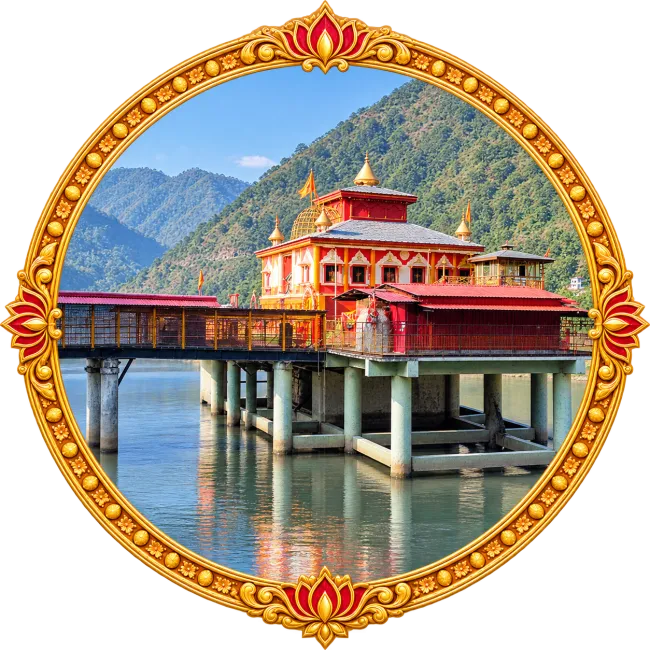
Dhari Devi Temple, Uttarakhand
Dhari Devi Temple is one of the most revered Shakti temples in Uttarakhand. Situated on a raised platform in the Alaknanda River near Kalyasaur, between Srinagar and Rudraprayag, the temple is dedicated to Goddess Dhari Devi. She is worshipped as the guardian deity of Uttarakhand and the protector of the Char Dham pilgrimage route.
The temple’s unusual location, surrounded by the flowing Alaknanda River and Himalayan mountains, creates a powerful spiritual atmosphere. Devotees believe that Goddess Dhari Devi protects the region from natural calamities and safeguards pilgrims travelling towards Kedarnath, Badrinath, Gangotri and Yamunotri.
About Dhari Devi Temple
Dhari Devi Temple is located near Dhari village in the Pauri Garhwal district of Uttarakhand. It stands between Srinagar Garhwal and Rudraprayag and can be reached from the main Rishikesh–Badrinath highway.
The shrine houses the upper portion of Goddess Dhari Devi. According to local tradition, the lower portion of the Goddess is worshipped as Goddess Kali at the Kalimath Temple in Rudraprayag district.
Dhari Devi is regarded as a manifestation of Goddess Kali and is also associated with the protective power of Shakti. The deity is represented by a natural stone image rather than an elaborately carved idol.
A widely followed local belief states that the appearance of the Goddess changes three times during the day:
- A young girl in the morning
- A mature woman during the afternoon
- An elderly woman in the evening
This transformation symbolises the three stages of human life and the timeless nature of the Divine Mother.
When Was Dhari Devi Temple Built and Who Built It?
The original date of the shrine’s establishment is not recorded. Dhari Devi is regarded as an ancient local deity whose worship began long before formal historical documentation of the region.
The old temple stood on a rock within the Alaknanda River. According to local tradition, the sacred image was discovered after severe flooding washed it downstream. The image became lodged against a rock near Dhari village, and villagers heard a divine voice instructing them to install it at that location. A shrine was subsequently established on the rock.
The old temple could be approached by a narrow bridge from the riverbank. With the development of the Srinagar Hydroelectric Project, the water level of the river was expected to rise and submerge the earlier structure.
A new elevated platform was therefore constructed above the river, and the deity was shifted from the old rock-level shrine on 16 June 2013. The relocated temple was designed to preserve the traditional position of the Goddess while protecting the shrine from the reservoir’s increased water level.
The present elevated temple was completed through a reconstruction project connected with the hydroelectric development. The deity was ceremonially established in the completed shrine in January 2023.
Legend of Dhari Devi
According to local tradition, a severe flood once carried the sacred image of the Goddess through the Alaknanda River. The upper portion of the image stopped near Dhari village after becoming lodged against a rock.
Villagers heard a divine voice asking them to retrieve the image and establish a shrine at the spot. They followed the instruction and began worshipping the Goddess as Dhari Devi, named after the nearby village.
The lower portion of the divine form is believed to have travelled to Kalimath, where it is worshipped as Goddess Kali. For this reason, Dhari Devi and Kalimath are spiritually connected.
Devotees often include both temples in their pilgrimage, regarding them as two parts of the same manifestation of Shakti.
Goddess Dhari Devi and the 2013 Floods
The relocation of the deity on 16 June 2013 coincided with the period of devastating floods and landslides in Uttarakhand. This led to a widespread local belief that moving the Goddess from her original position had disturbed the region’s protective spiritual energy.
The disaster had meteorological and geographical causes, including intense rainfall, overflowing rivers, landslides and extreme weather. However, in religious tradition, many devotees continue to view the timing as evidence of Dhari Devi’s role as the guardian of Uttarakhand.
The event significantly increased public awareness of the temple and strengthened local demands that the deity be treated according to established religious traditions.
Religious Significance
Dhari Devi is worshipped as the protector of the Garhwal region and the Char Dham pilgrimage. Drivers, travellers and pilgrims frequently stop at the temple before continuing towards Rudraprayag, Kedarnath or Badrinath.
Devotees pray to the Goddess for:
- Protection during mountain travel
- Safety from natural dangers
- Courage and emotional strength
- Good health
- Family welfare
- Marriage and children
- Success in education and employment
- Relief from fear and negative influences
- Fulfilment of wishes
- Spiritual progress
The Goddess is considered especially protective towards residents of the Himalayan region. Many local families worship her as a guardian deity.
Architecture of Dhari Devi Temple
The temple’s most distinctive feature is its location on an elevated platform in the middle of the Alaknanda River. A pedestrian bridge connects the shrine with the riverbank.
The present structure combines traditional Himalayan temple elements with modern engineering. Strong pillars support the elevated platform, allowing river water to flow beneath it.
The sanctum houses the natural stone form of Goddess Dhari Devi. The deity is decorated with flowers, jewellery, crowns, colourful clothes and sindoor.
The temple complex includes:
- Main sanctum
- Covered prayer area
- Pedestrian access bridge
- River-view platform
- Offering counters
- Shoe-storage area
- Bells and religious decorations
- Space for lamps and prayers
The Alaknanda River and surrounding mountains form an important part of the temple’s visual and spiritual identity.
Dhari Devi Temple Timings
The temple follows separate summer and winter schedules. Timings may be adjusted during Navratri, severe weather, road closures or high water levels.
Summer Timings
Winter Timings
During heavy rain or changing river conditions, entry to the bridge and temple can be regulated for safety. Visitors should follow the schedule displayed at the entrance on the day of their visit.
Morning Puja and Aarti
The morning rituals begin with the opening and cleaning of the sanctum. Priests perform Mangal Puja and prepare the sacred image for Shringar.
The morning worship includes:
- Ceremonial purification
- Offering of fresh clothes
- Flower decoration
- Application of sindoor and sandalwood
- Mantra chanting
- Incense offering
- Lighting of lamps
- Naivedya
- Morning Aarti
The morning Aarti is performed at 6:30 AM during summer and 7:00 AM during winter. Devotees can stand in the prayer area and participate in the ceremony.
Bhog Puja
Bhog is offered to Goddess Dhari Devi at noon. It generally includes sweets, fruits, dry fruits and Satvik food.
Darshan may be briefly regulated while the offering is presented. After the ceremony, prasad is distributed according to temple arrangements.
Evening Puja and Aarti
The evening worship begins with the lighting of lamps and incense. Priests recite prayers and offer flowers before performing Aarti.
The evening Aarti is held at 7:00 PM during summer and 6:00 PM during winter. The ceremony is particularly beautiful because the illuminated shrine is surrounded by the flowing Alaknanda River.
Shayan Puja is performed before the temple closes for the night.
Major Festivals
Chaitra Navratri
Chaitra Navratri is celebrated during March or April. Special worship is conducted throughout the nine days, and the Goddess is decorated in different forms.
Sharadiya Navratri
Sharadiya Navratri is one of the busiest periods at the temple. Devotees participate in special Puja, Havan, devotional recitation and Aarti.
Durga Ashtami
Durga Ashtami is observed with special offerings, Kanya Pujan and prayers to the Divine Mother.
Kali Puja
Special worship is offered to Dhari Devi as a manifestation of Goddess Kali. Devotees pray for protection and the destruction of negative influences.
Diwali
The shrine is decorated with lamps and lights during Diwali. Special prayers are offered for prosperity and family welfare.
Puja and Religious Services
Devotees may participate in different ceremonies according to temple arrangements:
- General Puja
- Special Puja
- Navratri Puja
- Durga Saptashati Path
- Havan
- Family welfare Puja
- Marriage-related prayers
- Child-blessing Puja
- Vehicle and journey protection prayers
- Thanksgiving Puja
- Offering of lamps
Puja services and donations should be arranged only through authorised priests or designated temple counters.
Offerings at Dhari Devi Temple
Common offerings include:
- Red chunri
- Coconut
- Flowers
- Sindoor
- Bangles
- Sweets
- Dry fruits
- Incense
- Clarified butter
- Mata’s Shringar items
- Sacred thread
- Monetary donations
Visitors should avoid throwing offerings, plastic or other materials into the Alaknanda River.
Prasad
Prasad generally includes coconut, mishri, sweets, cardamom and dry fruits. Prepared offering plates are available near the temple approach.
Devotees should accept prasad respectfully and dispose of packaging only in designated waste bins.
Dress Code and Entry Rules
There is no strict ceremonial dress code, but devotees should wear clean and modest clothing. Warm layers are advisable during winter, early morning and evening.
Important rules include:
- Remove footwear before entering the sanctum.
- Maintain order on the pedestrian bridge.
- Do not lean over the railings.
- Follow photography restrictions.
- Do not touch the deity.
- Do not throw waste or offerings into the river.
- Avoid alcohol, tobacco and non-vegetarian food.
- Deposit donations only at recognised counters.
- Follow instructions issued by priests and security staff.
- Avoid entering restricted areas during high water levels.
Entry Fee and Darshan Duration
General entry and darshan are free. Charges may apply to special Pujas and ritual materials.
On ordinary days, darshan generally requires 20–45 minutes. During Navratri, weekends and the Char Dham season, waiting time can extend beyond one hour.
Visitors should allow additional time for parking and walking from the road to the temple.
Best Time to Visit
March to June and September to November are suitable periods for visiting Dhari Devi Temple. These months offer comparatively comfortable weather and convenient road access.
The Char Dham season brings a highly devotional atmosphere but also increases traffic on the highway. Navratri is ideal for witnessing special celebrations.
July and August receive heavy monsoon rainfall. Landslides, roadblocks and rising river levels can affect travel. Winter visits are possible, but visitors should carry warm clothing and begin their journey during daylight hours.
How to Reach Dhari Devi Temple
By Air
Jolly Grant Airport near Dehradun is the nearest airport. It is approximately 135 kilometres from the temple. Taxis are available from the airport.
By Train
Rishikesh and Yog Nagari Rishikesh are the nearest convenient railway stations. Haridwar Junction provides additional railway connections.
From Rishikesh or Haridwar, travellers can continue by bus, shared taxi or private vehicle.
By Road
Dhari Devi Temple is situated close to the Rishikesh–Badrinath highway. Buses and taxis travelling towards Srinagar, Rudraprayag, Kedarnath and Badrinath pass through the region.
From the roadside parking area, visitors must walk towards the river and cross the pedestrian bridge to reach the temple.
Accommodation and Facilities
Hotels, guest houses and Dharamshalas are available in Srinagar Garhwal and Rudraprayag. Limited accommodation and food facilities are available near Kalyasaur.
Facilities near the temple include:
- Parking
- Drinking water
- Toilets
- Prasad shops
- Vegetarian food outlets
- Shoe-storage area
- Basic resting spaces
- Public transport
- Religious-item shops
Travellers should stay in Srinagar or Rudraprayag if they require a wider choice of accommodation.
Nearby Places to Visit
- Rudraprayag Sangam: The confluence of the Alaknanda and Mandakini rivers.
- Koteshwar Mahadev Temple: A cave temple dedicated to Lord Shiva.
- Kalimath Temple: The shrine associated with the lower portion of Dhari Devi.
- Augustmuni: A sacred town associated with Sage Agastya.
- Devprayag: The confluence where the Alaknanda and Bhagirathi form the River Ganga.
- Kartik Swami Temple: A mountain shrine dedicated to Lord Kartikeya.
- Kedarnath Temple: One of the twelve Jyotirlingas.
- Badrinath Temple: An important Char Dham shrine dedicated to Lord Vishnu.
Visitor Guidelines
Check the road and weather conditions before travelling, particularly during the monsoon. Carry drinking water, essential medicines, a valid identity document and suitable clothing.
Use the pedestrian bridge carefully and avoid crowding near the railings. Senior citizens and visitors with mobility difficulties should walk slowly and seek assistance where necessary.
Respect the Alaknanda River by avoiding littering and the disposal of ritual materials in the water. Complete donations and Puja arrangements only through authorised temple channels.
Conclusion
Dhari Devi Temple is a sacred Himalayan shrine where the Divine Mother is worshipped as the protector of Uttarakhand and guardian of the Char Dham route. Its location above the Alaknanda River, ancient stone deity and connection with Kalimath give it a distinctive spiritual identity.
The temple’s legends, daily Aartis and association with the protection of the Himalayan region inspire deep faith among devotees. A visit to Dhari Devi Temple offers an opportunity to seek safety, courage, peace and the blessings of the Divine Mother amid the natural beauty of Uttarakhand.