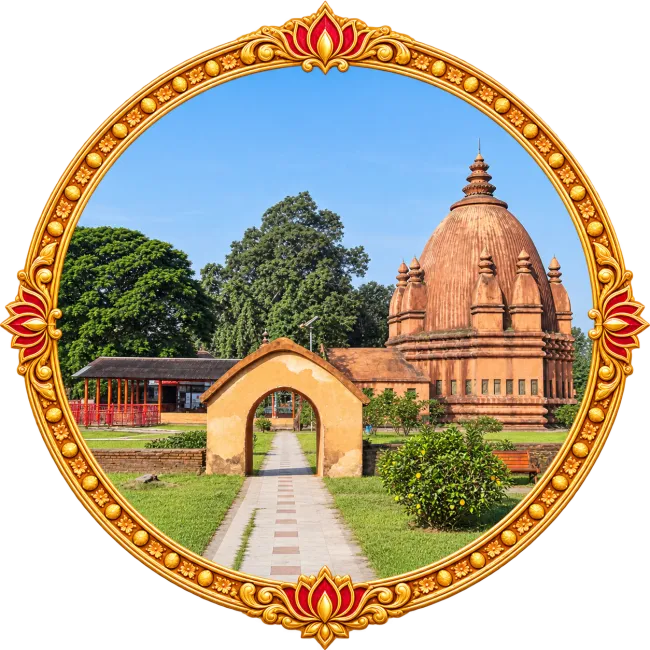
Devi Dol, Sivasagar
Devi Dol is a historic Shakti temple located beside the Sivasagar Tank, also known as Borpukhuri, in Sivasagar, Assam. Dedicated to Goddess Durga, the shrine forms part of the famous Sivasagar Dol complex alongside Shiva Dol and Vishnu Dol.
Built in 1734 CE by Queen Ambika, the wife of Ahom ruler Siva Singha, Devi Dol reflects the royal patronage, architectural skill and Shakti traditions of the Ahom kingdom. The temple becomes especially important during Navratri and Durga Puja.
About Devi Dol
Devi Dol stands close to Shiva Dol and Vishnu Dol in the centre of Sivasagar. The Goddess is worshipped as a powerful but compassionate manifestation of Shakti.
The presiding deity is identified with Goddess Durga, who represents protection, courage and the victory of righteousness over evil. Devotees also associate her with other manifestations of the Divine Mother, including:
Mahakali
Mahalakshmi
Mahasaraswati
Chandika
Mahishasuramardini
The temple forms the Shakta component of a sacred complex representing Shiva, Vishnu and the Divine Mother.
When Was Devi Dol Built and Who Built It?
Devi Dol was built in 1734 CE by Queen Ambika, popularly known as Bar Raja. She was the consort of Ahom king Siva Singha.
Queen Ambika sponsored the construction of three principal temples:
Shiva Dol
Vishnu Dol
Devi Dol
She also supported the excavation and development of the enormous Sivasagar Tank. The temples and water reservoir transformed the area into an important royal and religious centre.
Devi Dol underwent repairs following earthquakes, rainfall and natural deterioration. Conservation and restoration have preserved its Ahom-period form and traditional religious use.
Queen Ambika and Shakti Worship
The reign of Siva Singha was marked by the influence of Shakti worship at the Ahom court. Queen Ambika and other royal women sponsored temples, land grants and public works.
By constructing Devi Dol beside Shiva and Vishnu temples, Queen Ambika represented the unity of the three major Hindu traditions:
Shaivism
Vaishnavism
Shaktism
The complex also demonstrates the important position held by royal women in the political and religious history of the Ahom kingdom.
Religious Significance
Goddess Durga is worshipped as the Divine Mother who destroys evil and protects her devotees.
People visit Devi Dol to pray for:
Protection from danger
Courage and confidence
Good health
Marriage and children
Family welfare
Prosperity
Success in education and employment
Relief from fear
Freedom from negative influences
Fulfilment of wishes
The shrine receives its largest number of devotees during Sharadiya Navratri and Durga Puja.
Architecture of Devi Dol
Devi Dol displays architectural features associated with the Ahom kingdom. The temple is smaller than Shiva Dol but retains a prominent curvilinear Shikhara and decorated exterior.
The structure is built mainly from brick and lime mortar. Its walls contain floral patterns, sacred symbols and sculptural details connected with Shakti worship.
The Garbhagriha houses the sacred representation of Goddess Durga. The deity is decorated with colourful clothes, flowers, garlands, jewellery, sindoor and a crown.
Architectural elements include:
Curvilinear Shikhara
Garbhagriha
Mandapa
Carved exterior walls
Temple courtyard
Havan area
Festival space
Smaller sacred structures
Location beside Borpukhuri
The Sivasagar Dol Complex
Devi Dol belongs to a larger temple complex constructed under Queen Ambika’s patronage.
Shiva Dol
The tallest and most prominent shrine is dedicated to Lord Shiva. Mahashivratri is its principal festival.
Vishnu Dol
Vishnu Dol is dedicated to Lord Vishnu. Doul Utsav and Janmashtami are its major celebrations.
Devi Dol
Devi Dol is dedicated to Goddess Durga. Navratri, Durga Puja and Durga Ashtami are its most important occasions.
Together, the three temples represent the spiritual harmony of different Hindu traditions.
Devi Dol Timings
The temple follows a daily schedule for Puja, Bhog and Aarti.
Extended worship arrangements may be introduced during Navratri, Durga Puja and Kali Puja.
Morning Puja and Aarti
The temple day begins with purification of the sanctum and Mangal Puja. Morning Aarti is performed at 6:00 AM.
The morning rituals include:
Ceremonial cleaning
Offering of fresh clothes
Flower and garland decoration
Sindoor and sandalwood
Crown and jewellery decoration
Mantra chanting
Incense and lamps
Naivedya
Morning Aarti
General darshan continues after the morning Shringar and Puja have been completed.
Bhog and Evening Aarti
Bhog is offered to the Goddess at noon. It generally includes rice, lentils, vegetables, fruits, sweets and other ceremonial preparations.
Evening Puja begins at 5:30 PM, followed by Aarti at 6:30 PM. Devotees participate by chanting the name of the Goddess and singing traditional hymns.
Shayan Puja is performed before the temple closes.
Major Festivals
Sharadiya Navratri
Sharadiya Navratri is the most important annual celebration at Devi Dol. The nine forms of Goddess Durga are worshipped during the nine sacred days.
Special Shringar, Aarti, Chandi Path, Havan and devotional programmes are organised.
Durga Puja
Durga Puja attracts large numbers of visitors to the temple. The celebrations include:
Bodhan
Special Puja
Pushpanjali
Chandi recitation
Havan
Aarti
Cultural programmes
Prasad distribution
Durga Ashtami
Durga Ashtami is marked by elaborate worship and offerings. Many devotees observe fasting and participate in Kanya Pujan.
Chaitra Navratri
Special worship, Durga Saptashati recitation and Havan are performed during Chaitra Navratri.
Kali Puja and Diwali
The temple is illuminated with lamps during Kali Puja and Diwali. The Goddess is worshipped for protection and prosperity.
Puja and Religious Services
Available ceremonies may include:
General Devi Puja
Special Durga Puja
Navratri Puja
Durga Saptashati Path
Chandi Path
Havan
Kanya Pujan
Family welfare Puja
Marriage-related prayers
Child-blessing ceremony
Thanksgiving worship
Chunri and Shringar offering
Puja arrangements should be completed through authorised temple representatives.
Offerings and Prasad
Traditional offerings include:
Red flowers
Red chunri
Sindoor
Coconut
Fruits
Sweets
Bangles
Incense
Clarified butter
Shringar materials
Monetary donations
Prasad generally includes sweets, coconut, fruits, dry items and blessed flowers.
Dress Code and Temple Rules
There is no strict dress code, but visitors should wear clean and modest clothing.
Important rules include:
Remove footwear before entering.
Follow the designated queue.
Do not touch the principal deity.
Follow photography restrictions.
Do not damage architectural carvings.
Keep the courtyard and Borpukhuri clean.
Avoid alcohol and tobacco.
Deposit donations only at authorised counters.
Respect ongoing Puja and Havan ceremonies.
Follow instructions from priests and security staff.
Entry Fee and Darshan Duration
General entry and darshan are free. Charges may apply to special Pujas, Havan and ritual materials.
Darshan generally requires 20–40 minutes. Visitors exploring Devi Dol, Shiva Dol, Vishnu Dol and Borpukhuri should reserve one to two hours.
During Navratri and Durga Puja, waiting time can increase to several hours.
Best Time to Visit
October to March is the most comfortable period for visiting Sivasagar.
Sharadiya Navratri and Durga Puja offer the grandest devotional experience but attract the largest crowds. For peaceful darshan, visitors should arrive between 7:00 AM and 10:00 AM on a weekday.
Evening is suitable for viewing the illuminated temple complex and attending Aarti.
How to Reach Devi Dol
By Air
Jorhat Airport is approximately 65 kilometres from Sivasagar. Dibrugarh Airport is another option.
By Train
Sibsagar Town Railway Station is the nearest station. Simaluguri Junction provides additional railway connections.
By Road
Sivasagar is connected with Jorhat, Dibrugarh, Tinsukia and Guwahati by road.
Accommodation and Facilities
Sivasagar offers hotels, guest houses, lodges and restaurants.
Facilities near the Dol complex include:
Parking
Drinking water
Toilets
Shoe-storage area
Puja shops
Prasad stalls
Restaurants
Local transport
Security assistance
Nearby Places to Visit
Shiva Dol: The principal Shiva shrine in the complex.
Vishnu Dol: A historic temple dedicated to Lord Vishnu.
Borpukhuri: The enormous historic tank beside the temples.
Rang Ghar: An Ahom royal sports pavilion.
Talatal Ghar: A palace and military structure.
Kareng Ghar: The historic royal palace at Garhgaon.
Joysagar Tank: A large reservoir from the Ahom period.
Jaydol: A historic Vishnu temple.
Gaurisagar Temples: An Ahom-period group of Shiva, Vishnu and Devi shrines.
Charaideo Maidams: The burial grounds of Ahom royalty.
Conclusion
Devi Dol is an important Shakti shrine preserving the religious and architectural heritage of the Ahom kingdom. Built by Queen Ambika in 1734 CE, it forms part of the historic Sivasagar Dol complex beside Borpukhuri.
The temple’s elegant Shikhara, daily Aartis and grand Navratri and Durga Puja celebrations attract devotees throughout the year. Visitors worship Goddess Durga at Devi Dol to seek courage, protection, prosperity and family welfare.