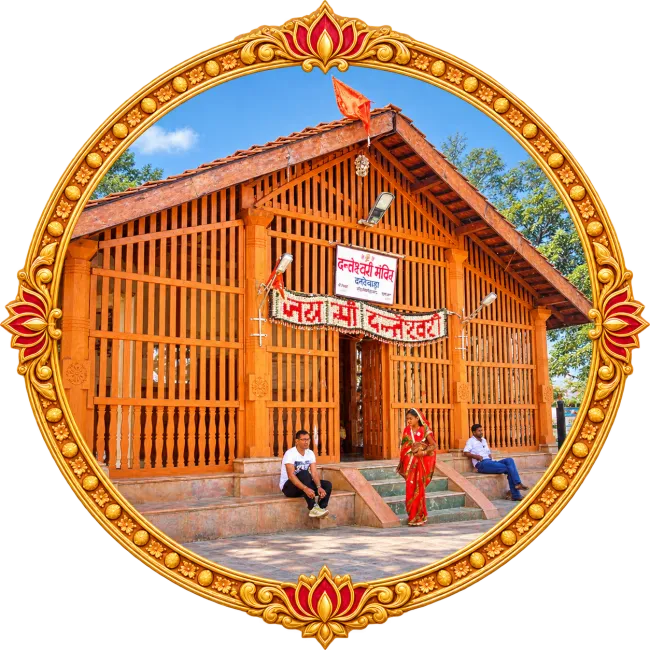
Danteshwari Temple, Chhattisgarh
Danteshwari Temple is one of the most sacred Shakti shrines in central India. Located in Dantewada, Chhattisgarh, the temple is dedicated to Goddess Danteshwari, the presiding deity of the historic Bastar region. The shrine stands near the confluence of the Shankini and Dhankini rivers and is traditionally counted among the 51 Shakti Peethas.
The temple is deeply connected with the history, culture and tribal traditions of Bastar. Goddess Danteshwari is worshipped as the protector of the region, and her blessings are sought before important religious, social and cultural events.
About Danteshwari Temple
Danteshwari Temple is situated in Dantewada town, approximately 80 kilometres from Jagdalpur. The town itself derives its name from Goddess Danteshwari.
The Goddess is worshipped as a manifestation of Shakti and is regarded as the family deity of the former Bastar royal dynasty. Tribal communities across Bastar also revere her as their supreme guardian.
The principal idol is made of black stone and has six arms. The Goddess is decorated with traditional clothes, jewellery, flowers, garlands and a silver crown. A silver ceremonial umbrella is placed above the deity.
The temple’s location at the meeting point of the Shankini and Dhankini rivers gives the shrine additional religious importance.
When Was Danteshwari Temple Built and Who Built It?
Danteshwari Temple was built during the 14th century by King Annam Dev, the founder of the Bastar branch of the Kakatiya dynasty.
Annam Dev travelled from the Warangal region and established his rule in Bastar. He brought the tradition of worshipping Goddess Danteshwari with him and constructed the temple at the confluence of the Shankini and Dhankini rivers.
The temple became the spiritual centre of the Bastar kingdom. Successive rulers supported its maintenance, organised festivals and expanded the shrine.
The structure has undergone renovations over the centuries. However, it continues to preserve architectural elements associated with the South Indian and Kakatiya traditions.
Danteshwari Temple as a Shakti Peetha
The temple’s Shakti Peetha status is connected with the story of Goddess Sati and Lord Shiva.
King Daksha organised a grand yajna but did not invite his daughter Sati and her husband, Lord Shiva. Sati attended the ceremony, where Daksha insulted Shiva. Unable to tolerate the humiliation, she entered the sacrificial fire and gave up her life.
Lord Shiva lifted Sati’s body and began performing the destructive Tandava. To protect creation, Lord Vishnu divided her body with the Sudarshana Chakra. The parts fell at different locations, which became sacred Shakti Peethas.
According to the tradition associated with Dantewada, a tooth or danta of Goddess Sati fell at this location. The Goddess consequently became known as Danteshwari.
Goddess Danteshwari and Bastar
Goddess Danteshwari is regarded as the guardian of Bastar and the spiritual protector of its people. The former kings of Bastar considered themselves servants of the Goddess rather than absolute rulers.
Before taking important political or military decisions, the rulers traditionally sought the Goddess’s blessings. Royal ceremonies and public festivals were organised in her honour.
The tribal communities of Bastar maintain their own traditions of devotion to Danteshwari. During major festivals, local deities from different villages are ceremonially brought together to honour the Goddess.
Religious Significance
Devotees visit Danteshwari Temple to pray for:
Protection from danger
Courage and strength
Good health
Family welfare
Marriage and children
Agricultural prosperity
Success in work and education
Relief from negative influences
Fulfilment of wishes
Spiritual peace
The temple is particularly important during Navratri and Bastar Dussehra, when special worship and community ceremonies are organised.
Architecture of Danteshwari Temple
Danteshwari Temple combines Kakatiya and South Indian architectural influences. The structure is built mainly from stone and has a fortified appearance.
The temple is divided into four principal sections:
Garbhagriha
Maha Mandap
Mukhya Mandap
Sabha Mandap
The Garbhagriha contains the black-stone idol of Goddess Danteshwari. The entrance and interior contain carved pillars, religious symbols and ornamental designs.
A Garuda pillar stands near the temple entrance. Devotees traditionally wear a dhoti or suitable traditional clothing before entering the innermost section of the shrine.
The temple complex also contains smaller shrines and spaces used for Puja, offerings and festival ceremonies.
Danteshwari Temple Timings
The temple follows a daily schedule for Puja, Bhog and Aarti. Special arrangements may be introduced during Navratri and Bastar Dussehra.
Festival ceremonies can affect ordinary queue movement. Visitors should follow the daily schedule displayed at the temple.
Morning Puja and Aarti
The day begins with Mangal Puja and the ceremonial preparation of the Goddess. Priests clean the sanctum and decorate the deity with fresh clothes, flowers, jewellery and sindoor.
The morning ceremonies include:
Ceremonial purification
Shringar
Flower and garland offering
Mantra chanting
Lighting of lamps
Incense offering
Naivedya
Morning Aarti
Morning Aarti is performed at 6:00 AM. General darshan continues after the ceremony.
Bhog Puja
Bhog is offered to Goddess Danteshwari at noon. The offering generally includes rice, sweets, fruits and locally prepared Satvik food.
Darshan may be briefly regulated while the Bhog ceremony is performed. The consecrated food is subsequently distributed as prasad.
Evening Puja and Aarti
The evening ceremony begins with the lighting of lamps and incense. Priests offer flowers and recite sacred prayers before performing Aarti at 7:00 PM.
Devotees participate through hymns and the chanting of the Goddess’s name. Shayan Puja is performed before the temple closes.
Bastar Dussehra
Bastar Dussehra is the most significant festival connected with Goddess Danteshwari. Unlike Dussehra celebrations focused on the victory of Lord Rama over Ravana, Bastar Dussehra primarily honours the Divine Mother.
The festival continues for more than 70 days and includes numerous rituals, tribal gatherings and ceremonial processions. Different communities of Bastar perform assigned religious duties during the celebrations.
An important ritual involves bringing the representative form of Goddess Danteshwari from Dantewada to Jagdalpur. The Goddess receives ceremonial honours, and local deities from across Bastar participate in the festival.
The massive wooden chariot pulled by thousands of devotees is one of the festival’s most prominent features.
Other Major Festivals
Chaitra Navratri
Special Puja, Aarti, Havan and devotional programmes are organised during Chaitra Navratri.
Sharadiya Navratri
Sharadiya Navratri attracts large numbers of pilgrims. The Goddess is decorated in different forms throughout the nine days.
Durga Ashtami
Durga Ashtami is observed with special Shringar, offerings, Havan and Kanya Pujan.
Diwali
The temple is decorated with lamps during Diwali. Devotees pray for prosperity and family welfare.
Puja and Offerings
Devotees can participate in general Puja, special Puja, Havan, Navratri worship, Durga Saptashati recitation and family ceremonies.
Common offerings include:
Red chunri
Coconut
Flowers
Sindoor
Bangles
Sweets
Fruits
Incense
Clarified butter
Shringar materials
Monetary donations
Puja arrangements and donations should be completed through authorised priests or recognised counters.
Prasad
Prasad usually includes coconut, sweets, mishri, dry fruits and blessed flowers. Cooked Bhog may also be distributed after the midday offering.
Devotees should obtain prasad from recognised counters and avoid carrying plastic into restricted parts of the complex.
Dress Code and Entry Rules
Visitors should wear clean and modest clothing. Traditional attire may be required for entering the innermost section of the temple.
Important rules include:
Remove footwear before entering.
Follow the designated queue.
Respect local tribal and temple traditions.
Do not touch the principal deity.
Follow photography restrictions.
Avoid alcohol, tobacco and non-vegetarian food.
Keep the temple and riverbank clean.
Deposit donations only at authorised counters.
Follow instructions from priests and security staff.
Entry Fee and Darshan Duration
General entry and darshan are free. Charges may apply to special Pujas, Havan and ritual materials.
On regular weekdays, darshan generally requires 20–45 minutes. During Navratri and Bastar Dussehra, waiting time can extend to several hours.
Best Time to Visit
October to March is the most comfortable period for visiting Dantewada. The weather is comparatively pleasant and suitable for travel.
Navratri and Bastar Dussehra offer the grandest religious experience but attract large crowds. Visitors seeking peaceful darshan should choose an ordinary weekday and arrive between 7:00 AM and 9:00 AM.
Travellers should check weather and road conditions during the monsoon.
How to Reach Danteshwari Temple
By Air
Jagdalpur Airport is the nearest airport and is approximately 85 kilometres from Dantewada. Swami Vivekananda Airport in Raipur offers wider flight connectivity.
By Train
Dantewada Railway Station is the nearest station. Jagdalpur Railway Station provides additional connections.
By Road
Dantewada is connected by road with Jagdalpur, Geedam, Raipur and other towns of Chhattisgarh.
Government buses, private vehicles and taxis are available.
Accommodation and Facilities
Hotels, guest houses and basic lodges are available in Dantewada. Additional accommodation options can be found in Jagdalpur.
Facilities near the temple include drinking water, toilets, shoe-storage counters, prasad shops, parking, medical assistance, security posts and vegetarian food outlets.
Nearby Places to Visit
Shankini–Dhankini Sangam: The sacred river confluence beside the temple.
Barsur: Known for ancient temples and archaeological remains.
Mama-Bhanja Temple: A historic stone temple at Barsur.
Battisa Temple: A distinctive twin Shiva temple.
Chitrakote Falls: A famous waterfall near Jagdalpur.
Tirathgarh Falls: A scenic multi-level waterfall.
Bastar Palace: A historic royal landmark in Jagdalpur.
Kanger Valley National Park: Known for forests, caves and wildlife.
Conclusion
Danteshwari Temple is the spiritual centre of Bastar and an important Shakti Peetha of India. Built by King Annam Dev in the 14th century, the shrine combines Kakatiya heritage with the living traditions of the tribal communities of Chhattisgarh.
The sacred black-stone image, Shankini–Dhankini confluence, daily Aartis and Bastar Dussehra give the temple a unique identity. Devotees visit Goddess Danteshwari to seek courage, protection, prosperity and spiritual strength.