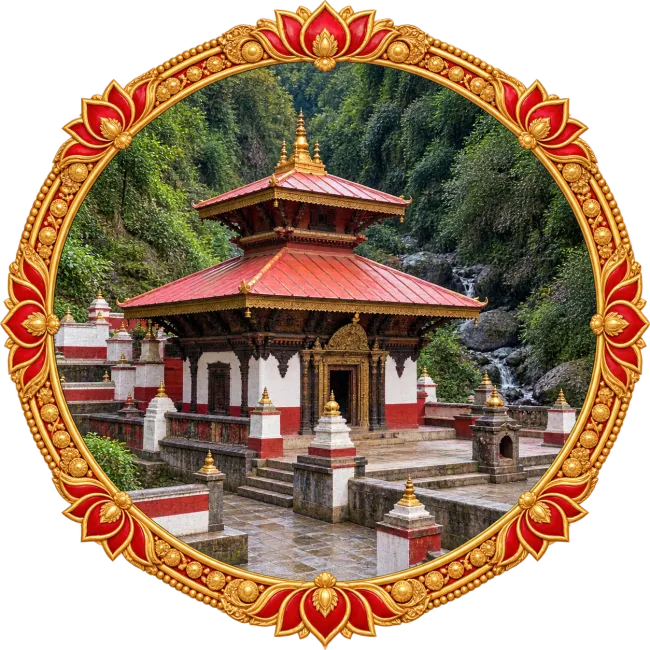
Dakshinkali Temple, Kathmandu, Nepal
Visit Dakshinkali Temple in Kathmandu, one of Nepal’s most powerful and revered temples dedicated to Goddess Kali. Located within a peaceful forested valley near Pharping, the temple is an important centre of Shakti worship. Devotees visit the shrine to pray for protection, courage, fulfilment of wishes and freedom from negative influences.
Dakshinkali Temple is especially crowded on Tuesdays and Saturdays, which are regarded as auspicious days for Goddess Kali. The temple also receives thousands of devotees during Navratri, Dashain and Kali Puja. Its sacred location at the meeting point of two streams adds to the temple’s spiritual importance.
About Dakshinkali Temple
Dakshinkali Temple is situated near Pharping in Dakshinkali Municipality, approximately 22 kilometres south of central Kathmandu. The temple is surrounded by green hills, forests and flowing streams.
The temple is dedicated to Goddess Dakshinkali, a powerful manifestation of Goddess Parvati and Adi Shakti. She represents divine power that destroys evil, protects devotees and removes negative forces.
The name Dakshinkali is formed from:
- Dakshin, meaning south or the southern direction
- Kali, referring to the fierce form of the Divine Mother
The deity is worshipped as the south-facing form of Goddess Kali. Devotees believe that sincere worship at this temple provides protection from fear, enemies, accidents, illness and spiritual obstacles.
Dakshinkali is one of the most important Shakti temples in the Kathmandu Valley, along with Guhyeshwari, Shobha Bhagwati, Maitidevi and Bajrayogini.
History of Dakshinkali Temple
Dakshinkali Temple was constructed during the reign of King Pratap Malla in the 17th century. King Pratap Malla ruled the Kathmandu Kingdom between 1641 and 1674 and supported the construction and renovation of several temples.
According to local tradition, Goddess Kali appeared in the king’s dream and instructed him to build a temple in her honour at a particular location south of Kathmandu.
Following the divine instruction, the king sent his officials and priests to locate the sacred place. The site was identified in a forested valley where two streams met. A shrine dedicated to Goddess Dakshinkali was then established there.
The location was suitable for Tantric worship because it was surrounded by forests, hills and flowing water. Over time, the temple became one of Nepal’s most prominent centres of Goddess Kali worship.
The temple has been repaired and expanded several times, but it continues to preserve its traditional open-air shrine and ancient ritual practices.
Mythology of Goddess Dakshinkali
Goddess Kali appeared from the divine power of Goddess Durga to destroy demons and protect the universe from evil.
According to Hindu mythology, powerful demons created destruction throughout the three worlds. The gods were unable to defeat them through ordinary means. Goddess Durga then manifested her fierce energy in the form of Kali.
Goddess Kali entered the battlefield and destroyed the demonic forces. Her power became so intense that she continued her cosmic dance even after the demons were defeated.
To calm her, Lord Shiva lay down in her path. When Kali unknowingly stepped upon Shiva, she recognized him and stopped her destructive dance.
This form represents the victory of divine consciousness over uncontrolled anger and destructive energy. Devotees worship Goddess Kali not merely as a fierce deity but as a compassionate mother who destroys suffering and protects her children.
Religious Significance of Dakshinkali Temple
Dakshinkali Temple is an important centre of Shakti and Tantric worship. The goddess is believed to possess the power to remove fear, defeat negative influences and protect devotees from visible and invisible dangers.
People visit the temple before beginning important work, entering a new business, purchasing a vehicle, travelling or making a major family decision.
Devotees pray at Dakshinkali Temple for:
- Protection from enemies
- Freedom from fear and anxiety
- Removal of negative energies
- Courage and confidence
- Success in business and employment
- Protection during travel
- Family happiness and prosperity
- Recovery from illness
- Fulfilment of sincere wishes
- Victory in difficult situations
- Spiritual strength and discipline
Many devotees return to the temple after their wish is fulfilled to offer prayers and express gratitude.
Main Deity of Dakshinkali Temple
The presiding deity is Goddess Dakshinkali. The sacred image is installed in a lower open-air shrine reached through stone steps.
The goddess is decorated with:
- Red cloth
- Vermilion
- Flowers and garlands
- Traditional jewellery
- Sacred ornaments
- Oil lamps
- Tantric symbols
Goddess Kali is represented in a fierce form, symbolising the destruction of evil, ego, ignorance and fear. Her appearance may seem powerful, but devotees regard her as a loving mother who protects those who approach her with faith.
Several smaller images and sacred stones associated with Bhairav, Shiva, Ganesha and other deities can also be seen near the principal shrine.
Architecture of Dakshinkali Temple
Dakshinkali Temple does not resemble a large enclosed palace-style shrine. Its main deity is installed in an open-air sacred area within a forested valley.
Important features of the temple include:
- Open-air sanctum
- Stone steps leading to the shrine
- Traditional metal canopy
- Sacred image of Goddess Kali
- Oil-lamp stands
- Bells offered by devotees
- Stone-paved worship area
- Two streams flowing near the shrine
- Smaller shrines dedicated to associated deities
- Forested hills surrounding the complex
The natural setting is an essential part of the temple’s spiritual atmosphere. The sound of flowing water, ringing bells and devotional chanting creates a powerful experience for visitors.
Dakshinkali Temple Timings
Festival schedules may be extended during Navratri, Dashain and Kali Puja. Tuesdays and Saturdays experience the longest queues.
Morning Puja and Aarti
The temple opens at 6:00 AM. The priests clean the shrine, light oil lamps and prepare the goddess for worship.
Morning Aarti is performed at 6:30 AM. Lamps, incense, red flowers, vermilion and sacred offerings are presented before Goddess Dakshinkali.
Devotees chant prayers and seek protection from the Divine Mother. The period between 6:30 AM and 9:00 AM is the best time for peaceful darshan on regular weekdays.
Visitors coming on Tuesday or Saturday should arrive before 6:00 AM because large queues begin forming soon after the temple opens.
Evening Puja and Aarti
Evening Puja begins at 6:00 PM, followed by Aarti at 6:30 PM. The shrine is illuminated with oil lamps while the priests recite prayers dedicated to Goddess Kali.
The forested surroundings become peaceful during the evening ceremony. Devotees sing Kali bhajans, ring temple bells and offer lamps to the goddess.
Visitors should complete darshan before 8:30 PM because the temple closes at 9:00 PM.
Bali Puja at Dakshinkali Temple
Dakshinkali Temple follows ancient Shakti and Tantric worship traditions. Animal sacrifice, known as Bali Puja, is traditionally performed on Tuesdays and Saturdays.
Goats and roosters may be offered by devotees as part of a personal religious promise. The sacrifice is performed only in the designated area according to temple customs.
Participating in animal sacrifice is not compulsory. Devotees who prefer vegetarian worship can make symbolic offerings such as:
- Coconut
- Pumpkin
- Fruits
- Red flowers
- Sweets
- Red cloth
- Incense
- Oil lamps
Visitors who are uncomfortable witnessing animal sacrifice should visit on Sunday, Monday, Wednesday, Thursday or Friday.
Major Festivals Celebrated
Dashain
Dashain is the most important festival celebrated at Dakshinkali Temple. Goddess Kali is worshipped as a powerful form of Durga.
Thousands of devotees visit during Ghatasthapana, Phulpati, Maha Ashtami, Maha Navami and Vijayadashami.
Sharadiya Navratri
Special worship is performed during all nine days of Sharadiya Navratri. Each day is dedicated to a different form of Goddess Durga.
Chaitra Navratri
Chaitra Navratri is observed through fasting, devotional prayers and special offerings.
Kali Puja
Kali Puja is celebrated with oil lamps, Tantric rituals, flowers and night worship. The goddess is specially decorated for the occasion.
Tihar
During Tihar, the temple is illuminated with lamps. Devotees worship the goddess for prosperity, protection and family happiness.
Tuesdays and Saturdays
Every Tuesday and Saturday is treated as a special day of worship. Large numbers of devotees visit to offer prayers and fulfil religious promises.
Offerings and Prasad
Common offerings made to Goddess Dakshinkali include:
- Red hibiscus flowers
- Red chunari
- Vermilion
- Bangles and cosmetic items
- Incense sticks
- Oil or ghee lamps
- Coconut
- Fruits and sweets
- Rice and grains
- Red sacred threads
- Jewellery or decorative items
- Monetary donations
Red hibiscus is considered especially dear to Goddess Kali. Devotees may receive flowers, vermilion, fruits or sweets as prasad.
Puja materials are available from shops near the temple entrance. Visitors should purchase offerings from authorized vendors.
Entry Fee and Visit Duration
There is no entry fee for regular darshan at Dakshinkali Temple. Charges may apply for special pujas, priest-led ceremonies and specific ritual arrangements.
A regular visit requires one to two hours. On Tuesdays and Saturdays, darshan may require two to four hours because of heavy crowds.
During Navratri and Dashain, visitors should keep additional time for security checks and long queues.
Visitor Guidelines
- Wear modest and respectful clothing.
- Remove footwear before entering the main shrine.
- Follow the designated darshan queue.
- Maintain silence during Puja and Aarti.
- Ask permission before taking photographs.
- Do not photograph Bali rituals without permission.
- Keep children close during crowded days.
- Use authorized counters for donations and special pujas.
- Keep the forest, streams and temple premises clean.
- Do not throw offerings or plastic waste into the water.
- Avoid carrying alcohol and tobacco.
- Respect devotees following different forms of worship.
- Walk carefully on wet stone steps.
- Follow the directions of priests and security personnel.
Best Time to Visit Dakshinkali Temple
October to March is the best time to visit because Kathmandu experiences pleasant weather.
The spring months from March to May are also suitable, and the surrounding forest appears green and colourful.
For peaceful darshan, visit on Monday, Wednesday, Thursday or Friday between 6:30 AM and 9:00 AM.
Devotees interested in traditional Bali Puja should visit on Tuesday or Saturday. Those who wish to avoid sacrifice ceremonies should select another weekday.
How to Reach Dakshinkali Temple
By Air
Tribhuvan International Airport is the nearest airport. Visitors can hire a taxi or private vehicle from the airport to Dakshinkali.
From Central Kathmandu
Dakshinkali Temple is approximately 22 kilometres south of central Kathmandu. The road passes through Kirtipur, Chobhar and Pharping.
The journey usually requires one to two hours, depending on traffic.
By Bus
Local buses for Pharping and Dakshinkali are available from Kathmandu. Visitors can travel towards Pharping and use a local bus, taxi or shared vehicle for the final section.
By Taxi
Hiring a taxi is the most convenient option for families and groups. Visitors can combine Dakshinkali Temple with Pharping, Shesh Narayan Temple and Taudaha Lake.
From India
Indian visitors can reach Kathmandu by air or enter Nepal through border crossings such as Raxaul–Birgunj and Sunauli–Bhairahawa.
Indian citizens should carry a valid passport or voter identity card and confirm transportation requirements before departure.
Nearby Places to Visit
Pharping
Pharping is a historic town containing Hindu and Buddhist religious sites.
Shesh Narayan Temple
An important temple dedicated to Lord Vishnu, situated close to Pharping.
Asura Cave
A sacred meditation cave associated with Guru Padmasambhava.
Yangleshö Cave
Another important Buddhist meditation site connected with Guru Rinpoche.
Bajrayogini Temple
A sacred temple dedicated to Goddess Vajrayogini.
Taudaha Lake
A peaceful lake associated with local serpent legends.
Chobhar Gorge
A natural gorge connected with the ancient drainage of the Kathmandu Valley.
Kirtipur
A historic Newari town known for traditional architecture, temples and views of Kathmandu.
Conclusion
Dakshinkali Temple is one of Nepal’s most powerful centres of Goddess worship. Established during the reign of King Pratap Malla, the temple is deeply connected with Shakti traditions, Tantric rituals and the belief that Goddess Kali protects her devotees from fear and negative forces.
Its open-air shrine, forested surroundings, sacred streams and traditional worship create a distinctive spiritual atmosphere. Morning Puja, evening Aarti and the grand celebrations of Navratri and Dashain allow devotees to experience the living traditions of Shakti worship.
A visit to Dakshinkali Temple provides courage, spiritual strength and a deeper understanding of Goddess Kali as both a fierce destroyer of evil and a compassionate mother who protects her children.