Da Parbatia Temple, Tezpur
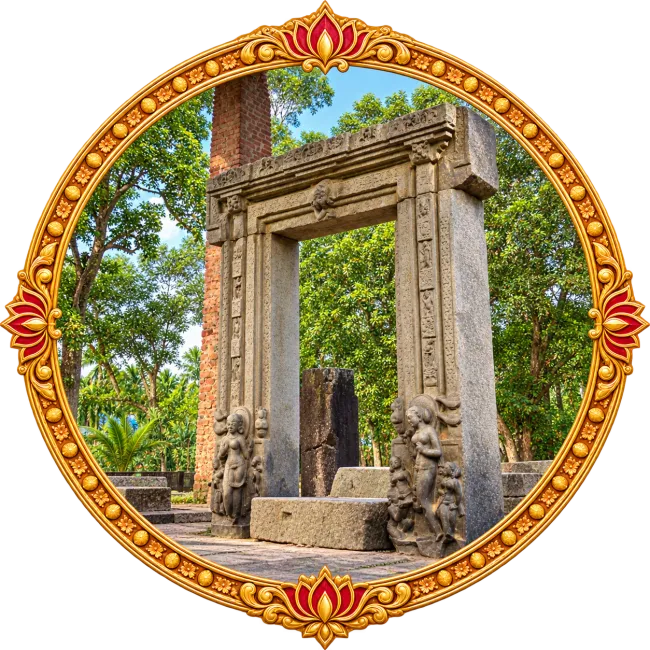
Da Parbatia Temple is one of Assam’s most important archaeological and architectural heritage sites. Located in Tezpur, the site preserves the remains of an ancient temple, particularly an elaborately carved stone doorway associated with the late Gupta artistic tradition.
Unlike Tezpur’s active places of worship, Da Parbatia is primarily a protected archaeological monument. Regular daily Puja, Aarti, Bhog and Abhishekam are not conducted here. The site is visited for its historic architecture, religious sculptures and importance in understanding the development of temple art in Assam.
About Da Parbatia Temple
Da Parbatia is situated in the western part of Tezpur in the Sonitpur district of Assam. The surviving remains include an ornate stone door frame, portions of the temple foundation and architectural fragments belonging to different periods.
The doorway is famous for its carvings of the river goddesses Ganga and Yamuna. These deities were traditionally placed on either side of temple entrances to symbolise ritual purification before entering the sacred space.
The surviving sculptures reflect the artistic influence of the Gupta period, which is often regarded as an important phase in the development of classical Indian temple architecture.
When Was Da Parbatia Temple Built and Who Built It?
The earliest surviving structure at Da Parbatia is generally associated with the 5th–6th century CE. It belongs to the late Gupta or early post-Gupta period.
The identity of the ruler or patron who commissioned the original temple is not preserved in the surviving remains. Its architectural style indicates that it was constructed during a period when Gupta artistic traditions had spread into the ancient Kamrupa region.
A later brick temple was built over the older stone foundation during the Ahom period. This later structure was severely damaged by the great Assam earthquake of 1897.
Archaeological excavation and conservation work during the early 20th century revealed the older carved doorway beneath the remains of the later temple. The site is now maintained as a protected monument.
Historical Development
The history of Da Parbatia can be understood through three broad phases:
Early Temple
The first temple was established during the 5th–6th century. Its stone doorway and sculptural style display characteristics associated with Gupta art.
Later Temple Construction
A brick temple was constructed over or close to the earlier foundation during a later period. The site continued to have religious importance under subsequent rulers, including the Ahoms.
Earthquake and Archaeological Discovery
The 1897 earthquake destroyed most of the later temple. Archaeological investigation revealed the ancient stone doorway and structural foundations. Conservation work was undertaken to protect the remaining sculptures.
Original Presiding Deity
The original deity worshipped at Da Parbatia cannot be identified conclusively from the surviving structure alone. The principal idol and the complete Garbhagriha no longer survive.
Some architectural interpretations connect the site with Shaiva worship because of the religious history of the Tezpur region and fragments found near the ruins. Other scholars treat the monument more broadly as an early Hindu temple without assigning a specific presiding deity.
The absence of the original idol is an important reason why the site functions primarily as an archaeological monument rather than an active temple.
Architecture of Da Parbatia Temple
The carved doorway is the monument’s most important surviving feature. Its refined proportions and detailed sculptures demonstrate the technical ability of early Indian craftsmen.
The doorway consists of:
Two decorated door jambs
A carved lintel
Images of Ganga and Yamuna
Floral and geometric patterns
Human and divine figures
Decorative scrollwork
Temple foundation remains
The entrance was designed to lead into the original sanctum. Although the walls and tower have disappeared, the surviving base indicates the layout of an early temple structure.
Sculptures of Ganga and Yamuna
Ganga and Yamuna appear on opposite sides of the doorway. Both river goddesses are represented in graceful standing postures beneath decorative arches.
Ganga is traditionally associated with the Makara, a mythical aquatic creature. Yamuna is associated with the tortoise.
Their placement at a temple entrance had symbolic meaning. A worshipper passing between them was considered spiritually purified before entering the Garbhagriha.
The figures are accompanied by attendants and surrounded by floral ornamentation. Their posture, jewellery and garments display the elegance associated with Gupta-period sculpture.
Gupta Artistic Influence
The Da Parbatia doorway is one of the finest surviving examples of Gupta-influenced art in northeastern India.
Important artistic features include:
Balanced and symmetrical composition
Graceful human figures
Carefully carved jewellery
Natural body postures
Floral scrolls
Sacred river symbols
Decorative but controlled ornamentation
The sculptures demonstrate that ancient Assam participated in wider artistic and religious developments taking place across the Indian subcontinent.
Religious and Cultural Significance
Although regular worship is not performed, Da Parbatia remains a sacred cultural site. It provides evidence of organised temple worship in ancient Kamrupa.
The monument is significant because it:
Preserves early Hindu temple architecture
Demonstrates Gupta artistic influence in Assam
Records the symbolic worship of sacred rivers
Connects ancient Kamrupa with wider Indian culture
Shows multiple phases of temple construction
Supports archaeological research
Preserves Tezpur’s religious heritage
Visitors should treat the ruins with the same respect they would show at an active shrine.
Da Parbatia Temple Visiting Hours
Da Parbatia is an archaeological monument and follows daytime visiting hours. It does not follow the schedule of temple Puja and Aarti.
Entry Fee and Visit Duration
General entry to Da Parbatia is free. A typical visit requires 30–45 minutes.
Visitors interested in art, architecture and photography may spend up to one hour studying the doorway and foundation remains.
Educational groups should avoid crowding around the sculptures and follow the directions of the monument staff.
Best Time to Visit
October to March is the most comfortable period for visiting Tezpur. The weather is suitable for walking and examining the exposed archaeological remains.
Morning between 7:00 AM and 10:00 AM provides comfortable temperatures and suitable natural light for viewing the carvings.
The monsoon makes the surrounding area green, but rain can limit exploration. Visitors should not walk across wet foundations or unstable surfaces.
Photography Guidelines
Photography for personal use is generally suitable in the open monument area, subject to instructions displayed at the site.
Visitors should:
Avoid touching the doorway while taking photographs.
Keep tripods away from protected foundations.
Do not climb onto walls or carved stones.
Avoid flash photography directly against delicate surfaces.
Obtain permission for professional or commercial photography.
Do not move architectural fragments.
Visitor Rules
Da Parbatia is an irreplaceable heritage monument. Visitors should observe the following rules:
Do not touch or scratch the carvings.
Do not write names on the stones.
Do not climb onto the foundation.
Do not light lamps or incense near the sculptures.
Do not apply oil, sindoor, paint or water.
Do not remove stones or fragments.
Keep food and plastic away from the monument.
Supervise children closely.
Follow instructions from conservation staff.
Maintain silence during educational or research visits.
How to Reach Da Parbatia Temple
By Air
Tezpur Airport at Salonibari is approximately 10–12 kilometres from the site. Taxis and local vehicles are available.
Lokpriya Gopinath Bordoloi International Airport in Guwahati offers wider flight connectivity.
By Train
Dekargaon Railway Station is the nearest railway station. Rangapara North Junction provides additional regional connections.
By Road
Da Parbatia is easily accessible from central Tezpur by auto-rickshaw, taxi or private vehicle.
Accommodation and Facilities
Hotels, lodges and guest houses are available throughout Tezpur. The monument itself has limited visitor facilities, so travellers should carry drinking water.
Facilities available in the surrounding city include:
Hotels and guest houses
Restaurants
Local transport
Medical shops
Parking near the approach
Tourist information
Basic shops
Nearby Places to Visit
Mahabhairav Temple: An ancient Shiva shrine associated with King Banasura.
Agnigarh: A hill connected with the story of Usha and Aniruddha.
Bamuni Hills: Known for ancient temple sculptures and ruins.
Chitralekha Udyan: A landscaped park displaying archaeological remains.
Cole Park: A historic recreational area within Chitralekha Udyan.
Ganesh Ghat: A scenic location beside the Brahmaputra.
Bhairabi Temple: A local shrine dedicated to Goddess Bhairavi.
Padum Pukhuri: A lake and recreational destination.
Nameri National Park: A forest and wildlife destination near Tezpur.
Importance for Students and Researchers
Da Parbatia is particularly valuable for students of archaeology, art history, architecture and religious studies.
The site helps researchers study:
Early temple design in Assam
Gupta-period sculptural influence
Sacred river-goddess imagery
Changes in temple construction over time
Earthquake damage to historic monuments
Conservation of exposed stone sculptures
Ancient cultural links between Kamrupa and other Indian regions
Conclusion
Da Parbatia Temple is one of Assam’s most valuable archaeological monuments. Its 5th–6th-century stone doorway, sculptures of Ganga and Yamuna and Gupta-influenced decorative work provide rare evidence of early temple architecture in the region.
The original temple and deity no longer survive, so regular Puja and Aarti are not conducted. The site’s importance lies in its artistic, historical and cultural heritage. Visitors can help preserve Da Parbatia by respecting the protected ruins and avoiding all physical contact with its ancient carvings.