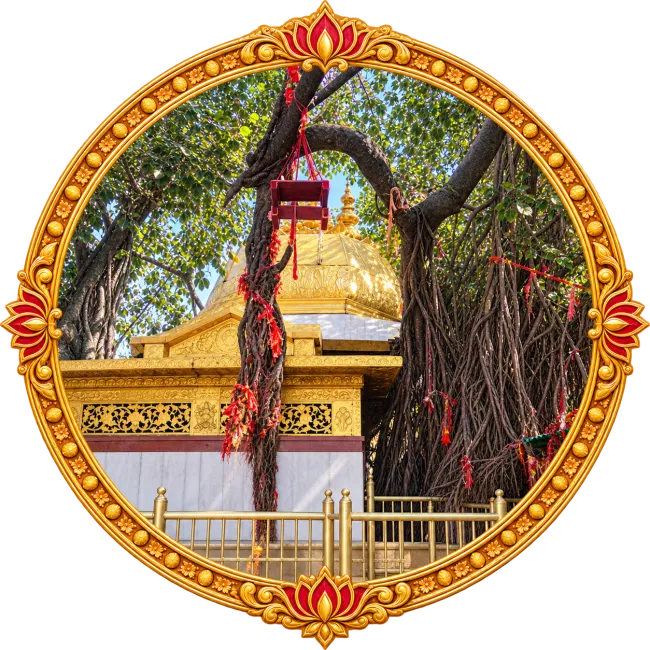
Chintpurni Temple, Himachal Pradesh
Chintpurni Temple is one of the most revered Shakti shrines in northern India. Located in the Una district of Himachal Pradesh, the temple is dedicated to Mata Chintpurni, the Goddess who is believed to remove the worries and difficulties of her devotees. The presiding deity is also worshipped as Mata Chhinnamastika, a powerful manifestation of Goddess Shakti.
Situated on a hill in the lower Himalayan region, the temple attracts pilgrims from Himachal Pradesh, Punjab, Haryana, Delhi, Jammu and other parts of India. Devotees visit the shrine to pray for protection, family welfare, prosperity, health and fulfilment of their wishes.
About Chintpurni Temple
Chintpurni Temple is situated in Chintpurni town of Una district. The name “Chintpurni” is derived from two words: Chinta, meaning worry, and Purni, meaning one who fulfils or removes. Mata Chintpurni is therefore worshipped as the Goddess who frees devotees from anxiety and fulfils their sincere wishes.
The Goddess is worshipped inside the sanctum in the form of a sacred Pindi rather than a conventional sculpted idol. The Pindi represents the living presence of Mata Chhinnamastika. It is decorated with flowers, ornaments, red cloth, sindoor and other traditional items of Shringar.
Chintpurni is recognised as an important Shakti Peetha. According to regional tradition, the sacred feet of Goddess Sati fell at this place. The temple is consequently regarded as a powerful centre of Shakti worship.
When Was Chintpurni Temple Built and Who Built It?
The temple’s exact construction year is not preserved in historical records. Temple tradition attributes the establishment of the shrine to Pandit Mai Das, a Saraswat Brahmin and devoted worshipper of Goddess Durga.
Pandit Mai Das is believed to have established the sacred Pindi at this location several centuries ago. His descendants continued the tradition of worship and served as the temple’s hereditary priests.
The original shrine was gradually enlarged as its popularity increased. Devotees, local rulers and temple administrators contributed to the development of its pathways, courtyards, gateways and pilgrim facilities.
The Himachal Pradesh government assumed administrative control of Chintpurni Temple on 12 June 1987. A temple trust now manages worship arrangements, pilgrim services, donations, development projects and major religious fairs.
Legend of Pandit Mai Das
Pandit Mai Das was an ardent devotee of the Divine Mother. During one of his journeys, he stopped to rest beneath a banyan tree in the forest. There, he had a dream in which a divine girl appeared and asked him to remain at that place and worship her.
Mai Das initially continued his journey, but he could not forget the divine vision. He later returned to the same location and began meditating. The Goddess appeared before him in the form of Chhinnamastika and revealed that she resided beneath the tree in the form of a sacred Pindi.
The Goddess instructed him to establish regular worship at the spot. She also showed him a source of water that could be used for performing rituals. Mai Das discovered the Pindi and began worshipping it. This sacred place eventually developed into the present Chintpurni Temple.
Mythology of the Shakti Peetha
The temple’s Shakti Peetha status is connected with the story of Goddess Sati and Lord Shiva. Sati was the daughter of King Daksha and the consort of Lord Shiva.
King Daksha organised a grand yajna but did not invite Shiva and Sati. Sati attended the ceremony despite the absence of an invitation. When Daksha insulted Lord Shiva before the assembled guests, Sati entered the sacrificial fire and gave up her life.
Lord Shiva was overcome with grief. He carried Sati’s body and began performing the destructive Tandava. To protect the universe, Lord Vishnu used the Sudarshana Chakra to divide Sati’s body. Its parts fell at different places, and these locations became sacred Shakti Peethas.
Mata Chhinnamastika
Mata Chintpurni is closely identified with Chhinnamastika, one of the powerful forms of the Divine Mother. The name Chhinnamastika means “the headless Goddess.”
In sacred symbolism, Chhinnamastika represents self-sacrifice, control over desire, destruction of ego and the continuous flow of life energy. Her form communicates that spiritual consciousness exists beyond physical identity.
At Chintpurni Temple, the Goddess is worshipped in the peaceful and compassionate form of the Mother who removes suffering. Devotees approach her with faith and pray for freedom from fear, confusion and worldly difficulties.
Religious Significance
Chintpurni Temple is considered a Siddha Peetha—a sacred place where sincere prayers and spiritual practices are believed to bear results. Devotees pray here for:
Relief from worries and emotional distress
Protection from difficulties
Health and recovery
Peace within the family
Marriage and children
Success in education and employment
Prosperity and financial stability
Courage and spiritual strength
Fulfilment of personal wishes
Many pilgrims tie sacred threads or make personal vows before the Goddess. After their prayers are fulfilled, they return to offer thanks through Puja, Havan, prasad distribution or community meals.
Architecture of Chintpurni Temple
The temple complex reflects the traditional architectural style of hill shrines in Himachal Pradesh. It has a central sanctum surrounded by passages, courtyards, gateways and spaces used for worship and pilgrim movement.
The sacred Pindi is installed inside the Garbhagriha. It is decorated with a silver covering, flowers, jewellery and colourful cloth. A canopy is placed above the sacred seat of the Goddess.
The main entrance is ornamented with religious symbols and images associated with Shakti worship. The temple’s elevated location offers views of the surrounding hills and settlements.
The present complex has been renovated several times to accommodate increasing numbers of pilgrims. Barricaded queues, covered passages, security checkpoints and pilgrim facilities have been developed around the original shrine.
Chintpurni Temple Timings
The temple follows separate summer and winter schedules. Extended arrangements may be introduced during Navratri and the annual Shravan fair.
Summer Timings
Winter Timings
The temple’s religious schedule identifies 6:30 AM as the daily time for the ceremonial bathing of the Goddess and morning Aarti. Festival schedules and crowd-control arrangements can affect ordinary queue movement.
Morning Puja and Aarti
The morning worship begins after the temple opens. The priests clean the sanctum, perform the ceremonial bathing of the sacred Pindi and decorate the Goddess with flowers, ornaments, sindoor and fresh clothes.
The principal morning ceremony includes:
Mata Snan
Shringar
Mantra chanting
Incense offering
Lighting of lamps
Flower offering
Naivedya
Morning Aarti
The main morning Aarti is performed at 6:30 AM. Devotees gather in the designated area and participate through prayers and devotional chanting.
Bhog Puja
Bhog is offered to the Goddess before noon. The offering may include sweets, fruits, dry fruits and other Satvik food. Darshan movement may slow or pause briefly during the ritual.
After the Puja, the consecrated offering is distributed as prasad according to temple arrangements.
Evening Puja and Aarti
The evening Puja begins with the lighting of lamps and incense. Priests offer flowers, recite prayers and perform Aarti before the sacred Pindi.
The ceremony creates a peaceful devotional atmosphere, particularly after sunset. Devotees chant the name of the Goddess and sing traditional Mata bhajans.
The evening Aarti is generally performed at 7:30 PM during summer and 6:30 PM during winter. Shayan Aarti concludes the day’s worship before the temple closes.
Major Festivals
Chaitra Navratri
Chaitra Navratri is celebrated during March or April. The temple is decorated, and special Pujas, devotional recitations and community meals are organised.
Shravan Ashtami Fair
The Shravan Ashtami fair is one of the largest annual celebrations at Chintpurni. It takes place during July or August and attracts a very large number of pilgrims.
Special security, sanitation, transport and crowd-control arrangements are implemented during the fair.
Sharadiya Navratri
Sharadiya Navratri is celebrated during September or October. The nine forms of Goddess Durga are worshipped, and the temple remains crowded throughout the festival.
Durga Ashtami
Durga Ashtami is observed with special Puja, Havan, Kanya Pujan and devotional programmes.
Three important annual fairs are associated with the shrine: Chaitra Navratri, Shravan Navratri and Ashwin Navratri.
Puja and Sevas
Devotees may participate in religious services according to temple arrangements. Common ceremonies include:
General Puja
Special Darshan
Havan
Durga Saptashati Path
Navratri Puja
Mata Jagran
Mundan ceremony
Marriage-related prayers
Child-blessing Puja
Thanksgiving Puja
Donation of food or religious materials
Puja services and donations should be arranged only through authorised temple counters or the official temple administration.
Offerings at Chintpurni Temple
Traditional offerings include:
Red chunri
Coconut
Flowers
Sindoor
Bangles
Sweets
Dry fruits
Mata’s Shringar items
Sacred thread
Incense
Clarified butter
Monetary donations
Visitors should carry only offerings permitted by the temple administration. Plastic packaging should be avoided whenever possible.
Prasad
Prasad generally consists of coconut, mishri, dry fruits, cardamom and sweets. Devotees can obtain prepared offering plates and packaged prasad from authorised counters and shops near the temple.
Community meals and Bhandaras are frequently organised during festivals and other auspicious occasions.
Dress Code and Temple Rules
The temple does not prescribe a strict ceremonial dress code. Visitors should wear modest, clean and comfortable clothing.
Important rules include:
Remove footwear before entering the temple.
Maintain order in the queue.
Follow all security instructions.
Do not carry alcohol, tobacco or non-vegetarian food.
Avoid taking photographs inside restricted areas.
Do not touch the sacred Pindi.
Keep the temple and town clean.
Use official donation boxes and counters.
Do not engage unauthorised guides or agents.
Take care of children and elderly family members in crowded areas.
Entry Fee and Darshan Duration
General entry and darshan are free. Charges may apply to certain special Pujas, ritual materials and temple services.
Darshan normally takes 30–60 minutes on a regular weekday. Waiting time can increase to several hours during Navratri, Shravan Ashtami, weekends and public holidays.
Early morning between 7:00 AM and 10:00 AM is suitable for peaceful darshan on ordinary days.
Best Time to Visit
March to June and September to November are suitable for visiting the temple. The weather remains relatively comfortable during these periods.
Pilgrims who wish to experience the major celebrations can visit during Navratri or the Shravan Ashtami fair. Those seeking shorter queues should avoid festival days, weekends and public holidays.
Winter visits are also possible, but warm clothing is necessary. During the monsoon, travellers should check weather and road conditions before beginning the journey.
How to Reach Chintpurni Temple
By Air
Kangra Airport at Gaggal is the nearest airport. It is approximately 65–70 kilometres from Chintpurni. Taxis are available from the airport.
By Train
Amb Andaura Railway Station is the nearest convenient railway station and is approximately 20 kilometres from the temple.
Una Himachal Railway Station is approximately 50–55 kilometres away. Taxis and buses operate from Una to Chintpurni.
By Road
Chintpurni is connected by road with Una, Kangra, Dharamshala, Hoshiarpur, Chandigarh, Jalandhar, Amritsar and Delhi. Government buses, private buses and taxis are available.
Accommodation and Facilities
Chintpurni has Dharamshalas, guest houses, budget hotels and private lodges. Accommodation should be booked in advance during Navratri and the Shravan fair.
Facilities available near the temple include:
Drinking water
Toilets
Shoe-storage counters
Prasad shops
Vegetarian restaurants
Medical assistance
Police and security posts
Parking areas
Public transport
Dharamshalas
Queue shelters
Nearby Places to Visit
Jwala Devi Temple: A famous Shakti Peetha known for its eternal flames.
Sheetla Devi Temple: A locally revered shrine near Chintpurni.
Baba Barbhag Singh Gurudwara: A well-known spiritual destination in Una district.
Dera Baba Rudranand: A religious centre associated with meditation and spiritual practice.
Pong Dam Lake: A scenic reservoir and wildlife area.
Kangra Devi Temple: An important Shakti shrine in Kangra.
Chamunda Devi Temple: A major pilgrimage destination dedicated to Goddess Chamunda.
Dharamshala: A hill town known for monasteries and Himalayan scenery.
Visitor Guidelines
Carry a valid identity document, essential medicines, water and weather-appropriate clothing. Senior citizens and visitors with health conditions should avoid standing in long queues without taking breaks.
Use authorised parking and transport services. During festivals, follow temporary route diversions, queue systems and administrative announcements. Make donations and book Pujas only through authorised temple channels.
Conclusion
Chintpurni Temple is a powerful centre of Shakti worship where Mata Chintpurni is believed to remove the worries of her devotees. Its association with the Chhinnamastika tradition, the Shakti Peetha legend and Pandit Mai Das gives the shrine profound religious importance.
The sacred Pindi, daily Aartis and major Navratri celebrations create a deeply devotional atmosphere. Whether devotees visit to fulfil a wish, offer gratitude or seek spiritual strength, the temple provides an uplifting pilgrimage experience amid the peaceful hills of Himachal Pradesh.