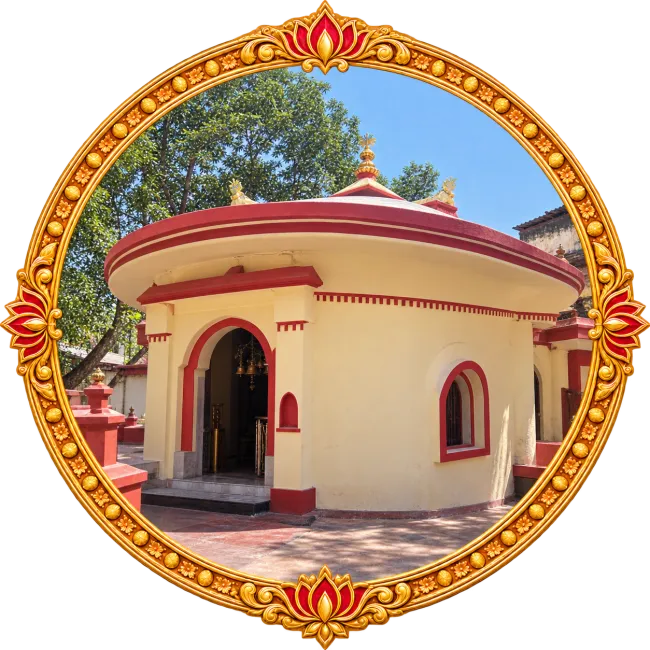
Chinnamasta Temple, Guwahati, Assam
Visit Chinnamasta Temple on Nilachal Hill in Guwahati, a sacred shrine dedicated to one of the ten Mahavidyas of the Shakta tradition. Located within the wider Kamakhya pilgrimage area, the temple honours Goddess Chinnamasta, whose powerful symbolism is associated with self-sacrifice, spiritual awakening and mastery over desire.
The shrine offers devotees an opportunity to explore the diverse forms of goddess worship practised on Nilachal Hill. Its stepped approach and connection with the surrounding temples make it a distinctive part of a Kamakhya pilgrimage.
About Chinnamasta Temple
Chinnamasta Temple, also written as Chhinnamasta Temple, is situated on Nilachal Hill in Guwahati, Assam.
The temple adjoins the Kameshwar Temple area and is reached through a steep, narrow flight of steps. This approach is an important consideration for visitors travelling with elderly family members or anyone who has difficulty climbing stairs.
The principal deity is Maa Chinnamasta, a fierce manifestation of the Divine Mother. Her shrine belongs to the group of Mahavidya temples associated with Kamakhya.
A visit can be included with darshan at Kamakhya and other accessible shrines on the hill. Allow the pace of the pilgrimage to follow the needs of your group, particularly on crowded days.
History and Religious Heritage
Chinnamasta Temple forms part of Nilachal Hill’s Shakta heritage. This tradition places the Divine Mother at the centre of worship and recognises her presence through several distinct forms.
The religious landscape around Kamakhya includes shrines dedicated to Kali, Tara, Bhuvaneshwari, Bhairavi, Chinnamasta, Dhumavati and Bagalamukhi, alongside other goddess and Shiva shrines.
Within this setting, Chinnamasta represents a particularly intense expression of spiritual transformation. Her worship contributes to Nilachal’s importance as a centre of Tantric Shaktism.
The temple’s continuing significance lies in its place within this living tradition. Devotees approach the shrine as a sacred destination in its own right while also recognising its relationship with the wider Kamakhya pilgrimage.
Who Is Goddess Chinnamasta?
Chinnamasta is traditionally counted as the sixth Mahavidya. Her name refers to her self-decapitated form, one of the most striking images in Hindu religious art.
In traditional iconography, the goddess holds her severed head, while streams of blood nourish her own head and two attendants. She is also depicted above the figures of Kama and Rati.
These features carry symbolic meaning within the Shakta tradition. They bring together ideas of nourishment, sacrifice, desire, life and death.
Her image is often interpreted as expressing the surrender of ego and the transformation of vital energy into spiritual awareness. The goddess’s fierce appearance is therefore understood within a religious and philosophical framework.
Religious Significance of Chinnamasta Temple
Devotees worship Maa Chinnamasta with prayers for courage, discipline and the strength to overcome inner obstacles.
Her symbolism encourages reflection on the difference between temporary desires and deeper spiritual purpose. The act of surrender represented in her image is associated with freedom from pride and attachment.
A visit may include prayers for:
Greater self-control.
Courage during difficult circumstances.
Clarity of thought.
Freedom from destructive habits.
Family well-being.
Progress in spiritual practice.
These prayers express personal faith. A respectful visit does not require specialised ritual knowledge; ordinary devotees can approach the goddess through darshan and sincere prayer.
Connection with the Dashamahavidyas
The Dashamahavidyas are ten great wisdom forms of the Divine Mother:
Kali.
Tara.
Tripura Sundari.
Bhuvaneshwari.
Bhairavi.
Chinnamasta.
Dhumavati.
Bagalamukhi.
Matangi.
Kamala.
Each form presents a different aspect of divine power and spiritual understanding. Chinnamasta’s place within this group is distinguished by her imagery of sacrifice and transformation.
The Mahavidya shrines around Kamakhya allow devotees to experience this tradition through a pilgrimage between individual places of worship.
Temple Setting and Approach
The stepped approach is one of the most important practical features of Chinnamasta Temple.
Visitors should move carefully on the narrow staircase and avoid stopping where others need to pass. During busy periods, patient movement helps keep the approach comfortable for everyone.
The focus of the visit is the sanctum and worship of the goddess. After receiving darshan, move away from the entrance before spending additional time in personal prayer.
For visitors interested in the surrounding religious setting, the proximity of Kameshwar and other Nilachal shrines adds context to the experience.
Chinnamasta Temple Timings
A verified, shrine-specific opening, closing and Aarti schedule is not available. The main Kamakhya Temple’s timings should not be treated as the timetable for Chinnamasta Temple.
Worship and Darshan
Approach the shrine with offerings ready and keep the entrance clear. Follow the arrangements in place for receiving darshan and presenting puja materials.
During any ceremony, remain in the designated area and avoid interrupting worship for photography or conversation.
A simple visit can include a quiet prayer to Maa Chinnamasta and a few moments of reflection on courage, humility and self-discipline.
Specialised Tantric practices belong to established religious traditions and should not be treated as a routine requirement for visitors.
Offerings at Chinnamasta Temple
For a simple devotional visit, keep offerings modest and easy to carry. Flowers, fruit and sweets may be presented where accepted.
Use the designated offering area and avoid placing materials on steps, walls or pathways. Carry packaging back to a waste bin.
When walking between several shrines, a small bag is easier to manage than a large collection of puja items. Keep your hands free where possible on the staircase.
Visitors who do not bring offerings can still receive darshan and offer personal prayers.
Festivals and the Nilachal Religious Calendar
Durga Puja
Durga Puja is a major occasion in the Kamakhya religious calendar. The wider Nilachal pilgrimage area takes on a festive atmosphere, drawing devotees of the Divine Mother.
For visitors, this period offers an opportunity to experience collective devotion while allowing extra time for crowds.
Ambubachi Mela
Ambubachi is the principal annual gathering associated with Kamakhya. Observed during the monsoon, it honours the goddess’s relationship with fertility and the earth.
The festival affects movement and access throughout the surrounding pilgrimage area. Its arrangements differ substantially from an ordinary temple visit.
These are major occasions of the wider Kamakhya sacred complex; individual shrines maintain their own ritual arrangements.
Planning Your Visit
Include Chinnamasta Temple in a flexible Nilachal itinerary. The staircase makes it useful to consider walking ability before deciding how many shrines to visit.
A comfortable plan should allow for:
Darshan at your principal destination.
Walking between individual temples.
Breaks for water and rest.
Slow movement on steps.
Queues and pauses during worship.
Carry only essential belongings. On wet days, give particular attention to footing and avoid rushing the descent.
If travelling with older relatives, keep the group together and allow them to set the pace.
How to Reach Chinnamasta Temple
By Air
Lokpriya Gopinath Bordoloi International Airport serves Guwahati. Continue by taxi towards the Kamakhya Temple area on Nilachal Hill.
By Train
Kamakhya Railway Station is convenient for reaching the Nilachal area. Guwahati Railway Station is another major arrival point.
From either station, continue by road towards Kamakhya.
By Road
Guwahati has road connections with other parts of Assam and neighbouring states. Local transport provides access to the Kamakhya approach area.
Ask for Chinnamasta Temple near Kameshwar Temple on Nilachal Hill. The final approach involves walking and climbing steps.
Nearby Temples to Visit
Kamakhya Temple
The principal shrine of Nilachal Hill and the central destination for most pilgrims visiting the area.
Kameshwar Temple
A Shiva shrine associated with the immediate religious setting of Chinnamasta Temple.
Kali and Tara Temples
These shrines honour two important Mahavidyas and can be considered when planning a wider goddess pilgrimage.
Other Mahavidya Shrines
Bhuvaneshwari, Bhairavi, Bagalamukhi and Dhumavati are among the other forms worshipped around Nilachal Hill. Their locations and approaches vary, so allow time for walking between them.
Important Visitor Guidelines
Wear modest clothing suitable for worship.
Remove footwear at the designated point.
Walk carefully on the narrow staircase.
Avoid blocking steps and shrine entrances.
Keep offerings small and manageable.
Respect restrictions on photography.
Keep mobile phones silent during ceremonies.
Do not touch sacred objects without permission.
Carry drinking water.
Give elderly visitors sufficient time and assistance.
Keep the temple surroundings clean.
Follow local queue and festival arrangements.
Conclusion
Chinnamasta Temple is a distinctive part of the Mahavidya tradition on Nilachal Hill. Its dedication to a goddess associated with sacrifice, discipline and spiritual transformation gives the shrine a particular devotional significance.
A considerate visit offers time for prayer and a deeper appreciation of the varied forms of Shakti worship within the Kamakhya pilgrimage area.