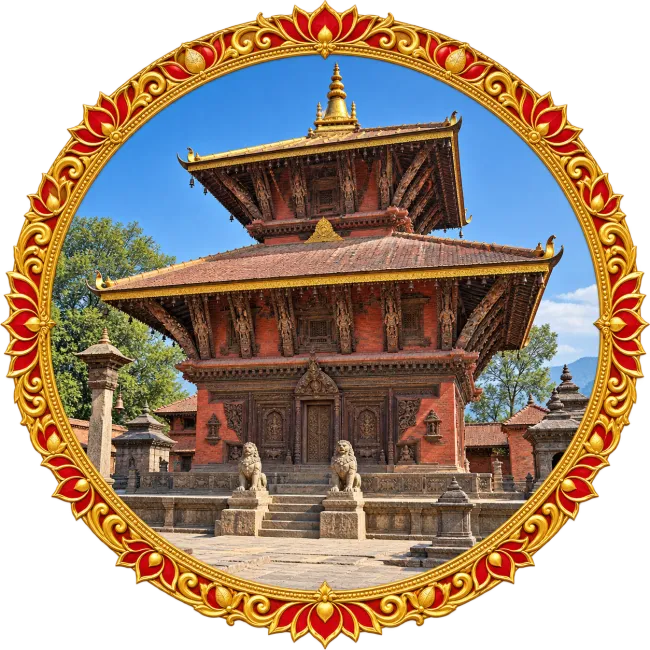
Changu Narayan Temple, Bhaktapur, Nepal
Visit Changu Narayan Temple in Bhaktapur, one of Nepal’s oldest and most historically important Hindu temples dedicated to Lord Vishnu. Located on a peaceful hilltop surrounded by traditional villages and green landscapes, the temple is renowned for its ancient stone inscriptions, beautiful Newari architecture and sculptures representing different forms of Lord Vishnu.
Changu Narayan Temple is an important religious destination as well as a valuable centre of Nepalese history, art and culture. Devotees visit the temple to seek blessings for family prosperity, protection, good health and spiritual progress. Its peaceful setting and proximity to Kathmandu, Bhaktapur and Nagarkot make it a popular pilgrimage and heritage destination.
About Changu Narayan Temple
Changu Narayan Temple is located on Dolagiri Hill in Changunarayan Municipality of Bhaktapur district, Nepal. The temple is dedicated to Lord Vishnu, who is worshipped here as Changu Narayan.
The temple is considered one of the oldest surviving Hindu temples in the Kathmandu Valley. It contains ancient sculptures, inscriptions and religious artwork dating back to the Licchavi period.
Changu Narayan is one of the seven monument zones included within the Kathmandu Valley UNESCO World Heritage Site. Its historical importance comes from the presence of Nepal’s oldest known stone inscription, installed during the reign of King Manadeva in 464 CE.
The main temple is surrounded by smaller shrines dedicated to Lord Shiva, Goddess Lakshmi, Goddess Chhinnamasta and Lord Ganesha. Sculptures depicting Lord Vishnu’s various incarnations are placed throughout the courtyard.
History of Changu Narayan Temple
According to historical tradition, an early temple was constructed at this location during the fourth century. King Hari Datta Varma is traditionally credited with establishing the original shrine dedicated to Lord Vishnu.
The strongest historical evidence connected with the temple is the stone pillar inscription of King Manadeva. Dated to 464 CE, this inscription records the military achievements and royal activities of the Licchavi ruler. It is considered the oldest known Sanskrit inscription discovered in Nepal.
Although the temple’s religious history extends back to the Licchavi period, the present structure has been repaired and reconstructed several times. The original buildings suffered damage because of fires, earthquakes and natural deterioration.
A major fire damaged the temple during the early 18th century. It was subsequently reconstructed in the traditional Nepalese pagoda style. Local rulers, religious communities and residents of the surrounding villages continued to preserve the temple and its daily rituals.
The temple was also affected by the Nepal earthquake of 2015. Several structures and sculptures in the surrounding complex required conservation and repair, while the main shrine continued to retain its historic architectural character.
Mythology of Changu Narayan Temple
A popular legend explains how Lord Vishnu came to be worshipped at Changu Narayan.
According to the story, Lord Vishnu once fought and killed a powerful demon. However, the demon was connected with a Brahmin family, and Vishnu became responsible for the sin of Brahmahatya—the killing of a Brahmin.
To free himself from the curse, Lord Vishnu wandered through different regions while riding on Garuda. He eventually reached a forest filled with Champak trees and remained hidden there.
A cow belonging to a local herdsman regularly visited the forest. Every day, she stood near a particular tree, and her milk mysteriously disappeared. The owner became suspicious and decided to observe her.
When he saw a divine figure drinking the cow’s milk, he believed that someone was stealing it. He struck the tree with an axe. Blood began flowing from the tree, revealing the presence of Lord Vishnu.
The cutting of the tree released Lord Vishnu from the curse. The herdsman realized the divine nature of the place, and a shrine was established there.
The area became associated with Lord Vishnu as Changu Narayan. Some traditions connect the name with the ancient Champak forest in which the deity appeared.
Religious Significance of Changu Narayan Temple
Changu Narayan Temple is an important Vaishnava pilgrimage site. Lord Vishnu is worshipped here as the protector and preserver of the universe.
Devotees believe that worshipping Changu Narayan provides protection from difficulties, brings peace to the family and supports spiritual growth. Special prayers are also offered for health, prosperity and the fulfilment of sincere wishes.
The temple is significant because several forms of Lord Vishnu can be seen within the complex. These include Narasimha, Trivikrama, Vaikuntha Vishnu, Vishwarupa and Garuda Narayan.
Devotees visit the temple for:
Protection from negative influences
Peace and prosperity within the family
Improvement in health
Success in education and employment
Blessings for marriage and children
Removal of obstacles
Spiritual growth
Devotion to Lord Vishnu
Relief from fear and uncertainty
Blessings before beginning a new journey
Main Deity of Changu Narayan Temple
The main deity is Lord Vishnu in his Changu Narayan form. The deity is worshipped as the supreme protector of the universe.
The principal image is kept inside the sanctum, where appointed priests perform daily worship. Lord Vishnu is represented with his traditional divine attributes, including the conch, discus, mace and lotus.
The temple also contains several important images related to Vishnu:
Garuda Narayan
Vaikuntha Vishnu
Narasimha
Trivikrama Vishnu
Vishwarupa
Lakshmi Narayan
Vishnu riding Garuda
These sculptures demonstrate the development of religious art in Nepal from the Licchavi period onwards.
Architecture of Changu Narayan Temple
Changu Narayan Temple is built in the traditional two-tiered Nepalese pagoda style. The main shrine stands on a raised stone platform within a spacious courtyard.
The temple’s wooden supports, doors and metal decorations contain detailed representations of Hindu deities, mythical creatures and floral designs.
Important architectural features include:
Two-tiered pagoda-style roof
Gilded entrance doorway
Intricately carved wooden struts
Stone lions guarding the entrance
Metal bells within the courtyard
Images of the ten incarnations of Lord Vishnu
Ancient stone sculptures
A historic inscription pillar
Traditional Newari artwork
Stone-paved courtyard
Shrines dedicated to associated deities
The main entrance is guarded by stone sculptures of lions, elephants and other protective figures. Images of Lord Vishnu’s Dashavatara are carved into the temple’s wooden and metal elements.
King Manadeva’s Stone Inscription
One of the most valuable historical objects at Changu Narayan Temple is the stone pillar inscription installed during the reign of King Manadeva in 464 CE.
The inscription is written in Sanskrit and records information about King Manadeva’s rule, military campaigns and royal family. It provides important evidence about Nepal’s political and cultural history during the Licchavi period.
Historians regard it as the oldest dated inscription discovered in Nepal. The pillar demonstrates that Changu Narayan was already an important religious centre during the fifth century.
Visitors should avoid touching or damaging the inscription and other ancient sculptures within the temple complex.
Important Sculptures and Shrines
Garuda Statue
A kneeling image of Garuda is positioned near the stone inscription. Garuda is Lord Vishnu’s divine vehicle and is depicted with human and bird-like features.
Vishnu Vikranta
The Vishnu Vikranta sculpture represents Lord Vishnu’s Trivikrama incarnation. It depicts the moment when Vishnu measured the universe in three steps during his Vamana Avatar.
Narasimha Sculpture
The image of Lord Narasimha depicts Vishnu in his half-human and half-lion form, defeating the demon king Hiranyakashipu to protect Prahlada.
Vaikuntha Vishnu
The Vaikuntha Vishnu sculpture presents the deity with multiple faces, representing his universal and all-seeing nature.
Vishwarupa
The Vishwarupa image represents Lord Vishnu’s cosmic form, showing the entire universe existing within the Supreme Being.
Kileshwar Mahadev Temple
This shrine is dedicated to Lord Shiva and demonstrates the presence of both Vaishnava and Shaiva traditions within the complex.
Chhinnamasta Temple
The temple contains a shrine dedicated to Goddess Chhinnamasta, a powerful Tantric manifestation of Adi Shakti.
Changu Narayan Temple Timings
The temple’s schedule may change during festivals, special ceremonies and local religious events. Visitors should reach the temple before 6:00 PM if they wish to attend the evening worship.
Morning Puja and Aarti
Morning worship begins when the temple opens at 6:00 AM. The sanctum is cleaned, oil lamps are lit and the deity is decorated with flowers and traditional ornaments.
Morning Aarti is performed at 6:30 AM. The priests offer lamps, incense, flowers and sacred water to Lord Changu Narayan while Vishnu mantras are recited.
The morning period between 7:00 AM and 10:00 AM is ideal for peaceful darshan. The courtyard is less crowded, and visitors have sufficient time to observe the ancient sculptures.
Evening Puja and Aarti
Evening Puja begins at 5:30 PM, followed by Aarti at 6:00 PM. Oil lamps are offered before Lord Vishnu while devotees participate in prayers and devotional chanting.
The temple surroundings become calm and spiritually uplifting during evening worship. Visitors should complete darshan and exploration of the outer complex before the temple closes at 7:00 PM.
Major Festivals Celebrated
Haribodhini Ekadashi
Haribodhini Ekadashi is one of the most important Vaishnava festivals celebrated at the temple. Devotees worship Lord Vishnu and observe fasting.
Krishna Janmashtami
Lord Krishna’s birth is celebrated with devotional singing, fasting and special worship.
Ram Navami
Special prayers are offered to Lord Rama, an incarnation of Lord Vishnu.
Changu Narayan Jatra
The local Jatra includes ceremonial worship, traditional music and religious processions. Residents from surrounding Newari settlements participate in the celebration.
Dashain
During Dashain, special worship is performed at the shrines dedicated to Goddess Chhinnamasta and other divine forms.
Tihar
Oil lamps illuminate the temple during Tihar. Goddess Lakshmi and Lord Vishnu are worshipped for prosperity.
Ekadashi
Every Ekadashi is considered auspicious for worshipping Lord Vishnu. Devotees observe fasting and offer Tulsi leaves.
Offerings and Prasad
Common offerings made at Changu Narayan Temple include:
Tulsi leaves
Yellow flowers
Marigold garlands
Fruits and sweets
Incense sticks
Oil or ghee lamps
Sandalwood paste
Yellow cloth
Rice and grains
Sacred threads
Monetary donations
Devotees may receive flowers, Tulsi leaves, fruits or sweets as prasad after worship.
Offerings should be purchased from authorized shops near the temple and presented according to the instructions of the priests.
Entry Fee and Visit Duration
Regular worship inside the temple is free for Hindu devotees. A heritage-area entry fee may apply to international visitors and certain categories of tourists.
Special pujas, guided heritage tours and ceremonial offerings may have separate charges.
A regular visit requires one to two hours. Visitors interested in studying the inscriptions, sculptures, architecture and nearby village should keep two to three hours.
Visitor Guidelines
Wear modest and respectful clothing.
Remove footwear before entering the main temple.
Maintain silence near the sanctum.
Do not touch ancient sculptures or inscriptions.
Ask permission before taking photographs inside the temple.
Keep mobile phones on silent mode.
Do not carry alcohol, tobacco or non-vegetarian food.
Avoid climbing on heritage structures.
Use authorized counters for donations.
Keep the courtyard and village pathways clean.
Follow the instructions of priests and heritage officials.
Respect local Newari traditions and ceremonies.
Take care while walking on stone paths during rain.
Best Time to Visit
October to March is the best period for visiting Changu Narayan Temple because the weather remains pleasant and mountain views are clearer.
Spring, from March to May, is also suitable because the surrounding hills and walking trails become green and colourful.
For peaceful darshan, visit between 7:00 AM and 10:00 AM. Evening visitors should reach the temple between 4:00 PM and 5:30 PM to explore the complex before attending Aarti.
How to Reach Changu Narayan Temple
By Air
Tribhuvan International Airport in Kathmandu is the nearest airport. The temple can be reached from the airport by taxi or private vehicle.
From Kathmandu
Changu Narayan Temple is approximately 20 kilometres from central Kathmandu. Visitors can hire a taxi or travel by local bus towards Bhaktapur and continue to Changu Narayan.
From Bhaktapur
The temple is approximately 7 kilometres from Bhaktapur Durbar Square. Local buses, taxis and private vehicles are available.
By Bus
Public buses for Changu Narayan operate from Bhaktapur. Travellers coming from Kathmandu can first reach Bhaktapur and then change to a local bus.
By Hiking
A popular walking route connects Changu Narayan with Sankhu, Telkot and Nagarkot. The trails pass through traditional villages, agricultural fields and forested hills.
Indian citizens travelling to Nepal should carry a valid passport or voter identity card and verify transportation requirements before departure.
Nearby Places to Visit
Bhaktapur Durbar Square
Nyatapola Temple
Dattatreya Temple
Taumadhi Square
Pottery Square
Siddha Pokhari
Nagarkot
Telkot
Kailashnath Mahadev Statue
Sankhu
Traditional Changu Village
Conclusion
Changu Narayan Temple is a sacred Vaishnava shrine and an invaluable monument of Nepalese history. Its origins in the Licchavi period, King Manadeva’s inscription, ancient stone sculptures and traditional pagoda architecture make it one of Nepal’s most important heritage temples.
The temple offers visitors a meaningful combination of devotion, history, art and natural beauty. Worshipping Lord Changu Narayan, observing the ancient sculptures and experiencing the peaceful hilltop atmosphere make a visit to this temple spiritually uplifting and culturally enriching.