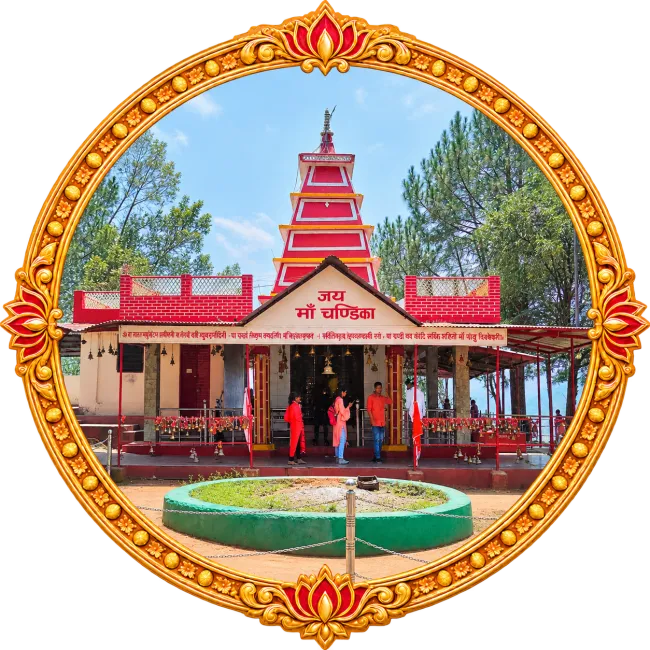
Chandika Devi Temple, Bageshwar
Visit Chandika Devi Temple in Bageshwar, a sacred shrine dedicated to Maa Chandika, a powerful manifestation of the Divine Mother. Situated on the Bhileshwar hillside, the temple holds a special place in the religious life of this Kumaoni town.
Maa Chandika is revered as Bageshwar’s Nagar Devi, the protective goddess of the town. Devotees visit throughout the year to seek her blessings, attend Aarti and offer prayers for family well-being. During Navratri, the temple becomes an important gathering place for worship, bhajans and collective devotion.
About Chandika Devi Temple
Chandika Devi Temple is located close to Bageshwar town in Uttarakhand. The goddess is affectionately worshipped as Chandika Mai and is associated with the protective power of Durga and Kali.
The temple’s hillside position gives it a distinct presence within Bageshwar’s sacred landscape. A visit can be combined with darshan at Bagnath Temple and time beside the confluence of the Saryu and Gomti rivers.
The shrine’s establishment is connected with Pandey families who served as hereditary priests of the Chand rulers. They brought the worship of Maa Chandika from Champawat to Bageshwar. The present temple developed through community-led construction during the 1990s.
History of Chandika Devi Temple
Chandika Devi Temple preserves a religious tradition linking Bageshwar with Champawat, an important centre of Chand-era Kumaon.
The Pandey priestly families established the goddess’s worship in Bageshwar, where she became honoured as the town’s protective deity.
The modern development of the temple followed several stages:
Discussions about renovation began in 1985.
The Chandika Temple Committee was formed in 1988.
Construction of the larger temple took place during the 1990s.
Subsequent improvements included expansion of the premises, a rest house, boundary walls and road access.
These developments reflect the involvement of Bageshwar’s residents in maintaining a shared place of worship. The temple’s continuing importance rests on both its inherited traditions and the community’s support.
Maa Chandika as the Nagar Devi of Bageshwar
The title Nagar Devi expresses the goddess’s relationship with the town and its people.
For devotees, Maa Chandika is a guardian whose blessings are sought for the welfare of families and the wider community. Worship is therefore both personal and collective.
Residents visit to offer gratitude, seek strength during difficulties and mark important moments in their lives. During festivals, this relationship becomes especially visible as families gather for prayers and devotional singing.
The temple forms part of Bageshwar’s living religious heritage, where reverence for Shiva and the Divine Mother remains closely connected.
Religious Significance of Goddess Chandika
Chandika represents the force of the Divine Mother that confronts injustice and restores harmony. Her worship emphasises courage, protection and the strength to overcome destructive tendencies.
In the wider traditions of Devi worship, the goddess combines firmness with compassion. Devotees approach her as a mother who offers reassurance while encouraging right conduct.
Visitors pray for:
Peace and harmony within the family
Courage during difficult circumstances
The well-being of children and elders
Clarity in important decisions
Patience and inner strength
Spiritual growth
Gratitude for blessings received
These prayers express faith and devotion. A quiet visit, a simple offering or participation in Aarti can be a meaningful way to worship Maa Chandika.
Main Deity and Other Shrines
The principal deity is Maa Chandika, also known locally as Chandika Mai.
Other shrines within the complex include those dedicated to Maa Chamunda, Maa Kalika, Santoshi Mata and Lord Hanuman, together with local guardian deities.
This arrangement allows devotees to visit several worship spaces within the same premises. Begin with darshan of Maa Chandika and move through the complex without interrupting ceremonies or blocking entrances.
Architecture and Temple Surroundings
Chandika Devi Temple is a hillside complex centred on the main goddess shrine.
The layout includes additional shrines, circulation space and areas used by devotees during gatherings. The setting provides a different experience from the closely built market and riverfront areas of Bageshwar.
The temple is best explored at an unhurried pace. Allow time to receive darshan, visit the adjoining shrines and sit quietly where space permits.
During Navratri, the movement of worshippers becomes an important consideration. Keep walkways clear and avoid stopping for photographs near the sanctum entrance.
Chandika Devi Temple Timings
The regular daily schedule is:
The temple opens throughout the week. Special festival ceremonies may affect the regular routine.
Best time for a morning visit: 7:00 AM–9:00 AM, allowing time for darshan before continuing to other places in Bageshwar.
For evening Aarti: Arrive before 8:30 PM so you can settle into the worship area without disturbing the ceremony.
Morning Puja and Aarti
Mangala Aarti takes place at 5:30 AM.
The early ceremony begins the day’s devotional observances. Devotees gather to offer prayers to Maa Chandika and seek her blessings.
Those attending should keep offerings ready before entering the worship area. Maintain silence during the ceremony and allow other visitors sufficient space.
An early visit is particularly suited to devotees staying in Bageshwar who wish to begin their day with worship.
Evening Puja and Aarti
Sandhya Aarti takes place at 8:30 PM.
Evening worship brings devotees together for prayer near the close of the temple’s daily schedule. The ceremony provides an opportunity to express gratitude and reflect on the day.
The temple closes at 9:00 PM, so visitors attending Aarti should have their return journey arranged beforehand.
Offerings at Chandika Devi Temple
Devotees may bring simple offerings associated with worship of the Divine Mother, including:
Fresh flowers
Fruit
Sweets
Coconut
A chunari
Incense or lamps for designated worship areas
Present offerings according to the arrangements at the shrine. Keep packaging separate and avoid leaving food or flowers along walkways.
Devotion can also take the form of mantra recitation, quiet prayer or voluntary service. Elaborate offerings are not necessary for a respectful visit.
A familiar Durga mantra for personal prayer is:
Om Dum Durgayei Namah
Festivals Celebrated at Chandika Devi Temple
Chaitra Navratri
Chaitra Navratri is one of the principal occasions for worship at Chandika Devi Temple.
Devotees visit during the nine days dedicated to the Divine Mother, offering prayers for courage, protection and family welfare.
Sharad Navratri
Sharad Navratri brings large gatherings of devotees to the shrine. Bhajans, kirtans and collective worship strengthen the temple’s role as a community religious centre.
Both Navratri periods are especially important in Bageshwar’s devotional calendar.
Ashtami and Navami
Ashtami and Navami hold particular significance within Navratri. Families observe these days through prayer, fasting and other practices according to their traditions.
Visitors should allow more time for darshan during the closing days of the festival, when attendance can increase.
Dussehra
Dussehra continues the theme of the victory of righteousness over destructive forces. It provides another occasion to remember the protective power of the goddess.
Best Time to Visit
March to June and October to November are practical periods for combining temple darshan with travel around Bageshwar.
Devotees interested in the festival atmosphere can visit during Chaitra or Sharad Navratri. Those who prefer a quieter experience may choose a regular weekday.
Morning visits are convenient for combining Chandika Devi Temple with Bagnath Temple and the riverfront. Evening visits are suitable for devotees staying nearby who wish to attend Sandhya Aarti.
Carry a warm layer during colder months and walk carefully on wet surfaces during rain.
How to Reach Chandika Devi Temple
By Air
Pantnagar Airport is a practical air gateway for the onward road journey to Bageshwar.
Travel continues through the Kumaon region towards Almora and Bageshwar.
By Train
Kathgodam Railway Station is the main railway gateway for reaching Bageshwar by road.
From Kathgodam, arrange onward transport through Haldwani, Bhowali and Almora.
By Road
Bageshwar is connected by road with Almora, Kausani, Garud and other towns in Kumaon.
After reaching Bageshwar, continue towards Chandika Devi Temple on the Bhileshwar hillside.
Local Transport
The temple can be approached by road, making a local taxi a convenient option. Visitors staying nearby can plan a walk according to their accommodation’s location and comfort with the incline.
Nearby Places to Visit
Bagnath Temple
Bagnath Temple is Bageshwar’s principal Shiva shrine. It stands near the confluence of the Saryu and Gomti rivers and is an important stop on a local pilgrimage itinerary.
Saryu–Gomti Sangam
The river confluence is central to Bageshwar’s religious identity. Visitors can spend time beside the ghats while respecting ongoing rituals and keeping clear of fast-flowing water.
Gauri Udiyar
Gauri Udiyar is a cave shrine associated with Lord Shiva, approximately 8 kilometres from Bageshwar. It requires a separate excursion.
Sriharu Temple
Situated approximately 5 kilometres from Bageshwar, Sriharu Temple is another religious destination in the surrounding area.
Baijnath Temple Complex
The historic temples at Baijnath in the Garud Valley can be included in a longer outing from Bageshwar.
Planning Your Temple Visit
A relaxed visit can begin with morning darshan at Chandika Devi Temple, followed by Bagnath Temple and the riverfront.
Keep longer road excursions, such as Baijnath, separate from a late-evening Aarti visit. This avoids rushing between destinations and gives sufficient time for the hill roads.
During Navratri, carry only essential belongings and keep offerings easy to manage. Families travelling with children or elderly visitors should allow time for rest and slower movement through crowded areas.
Important Visitor Guidelines
Wear clean, modest clothing.
Remove footwear at the designated point.
Keep mobile phones silent during worship.
Respect restrictions on photography.
Avoid blocking shrine entrances.
Follow the darshan queue during busy periods.
Present offerings only in permitted areas.
Supervise children around steps and crowded walkways.
Carry warm clothing for an evening visit in colder weather.
Dispose of wrappers and other waste responsibly.
Keep the temple premises and nearby roads clean.
Arrange return transport before attending late-evening Aarti.
Conclusion
Chandika Devi Temple holds an important place in Bageshwar as the shrine of its protective Nagar Devi.
Its connection with the Pandey priestly families, community-led development and continuing Navratri traditions give it a distinctive local identity. A visit offers an opportunity to worship Maa Chandika and experience the devotion that connects the temple with the people of Bageshwar.