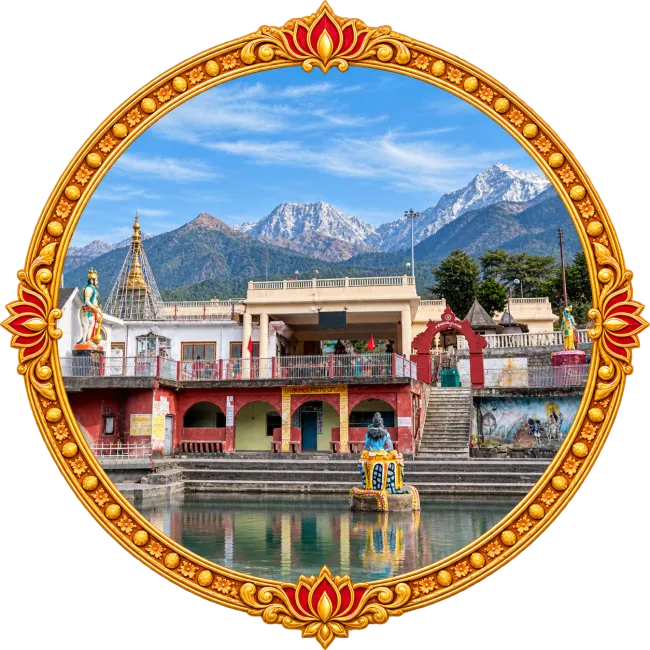
Chamunda Devi Temple, Himachal Pradesh
Chamunda Devi Temple is one of the most revered Shakti temples in Himachal Pradesh. Located at Chamunda Nandikeshwar Dham in the Kangra district, the temple is dedicated to Goddess Chamunda, a fierce and protective manifestation of Goddess Durga. The shrine stands on the banks of the Baner River, with the Dhauladhar mountain range forming a beautiful background.
The temple is also associated with Lord Shiva, who is worshipped here as Nandikeshwar Mahadev. This combination of Shakti and Shiva makes Chamunda Devi Temple an important pilgrimage destination for devotees seeking protection, courage, spiritual strength and relief from difficulties.
About Chamunda Devi Temple
Chamunda Devi Temple is situated approximately 15 kilometres from Dharamshala and 10 kilometres from Palampur. It is commonly known as Chamunda Nandikeshwar Dham because Goddess Chamunda and Lord Shiva are worshipped within the same sacred complex.
Goddess Chamunda is regarded as one of the powerful forms of Durga. Her name is derived from the demons Chanda and Munda, whom she defeated in battle. Although her form is fierce, devotees worship her as a compassionate mother who protects those who approach her with sincere faith.
The principal deity is housed inside the sanctum and decorated with flowers, jewellery, sindoor and colourful clothes. The temple complex also contains a sacred cave-like shrine dedicated to Nandikeshwar Mahadev.
The combination of the Baner River, forested hills and snow-covered Dhauladhar peaks gives the temple a peaceful natural setting.
When Was Chamunda Devi Temple Built and Who Built It?
The present Chamunda Devi Temple is believed to have been established approximately 400 years ago. According to temple tradition, the original place of worship was located in a difficult mountainous area where ordinary devotees could not easily reach.
A local ruler and a priest prayed to Goddess Chamunda for permission to move the deity to a more accessible location. The Goddess appeared to the priest in a dream and identified the place where her sacred image could be found.
Following the divine instruction, the image was discovered and installed at the present location. A temple was subsequently constructed, and regular worship began.
The shrine has been repaired and expanded several times. Later additions include pilgrim halls, pathways, bathing areas, administrative buildings and other facilities. The temple’s present appearance is therefore the result of gradual renovation rather than construction during a single period.
Mythology of Goddess Chamunda
The story of Goddess Chamunda appears in the Devi Mahatmya, an important section of the Markandeya Purana. the demons Shumbha and Nishumbha had become extremely powerful and had defeated the gods.
During the battle between the Goddess and the demon armies, two commanders named Chanda and Munda attacked the Divine Mother. Goddess Ambika became angry, and from her forehead emerged a terrifying form of Shakti known as Kali.
The Goddess defeated Chanda and Munda and presented their heads to Ambika. Pleased with her victory, Ambika declared that she would thereafter be known as Chamunda—a name created by combining Chanda and Munda.
Chamunda Devi consequently represents the power that destroys arrogance, cruelty, fear and negative forces. Devotees believe that she protects the righteous and removes spiritual obstacles.
Legend of Nandikeshwar Mahadev
Chamunda Devi Temple is closely associated with Lord Shiva. According to local tradition, Lord Shiva resides near the Goddess in the form of Nandikeshwar Mahadev.
A cave-like shrine dedicated to Nandikeshwar is located within the temple complex. Devotees usually worship Goddess Chamunda and then visit the Shiva shrine. This practice symbolises the inseparable relationship between Shiva and Shakti.
The presence of both deities gives the sacred site its complete name: Shri Chamunda Nandikeshwar Dham.
Religious Significance
Chamunda Devi is worshipped as a guardian Goddess who grants strength and protection. Her fierce appearance represents the destruction of ego, injustice and negative tendencies.
Devotees visit the shrine to pray for:
- Protection from danger and negative influences
- Courage during difficult situations
- Recovery from illness
- Family peace and prosperity
- Success in education and employment
- Marriage and children
- Relief from fear and anxiety
- Spiritual strength
- Fulfilment of personal wishes
The temple is especially important to followers of Shakti and devotees who worship the Goddess during Navratri. Many pilgrims also include Chamunda Devi Temple in a circuit covering the major Devi temples of Himachal Pradesh.
Architecture of Chamunda Devi Temple
The temple reflects the architectural character of a traditional North Indian hill shrine. Its colourful entrance, sloping roofs, decorated sanctum and spacious courtyard blend with the surrounding landscape.
The image of Goddess Chamunda is installed in the main sanctum. The walls contain religious paintings and scenes connected with Hindu deities and sacred legends.
The Nandikeshwar Mahadev shrine is situated inside a cave-like space near the principal temple. A Shiva Lingam is worshipped there with water, milk, Bilva leaves and flowers.
The temple complex also includes:
- A spacious prayer hall
- A sacred bathing area
- Yajna and ritual spaces
- Pilgrim resting areas
- Administrative counters
- Prasad shops
- Shoe-storage facilities
- Drinking-water points
- Views of the Baner River and Dhauladhar mountains
Chamunda Devi Temple Timings
The temple follows separate summer and winter schedules. Timings can be specially extended or regulated during Navratri, religious fairs and days of heavy pilgrimage.
Summer Timings
Winter Timings
Visitors should check the day’s displayed schedule at the temple entrance because festival rituals and administrative arrangements can affect queue movement.
Morning Puja and Aarti
The day begins with the ceremonial cleaning of the sanctum. Priests perform the morning worship and decorate Goddess Chamunda with fresh flowers, clothes, jewellery and sindoor.
The morning rituals include:
- Mangal Puja
- Ceremonial bathing of the deity
- Shringar
- Mantra chanting
- Flower offering
- Incense and lamp offering
- Naivedya
- Morning Aarti
The main morning Aarti is performed at 8:00 AM. Devotees gather in the prayer area and participate through devotional chanting.
After receiving darshan of Goddess Chamunda, devotees can visit the Nandikeshwar Mahadev shrine and offer water, flowers and Bilva leaves to the Shiva Lingam.
Bhog Puja
Bhog is offered to the Goddess before noon. The offering generally includes Satvik food, sweets, fruits and dry fruits.
Darshan may be briefly regulated while the offering is presented. After completion of the ritual, a portion of the consecrated offering is distributed as prasad.
Evening Puja and Aarti
The evening ceremony begins with the lighting of lamps and incense. Priests perform Aarti while devotees sing hymns and chant the name of Goddess Chamunda.
The evening Aarti is held at 8:00 PM during summer and 6:00 PM during winter. The illuminated temple, flowing river and surrounding mountains create a peaceful devotional atmosphere at this time.
Shayan Puja is performed before closing. It marks the conclusion of the day’s religious services.
Major Festivals
Chaitra Navratri
Chaitra Navratri is celebrated during March or April. The temple is decorated with flowers and lights, and special prayers are offered throughout the nine days.
Sharadiya Navratri
Sharadiya Navratri is one of the most important celebrations at the temple. Special Puja, Havan, devotional recitation, Bhajan and Kanya Pujan are organised.
Durga Ashtami
Durga Ashtami is observed with elaborate worship of the Goddess. Devotees offer red chunri, flowers, coconut and Shringar items.
Ram Navami
Ram Navami is celebrated at the end of Chaitra Navratri. Special prayers and community meals may be organised.
Shivratri
Because the temple complex contains the Nandikeshwar Mahadev shrine, Mahashivratri is also celebrated with great devotion. Devotees offer water, milk, Bilva leaves and flowers to Lord Shiva.
Diwali
The temple is decorated with lamps during Diwali. Special prayers are offered for prosperity, protection and family welfare.
Puja and Religious Services
Devotees can participate in different forms of worship according to temple arrangements:
- General Puja
- Special Puja
- Havan
- Durga Saptashati Path
- Navratri Puja
- Mata Jagran
- Rudrabhishek at Nandikeshwar Mahadev
- Mundan ceremony
- Family welfare Puja
- Marriage-related prayers
- Thanksgiving ceremony
- Community meal service
Puja and donation arrangements should be made only through authorised temple counters.
Offerings at Chamunda Devi Temple
Common offerings include:
- Red chunri
- Coconut
- Flowers
- Sindoor
- Bangles
- Sweets
- Dry fruits
- Incense
- Clarified butter
- Mata’s Shringar items
- Sacred thread
- Monetary donations
For Nandikeshwar Mahadev, devotees may offer:
- Water
- Milk
- Bilva leaves
- Flowers
- Fruits
- Sandalwood paste
Visitors should use environmentally responsible packaging and place waste only in designated bins.
Prasad
Prasad generally includes coconut, mishri, sweets, dry fruits and cardamom. Prepared offering plates and packaged prasad are available near the temple.
Bhandaras and community meals are organised during Navratri, Shivratri and other important occasions. Devotees should accept prasad respectfully and avoid wasting food.
Dress Code and Entry Rules
There is no rigid dress code, but visitors should wear clean, modest and comfortable clothes. Warm clothing is advisable during winter and early morning visits.
Important temple rules include:
- Remove footwear before entering.
- Maintain silence near the sanctum.
- Follow the designated queue.
- Do not touch the main deity.
- Follow photography restrictions.
- Do not carry alcohol, tobacco or non-vegetarian food.
- Keep the riverbank and temple clean.
- Do not bathe in restricted sections of the river.
- Deposit donations only in official boxes.
- Follow security and temple staff instructions.
Entry Fee and Darshan Duration
General entry and darshan are free. Charges may apply to special Pujas, ritual materials and other optional services.
On regular weekdays, darshan generally requires 30–60 minutes. During Navratri, weekends and public holidays, the waiting period can extend to several hours.
The best time for a peaceful visit is after the morning Aarti on an ordinary weekday.
Best Time to Visit
March to June and September to November are suitable periods for visiting Chamunda Devi Temple. The weather is comfortable, and the Dhauladhar mountains remain clearly visible on many days.
Navratri is the best period for experiencing the temple’s festive atmosphere, but it also brings large crowds. Visitors seeking shorter queues should avoid major festivals and public holidays.
December to February can be cold, particularly during the morning and evening. July and August bring monsoon rain, so travellers should check road and weather conditions before visiting.
How to Reach Chamunda Devi Temple
By Air
Kangra Airport at Gaggal is the nearest airport. It is approximately 25 kilometres from the temple. Taxis are available from the airport.
By Train
The nearest narrow-gauge railway stations are Chamunda Marg and Palampur. Pathankot is the nearest major broad-gauge railway station.
Visitors travelling from Pathankot can continue by taxi, bus or the Kangra Valley narrow-gauge railway.
By Road
The temple is well connected with Dharamshala, Kangra, Palampur, Pathankot, Chandigarh and Delhi. Government buses, private buses and taxis are available.
Accommodation and Facilities
Hotels, guest houses, Dharamshalas and homestays are available near the temple and in Dharamshala and Palampur.
The temple area provides:
- Drinking water
- Toilets
- Shoe-storage counters
- Prasad shops
- Vegetarian food outlets
- Parking
- Medical assistance
- Police and security facilities
- Pilgrim resting areas
- Dharamshalas
- Public transport
Advance accommodation booking is recommended during Navratri and long weekends.
Nearby Places to Visit
- Nandikeshwar Mahadev Shrine: Located within the temple complex.
- Dharamshala: A popular hill destination surrounded by the Dhauladhar range.
- McLeod Ganj: Known for monasteries, Tibetan culture and mountain views.
- Kangra Devi Temple: An important Shakti shrine in Kangra.
- Kangra Fort: One of the oldest surviving forts in India.
- Palampur: Known for tea gardens and Himalayan scenery.
- Baijnath Temple: An ancient Shiva temple near Palampur.
- Jwala Devi Temple: A Shakti Peetha famous for its sacred flames.
- Norbulingka Institute: A cultural centre dedicated to Tibetan art and craftsmanship.
Visitor Guidelines
Carry a valid identity document, drinking water, essential medicines and suitable clothing. Wear comfortable footwear because walking and standing may be required.
Senior citizens and visitors with mobility concerns should seek assistance from temple personnel. During festivals, follow official traffic diversions and queue arrangements. Avoid unauthorised guides and make payments only at recognised counters.
Conclusion
Chamunda Devi Temple is a sacred destination where devotees worship the protective power of the Divine Mother and the spiritual presence of Lord Shiva. Its association with the victory over Chanda and Munda gives the shrine profound mythological importance.
The ancient traditions, daily Aartis, Nandikeshwar Mahadev shrine and scenic location beside the Baner River create a deeply spiritual environment. A visit to Chamunda Devi Temple offers devotees an opportunity to seek courage, protection, peace and the blessings of Goddess Chamunda.