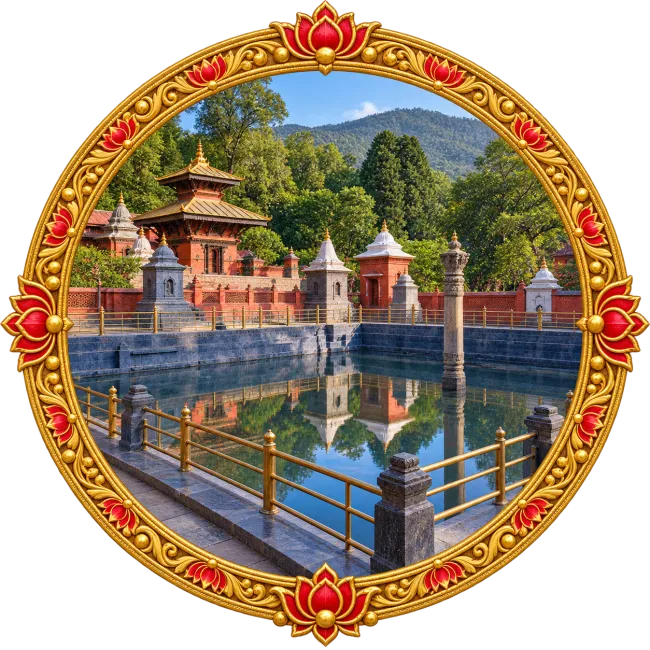
Budhanilkantha Temple, Kathmandu, Nepal
Visit Budhanilkantha Temple in Kathmandu, one of Nepal’s most remarkable Hindu temples dedicated to Lord Vishnu. The temple is famous for its enormous black stone image of Lord Vishnu reclining on the coils of Sheshnag in an open-air sacred pond. Because of this form, the deity is also known as Jal Narayan or the Lord who rests upon water.
Located near the foothills of Shivapuri, Budhanilkantha Temple attracts devotees seeking protection, family prosperity, good health and spiritual peace. Its peaceful surroundings, ancient stone sculpture and strong connection with Vaishnava traditions make it one of the most important religious destinations in the Kathmandu Valley.
About Budhanilkantha Temple
Budhanilkantha Temple is located in Budhanilkantha Municipality, approximately 9 kilometres north of central Kathmandu. It stands close to the entrance of Shivapuri Nagarjun National Park.
The principal deity is Lord Vishnu reclining upon Ananta Shesha, the cosmic serpent. The image is placed within a recessed pond representing Kshira Sagara, the cosmic ocean described in Hindu scriptures.
The deity is worshipped by several names:
- Budhanilkantha
- Jal Narayan
- Narayan Bhagwan
- Sheshashayi Vishnu
- Anantashayana Vishnu
The name Budhanilkantha means “Ancient Blue-Throated One.” Although the name Nilkantha is usually connected with Lord Shiva, the principal deity here is Lord Vishnu.
Devotees believe that worshipping Jal Narayan provides relief from difficulties, protects the family and brings peace, stability and prosperity.
History of Budhanilkantha Temple
The sacred image at Budhanilkantha is generally dated to the Licchavi period of Nepalese history. It is believed to have been created and installed during the seventh century.
Some historical traditions associate the installation of the deity with King Vishnugupta, who exercised power during the reign of the Licchavi ruler Bhimarjuna Deva. The sculpture’s style, design and craftsmanship display features associated with early medieval Nepalese art.
The present temple complex developed gradually around the ancient image. Unlike many large temples, Budhanilkantha does not have an enclosed sanctum containing the main deity. Lord Vishnu remains visible in an open-air pond surrounded by a stone platform.
The temple has been renovated several times, but the original sacred image has continued to be the central object of worship. Priests and local communities have preserved its daily rituals for generations.
Legend Behind the Discovery of the Deity
According to a popular local legend, the sacred image was discovered by a farmer and his wife.
The couple was working in a field when their farming tool struck a large stone beneath the soil. Blood reportedly began flowing from the point where the tool had hit the stone.
The frightened couple carefully removed the surrounding soil and discovered the enormous reclining image of Lord Vishnu. Recognizing the place as sacred, local residents established worship at the site.
Another tradition states that the deity was sculpted and installed under royal patronage during the Licchavi period. The discovery legend, however, remains deeply connected with the religious identity of Budhanilkantha.
Religious Significance of Budhanilkantha Temple
Budhanilkantha Temple is one of the most important Vaishnava pilgrimage destinations in Nepal. The reclining form of Lord Vishnu represents cosmic balance, preservation and the peaceful state of the universe between cycles of creation.
Lord Vishnu rests upon Ananta Shesha, the endless serpent. Goddess Lakshmi is traditionally believed to remain near his feet, while Lord Brahma emerges from a lotus connected with Vishnu’s navel to begin the process of creation.
The deity represents the belief that divine power remains active even while appearing to rest. Lord Vishnu watches over the universe and protects the balance of creation.
Devotees visit the temple for:
- Family peace and prosperity
- Protection from danger
- Relief from financial difficulties
- Success in education and employment
- Blessings for marriage and children
- Recovery from illness
- Removal of obstacles
- Spiritual stability
- Protection during travel
- Devotion to Lord Vishnu
Main Deity and Sacred Pond
The principal image of Lord Vishnu is carved from a single block of black stone. The statue is approximately five metres long and rests within a sacred pond measuring approximately 13 metres in length.
Lord Vishnu is shown reclining upon the coils of Ananta Shesha. The serpent’s multiple hoods rise protectively behind the deity’s head.
The four hands of Lord Vishnu represent his traditional divine attributes:
- Sudarshana Chakra
- Panchajanya Shankha
- Kaumodaki Gada
- Padma
The pond represents the cosmic ocean upon which Lord Vishnu rests. The image appears to float upon the water, creating a visually impressive and spiritually powerful sight.
Only authorized priests are permitted to enter the pond and touch the deity during worship. Devotees receive darshan from the stone platform surrounding the sacred pool.
The Royal Legend of Budhanilkantha
A famous legend connects Budhanilkantha Temple with the former royal family of Nepal.
According to tradition, King Pratap Malla received a divine warning that any ruling monarch of Nepal who looked directly upon the Budhanilkantha deity would die. Because of this belief, Nepalese kings traditionally avoided entering the temple and having direct darshan of the image.
A smaller representation of the deity was reportedly created at Balaju for members of the royal family to worship.
The legend remains an important part of the temple’s identity, even though it is based on religious tradition rather than documented historical evidence.
Architecture of Budhanilkantha Temple
Budhanilkantha Temple differs from traditional enclosed pagoda-style temples. Its main deity is placed in an open-air pond at the centre of a stone-paved courtyard.
Important architectural and artistic features include:
- Open-air sacred pond
- Large monolithic black stone image
- Lord Vishnu reclining on Ananta Shesha
- Stone platform surrounding the pond
- Smaller shrines dedicated to Hindu deities
- Traditional prayer bells
- Oil-lamp stands
- Carved stone and metal decorations
- Dharamshalas and worship areas
- Shivapuri hills forming a natural background
The temple’s simple arrangement allows visitors to view the complete reclining image from different sides.
The sound of temple bells, chanting of Vishnu mantras and views of the nearby hills create a serene devotional environment.
Budhanilkantha Temple Timings
The temple remains more crowded on Saturdays, Ekadashi dates and major Vaishnava festivals. Ritual schedules may be extended during Haribodhini Ekadashi and Harishayani Ekadashi.
Morning Puja and Aarti
Morning worship begins when the temple opens at 5:00 AM. The priests clean the worship area, light oil lamps and prepare the offerings.
Morning Aarti is performed at 5:30 AM. The priests offer lamps, incense, flowers, Tulsi leaves and sacred water while Vishnu mantras are recited.
The principal deity is ceremonially bathed and decorated with:
- Flowers
- Tulsi garlands
- Sandalwood paste
- Yellow cloth
- Sacred ornaments
- Vermilion and ritual colours
The period between 6:00 AM and 9:00 AM is suitable for peaceful darshan.
Bhog and Afternoon Darshan
Bhog is offered to Lord Vishnu at 12:00 PM. The offering may include rice, fruits, sweets and other vegetarian preparations.
Regular afternoon darshan continues after the completion of the Bhog ritual. Devotees can visit the smaller shrines, light oil lamps and perform circumambulation of the sacred pond.
Evening Puja and Aarti
Evening worship begins at 5:30 PM, followed by Aarti at 6:00 PM. Oil lamps are waved before the deity while devotees sing Vishnu bhajans and recite prayers.
The evening Aarti offers a peaceful experience as the lamps reflect on the water surrounding the reclining image.
Devotees wishing to attend the complete ceremony should reach the temple before 5:30 PM. The temple closes at 7:00 PM.
Haribodhini Ekadashi Festival
Haribodhini Ekadashi is the most important festival celebrated at Budhanilkantha Temple. It marks the awakening of Lord Vishnu after the four-month period of cosmic rest known as Chaturmas.
Thousands of devotees visit the temple to offer Tulsi leaves, flowers, fruits and sacred lamps. Many pilgrims observe fasting and stay awake while chanting the names of Lord Vishnu.
The festival usually includes:
- Special Abhishek
- Vishnu Sahasranama recitation
- Tulsi offerings
- Devotional singing
- Lighting of oil lamps
- Religious processions
- Distribution of prasad
- Fasting and night prayers
Long queues form during the festival, and devotees should arrive before sunrise.
Other Major Festivals
Harishayani Ekadashi
Harishayani Ekadashi marks the beginning of Lord Vishnu’s four-month cosmic rest. Special puja and fasting are observed.
Vaikuntha Ekadashi
Devotees worship Lord Vishnu and pray for liberation, forgiveness and spiritual progress.
Krishna Janmashtami
The birth of Lord Krishna is celebrated with fasting, bhajans and special decoration of the deity.
Ram Navami
Lord Rama’s birth is observed through Ramayana recitation and devotional worship.
Tulsi Vivah
The ceremonial marriage of Goddess Tulsi and Lord Vishnu is celebrated after Haribodhini Ekadashi.
Janai Purnima
Devotees visit the temple to receive sacred threads and offer prayers for protection.
Offerings and Prasad
Common offerings made to Lord Budhanilkantha include:
- Tulsi leaves and garlands
- Yellow flowers
- Lotus flowers
- Fruits and sweets
- Incense sticks
- Oil or ghee lamps
- Sandalwood paste
- Yellow cloth
- Rice and grains
- Sacred threads
- Coconut
- Monetary donations
Tulsi leaves have special significance in Lord Vishnu worship. Devotees should not enter the sacred pond or throw offerings directly into the water.
Prasad may include fruits, sweets, Tulsi leaves and dry offerings blessed during the puja.
Entry Fee and Visit Duration
There is no entry fee for regular darshan at Budhanilkantha Temple. Charges may apply for special pujas, offerings and priest-led rituals.
A regular visit requires one to two hours. Visitors attending Aarti or exploring nearby shrines should keep two to three hours.
The temple is accessible to devotees and visitors, but only authorized priests are allowed to enter the pond and touch the sacred image.
Visitor Guidelines
- Wear modest and respectful clothing.
- Remove footwear before entering the main worship area.
- Do not step into the sacred pond.
- Do not touch the main deity.
- Maintain silence during Puja and Aarti.
- Ask permission before taking close photographs.
- Keep mobile phones on silent mode.
- Do not carry alcohol, tobacco or non-vegetarian food.
- Avoid throwing flowers, coins or waste into the pond.
- Use authorized counters for donations and special pujas.
- Keep the temple courtyard clean.
- Follow the directions of priests and temple officials.
- Take care of personal belongings during crowded festivals.
Best Time to Visit
The best time to visit Budhanilkantha Temple is between October and March when Kathmandu experiences pleasant weather.
The spring months from March to May are also suitable, especially for visitors planning to explore Shivapuri and nearby natural areas.
For peaceful darshan, visit between 6:00 AM and 9:00 AM. Evening visitors should reach between 5:00 PM and 5:30 PM to attend the Puja and Aarti.
Saturdays and Ekadashi dates experience heavier crowds.
How to Reach Budhanilkantha Temple
By Air
Tribhuvan International Airport is the nearest airport. Taxis and private vehicles are available from the airport to Budhanilkantha.
From Central Kathmandu
The temple is approximately 9 kilometres north of central Kathmandu. Visitors can hire a taxi or use local buses travelling towards Budhanilkantha.
From Thamel
Budhanilkantha Temple is approximately 10 kilometres from Thamel. The journey takes 30–45 minutes, depending on traffic.
By Bus
Local buses and minibuses operate from central Kathmandu, Ratna Park and nearby transportation points towards Budhanilkantha.
By Private Vehicle
Visitors can travel through Maharajgunj, Bansbari and Narayanthan to reach the temple. Parking facilities are available near the surrounding market area.
Indian citizens travelling to Nepal should carry a valid passport or voter identity card and confirm the latest transportation requirements before departure.
Nearby Places to Visit
- Shivapuri Nagarjun National Park
- Nagi Gompa
- Kopan Monastery
- Pashupatinath Temple
- Boudhanath Stupa
- Guhyeshwari Temple
- Baghdwar
- Bishnudwar
- Jamchen Vijaya Stupa
- Kathmandu Durbar Square
- Swayambhunath Temple
Conclusion
Budhanilkantha Temple is one of Nepal’s most extraordinary Lord Vishnu temples. Its ancient black stone image, open-air sacred pond, Licchavi-period heritage and peaceful location near the Shivapuri hills make it a unique pilgrimage destination.
The reclining form of Lord Vishnu represents divine protection, cosmic balance and eternal peace. Morning Puja, evening Aarti and the grand celebration of Haribodhini Ekadashi allow devotees to experience the living Vaishnava traditions of Nepal.
A visit to Budhanilkantha Temple offers not only the blessings of Jal Narayan but also a powerful feeling of peace, devotion and spiritual stability.