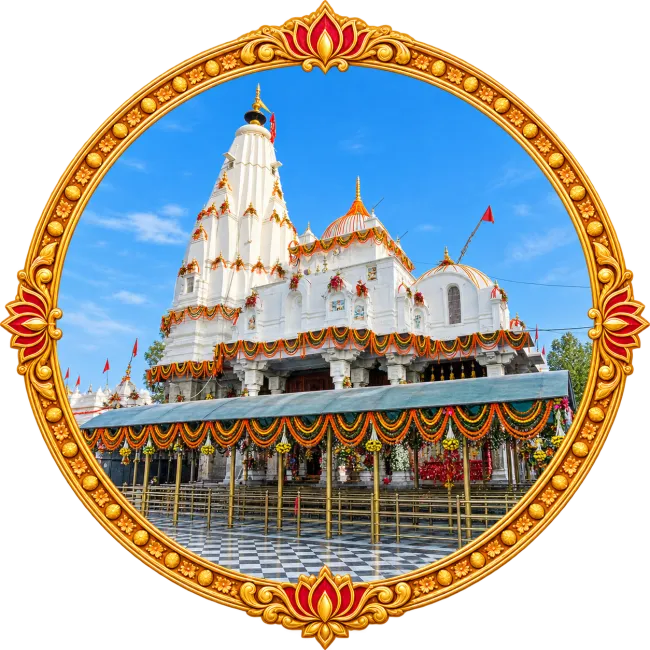
Brajeshwari Devi Temple, Himachal Pradesh
Brajeshwari Devi Temple, also known as Bajreshwari Devi Temple, Vajreshwari Devi Temple and Kangra Devi Temple, is one of the most important Shakti shrines in Himachal Pradesh. Located in the historic town of Kangra, the temple is dedicated to Goddess Brajeshwari, a powerful manifestation of Goddess Durga.
The temple is traditionally regarded as a Shakti Peetha and is connected with the sacred legend of Goddess Sati. Its spiritual importance, ancient history, distinctive rituals and association with the former rulers of Kangra attract devotees from across India.
About Brajeshwari Devi Temple
Brajeshwari Devi Temple is situated in the old area of Kangra town. The Goddess is worshipped as Vajreshwari, meaning the divine feminine power associated with the thunderbolt. She is believed to protect devotees from danger, remove difficulties and grant courage, prosperity and spiritual strength.
The temple is also known as Nagarkot Dham because Kangra was historically called Nagarkot. It forms part of the important Devi pilgrimage circuit of Himachal Pradesh, which includes Jwala Devi, Chamunda Devi, Chintpurni and Naina Devi.
The principal deity is installed inside the Garbhagriha and worshipped in a sacred Pindi form. The Pindi is decorated with flowers, jewellery, clothes, sindoor and other traditional Shringar materials.
When Was Brajeshwari Devi Temple Built and Who Built It?
The shrine is ancient, and its original construction date is not preserved in historical records. According to temple tradition, the first shrine was established by the Pandavas during the Mahabharata period.
The Pandavas are believed to have seen Goddess Durga in a dream. The Goddess instructed them to construct a temple at Nagarkot. Following her command, they identified the sacred site and built a shrine dedicated to the Divine Mother.
The temple was later supported and expanded by the Katoch rulers of Kangra. Because of its religious prominence and accumulated wealth, the shrine became a target for repeated invasions.
The earlier temple suffered extensive damage during different periods of history. A devastating earthquake in 1905 destroyed much of the structure. The shrine was subsequently reconstructed, and the present temple emerged through restoration and later development.
Therefore, Brajeshwari Devi Temple cannot be attributed to a single historical builder. Its origin is traditionally associated with the Pandavas, while the Katoch rulers, devotees and later temple administrations contributed to its construction and reconstruction.
Historical Importance
The shrine was one of the wealthiest temples of ancient northern India. Kings, merchants and devotees donated gold, silver, precious stones and other valuables to the Goddess.
Mahmud of Ghazni attacked the Kangra region in the early 11th century and looted the temple’s accumulated wealth. The shrine was subsequently restored, but it faced further attacks and damage during later centuries.
Despite these disruptions, worship at the site continued. The Katoch rulers and local devotees repeatedly renovated the shrine. The temple’s survival through invasions, political changes and natural disasters reflects its enduring religious importance.
The 1905 Kangra earthquake caused severe destruction across the region and damaged the temple. Reconstruction work was undertaken afterward, giving the shrine much of its present appearance.
Mythology of the Shakti Peetha
The religious significance of Brajeshwari Devi Temple is connected with the story of Goddess Sati and Lord Shiva.
Sati was the daughter of King Daksha and the wife of Lord Shiva. When Daksha organised a grand yajna, he deliberately did not invite Shiva and Sati. Sati nevertheless attended the ceremony, where Daksha publicly insulted Lord Shiva.
Unable to tolerate the humiliation of her husband, Sati entered the sacrificial fire and gave up her life. Lord Shiva was overcome with grief and carried her body across the universe while performing the destructive Tandava.
To protect creation, Lord Vishnu used his Sudarshana Chakra to divide Sati’s body. Its parts fell at different locations, which became sacred Shakti Peethas.
According to the tradition associated with Kangra, the left breast of Goddess Sati fell at this location. The site consequently became a powerful centre of Shakti worship.
Legend of the Pandavas
According to local tradition, the Pandavas received a divine message from Goddess Durga during their travels. She informed them that she was present at Nagarkot and instructed them to establish a shrine there.
The Pandavas reached the site, discovered the sacred presence of the Goddess and built the first temple. Although this account belongs to religious tradition rather than dated history, it remains central to the identity of the shrine.
Religious Significance
Goddess Brajeshwari is worshipped as a protective and compassionate form of Shakti. Devotees believe that sincere worship at the temple helps remove fear, suffering and negative influences.
People visit the shrine to pray for:
Protection from danger
Physical and emotional strength
Recovery from illness
Family welfare
Marriage and children
Prosperity and financial stability
Success in education and employment
Relief from fear and difficulties
Fulfilment of wishes
Spiritual progress
The temple is particularly important during Navratri, when the nine manifestations of Goddess Durga are worshipped.
Architecture of Brajeshwari Devi Temple
The present temple displays a combination of North Indian temple design and architectural features introduced during reconstruction. It is entered through an ornamented gateway leading to a spacious courtyard.
The complex is surrounded by a stone wall and contains several smaller shrines. The main sanctum houses the sacred Pindi of Goddess Brajeshwari.
The temple has a decorated dome, pillared spaces, carved entrances and enclosed areas for ritual worship. Decorative elements include floral patterns, religious symbols and images of Hindu deities.
The principal sections of the complex include:
Main sanctum of Goddess Brajeshwari
Temple courtyard
Bhairav shrine
Smaller shrines dedicated to Hindu deities
Havan area
Pilgrim queue passages
Administrative and donation counters
Prasad distribution points
Brajeshwari Devi Temple Timings
The temple follows separate summer and winter schedules. Darshan timings may be extended during Navratri and other major festivals.
Summer Timings
Winter Timings
Festival rituals and special administrative arrangements can affect the ordinary darshan queue. Visitors should observe the daily schedule displayed at the temple entrance.
Morning Puja and Aarti
The day begins with the opening of the sanctum and Mangal Puja. Priests clean the worship area and prepare the sacred Pindi for the morning rituals.
The morning worship includes:
Ceremonial bathing
Shringar
Offering of fresh clothes
Flower decoration
Sindoor and sandalwood offering
Mantra chanting
Lighting of lamps
Incense offering
Naivedya
Morning Aarti
The main morning Aarti is performed at 7:00 AM. After the ceremony, regular darshan continues through the designated queue.
Bhog Puja
Bhog is offered to Goddess Brajeshwari at noon. Satvik food, fruits, sweets and dry fruits are ceremonially presented to the deity.
Queue movement may slow or pause while the ritual is conducted. After the offering, prasad is distributed according to temple arrangements.
Evening Puja and Aarti
The evening ceremony begins with the lighting of lamps and incense. Priests offer prayers, flowers and Naivedya before performing Aarti.
The evening Aarti is held at 8:00 PM during summer and 7:00 PM during winter. Devotees participate by singing traditional hymns and chanting the name of the Goddess.
Shayan Puja is performed before the temple closes. It marks the conclusion of the day’s worship.
Makar Sankranti and the Butter Ritual
The Makar Sankranti celebration at Brajeshwari Devi Temple is associated with a distinctive ritual known as Ghrit Mandal.
According to tradition, Goddess Brajeshwari was injured while fighting the demon Mahishasura. The gods applied butter to her wounds to provide relief. To commemorate this event, the sacred Pindi is covered with a large quantity of purified butter during Makar Sankranti.
The butter is washed repeatedly with cold water before being applied to the deity. It is decorated with dry fruits, flowers and other sacred materials. The covering remains on the Pindi for several days and is later removed and distributed as prasad.
Devotees regard this butter as sacred and apply it with faith for blessings and well-being.
Major Festivals
Chaitra Navratri
Chaitra Navratri is celebrated during March or April. Special Pujas, Havan, devotional recitation and community meals are organised.
Sharadiya Navratri
Sharadiya Navratri is one of the busiest periods at the temple. The shrine is decorated with flowers and lights, and the nine forms of Goddess Durga are worshipped.
Makar Sankranti
Makar Sankranti is famous for the Ghrit Mandal ritual, during which the sacred Pindi is covered with purified butter.
Durga Ashtami
Durga Ashtami is marked by special worship, Havan, Kanya Pujan and offerings to the Goddess.
Diwali
The temple is illuminated with lamps during Diwali. Devotees pray for prosperity, protection and family welfare.
Puja and Religious Services
Different worship services may be arranged according to temple regulations:
General Puja
Special Puja
Havan
Durga Saptashati Path
Navratri Puja
Mata Jagran
Kanya Pujan
Mundan ceremony
Marriage-related prayers
Family welfare Puja
Thanksgiving Puja
Community meal service
Pujas, donations and ritual services should be arranged only through authorised temple counters.
Offerings at Brajeshwari Devi Temple
Traditional offerings include:
Red chunri
Coconut
Flowers
Sindoor
Bangles
Sweets
Dry fruits
Mata’s Shringar items
Sacred thread
Incense
Clarified butter
Monetary donations
During Makar Sankranti, purified butter forms an important part of the temple’s special ritual.
Prasad
Prasad generally consists of coconut, mishri, dry fruits, cardamom and sweets. During the Ghrit Mandal celebration, the consecrated butter is distributed as special prasad.
Prepared offering plates and prasad packets are available near the temple. Visitors should purchase religious materials from recognised shops and counters.
Dress Code and Entry Rules
There is no strict ceremonial dress code, but visitors should wear modest, clean and comfortable clothing.
Important rules include:
Remove footwear before entering.
Follow the designated queue.
Maintain silence near the sanctum.
Do not touch the sacred Pindi.
Follow all photography restrictions.
Do not carry alcohol, tobacco or non-vegetarian food.
Keep the temple premises clean.
Deposit donations only at authorised counters.
Avoid carrying unnecessary valuables.
Follow directions issued by security personnel and temple staff.
Entry Fee and Darshan Duration
General temple entry and darshan are free. Charges may apply to special Pujas, ritual materials and other optional services.
On an ordinary weekday, darshan may require 30–60 minutes. During Navratri, Makar Sankranti, weekends and public holidays, pilgrims may have to wait for several hours.
The period after morning Aarti is suitable for devotees seeking a peaceful darshan.
Best Time to Visit
March to June and September to November are suitable periods for visiting the temple. The weather is generally pleasant, and travel within Kangra is convenient.
Navratri offers the grandest devotional atmosphere but attracts very large crowds. Makar Sankranti is the best time to witness the unique butter ritual.
Winter temperatures can be low, particularly during early morning and evening. Visitors should carry warm clothes. During the monsoon, travellers should check road and weather conditions before beginning their journey.
How to Reach Brajeshwari Devi Temple
By Air
Kangra Airport at Gaggal is the nearest airport. It is approximately 12 kilometres from the temple. Taxis are available from the airport.
By Train
Kangra Mandir Railway Station on the narrow-gauge Kangra Valley line is the nearest local station.
Pathankot is the nearest major broad-gauge railway station. Buses and taxis operate from Pathankot to Kangra.
By Road
Kangra is connected by road with Dharamshala, Palampur, Pathankot, Chandigarh, Jammu and Delhi. Government buses, private buses and taxis are available.
Accommodation and Facilities
Hotels, guest houses, Dharamshalas and budget lodges are available in Kangra. Additional accommodation options can be found in Dharamshala.
Facilities near the temple include:
Drinking water
Toilets
Shoe-storage counters
Prasad shops
Vegetarian food outlets
Parking
Medical assistance
Security posts
Pilgrim resting areas
Dharamshalas
Public transport
Advance booking is recommended during Navratri and Makar Sankranti.
Nearby Places to Visit
Kangra Fort: An ancient fort associated with the Katoch dynasty.
Gupt Ganga Temple: A sacred site located near Kangra.
Chamunda Devi Temple: A prominent Shakti temple near Dharamshala.
Jwala Devi Temple: A Shakti Peetha famous for its eternal flames.
Masroor Rock-Cut Temples: An important group of ancient monolithic temples.
Dharamshala: A hill destination known for monasteries and mountain scenery.
McLeod Ganj: Known for Tibetan culture and Buddhist institutions.
Palampur: Famous for tea gardens and views of the Dhauladhar mountains.
Baijnath Temple: An ancient temple dedicated to Lord Shiva.
Visitor Guidelines
Carry a valid identity document, essential medicines and clothing suitable for the season. Visitors should wear comfortable footwear because walking through the market and temple approach may be required.
Senior citizens and people with mobility difficulties should seek assistance from temple personnel. During festivals, follow official parking, traffic and queue arrangements. Donations and Puja bookings should be completed only at authorised counters.
Conclusion
Brajeshwari Devi Temple is an important centre of Shakti worship with a religious tradition extending back to ancient times. Its association with the Pandavas, the Shakti Peetha legend, the Katoch rulers and the history of Kangra gives the temple exceptional spiritual and cultural importance.
The sacred Pindi, daily Aartis, Navratri celebrations and unique Ghrit Mandal ritual attract devotees throughout the year. A visit to Brajeshwari Devi Temple offers an opportunity to seek courage, protection, prosperity and the compassionate blessings of Goddess Brajeshwari.