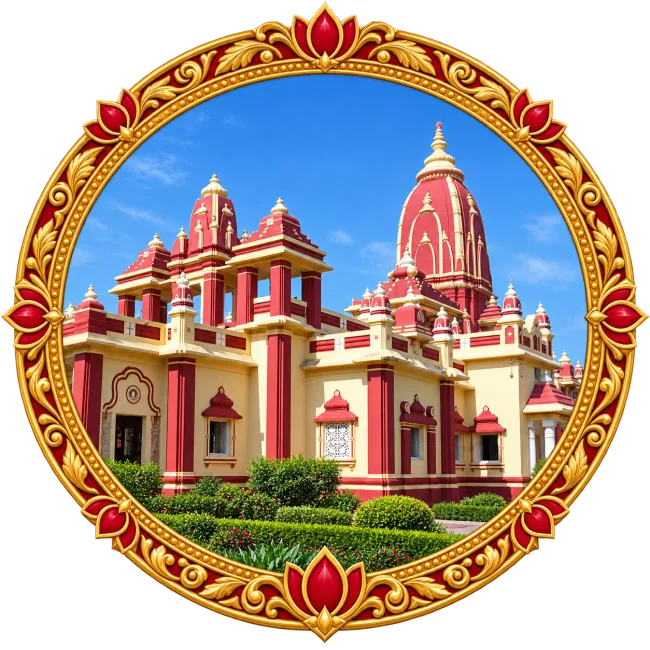
Birla Mandir Mathura
Visit Birla Mandir Mathura, also known as Gita Mandir, a peaceful and beautifully designed temple situated on the Mathura–Vrindavan Road. Dedicated primarily to Lord Lakshmi Narayan, the temple is also associated with Lord Krishna and the divine teachings of the Bhagavad Gita. Its magnificent Gita Stambh, spacious prayer halls, landscaped surroundings, and calm atmosphere attract devotees, families, students, and tourists throughout the year.
Unlike the crowded temples situated in the narrow lanes of Mathura and Vrindavan, Birla Mandir offers a comparatively peaceful environment for prayer and meditation. Devotees can attend the morning and evening aarti, read the sacred verses displayed within the complex, and spend time reflecting upon the spiritual message of Lord Krishna.
About Birla Mandir Mathura
Birla Mandir is a prominent Hindu temple located at Garravkendra on the Mathura–Vrindavan Road in Mathura, Uttar Pradesh. It is commonly known as Gita Mandir because all 700 verses of the Shrimad Bhagavad Gita are inscribed within the temple complex, particularly on its famous Gita Stambh.
The temple is dedicated to Lord Lakshmi Narayan, the divine form of Lord Vishnu with Goddess Lakshmi. The complex also contains sacred images connected with Lord Krishna, Radha Rani, Lord Rama, Goddess Sita, and other Hindu deities. The presence of these deities gives the temple a universal devotional character and attracts followers of different Vaishnava traditions.
The peaceful campus, clean surroundings, open spaces, and organised darshan arrangements make it suitable for elderly devotees and families travelling with children. The temple is also an important stop for pilgrims travelling between Mathura and Vrindavan.
History of Birla Mandir Mathura
Birla Mandir Mathura was built in 1946 by the renowned industrialist and philanthropist Seth Jugal Kishore Birla. He constructed the temple in memory of his parents and dedicated it to the spiritual teachings of Lord Krishna.
The Birla family established several temples in different parts of India with the objective of making Hindu philosophy, architecture, and worship accessible to everyone. Birla Mandir Mathura forms an important part of this temple tradition.
Mathura was selected because it is the birthplace of Lord Krishna and one of the most sacred cities associated with his life. The location between Mathura and Vrindavan connects the temple with two major centres of Krishna devotion.
The construction of the temple during the twentieth century reflects an effort to combine traditional Hindu temple architecture with modern building techniques. The Gita Stambh was created as a permanent representation of Lord Krishna’s teachings to Arjuna on the battlefield of Kurukshetra.
Since its establishment, the temple has remained an important place of worship, spiritual learning, meditation, and religious tourism. It continues to attract devotees interested in both Krishna Bhakti and the philosophical teachings of the Bhagavad Gita.
Religious Significance of Birla Mandir
The temple holds religious importance because it connects temple worship with the teachings of the Bhagavad Gita. Lord Krishna delivered the Gita to Arjuna when he was confused about his duties and responsibilities. Through this sacred dialogue, Krishna explained the paths of devotion, knowledge, selfless action, meditation, and surrender.
The presence of all 700 Bhagavad Gita verses encourages visitors to understand that spirituality is not limited to rituals. It also includes righteous conduct, self-discipline, compassion, wisdom, and devotion.
Devotees believe that worshipping Lord Lakshmi Narayan at the temple brings:
- Peace and harmony within the family.
- Prosperity and financial stability.
- Wisdom and clarity in decision-making.
- Protection from negative influences.
- Progress in education and career.
- Strength to overcome fear and confusion.
- Devotion towards Lord Krishna.
- Spiritual discipline and inner peace.
Students and spiritual seekers visit the temple to read the Gita verses and seek Lord Krishna’s blessings for knowledge and concentration.
The Gita Stambh
The Gita Stambh is the most distinctive feature of Birla Mandir Mathura. It is a tall and beautifully designed pillar bearing the verses of the Shrimad Bhagavad Gita.
The Bhagavad Gita consists of 18 chapters and 700 verses. These verses record the spiritual dialogue between Lord Krishna and Arjuna. The teachings discuss duty, devotion, knowledge, meditation, self-control, the nature of the soul, and liberation.
The Gita Stambh represents the timeless nature of these teachings. Visitors often walk around the pillar, read selected verses, and spend time in silent contemplation.
For students of Hindu philosophy, the pillar transforms the temple into a place of spiritual education. It also reminds devotees that Lord Krishna should be remembered not only through worship but also through the values and teachings he shared in the Gita.
Main Deities and Shrines
The principal deity of Birla Mandir is Lord Lakshmi Narayan. Goddess Lakshmi represents prosperity, purity, and divine grace, while Lord Narayan represents preservation, righteousness, and protection.
The temple complex also includes sacred representations associated with:
- Lord Krishna and Radha Rani
- Lord Rama and Goddess Sita
- Lord Lakshmi Narayan
- Lord Hanuman
- Other Hindu deities
A representation of Lord Krishna’s chariot associated with the Bhagavad Gita is also an important attraction. It reminds visitors of the moment when Krishna guided Arjuna and revealed the principles of Dharma.
The arrangement of different deities allows devotees to worship several divine forms during one visit.
Architecture of Birla Mandir Mathura
Birla Mandir Mathura is known for its graceful combination of red sandstone and white marble. Its design follows traditional North Indian temple architecture while incorporating the clean lines and spacious planning commonly seen in Birla temples.
The elevated temple structure, carved pillars, decorated walls, beautiful arches, and prominent shikhara create an impressive appearance. The contrast between red stone and white marble enhances the visual beauty of the complex.
The prayer hall provides sufficient space for devotees to attend aarti, bhajan, and other religious programmes. Images and scenes connected with Lord Krishna and Hindu scriptures can be seen throughout the temple.
The spacious courtyard and landscaped surroundings create a peaceful environment. Visitors can sit quietly, meditate, or read the Bhagavad Gita after completing darshan.
The temple is especially beautiful during the evening when lights illuminate the shikhara, pillars, and surrounding structures.
Birla Mandir Mathura Timings
The temple follows different schedules during summer and winter.
Summer Timings
Winter Timings
Darshan and aarti timings may be modified during Janmashtami, Gita Jayanti, Holi, Diwali, and other major festivals. Visitors should check the schedule displayed at the temple entrance when arriving on a festival day.
Daily Puja and Aarti
The daily worship at Birla Mandir begins with the opening of the sanctum in the early morning. The deities are offered prayers, flowers, clothes, sandalwood paste, incense, lamps, and bhog.
Morning aarti is performed between 7:00 AM and 7:30 AM. Devotees gather in the prayer hall while devotional hymns and mantras are recited. Lamps are offered before the deities, accompanied by bells and collective chanting.
The temple closes for a short afternoon interval after the morning darshan session. During this period, bhog and rest-related services are performed.
Evening aarti takes place between 6:30 PM and 7:00 PM. The illuminated temple, ringing bells, devotional music, and collective prayers create a spiritually uplifting atmosphere. The evening aarti is one of the best times to experience the beauty and devotional energy of the temple.
Major Festivals Celebrated at the Temple
Krishna Janmashtami
Krishna Janmashtami is one of the principal festivals celebrated at Birla Mandir. The temple is decorated with flowers, lights, and colourful fabrics. Special puja, bhajans, kirtans, and devotional programmes are organised.
Gita Jayanti
Gita Jayanti commemorates the day on which Lord Krishna delivered the Bhagavad Gita to Arjuna. Recitation of Gita verses, spiritual discourses, prayers, and religious programmes are conducted at the temple. The Gita Stambh becomes the main centre of attention during the celebration.
Radhashtami
Radhashtami celebrates the appearance of Radha Rani. Devotees offer flowers, sweets, and prayers to Radha and Krishna.
Holi
Holi is celebrated with great enthusiasm throughout the Braj region. The temple organises special decorations, devotional music, and Krishna-centred celebrations.
Diwali
During Diwali, the temple is illuminated with lamps and decorative lights. Special worship is offered to Goddess Lakshmi and Lord Narayan for prosperity, happiness, and spiritual wellbeing.
Ram Navami
Ram Navami is celebrated with prayers dedicated to Lord Rama and Goddess Sita. Devotees recite Ram bhajans and passages connected with the Ramayana.
Other Celebrations
Govardhan Puja, Annakoot, Sharad Purnima, Kartik Purnima, Narasimha Jayanti, and various Ekadashi observances are also celebrated with devotion.
Offerings and Prasad
Devotees may offer the following items at Birla Mandir:
- Fresh flowers and garlands
- Tulsi leaves
- Fruits and dry fruits
- Laddu and barfi
- Mathura peda
- Makhan and mishri
- Incense sticks
- Ghee lamps
- Clothes and ornaments for the deities
- Donations for temple services
Prasad is distributed after puja and aarti, depending on the daily arrangements. Offerings should be submitted at authorised counters or given to the designated temple priest.
Visitors should avoid bringing leather items, tobacco products, alcohol, or non-vegetarian food into the temple premises.
Entry Fee and Visit Duration
There is no entry fee for general darshan at Birla Mandir Mathura. Devotees can enter the temple and visit the main shrines without purchasing a ticket.
Specific pujas, religious services, or special offerings may involve separate charges. Such services should be booked only through authorised temple arrangements.
A normal visit requires 45 minutes to one hour. Visitors interested in reading the inscriptions, exploring the complex, attending aarti, and meditating should reserve one to two hours.
Best Time to Visit Birla Mandir
The best months to visit Birla Mandir Mathura are October to March. The weather remains comfortable for temple visits and sightseeing during this period.
For a peaceful experience, visitors should arrive during the following periods:
- Summer Morning: 6:00 AM – 8:00 AM
- Winter Morning: 7:00 AM – 9:00 AM
- Summer Evening: 5:30 PM – 7:30 PM
- Winter Evening: 5:00 PM – 7:00 PM
The evening aarti is recommended for visitors who wish to experience the temple’s illuminated architecture and devotional atmosphere.
Janmashtami, Gita Jayanti, Holi, and Diwali offer grand celebrations but also attract larger crowds.
Visitor Guidelines
- Wear modest and respectful clothing.
- Remove footwear at the designated counter.
- Maintain silence near the sanctum and prayer hall.
- Follow the queue system during busy hours.
- Ask permission before taking photographs or videos.
- Photography may be restricted inside the sanctum.
- Do not touch the deities, carvings, or religious inscriptions.
- Keep mobile phones on silent mode.
- Use authorised counters for donations and special puja.
- Maintain cleanliness within the temple complex.
- Do not carry tobacco, alcohol, or non-vegetarian food.
- Parents should supervise children near the stairs and open areas.
- Elderly visitors should seek assistance when required.
How to Reach Birla Mandir Mathura
By Air
Agra Airport is the nearest airport and is located at a convenient road distance from Mathura. After reaching Agra, visitors can hire a taxi or use road transport to reach the temple.
Indira Gandhi International Airport in Delhi is the nearest major international airport. Buses, trains, and taxis are available from Delhi to Mathura.
By Train
Mathura Junction Railway Station is the nearest major railway station. It is approximately 5 to 6 kilometres from Birla Mandir.
Mathura Junction is connected with Delhi, Agra, Jaipur, Lucknow, Varanasi, Mumbai, Kolkata, and other major cities. Auto-rickshaws, e-rickshaws, and taxis are available outside the station.
By Road
The temple is located directly on the Mathura–Vrindavan Road and can be easily reached by bus, taxi, private vehicle, auto-rickshaw, or e-rickshaw.
Regular road transport is available from Mathura, Vrindavan, Govardhan, Gokul, Barsana, Agra, and Delhi.
From Mathura Bus Stand
The main Mathura bus stand is approximately 4 to 5 kilometres from the temple. Visitors can take an auto-rickshaw, e-rickshaw, or taxi to reach Birla Mandir.
Nearby Places to Visit
Visitors can explore several important religious attractions near Birla Mandir:
- Shri Krishna Janmabhoomi Temple
- Shri Bhuteshwar Mahadev Temple
- Dwarkadhish Temple
- Vishram Ghat
- Yamuna River Ghats
- Government Museum Mathura
- Prem Mandir Vrindavan
- ISKCON Krishna Balaram Temple
- Banke Bihari Temple
- Pagal Baba Temple
- Vrindavan Chandrodaya Temple
- Gopeshwar Mahadev Temple
Due to its location on the main Mathura–Vrindavan Road, Birla Mandir can be conveniently included in a one-day Mathura and Vrindavan pilgrimage itinerary.
Conclusion
Birla Mandir Mathura is not only a place of worship but also a centre of spiritual knowledge and peaceful contemplation. Constructed by Seth Jugal Kishore Birla in 1946, the temple combines devotion, architecture, philosophy, and the timeless message of the Bhagavad Gita.
Its sacred deities, magnificent Gita Stambh, red sandstone and marble architecture, spacious campus, and organised worship arrangements make it one of the most memorable temples on the Mathura–Vrindavan route.
Whether visitors come to attend the morning aarti, experience the illuminated evening darshan, read the verses of the Bhagavad Gita, or simply spend a few peaceful moments in prayer, Birla Mandir provides an inspiring spiritual experience in the sacred land of Lord Krishna.