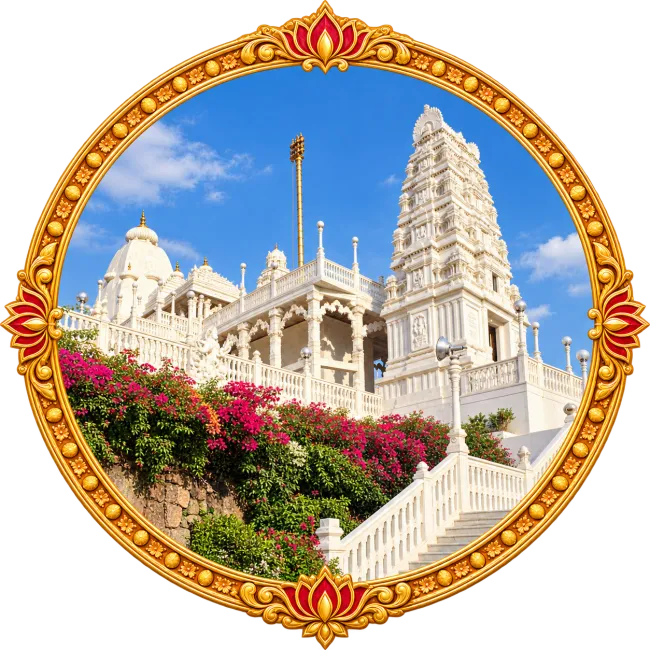
Birla Mandir, Hyderabad
Birla Mandir in Hyderabad is one of the city’s most prominent temples dedicated to Lord Venkateswara. Built entirely from white marble, the temple stands on Naubat Pahad and offers panoramic views of Hyderabad, Hussain Sagar Lake and the surrounding city.
Constructed by the Birla Foundation and opened in 1976, the temple combines Dravidian, Rajasthani and Utkala architectural traditions. Its peaceful environment, marble carvings and central location attract devotees and visitors throughout the year.
About Birla Mandir Hyderabad
Birla Mandir is situated on Naubat Pahad, a hill overlooking the centre of Hyderabad. The temple occupies a large elevated area and can be reached by climbing a gently rising path and a series of steps.
The principal deity is Lord Venkateswara, a form of Lord Vishnu. The main idol is approximately 11 feet high and resembles the traditional form of Sri Venkateswara worshipped at Tirumala.
The temple complex also contains shrines dedicated to:
Goddess Padmavati
Goddess Andal
Lord Shiva
Goddess Parvati
Lord Ganesha
Lord Hanuman
Lord Brahma
Goddess Saraswati
Goddess Lakshmi
Lord Krishna
Saibaba
The temple is known for its quiet atmosphere. The absence of loud bells in the main worship area encourages visitors to pray and meditate peacefully.
When and Who Built Birla Mandir?
Construction of Birla Mandir began in 1966 under the Birla Foundation. The project required approximately ten years to complete.
The temple was formally opened in 1976. Swami Ranganathananda of the Ramakrishna Mission participated in the consecration and opening ceremonies.
The Birla family constructed temples, educational institutions and cultural centres in several Indian cities. Hyderabad’s Birla Mandir formed part of this wider philanthropic tradition.
Marble was brought from Rajasthan and carved by skilled artisans. The building’s elevated position and brilliant white exterior were deliberately chosen to create a visible spiritual landmark above the city.
Why Was Naubat Pahad Selected?
Naubat Pahad is one of the prominent rocky hills in central Hyderabad. The site stands approximately 280 feet above the surrounding area.
Its elevation provides:
A peaceful setting above city traffic
Views of Hussain Sagar Lake
Visibility from different parts of Hyderabad
Space for a large temple complex
A symbolic upward journey towards the deity
The walk from the entrance to the sanctum gradually rises, allowing devotees to leave behind the noise of the city before receiving darshan.
Lord Venkateswara
Lord Venkateswara is worshipped as a manifestation of Lord Vishnu and the protector of devotees during Kali Yuga.
The deity at Birla Mandir stands beneath a carved marble structure and is decorated with flowers, silk garments and ornaments.
The idol displays the familiar characteristics of Venkateswara:
A tall crown
Shankha and Chakra symbols
Traditional Vaishnavite markings
Protective hand gestures
Rich floral decoration
Devotees pray to the Lord for prosperity, health, education, employment, marriage and relief from difficulties.
Religious Significance
Birla Mandir brings together several Hindu traditions within one complex. Although Lord Venkateswara is the principal deity, the presence of Shiva, Shakti, Ganesha, Hanuman and other deities makes it accessible to devotees from different traditions.
People visit the temple to pray for:
Family peace and prosperity
Success in education
Employment and professional growth
Good health
Marriage and marital harmony
Blessings for children
Financial stability
Relief from stress
Protection from difficulties
Spiritual wisdom
Mental clarity
Fulfilment of sincere wishes
The hilltop environment also makes the temple popular for meditation and quiet personal prayer.
Main Deities and Shrines
Lord Venkateswara
Lord Venkateswara is the presiding deity. Devotees receive darshan after ascending through the main marble complex.
Goddess Padmavati
Goddess Padmavati is worshipped as the divine consort of Lord Venkateswara. She represents prosperity, compassion and family welfare.
Goddess Andal
Andal is one of the most respected Alwar saints and represents complete devotion to Lord Vishnu.
Lord Shiva and Goddess Parvati
Their shrines represent the unity of Shaivite and Vaishnavite traditions.
Lord Ganesha
Ganesha is worshipped before beginning important work or a journey.
Lord Hanuman
Hanuman represents courage, strength and complete devotion.
Other shrines honour Brahma, Saraswati, Lakshmi, Krishna and Saibaba.
Architecture of Birla Mandir
Birla Mandir is constructed primarily from white marble and combines several Indian architectural styles.
Dravidian Influence
The principal sanctum and tower contain features inspired by South Indian temples. The deity, Vaishnavite symbols and sanctum arrangement follow traditions associated with Lord Venkateswara.
Rajasthani Influence
White marble construction, carved screens and decorative surfaces reflect the architectural traditions of Rajasthan.
Utkala Influence
Selected tower designs and sculptural details draw inspiration from Odisha’s temple architecture.
Marble Carvings
The marble walls contain carvings of:
Hindu deities
Floral patterns
Sacred symbols
Episodes from Hindu scriptures
Philosophical verses
Divine guardians
The white marble reflects sunlight during the day and artificial illumination at night, giving the temple a distinctive appearance.
Main Sanctum
The sanctum houses the 11-foot image of Lord Venkateswara. The interior is designed to keep attention focused on the deity.
Devotees move through an organised passage and receive darshan from the designated area. Access may pause briefly during Aarti or Naivedyam.
The sanctum is comparatively quiet because the temple encourages meditative worship rather than loud ritual activity.
No-Bell Tradition
Birla Mandir is known for not placing conventional bells throughout the main worship space.
The absence of loud bells helps preserve silence and allows visitors to meditate without interruption.
Devotees are encouraged to avoid loud conversations, music and phone use. The quiet atmosphere distinguishes Birla Mandir from many busy urban temples.
Bhagavad Gita Carvings
Selected marble surfaces display verses and teachings associated with the Bhagavad Gita.
These inscriptions emphasise:
Selfless action
Devotion
Discipline
Control of the mind
Knowledge of the self
Surrender to God
Visitors should take time to observe the carvings without blocking pathways.
Birla Mandir Hyderabad Timings
The regular daily schedule is:
Timings may be extended or reorganised during Vaikuntha Ekadashi, Janmashtami, Rama Navami and other important festivals.
Morning Puja and Aarti
The temple opens at 7:00 AM with the ceremonial opening of the sanctum and morning prayers.
Morning Aarti and Deepa Aradhana are performed at 7:30 AM. Lamps, incense, flowers and devotional prayers are offered to Lord Venkateswara.
Archana continues from 8:00 AM to 10:30 AM. The best morning darshan period is from 7:30 AM to 10:00 AM.
Morning visits offer cooler weather and a comparatively quiet atmosphere for meditation.
Madhyahna Puja
Madhyahna Puja and Naivedyam are performed at 11:30 AM. Food is ceremonially offered to the deity before the end of the morning session.
Darshan may pause briefly while the ritual is completed. The temple closes at 12:00 PM.
Visitors reaching late in the morning should begin climbing towards the sanctum before 11:15 AM.
Evening Puja and Aarti
The temple reopens at 3:00 PM. Evening Aarti and Deepa Aradhana are performed at 7:00 PM.
The best evening darshan period is from 5:00 PM to 7:30 PM. During this period, visitors can observe the sunset and illuminated Hyderabad skyline.
Night Puja and final Aarti are performed at 8:30 PM. The temple closes at 9:00 PM.
Major Festivals
Vaikuntha Ekadashi
Vaikuntha Ekadashi is one of the most important festivals for Lord Venkateswara. Devotees observe fasting, chant Vishnu Sahasranama and attend special darshan.
Janmashtami
The birth of Lord Krishna is celebrated with special Alankaram, Bhajans and Puja.
Rama Navami
Lord Rama is worshipped through special prayers, Ramayana recitation and devotional music.
Brahmotsavam
Special worship and ceremonies dedicated to Lord Venkateswara may be organised during the temple’s festival calendar.
Deepavali
The temple is illuminated with lamps and decorative lighting during Deepavali.
Ugadi
The Telugu New Year is observed through Puja, Alankaram and prayers for prosperity.
Other celebrations include Hanuman Jayanti, Ganesh Chaturthi, Navaratri and major Ekadashi dates.
Sevas and Offerings
Birla Mandir maintains a comparatively simple worship system. Available Sevas may include:
Archana
Sahasranama Archana
Special Aarti
Tulasi offering
Flower offering
Deepa Seva
Vahana Puja
Festival sponsorship
Charitable contribution
Tulasi leaves, flowers, coconuts and fruits are common offerings.
Visitors should use authorised counters and follow current temple rules regarding materials allowed inside.
Prasadam
Devotees may receive:
Tulasi
Sacred sandalwood paste
Flowers
Laddu or other food prasadam
Blessed ritual items
Prasadam availability depends on the temple’s daily arrangements.
Food and packaging should not be left within the marble complex or on the hill pathways.
Dress Code and Entry Rules
Visitors should wear clean and modest clothing.
Men may wear a dhoti, kurta-pyjama or full-length trousers with a shirt. Women may wear a saree, salwar kameez or another modest outfit.
Footwear must be removed before entering the main temple complex.
Mobile phones, cameras and electronic devices may need to be deposited before entry. Photography and videography are prohibited in restricted areas.
Large bags, food, tobacco, alcohol and non-vegetarian items must not be carried inside.
Visitors should maintain silence and avoid loud conversations near the sanctum.
Entry Fee and Visit Duration
General entry and darshan are available without an entry fee.
A regular visit requires 1 to 1½ hours. Visitors wishing to explore all shrines, read the marble inscriptions and enjoy the hilltop view should keep 2 hours available.
Waiting times are longer on weekends, public holidays, Vaikuntha Ekadashi and major festival days.
Accessibility and Physical Effort
The temple is situated on a hill and requires walking along inclined pathways and steps.
Senior citizens and visitors with knee, heart or mobility conditions should move slowly and take breaks at permitted points.
Carrying drinking water may be restricted within selected areas, so visitors should use authorised facilities.
The marble floor can become warm during the afternoon. Visitors should prefer morning or evening hours during summer.
Best Time to Visit
October to February is the most comfortable period for visiting Hyderabad.
For peaceful darshan, visit between 7:30 AM and 10:00 AM on a weekday.
Evening darshan between 5:00 PM and 7:30 PM is popular because of the sunset, city views and Aarti. This period can also be more crowded.
Avoid the hottest afternoon hours during summer because of the exposed hill and marble surfaces.
How to Reach Birla Mandir Hyderabad
By Air
Rajiv Gandhi International Airport is the nearest airport. Taxis, airport buses and app-based cabs are available.
By Train
Hyderabad Deccan Railway Station at Nampally, Kacheguda Railway Station and Secunderabad Junction are the principal railheads.
Local buses, metro services, taxis and auto-rickshaws connect the stations with the temple area.
By Metro
Lakdi-ka-pul and Assembly are convenient metro stations for reaching the surrounding area. A taxi or auto-rickshaw may be required for the final section.
By Road
Birla Mandir is situated near Lakdi-ka-pul, the Secretariat and Hussain Sagar. It is accessible by city buses, taxis and app-based cabs.
Parking near the temple can be limited on weekends and festival days.
Nearby Places to Visit
Visitors may also explore:
Birla Science Museum
B. M. Birla Planetarium
Telangana State Archaeology Museum
Hussain Sagar Lake
Buddha Statue
Lumbini Park
NTR Gardens
Necklace Road
Tank Bund
Prasads Multiplex
Ravindra Bharathi
Public Gardens
Hilltop View
The temple provides panoramic views of:
Hussain Sagar Lake
Buddha Statue
Tank Bund
Secretariat area
Central Hyderabad
City lights during the evening
Visitors should use designated viewing areas and avoid leaning over walls or barriers.
The best visibility is generally available during the morning and before sunset.
Visitor Guidelines
Deposit footwear, mobile phones, cameras and restricted belongings only at authorised counters. Keep the token safely.
Carry minimal luggage because the temple requires walking uphill.
Visit on a weekday morning for shorter queues and a quieter atmosphere.
Maintain silence and respect the no-bell character of the temple. Avoid playing music or making calls near the sanctum.
Do not sit on marble steps that block the movement of other visitors.
Conclusion
Birla Mandir is one of Hyderabad’s most beautiful spiritual landmarks. Built by the Birla Foundation and opened in 1976, the temple combines traditional Indian architecture with a peaceful modern environment.
Its white-marble structure, Lord Venkateswara shrine, Bhagavad Gita carvings and panoramic city views make it both a major place of worship and an architectural attraction.
A visit to Birla Mandir offers devotees an opportunity to seek Lord Venkateswara’s blessings while experiencing quiet prayer above the busy city of Hyderabad.