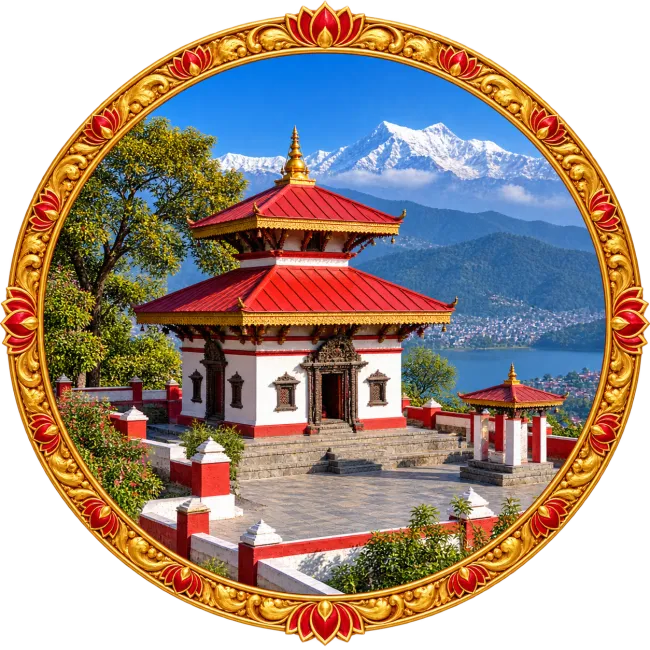
Bindhyabasini Temple, Pokhara, Nepal
Visit Bindhyabasini Temple in Pokhara, one of Nepal’s most revered temples dedicated to Goddess Durga. Situated on a peaceful hilltop overlooking Pokhara city, the temple offers magnificent views of the Annapurna mountain range and the sacred Machhapuchhre peak.
The temple is an important centre of Shakti worship and attracts devotees seeking protection, courage, family prosperity and fulfilment of their wishes. Its white shrine, spacious courtyard and Himalayan surroundings make Bindhyabasini Temple both a sacred pilgrimage site and a popular cultural destination in Pokhara.
About Bindhyabasini Temple
Bindhyabasini Temple is located in the Bindhyabasini area near Pokhara’s historic Old Bazaar. The temple stands on a small hill and can be reached through a series of stone steps.
The presiding deity is Goddess Bindhyabasini, a powerful manifestation of Goddess Durga or Bhagwati. She is regarded as the protector of Pokhara and the surrounding region.
The name Bindhyabasini means “the goddess who resides in the Vindhya Mountains.” The deity is closely connected with Goddess Vindhyavasini, whose principal ancient shrine is situated in the Vindhyachal region of Uttar Pradesh, India.
Devotees visit Bindhyabasini Temple before beginning new businesses, marriages, journeys and important family events. The temple is also a popular location for traditional Hindu wedding ceremonies.
History of Bindhyabasini Temple
Bindhyabasini Temple is believed to have been established during the late 18th century by King Siddhi Narayan Shah, a ruler of the former Kingdom of Kaski.
According to local tradition, the king had a divine dream in which Goddess Bindhyabasini instructed him to bring her sacred image from the Vindhyachal region of India and establish it in his kingdom.
The king sent priests and attendants to bring the deity to Kaski. During the journey, the group stopped to rest at the present hilltop location in Pokhara.
When they prepared to continue their journey, the sacred image could not be lifted from the ground. The attendants interpreted this as the goddess’s desire to remain at that location.
King Siddhi Narayan Shah then ordered the construction of a shrine on the hill. The sacred image was installed, and the goddess became the guardian deity of Pokhara and the former Kaski Kingdom.
The temple has been renovated and expanded over time, but it continues to preserve its traditional religious identity.
Mythology of Goddess Bindhyabasini
Goddess Bindhyabasini is associated with Goddess Yogamaya, the divine feminine power who appeared during the birth of Lord Krishna.
According to the Bhagavata tradition, Lord Krishna was born to Devaki and Vasudeva in the prison of King Kansa. On the same night, Goddess Yogamaya was born to Yashoda and Nanda in Gokul.
Vasudeva secretly carried Lord Krishna to Gokul and returned with the newborn girl. When Kansa tried to kill the child, she escaped from his hands and appeared in the sky as a powerful goddess.
She warned Kansa that the person destined to destroy him had already been born. The goddess later came to be associated with the Vindhya Mountains and was worshipped as Vindhyavasini.
At Pokhara, this same divine power is worshipped as Bindhyabasini Bhagwati. She represents courage, protection, victory and the destruction of evil.
Religious Significance of Bindhyabasini Temple
Bindhyabasini Temple is one of Pokhara’s most important Shakti shrines. The goddess is worshipped as a compassionate mother and powerful protector.
Devotees believe that sincere prayers made at the temple can remove obstacles and provide courage during challenging situations. The goddess is also worshipped for marriage, children, good health and family prosperity.
People visit Bindhyabasini Temple for:
- Protection from negative forces
- Family peace and prosperity
- Blessings for marriage
- Health and well-being of children
- Success in business and employment
- Courage and confidence
- Victory over difficulties
- Safe travel
- Removal of obstacles
- Fulfilment of sincere wishes
- Spiritual strength
- Blessings before important ceremonies
Local residents often visit the temple before beginning any important work.
Main Deity of Bindhyabasini Temple
The presiding deity is Goddess Bindhyabasini, worshipped as a form of Durga and Bhagwati. The sacred image is installed inside the main white shrine.
The goddess is decorated with:
- Red cloth
- Vermilion
- Flowers and garlands
- Traditional jewellery
- Sacred ornaments
- Silver and metal decorations
- Oil lamps
Red is the principal colour associated with the goddess because it represents divine power, courage and Shakti.
The temple complex also contains smaller shrines dedicated to:
- Lord Shiva
- Lord Ganesha
- Goddess Saraswati
- Lord Hanuman
- Lord Krishna
- Goddess Lakshmi
Devotees commonly worship Lord Ganesha before entering the main shrine of Goddess Bindhyabasini.
Architecture of Bindhyabasini Temple
Bindhyabasini Temple is known for its beautiful white structure and hilltop location. The main shrine is constructed in a traditional Shikhara-inspired style.
Important architectural features include:
- White main shrine
- Elevated hilltop location
- Stone steps leading to the temple
- Spacious stone-paved courtyard
- Decorative entrance gateway
- Traditional bells
- Oil-lamp stands
- Smaller shrines surrounding the main temple
- Wedding and ceremonial spaces
- Views of the Annapurna and Machhapuchhre mountains
The temple’s simplicity creates a calm and devotional atmosphere. On clear mornings, visitors can see the snow-covered Himalayan peaks from the courtyard.
Bindhyabasini Temple Timings
The temple may remain open for extended hours during Navratri, Dashain, Chaite Dashain and other special occasions.
Morning Puja and Aarti
The temple opens at 5:00 AM. Priests clean and prepare the main shrine before decorating Goddess Bindhyabasini with fresh clothes, flowers and ornaments.
Morning Aarti is performed at 5:30 AM. The priests offer lamps, incense, flowers, vermilion and sacred water while Durga mantras are recited.
The period between 6:00 AM and 9:00 AM is the best time for darshan. The weather remains pleasant, the courtyard is less crowded and the Himalayan views are generally clearer during the morning.
Bhog and Afternoon Darshan
Bhog is offered to the goddess at 12:00 PM. The offering may contain rice, fruits, sweets and traditional vegetarian preparations.
Afternoon darshan continues after the completion of the Bhog ceremony. This period is convenient for visitors exploring Pokhara’s Old Bazaar and nearby religious sites.
Devotees arranging a special puja or wedding ceremony should consult the authorized temple priests.
Evening Puja and Aarti
Evening Puja begins at 5:30 PM, followed by Aarti at 6:30 PM. Oil lamps are offered to Goddess Bindhyabasini while devotees sing bhajans and recite prayers.
The temple courtyard becomes peaceful during the evening. The lights of Pokhara city and the spiritual atmosphere of the hilltop make evening Aarti a memorable experience.
Visitors should reach the temple before 6:00 PM to attend the complete Aarti ceremony.
Traditional Wedding Ceremonies
Bindhyabasini Temple is one of Pokhara’s most popular places for Hindu wedding ceremonies.
Couples seek the blessings of Goddess Bindhyabasini for:
- Love and mutual understanding
- A stable married life
- Family prosperity
- Children
- Protection from marital difficulties
- Long life and good health
Wedding ceremonies are generally performed in designated areas of the temple complex. Families planning a ceremony should make arrangements with the temple authorities and priests in advance.
Bali Puja at Bindhyabasini Temple
Traditional Shakti worship may include Bali Puja on certain festival days, particularly during Dashain.
Participation in animal sacrifice is not compulsory. Devotees preferring vegetarian worship may present symbolic offerings such as:
- Coconut
- Pumpkin
- Fruits
- Sweets
- Red flowers
- Red cloth
- Incense
- Oil lamps
Visitors who do not wish to witness traditional Bali rituals should avoid the principal sacrificial periods during Maha Ashtami and Maha Navami.
Major Festivals Celebrated
Dashain
Dashain is the most important festival celebrated at Bindhyabasini Temple. Goddess Durga is worshipped during Ghatasthapana, Phulpati, Maha Ashtami, Maha Navami and Vijayadashami.
Thousands of devotees visit the temple to receive blessings for victory, courage and prosperity.
Sharadiya Navratri
The nine forms of Goddess Durga are worshipped during Navratri. Special Aartis, mantras and offerings are arranged throughout the festival.
Chaite Dashain
Chaite Dashain is another major occasion dedicated to Goddess Durga. Devotees observe fasting and offer prayers for protection.
Teej
Women visit the temple during Teej to pray for marital happiness, family well-being and the health of their spouses.
Tihar
The temple is illuminated with oil lamps during Tihar. Goddess Lakshmi and Goddess Durga are worshipped for prosperity.
Full-Moon and Ashtami Days
Ashtami and Purnima dates are considered auspicious for worshipping the goddess. Special prayers may be performed on these days.
Offerings and Prasad
Common offerings made to Goddess Bindhyabasini include:
- Red hibiscus flowers
- Marigold garlands
- Red chunari
- Vermilion
- Bangles
- Cosmetic items
- Fruits and sweets
- Coconut
- Rice and grains
- Incense sticks
- Oil or ghee lamps
- Sacred red threads
- Monetary donations
Women often offer Shringar items while praying for marriage and family well-being.
Prasad may include fruits, sweets, flowers, vermilion and sacred threads blessed during worship.
Entry Fee and Visit Duration
There is no entry fee for regular darshan at Bindhyabasini Temple. Charges may apply for special pujas, wedding arrangements and priest-led ceremonies.
A regular visit requires one to two hours. Visitors attending Aarti or exploring all the smaller shrines should keep two hours.
During Navratri and Dashain, additional time is required because of long queues and special rituals.
Visitor Guidelines
- Wear clean and modest clothing.
- Remove footwear before entering the main temple.
- Maintain silence near the sanctum.
- Ask permission before taking photographs inside the shrine.
- Keep mobile phones on silent mode.
- Follow the designated darshan queue.
- Do not carry alcohol, tobacco or non-vegetarian food.
- Use authorized counters for donations and special pujas.
- Keep the temple courtyard and hill clean.
- Walk carefully on the stone steps during rain.
- Respect wedding ceremonies taking place in the complex.
- Follow the instructions of priests and temple officials.
- Keep children close during crowded festivals.
Best Time to Visit
October to March is the best period for visiting Bindhyabasini Temple because Pokhara experiences pleasant weather and clear Himalayan views.
March to May is also suitable, with colourful flowers and comfortable daytime temperatures.
For clear mountain views and peaceful darshan, visit between 6:00 AM and 9:00 AM. Evening visitors should arrive between 5:00 PM and 6:00 PM to attend Puja and Aarti.
How to Reach Bindhyabasini Temple
By Air
Pokhara International Airport is the nearest airport. Taxis and private vehicles are available for the temple.
From Pokhara Lakeside
Bindhyabasini Temple is approximately 4–5 kilometres from Pokhara Lakeside. Taxis, local buses and rented vehicles are easily available.
From Pokhara Old Bazaar
The temple is located close to Pokhara’s Old Bazaar. Visitors can reach it by walking, taxi or local vehicle.
From Kathmandu
Pokhara is connected with Kathmandu by domestic flights, tourist buses, local buses and private vehicles.
The road journey follows the Prithvi Highway, while a flight offers the fastest travel option.
From India
Indian visitors can enter Nepal through the Sunauli–Bhairahawa border and continue towards Pokhara by bus, taxi or private vehicle.
Indian citizens should carry a valid passport or voter identity card and confirm transportation requirements before departure.
Nearby Places to Visit
Pokhara Old Bazaar
A traditional market area known for historic houses, shops and Newari cultural influences.
Phewa Lake
Pokhara’s famous lake, offering boating and views of the Annapurna mountains.
Tal Barahi Temple
A sacred temple dedicated to Goddess Barahi, situated on an island in Phewa Lake.
Mahendra Cave
A natural limestone cave located in northern Pokhara.
Bat Cave
A cave known for its large bat population and unusual rock formations.
Seti River Gorge
A deep natural gorge formed by the Seti River.
Davis Falls
A famous waterfall where water disappears into an underground tunnel.
Gupteshwar Mahadev Cave
A sacred cave temple dedicated to Lord Shiva, located close to Davis Falls.
World Peace Pagoda
A Buddhist stupa located on a hill overlooking Phewa Lake and Pokhara city.
Conclusion
Bindhyabasini Temple is one of Pokhara’s most sacred and culturally important religious destinations. Established under the patronage of King Siddhi Narayan Shah, the temple is connected with Goddess Vindhyavasini and the ancient tradition of Shakti worship.
Its white hilltop shrine, Himalayan views, daily Aartis and grand celebrations of Navratri and Dashain create a deeply devotional atmosphere. The temple is also an important centre for Hindu wedding ceremonies and family prayers.
A visit to Bindhyabasini Temple offers the blessings of Goddess Durga along with an opportunity to experience the spiritual, cultural and natural beauty of Pokhara.