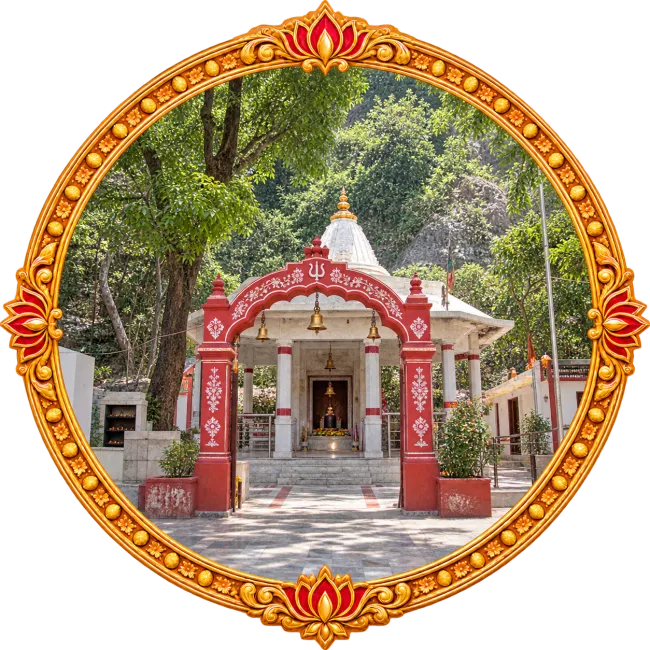
Bilkeshwar Mahadev Temple, Haridwar
Visit Bilkeshwar Mahadev Temple in Haridwar, a sacred shrine dedicated to Lord Shiva and associated with Goddess Parvati’s penance. Also known as Bilvakeshwar or Bilvkeshwar Mahadev Temple, it is set amid wooded surroundings near the Bilva Parvat area.
The temple offers devotees a place for darshan, prayer, and reflection within easy reach of central Haridwar. Its connection with Shiva and Parvati, the nearby Gauri Kund, and the tradition of offering bilva leaves give it a distinctive place in the city’s religious heritage.
About Bilkeshwar Mahadev Temple
Bilkeshwar Mahadev Temple is located near Haridwar Junction Railway Station, approached through the Balmiki Colony area. Despite its proximity to the city, its tree-covered surroundings give the temple a more secluded character.
Lord Shiva is worshipped here in the form of a Shiva Lingam. The temple precinct also includes representations of Nandi and shrines dedicated to Goddess Parvati, Lord Ganesha, and Lord Hanuman.
According to local religious tradition, Goddess Parvati performed penance at this location to obtain Lord Shiva as her husband. The shrine is therefore associated with devotion, perseverance, and the sacred relationship between Shiva and Parvati.
History and Sacred Legend of Bilkeshwar Mahadev Temple
The temple’s remembered past is closely connected with the tradition of Goddess Parvati’s worship of Lord Shiva.
According to the local legend, Parvati undertook penance in the Bilva forest. Pleased with her devotion, Lord Shiva appeared before her and accepted her wish to become his consort.
The temple’s name is linked with bilva, also called bel, a tree whose leaves hold particular significance in Shiva worship. Offering bilva leaves remains an important expression of devotion at the shrine.
The nearby Gauri Kund is also associated with Parvati, who is worshipped as Gauri. Together, the temple and kund preserve the local sacred narrative surrounding her penance. These accounts belong to religious tradition rather than a dated record of the present building’s construction.
Religious Significance of Bilkeshwar Mahadev Temple
Worship of Lord Shiva
The Shiva Lingam forms the centre of worship. Devotees visit to offer prayers, express gratitude, and seek spiritual strength.
Association with Goddess Parvati
Parvati’s penance gives the shrine a special devotional identity. Her story represents patience, dedication, and commitment to a spiritual goal.
For worshippers, this association can make the visit an opportunity to reflect on harmony within relationships and the importance of steadfast devotion.
Significance of Bilva Leaves
Bilva leaves are traditionally offered to Lord Shiva. Their three-leaf form carries several symbolic interpretations within Hindu worship, including an association with Shiva’s three eyes.
A Place for Quiet Reflection
The wooded setting encourages visitors to slow down and spend time in prayer. Quiet chanting and contemplation can be part of the visit without disturbing other devotees or ongoing worship.
Architecture of Bilkeshwar Mahadev Temple
Bilkeshwar Mahadev is a compact temple whose main focus is its sacred worship space rather than a large monumental structure.
The principal shrine stands within a courtyard and houses the Shiva Lingam. A stone representation of Nandi accompanies the shrine, while smaller devotional spaces honour other deities.
Trees surrounding the temple are an important part of its setting. The approach passes through a slightly hilly area, connecting the religious precinct with the nearby residential locality.
The temple’s scale makes it important to keep entrances and pathways clear, particularly when several groups arrive together. Visitors should avoid standing for long periods directly in front of the sanctum after completing darshan.
Bilkeshwar Mahadev Temple Timings
The usual visiting hours are:
Festival arrangements may differ from the regular visiting hours.
Offerings at Bilkeshwar Mahadev Temple
Bilva leaves and water are closely associated with worship at the temple. Devotees traditionally offer bilva leaves to Lord Shiva and perform jalabhishek using Ganga water.
Follow the arrangements in place for approaching the Shiva Lingam and making offerings. Avoid touching or moving ritual objects without permission.
A visit can also include silent prayer or gentle chanting of “Om Namah Shivaya.” Elaborate offerings are not necessary for a meaningful devotional experience.
Keep offering containers and packaging out of the temple courtyard and surrounding vegetation. Do not leave food near the shrines or dispose of religious materials in the nearby kund.
Festivals and Special Worship
Shravan Mondays
Shravan is an important period for Shiva worship, and Bilkeshwar Mahadev receives devotees offering jalabhishek during the month. Mondays carry particular devotional significance.
Visitors attending during Shravan should allow additional time for worship and queues. The experience may be busier than on an ordinary weekday, so avoid planning an immediate onward departure.
How to Reach Bilkeshwar Mahadev Temple
By Train
Haridwar Junction is the nearest principal railway arrival point. The temple can be approached from the station area through Balmiki Colony.
Use the full name Bilkeshwar Mahadev Temple, Haridwar when arranging directions, as similarly named temples exist in other cities.
By Road
After reaching Haridwar, travel towards the railway station and Balmiki Colony area. Local transport can bring visitors towards the approach road, followed by a walk to the shrine.
The final approach is slightly hilly. Wear suitable footwear and allow a slower pace for elderly visitors or anyone with limited mobility.
By Air
Jolly Grant Airport near Dehradun serves the journey to Haridwar. Continue by road towards the city and then the temple approach.
Allow enough time between your arrival and the visit rather than planning darshan immediately after landing.
Nearby Places to Visit
Gauri Kund
Gauri Kund is a small sacred water body near the temple, associated with Goddess Parvati. It is distinct from Gaurikund on the Kedarnath pilgrimage route.
Treat it as a sacred site, keep the surroundings clean, and avoid drinking untreated water.
Maya Devi Temple
Maya Devi Temple can be included in a wider Haridwar pilgrimage itinerary. It is dedicated to the Divine Mother and is one of the city’s important religious landmarks.
Mansa Devi Temple
Mansa Devi Temple is another significant shrine in Haridwar. Plan it as a separate stop, allowing time for its hilltop approach and visitor arrangements.
Har Ki Pauri
Har Ki Pauri provides an opportunity to visit the Ganga ghats. Its Ganga Aarti is a separate riverside ceremony and should not be confused with worship at Bilkeshwar Mahadev Temple.
Important Visitor Guidelines
Wear modest clothing and remove footwear at the designated place.
Use comfortable shoes for the approach walk.
Keep the sanctum entrance and courtyard pathways clear.
Follow local arrangements for jalabhishek and offerings.
Maintain a quiet atmosphere during worship.
Seek permission before photographing shrines or ceremonies.
Avoid feeding or approaching animals in the wooded surroundings.
Take care on wet paths during rain.
Carry drinking water and dispose of waste responsibly.
Stay on the established approach route.
Conclusion
Bilkeshwar Mahadev Temple combines devotion to Lord Shiva with the local tradition of Goddess Parvati’s penance. Its wooded setting, Shiva Lingam, and nearby Gauri Kund make it a meaningful part of Haridwar’s sacred landscape.
Whether visited independently or alongside other temples in the city, the shrine offers an opportunity for prayer and reflection on patience, dedication, and spiritual commitment.