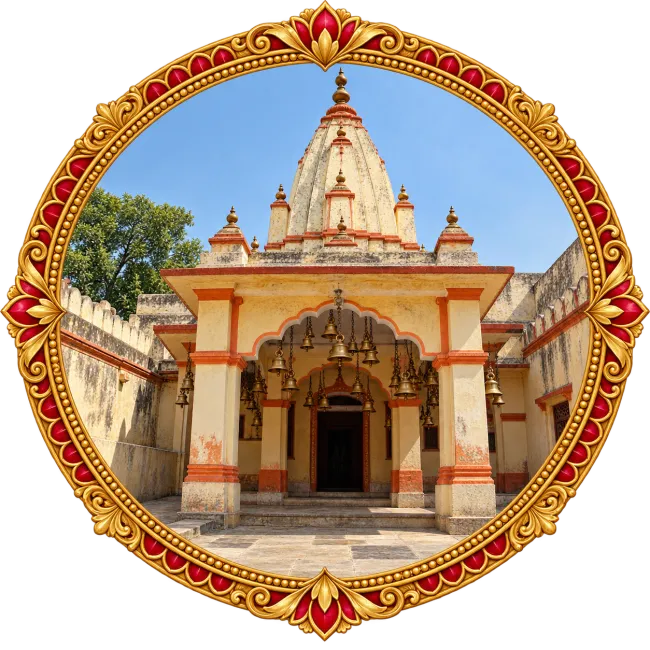
Bhimsen Temple Mainpuri
Visit Bhimsen Temple in Mainpuri, an ancient and highly revered Shiva temple associated with the legends of the Mahabharata. Located in the Gadiwan area of Mainpuri, the temple is known for its sacred Shiva form, the traditional belief that Bhima worshipped Lord Shiva here during the Pandavas’ exile, its unique connection with Hindu and Muslim saints, and the grand celebrations organised during Sawan and Mahashivratri.
About Bhimsen Temple Mainpuri
Bhimsen Temple, also known as Shri Bhimsen Ji Maharaj Temple, is one of the most prominent Shiva temples in Mainpuri, Uttar Pradesh. The temple is situated in Mohalla Gadiwan, close to Gopi Nath Nagar and Dharau in Mainpuri city.
Despite its name, the temple is primarily dedicated to Lord Shiva. The sacred Shiva form worshipped here is locally addressed as Shri Bhimsen Ji Maharaj. The temple is considered an ancient Siddhpeeth where devotees offer water, milk, bel leaves, flowers, dhatura, and other traditional items to Lord Shiva.
Local tradition connects the sacred site with the Pandavas. It is believed that while travelling towards Bithoor during their period of incognito exile, the Pandavas stopped near the Ichhu River, presently known as the Ishan River. At this place, Bhima worshipped Lord Shiva and established the sacred Shiva Lingam.
The temple is particularly crowded on Mondays, during the month of Sawan, and on Mahashivratri. Devotees believe that worshipping Lord Shiva here with devotion brings mental peace, strength, prosperity, and relief from personal difficulties.
History of Bhimsen Temple Mainpuri
The history of Bhimsen Temple is preserved through religious traditions, regional accounts, and stories passed down through generations. The present temple is believed to have taken architectural form during the 12th century, while the sacred Shiva image and the religious importance of the site are associated with a much earlier period.
According to the principal Mahabharata tradition connected with the temple, the Pandavas passed through this region during their exile. They travelled along the banks of the ancient Ichhu River while proceeding towards Bithoor.
Bhima, the powerful younger brother of Yudhishthira, stopped at this place and worshipped Lord Shiva. He is believed to have installed the Shiva Lingam within the present sanctum. The shrine consequently became associated with Bhima and came to be known as Bhimsen Temple.
Another local tradition connects the construction of the temple with a Shiva devotee named Bhimsen, who was born in Manchhana village, approximately 7 kilometres from Mainpuri. According to this account, Bhimsen was born into a Kayastha family and received the blessings of a travelling saint during his childhood.
The story states that Bhimsen later became deeply devoted to Lord Shiva. He established or developed the temple at the sacred site and dedicated his life to Shiva worship. This tradition offers another explanation for the name “Bhimsen Temple.”
The temple underwent repairs and renovations during different periods. These changes helped it develop into the present religious complex while preserving its ancient Shiva traditions.
Maharishi Markandeya is also traditionally associated with the temple. It is believed that he performed spiritual practices and worshipped Lord Shiva at this sacred location.
Who Built Bhimsen Temple and When?
The present form of Bhimsen Temple is associated with the 12th century. The temple’s religious origin, however, is traditionally connected with the Mahabharata period and Bhima’s worship of Lord Shiva.
A separate local tradition attributes the construction or development of the temple to a Shiva devotee named Bhimsen from Manchhana village near Mainpuri. According to this belief, he established the temple after dedicating his life to the worship of Lord Shiva.
The current temple complex is the result of renovation, reconstruction, and expansion undertaken during different periods. Therefore, the temple combines Mahabharata traditions, medieval architectural history, and the legacy of local Shiva devotees.
Religious Significance of Bhimsen Temple
Bhimsen Temple is considered an important Siddhpeeth of Lord Shiva. Devotees believe that prayers performed here with sincerity help remove obstacles, provide courage, and bring spiritual peace.
A prominent belief associated with the temple is the 40-day worship tradition. Devotees perform regular puja of the sacred Shiva Lingam for 40 consecutive days while following religious discipline. It is believed that Lord Shiva fulfils the sincere wish of a devotee who completes this worship with faith.
The temple is visited by devotees seeking blessings for:
- Fulfilment of wishes
- Good health and wellbeing
- Courage and inner strength
- Success in education and employment
- Family happiness and harmony
- Relief from fear and anxiety
- Marriage and relationship matters
- Protection from negative influences
- Prosperity and financial stability
- Spiritual progress
Mondays are considered especially auspicious because this day is traditionally dedicated to Lord Shiva. Devotees observe a fast, perform Jalabhishek, and offer bel leaves to Shri Bhimsen Ji Maharaj.
Main Deity of Bhimsen Temple
The principal deity of Bhimsen Temple is Lord Shiva. The sacred form in the sanctum is worshipped locally as Shri Bhimsen Ji Maharaj.
The temple is distinguished by its representation of Lord Shiva in a seated Padmasana posture. Similar seated forms of Shiva are also associated with the temples of Bateshwar. The deity is traditionally described with large matted locks, a crescent moon on the forehead, and prominent moustaches.
This representation differs from the more commonly seen form of Shiva worshipped only through a Shiva Lingam. The unusual seated form gives the temple a distinctive artistic and religious identity.
The Shiva Lingam connected with Bhima’s worship is the centre of daily Jalabhishek, Rudrabhishek, and other rituals. During Sawan Mondays and Mahashivratri, the sanctum is elaborately decorated with flowers, bel leaves, sandalwood paste, sacred ash, and colourful cloth.
Architecture of Bhimsen Temple
Bhimsen Temple reflects the character of an ancient North Indian Shiva shrine that has developed through several phases of renovation. The complex includes the main entrance, a courtyard, prayer spaces, the sanctum, shrines, sacred images, bells, and the samadhis of saints.
The sanctum is the spiritual centre of the temple. The sacred Shiva Lingam and the distinctive form of Shri Bhimsen Ji Maharaj are worshipped here. Traditional lamps, bells, floral decorations, religious symbols, and paintings of Hindu deities add to the devotional atmosphere.
A notable feature of the temple is the large number of bells offered by devotees after the fulfilment of their wishes. Some of these brass bells are exceptionally heavy. They represent gratitude and the continued faith of families who have worshipped at the temple for generations.
The temple also contains stone plaques installed by devotees. These plaques commemorate religious offerings, fulfilled vows, renovation work, and contributions made to the temple.
Baba Raghav Das and Baba Gulab Shah Samadhis
One of the most remarkable features of Bhimsen Temple is its association with Baba Raghav Das and the Muslim saint Baba Gulab Shah, also remembered as Gulab Khan or Gulabshahi Baba.
Baba Raghav Das’s samadhi is situated within the temple complex, while the samadhi of Baba Gulab Shah is associated with the outer section of the shrine.
According to local tradition, a bhandara was being organised at the temple when Baba Gulab Shah arrived and requested water or a sweet drink in his kamandal. The disciples attempted to fill it, but it remained unfilled. Baba Raghav Das then came forward with his own kamandal.
The story states that neither Baba Raghav Das’s vessel became empty nor Baba Gulab Shah’s vessel became full. Recognising each other’s spiritual power, the two saints embraced.
Both saints later became permanently associated with the sacred site. Devotees continue to pay respect at both samadhis, making the temple a symbol of harmony between Hindu and Muslim spiritual traditions.
Some visitors respectfully offer a cloth or chadar at the samadhi of Baba Gulab Shah after completing their worship of Lord Shiva.
Bhimsen Temple Mainpuri Timings
The regular darshan schedule is:
On Sawan Mondays and Mahashivratri, devotees may begin gathering at the temple from 4:00 AM. The temple remains accessible for extended darshan during major celebrations.
Special rituals such as Maharudrabhishek, Shiva Mahapuran Katha, night vigil, and festival aarti may follow a separate schedule. Visitors planning a special puja should confirm the day’s programme with the temple management.
Daily Puja and Rituals
The daily worship begins with the purification of the sanctum and ceremonial bathing of the Shiva Lingam. Priests offer water, milk, curd, honey, ghee, sandalwood paste, bel leaves, flowers, and sacred ash.
The principal rituals include:
- Morning cleaning and purification
- Jalabhishek of the Shiva Lingam
- Panchamrit Abhishek
- Offering of bel leaves and flowers
- Morning puja and aarti
- Recitation of Shiva mantras
- Rudrabhishek
- Shringar of Shri Bhimsen Ji Maharaj
- Evening puja and aarti
- Distribution of prasad
Devotees commonly chant “Om Namah Shivaya” and the Mahamrityunjaya Mantra. Shiva Chalisa, Rudrashtakam, and passages from the Shiva Mahapuran are also recited.
Forty-Day Worship Tradition
A special religious tradition at Bhimsen Temple involves worshipping the Shiva Lingam for 40 consecutive days. Devotees begin the practice after making a religious resolution or sankalp.
During the worship period, they may:
- Visit the temple daily
- Offer clean water to the Shiva Lingam
- Present bel leaves and flowers
- Chant “Om Namah Shivaya”
- Observe simplicity and religious discipline
- Avoid alcohol, tobacco, and non-vegetarian food
- Participate in the morning or evening aarti
- Pray for one sincere wish
After completing the 40 days, devotees may offer prasad, a bell, or organise a small bhandara as an expression of gratitude.
Major Festivals Celebrated at Bhimsen Temple
Mahashivratri
Mahashivratri is one of the temple’s biggest festivals. Special puja, Rudrabhishek, Shiva Lingam decoration, bhajan-kirtan, religious discourses, and night vigil are organised.
Devotees observe a fast and offer water, milk, honey, bel leaves, dhatura, flowers, and fruits to Lord Shiva. The temple receives visitors throughout the day and night.
Sawan Month
The entire month of Sawan is celebrated with great devotion. Thousands of Shiva devotees and Kanwariyas visit the temple to offer holy Ganga water.
Every Monday of Sawan features:
- Special Jalabhishek
- Maharudrabhishek
- Grand shringar
- Religious procession
- Bhajan and kirtan
- Shiva Mahapuran Katha
- Prasad distribution
- Community bhandara
A fair-like atmosphere develops around the temple on Sawan Mondays.
Sawan Mahotsav
The temple organises a special Sawan Mahotsav with Shiva Mahapuran recitation, Shrimad Bhagavat Katha, religious discourses, devotional music, and cultural programmes.
Kartik Month and Pradosh Vrat
Pradosh Vrat is considered auspicious for Shiva worship. Devotees visit the temple during the evening and offer lamps, water, milk, and bel leaves.
Shravan Shivratri
Shravan Shivratri is another important occasion when Kanwariyas offer Ganga water to the Shiva Lingam. Special crowd arrangements are made for devotees.
Offerings and Prasad
Common offerings include:
- Water and Ganga water
- Milk and Panchamrit
- Bel leaves
- White and blue flowers
- Dhatura
- Aak flowers
- Sandalwood paste
- Sacred ash
- Fruits and sweets
- Incense sticks
- Earthen lamps
- Rudraksha
- Brass bells
Devotees should use designated places for Jalabhishek and offerings. Milk and other liquid offerings should be poured carefully to maintain cleanliness within the sanctum.
Prasad generally includes batasha, mishri, fruits, peda, or other sweets. Bhandaras are organised during Mahashivratri, Sawan Mondays, and special religious events.
Best Time to Visit Bhimsen Temple
October to March is the most comfortable period for visiting the temple. The weather remains pleasant for darshan and local sightseeing.
The best daily darshan time is between 6:30 AM and 9:00 AM. Visitors wishing to attend the evening aarti should arrive before 6:30 PM.
Sawan is the best period for experiencing the temple’s grand Shiva worship and festive atmosphere. However, Mondays during Sawan are extremely crowded. Devotees seeking a quieter darshan should visit on a weekday other than Monday.
Entry Fee and Visit Duration
Entry to Bhimsen Temple is free.
A regular visit generally requires 30 to 60 minutes. On ordinary Mondays, devotees may require additional time because of the larger crowd. During Sawan Mondays and Mahashivratri, darshan may take 1 to 3 hours.
Charges may apply for individually arranged Rudrabhishek, Maharudrabhishek, havan, religious recitation, or family ceremony. These rituals should be booked through authorised temple representatives.
Visitor Guidelines
- Wear clean and respectful clothing.
- Remove footwear before entering the worship area.
- Follow the queue for Jalabhishek and darshan.
- Do not push other devotees near the sanctum.
- Offer water and milk only at the designated place.
- Avoid wasting milk or other puja materials.
- Do not touch sacred images or samadhis without permission.
- Maintain respect at the samadhis of Baba Raghav Das and Baba Gulab Shah.
- Keep the temple premises clean.
- Ask permission before taking photographs.
- Keep children and elderly visitors close during crowded festivals.
- Use authorised counters for donations and special puja.
- Follow police and volunteer instructions during Sawan and Mahashivratri.
How to Reach Bhimsen Temple Mainpuri
By Train
Mainpuri Junction is the nearest railway station. The temple is located a short distance from the station and can be reached by auto-rickshaw, e-rickshaw, cycle-rickshaw, or taxi.
Mainpuri Junction lies on the Shikohabad–Farrukhabad railway route and provides connectivity with nearby cities.
By Road
Mainpuri is connected by road with Agra, Etah, Etawah, Firozabad, Farrukhabad, Shikohabad, and Kannauj. Government buses, private buses, taxis, and personal vehicles are available.
After reaching Mainpuri city, visitors can ask for Shri Bhimsen Ji Maharaj Temple in Mohalla Gadiwan or Gopi Nath Nagar.
By Air
Agra Airport is the nearest airport. Visitors can hire a taxi or use road transport from Agra to reach Mainpuri.
Lucknow Airport provides better flight connectivity for travellers arriving from distant states but is farther from the temple.
Nearby Places to Visit
Visitors can also explore:
- Sheetla Mata Temple
- Maharaja Tej Singh Fort
- Kali Mata Temple
- Chandeshwar Mahadev Temple
- Falahari Ashram
- Mainpuri city markets
- Saman Bird Sanctuary
- Shri Devi Mela Ground
Conclusion
Bhimsen Temple is one of Mainpuri’s most important ancient Shiva shrines. Its association with Bhima and the Pandavas, its 12th-century temple form, the distinctive Padmasana image of Lord Shiva, and the 40-day worship tradition make it a unique spiritual destination.
The samadhis of Baba Raghav Das and Baba Gulab Shah also make the temple a meaningful symbol of religious harmony. Grand celebrations during Sawan and Mahashivratri, the offering of bells after the fulfilment of wishes, and the daily worship of Shri Bhimsen Ji Maharaj continue to preserve the temple’s devotional heritage.
Whether devotees come for Jalabhishek, Rudrabhishek, Monday worship, evening aarti, or a peaceful darshan, Bhimsen Temple offers a powerful atmosphere of faith, history, and spiritual unity.