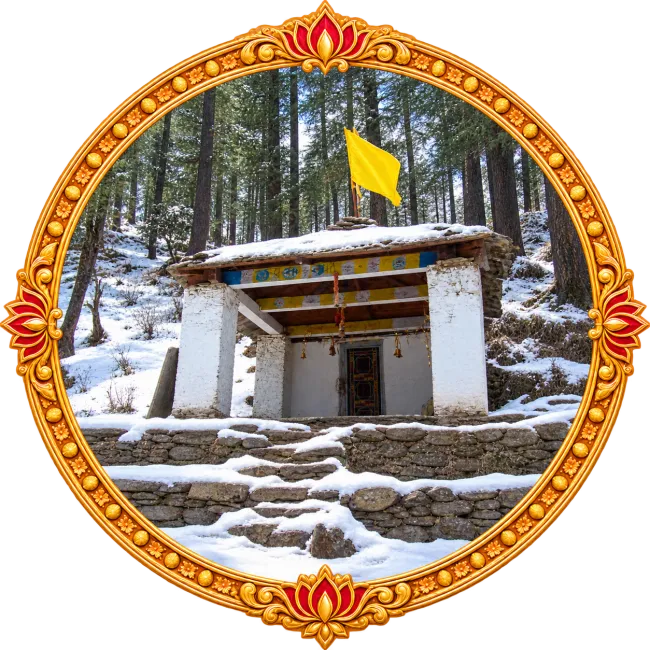
Bhavishya Badri Temple, Subhain, Uttarakhand
Bhavishya Badri Temple is a sacred Vishnu shrine situated near Subhain village in the Chamoli district of Uttarakhand. Surrounded by forests and Himalayan slopes, the temple forms part of the Panch Badri pilgrimage circuit.
The name Bhavishya Badri means “the Badrinath of the future.” According to religious tradition, Lord Badrinarayan will be worshipped here when the present route to Badrinath becomes inaccessible. Its connection with this prophecy gives the shrine a distinctive place in Uttarakhand’s spiritual heritage.
About Bhavishya Badri Temple
Bhavishya Badri stands at an elevation of approximately 2,744 metres, beyond Tapovan near Joshimath. The shrine is reached through a mountain trail passing through the Subhain area.
Lord Vishnu is worshipped here in his Narasimha form. The temple belongs to the Panch Badri circuit alongside Badrinath, Yogadhyan Badri, Vridha Badri and Adi Badri. Its forest setting offers a quieter pilgrimage experience than the main Badrinath shrine.
History of Bhavishya Badri Temple
Bhavishya Badri belongs to the longstanding Vishnu-worship traditions of the Garhwal Himalayas. Its religious identity is closely connected with Badrikashram and Narasimha Temple in Joshimath.
The shrine’s significance comes primarily from the belief that it will become the future seat of Badrinarayan. A verified construction year and named builder for the existing structure are not established in the available official descriptions.
The temple should therefore be understood as a traditional Himalayan pilgrimage shrine rather than a monument that can confidently be assigned to a particular king or century.
Legend of the Future Badrinath
The principal legend connects Bhavishya Badri with the Narasimha image at Joshimath.
According to local belief, one arm of the image is gradually becoming thinner. When it finally separates, the mountains associated with the route to Badrinath will close the passage, making the present shrine inaccessible.
Lord Badrinarayan will then manifest at Bhavishya Badri, where devotees will continue to worship him. This is a religious prophecy, not a geological forecast.
For worshippers, the story expresses the continuity of divine presence: physical routes and landscapes may change, but devotion to Lord Vishnu will endure.
Religious Significance
Bhavishya Badri represents hope, protection and the enduring presence of Lord Vishnu. Its association with Narasimha also recalls the protection of Prahlada and the victory of sincere devotion over arrogance.
Devotees visit to pray for:
Courage and protection
Family peace and well-being
Strength during difficult circumstances
Knowledge and spiritual understanding
Safe travel
Devotion to Lord Vishnu
Many pilgrims include Bhavishya Badri in a journey covering Joshimath, Badrinath and other Badri shrines.
Temple Architecture and Surroundings
Bhavishya Badri is a compact mountain shrine rather than a large temple complex. The main focus is the sanctum and its sacred image.
The surrounding forest, village pathways and mountain slopes are integral to the experience. Visitors approach on foot, with the final journey offering opportunities to appreciate the landscape and traditional life of Subhain.
The temple’s modest scale encourages quiet prayer. Visitors should follow the priest’s directions regarding entry, offerings and photography.
Bhavishya Badri Temple Timings
Opening Season and Winter Access
Uttarakhand Tourism describes Bhavishya Badri as a seasonal shrine that closes during winter and opens with the Badrinath pilgrimage season. Confirm the opening status before travelling, particularly near the beginning or end of the season.
Snow, rain and changing trail conditions can affect access even when the shrine is open.
Morning and Evening Worship
Worship centres on Lord Vishnu and devotional offerings presented according to the shrine’s local customs.
Pilgrims can ask the priest about participation in prayers, offering flowers and Tulsi, or arranging a family Puja. The availability and timing of special services should be settled directly before the visit.
Anyone wishing to attend evening worship should arrange nearby accommodation and confirm the return route. A late descent through an unfamiliar forest trail is best avoided.
Festivals and Auspicious Visits
Narasimha Jayanti
Narasimha Jayanti is especially relevant because the presiding form is associated with Lord Narasimha. Visitors should confirm any special programme locally.
Janmashtami and Ekadashi
These occasions are important in Vishnu worship. Devotees may observe fasting, recite sacred names and offer prayers according to their traditions.
Seasonal Opening
The beginning of the pilgrimage season is significant for local worshippers and visitors. The date and access arrangements should be checked before planning a journey.
A large public fair or extended night programme should not be assumed unless announced locally.
Offerings and Prasad
Suitable offerings for Vishnu worship include:
Tulsi leaves
Flowers
Fruits
Sweets
Incense
Voluntary donations
Ask the priest which offerings are accepted. Carry modest quantities because supplies and waste-disposal facilities are limited.
Prasad depends on the day’s worship arrangements. Visitors should not assume that cooked meals are available at the temple.
Trek to Bhavishya Badri
The traditional approach begins from Saldhar on the Joshimath–Tapovan route and continues towards Subhain and the temple.
The Chamoli district description lists a 6-kilometre trek from Saldhar. The actual walking distance depends on the usable roadhead and route, so confirm the starting point locally rather than treating every advertised distance as interchangeable.
Expect uphill walking, village sections and forest paths. Start early, carry water and allow sufficient time for breaks and the descent.
Best Time to Visit
May–June and September–October are practical periods to consider, provided the temple is open and local conditions permit travel.
The monsoon can bring slippery paths, swollen streams and landslides. Later in autumn, colder temperatures and shorter daylight hours require additional preparation.
Check weather and road advisories shortly before departure.
How to Reach Bhavishya Badri Temple
By Air
Jolly Grant Airport near Dehradun is the usual air gateway for this part of Garhwal. Continue by road towards Joshimath.
By Train
Rishikesh, Yog Nagari Rishikesh and Haridwar are convenient railway gateways. The onward mountain journey is by road.
By Road and Trek
The usual approach is:
Rishikesh → Devprayag → Rudraprayag → Karnaprayag → Chamoli → Joshimath → Tapovan/Saldhar → Subhain → Bhavishya Badri
Arrange the final road transfer and walking route with local assistance. Do not assume vehicles can reach the temple entrance.
Accommodation and Facilities
Joshimath offers the widest choice of accommodation and services in the immediate region. Homestays may be available in Subhain or nearby villages, but advance confirmation is advisable.
Carry drinking water, snacks, essential medicines, cash, a charged phone and rain protection. Mobile coverage, transport and food availability may be limited along the trail.
Entry, Dress and Visitor Guidelines
Confirm any current access, guide or special-Puja charges locally. Avoid paying unauthorised agents promising guaranteed darshan or ritual results.
Wear modest clothing, supportive walking shoes and warm layers. Remove footwear where instructed.
Important precautions include:
Stay on the established trail.
Avoid walking after dark.
Do not pluck forest plants.
Carry all packaging back.
Follow photography restrictions.
Respect village property and customs.
Postpone travel when local authorities advise against it.
Nearby Places to Visit
Narasimha Temple, Joshimath
Jyotirmath
Tapovan
Vishnuprayag
Yogadhyan Badri, Pandukeshwar
Vridha Badri, Animath
Badrinath Temple
Auli
These places require separate travel planning and are not all within walking distance of the shrine.
Conclusion
Bhavishya Badri Temple is a distinctive Panch Badri shrine associated with the future manifestation of Lord Badrinarayan. Its Narasimha worship, connection with Joshimath and forested Himalayan setting give it lasting spiritual importance.
A meaningful visit combines devotion with careful planning: confirm the temple’s opening status, consult the local priest about worship times and complete the mountain walk in safe daylight conditions.