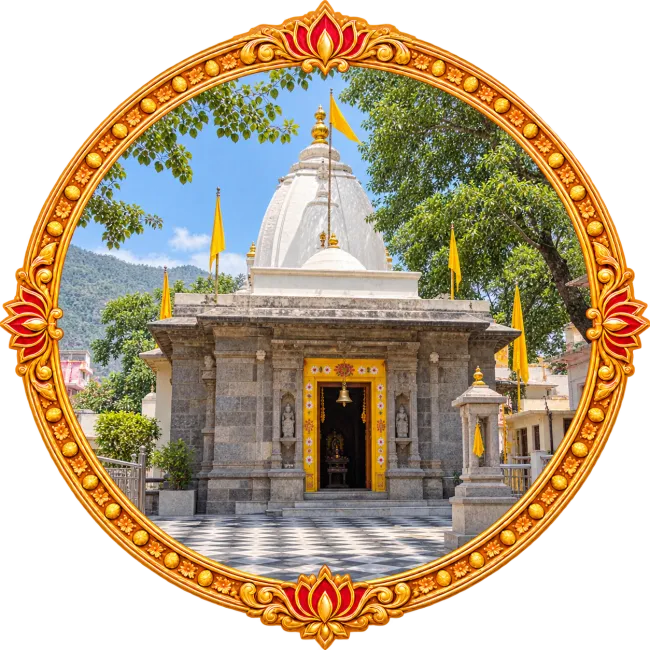
Bharat Mandir, Rishikesh
Visit Bharat Mandir in Rishikesh, one of the city’s oldest and most revered temples dedicated to Lord Vishnu. Also known as Shri Hrishikesh Narayan Bharat Bhagwan Temple, this sacred shrine holds an important place in the religious heritage of Uttarakhand.
Situated near Triveni Ghat, the temple is known for its black-stone deity, association with Adi Shankaracharya and distinctive celebrations of Basant Panchami and Akshaya Tritiya. Its location in the old town makes it a convenient spiritual stop for pilgrims exploring Rishikesh.
About Bharat Mandir
Bharat Mandir is situated at Jhanda Chowk in the Main Bazar area of Rishikesh. The presiding deity is Lord Vishnu, worshipped here as Hrishikesh Narayan Bharat Bhagwan.
The name “Bharat” in this temple refers to the form of Lord Vishnu worshipped at the shrine. The temple’s identity is closely connected with the sacred traditions surrounding the name Rishikesh.
According to temple tradition, Lord Vishnu appeared before the sage Raibhya after being pleased with his penance. This association makes Bharat Mandir an important place for understanding the spiritual history of the town.
History of Bharat Mandir
The temple’s tradition associates the reinstallation of the deity with Adi Shankaracharya, approximately in 789 CE, on the occasion of Basant Panchami. This event is remembered through the temple’s annual spring festival.
The association concerns the renewal of worship and reinstallation of the sacred image, rather than establishing that the entire present structure was built at that time.
The outer structure was reconstructed in 1832 CE under Maharaja Yashwant Singh Malvendra Bahadur of Nabha. The shrine therefore preserves different stages of religious patronage and architectural renewal.
Its history reflects the continued importance of Vishnu worship in Rishikesh and the efforts of successive generations to maintain the sacred site.
Legend of Raibhya Rishi
According to the temple’s sacred tradition, Raibhya Rishi performed intense penance at this place. Pleased with his devotion, Lord Vishnu appeared before him.
One account describes Vishnu appearing on a mango tree that bent under his presence. This is associated with the sacred name Kubjamrak, referring to the bent mango tree.
The legend connects the shrine with devotion, control over the senses and the pursuit of spiritual freedom. For worshippers, it represents the relationship between sincere spiritual practice and divine grace.
Religious Significance of Bharat Mandir
Bharat Mandir is a centre of worship dedicated to Lord Vishnu as Hrishikesh Narayan. Temple tradition links this divine form with mastery over the senses and liberation from Maya, or worldly illusion.
Devotees visit with prayers for peace, spiritual discipline and the well-being of their families. The temple encourages reflection on devotion and the deeper purpose of pilgrimage.
Its significance is particularly visible during Basant Panchami and Akshaya Tritiya, when distinctive traditions bring together worshippers from Rishikesh and the surrounding region.
Main Deity of Bharat Mandir
The principal image depicts Lord Vishnu with four arms, holding the Shankha, Chakra, Gada and Padma—the conch, discus, mace and lotus.
The deity is carved from a single piece of black stone traditionally described as Shaligram Shila. Worshipped as Hrishikesh Narayan Bharat Bhagwan, the image forms the central focus of darshan.
The four attributes express familiar aspects of Vishnu’s divine identity, including protection, spiritual authority and the preservation of cosmic order.
Architecture of Bharat Mandir
Bharat Mandir is constructed with substantial stone masonry and stands on a raised platform. Its architecture reflects the shrine’s long history of preservation and rebuilding.
Important features include:
Thick stone walls.
A central sanctum containing the black-stone Vishnu image.
A main structure with sixteen corners.
An outer arrangement of nine domes.
A stone image of Lord Varaha beside the principal deity.
A circumambulatory area used for Parikrama.
The shrine also preserves a Sri Yantra within its sacred interior, traditionally associated with Adi Shankaracharya. Access to the innermost sanctum follows the temple’s religious restrictions.
Sacred Trees at Bharat Mandir
An unusual feature near the temple is the presence of banyan, peepal and bel trees growing closely together, with intertwined roots.
Devotional tradition associates this grouping with the Hindu Trinity—Brahma, Vishnu and Shiva. The trees form part of the temple’s sacred surroundings and are a distinctive feature for visitors to observe respectfully.
An excavated Buddha image is also associated with this area of the complex.
Bharat Mandir Timings
Bharat Mandir follows separate morning and evening visiting sessions.
Plan your visit within either darshan session, allowing time to explore the temple respectfully without arriving immediately before closure.
Basant Panchami Celebration
Basant Panchami is one of Bharat Mandir’s most important festivals. It commemorates the reinstallation of the deity associated with Adi Shankaracharya.
The celebration includes a ceremonial procession in which the sacred image is taken for a holy bath at Mayakund. The procession then moves through the town before returning to the temple for symbolic reinstallation.
This tradition connects the temple, the sacred waters and the surrounding community. It is a distinctive expression of Rishikesh’s living religious heritage.
Akshaya Tritiya and Charan Darshan
Akshaya Tritiya holds special importance because the deity’s feet are uncovered for Charan Darshan on this occasion.
Devotees also undertake 108 Parikramas, or circumambulations, of the temple. In the shrine’s devotional tradition, this practice is considered especially meritorious and is associated with the blessings of Lord Badrinarayan.
The significance of these practices belongs to religious belief and the temple’s established festival traditions.
Temple Museum
Bharat Mandir has a museum preserving objects discovered during excavations within the temple premises.
The collection includes pottery, ornamental bricks and sculptural fragments. Images of Yaksha, Yakshini and four-armed Vishnu are among the notable objects described in the collection.
These remains add an archaeological dimension to the visit, allowing visitors to appreciate the site as both an active place of worship and a repository of regional heritage.
Educational and Cultural Contribution
The Bharat Mandir institution has also contributed to education in Rishikesh.
Shri Bharat Sanskrit Mahavidyalaya was founded on 11 March 1921 by Mahant Parashuram Ji Maharaj to support Sanskrit learning and preserve Vedic culture.
The wider Bharat Mandir organisation subsequently developed educational and social-service activities. This gives the institution a role beyond daily worship, connecting religious heritage with learning and community life.
How to Reach Bharat Mandir
By Air
Jolly Grant Airport in Dehradun is the nearest airport serving Rishikesh. Continue by road towards the town and the Main Bazar area.
By Train
Rishikesh Railway Station provides a rail access point for the town. From the station, continue towards Jhanda Chowk and Bharat Mandir.
By Road
The temple’s address is Jhanda Chowk, Main Bazar, Rishikesh. When arranging local transport, use this location to distinguish it from other temples with similar names.
From Triveni Ghat
Bharat Mandir is near Triveni Ghat, making the two suitable stops for the same local itinerary. Allow time to walk through the market streets and approach the temple without rushing.
Nearby Places to Visit
Triveni Ghat
Triveni Ghat is one of Rishikesh’s principal riverfront pilgrimage sites and is known for its evening Ganga Aarti.
Swarg Ashram
The Swarg Ashram area contains religious institutions and centres associated with yoga and spiritual study.
Parmarth Niketan
Parmarth Niketan is another spiritual destination to include in a broader Rishikesh itinerary. These additional stops require separate travel beyond the immediate Bharat Mandir neighbourhood.
Important Visitor Guidelines
Wear clean, modest clothing.
Remove footwear before entering designated sacred areas.
Respect restrictions on entering the inner sanctum.
Keep phones silent during worship.
Follow photography instructions.
Do not touch historic sculptures or museum objects.
Avoid damaging the sacred trees.
Keep passages clear for other devotees.
Allow additional time during Basant Panchami and Akshaya Tritiya.
Keep the temple and surrounding market area clean.
Conclusion
Bharat Mandir is an important part of Rishikesh’s sacred identity. Its worship of Hrishikesh Narayan, connection with Adi Shankaracharya and distinctive festival traditions give it a special place among the town’s temples.
The stone architecture, sacred trees, museum and educational legacy add depth to the pilgrimage experience. A visit offers an opportunity to explore the relationship between devotion, history and community life in the heart of Rishikesh.