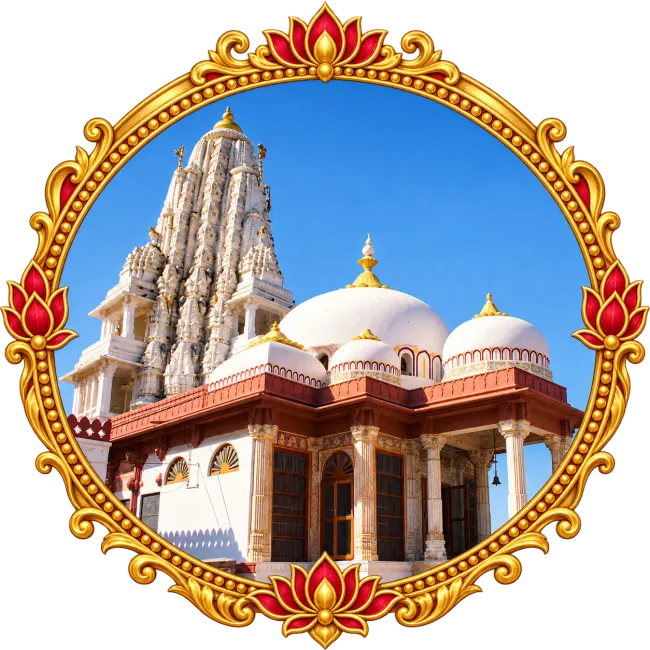
Bhandasar Jain Temple
Visit Bhandasar Jain Temple in Bikaner, one of Rajasthan’s most beautifully decorated Jain temples and an outstanding example of medieval art and architecture. Dedicated to Lord Sumatinath, the fifth Jain Tirthankara, the temple is famous for its gold-leaf paintings, colourful frescoes, mirror work, intricately carved pillars and three-storey structure. Construction was initiated by the wealthy Jain merchant Bhandasa Oswal in 1468 and completed in 1514.
About Bhandasar Jain Temple, Bikaner
Bhandasar Jain Temple, also called Bhanda Shah Jain Temple, is a historic Shwetambara Jain shrine situated in the old city of Bikaner, Rajasthan. It stands close to Shri Laxminath Temple and is approximately three kilometres from Bikaner Junction Railway Station.
The temple is dedicated to Lord Sumatinath, the fifth Tirthankara of Jainism. The name Sumatinath means the Lord of Wisdom or Righteous Intellect. Jain devotees worship him as a spiritually liberated teacher who guides people towards non-violence, truth, self-control and freedom from worldly attachments.
Bhandasar Temple is famous not only as a place of worship but also for its extraordinary artistic decoration. The interiors are covered with colourful paintings, floral patterns, gold-leaf work, carved stone, traditional Usta art and ornamental mirrors.
The temple has three storeys, and visitors can climb to the upper levels when access is permitted. The balconies and rooftop areas provide views of Bikaner’s old city, including historic havelis, temples and closely packed houses.
Bhandasar Jain Temple is protected as a monument of national importance by the Archaeological Survey of India. Regular worship continues inside the temple while its historic paintings and architectural elements are preserved.
History of Bhandasar Jain Temple
Construction of Bhandasar Jain Temple was started in 1468 by Bhandasa Oswal, a prosperous Jain merchant. He belonged to the influential Oswal Jain community, which played an important role in Rajasthan’s trade, culture and temple-building traditions.
The temple was constructed as an expression of devotion to Lord Sumatinath. Skilled stone carvers, painters and artisans were employed to create its pillars, sanctum, mandapas and decorative surfaces.
The complete construction process continued for several decades. Bhandasa Oswal passed away before the project was completed, and the remaining work was continued by his family and members of the Jain community. The temple is generally recorded as having been completed in 1514.
Later generations added paintings, gold-leaf decoration, mirror work and other artistic details. As a result, the temple displays a combination of late-medieval architecture and decorative styles developed in Bikaner during subsequent periods.
Over the centuries, the temple remained an active centre of Jain worship. Its delicate paintings and ornamental surfaces were repaired and conserved at different times. Today, the structure is both a functioning religious shrine and an important protected heritage monument.
Who Built Bhandasar Jain Temple?
Bhandasar Jain Temple was commissioned by Seth Bhandasa Oswal, also known as Bhanda Shah, in 1468. He was a wealthy Jain merchant and a respected member of Bikaner’s Oswal community.
The temple was named Bhandasar or Bhanda Shah Temple in recognition of its patron. Construction continued after his death and was completed in 1514 through the efforts of his family and community.
The temple’s artwork was created by skilled artisans who specialised in stone carving, fresco painting, mirror decoration and gold-leaf work. These artists transformed the religious structure into one of Bikaner’s finest examples of decorative temple architecture.
The Famous Ghee Foundation Tradition
Bhandasar Jain Temple is associated with an unusual construction tradition. According to local belief, approximately 40,000 kilograms of ghee were used in the temple’s foundation mortar instead of water.
The story says that water was extremely valuable in the desert environment of Bikaner. Seth Bhandasa Oswal reportedly decided to use ghee while preparing the foundation mixture so that the available water could remain accessible to people.
Local residents believe that traces of ghee can sometimes be seen on the temple floor during extremely hot weather. This story has become one of the temple’s most famous features.
The use of 40,000 kilograms of ghee belongs to local tradition and should be understood as part of the temple’s cultural history. Regardless of the precise construction method, the structure has survived for more than five centuries and demonstrates the skill of its builders.
Religious Significance of Bhandasar Jain Temple
Bhandasar Jain Temple is dedicated to Lord Sumatinath, the fifth of the twenty-four Jain Tirthankaras. According to Jain tradition, a Tirthankara is a spiritually liberated teacher who shows others the path towards liberation.
Lord Sumatinath represents wisdom, purity, non-violence and control over desires. His traditional symbol is the curlew or krauncha bird.
Devotees visit the temple to seek:
- Spiritual wisdom
- Mental peace
- Freedom from anger and attachment
- Strength to follow non-violence
- Purity of thought and action
- Family harmony
- Progress in meditation
- Guidance towards righteous living
The temple follows the principles of the Shwetambara Jain tradition. Worship focuses on the virtues represented by the Tirthankara rather than asking the deity to intervene in worldly matters.
Meditation, prayer, self-examination and disciplined conduct are considered important parts of worship. The temple’s peaceful environment encourages visitors to reflect on Jain principles such as Ahimsa, Satya, Aparigraha and Anekantavada.
Architecture of Bhandasar Jain Temple
Bhandasar Jain Temple is a three-storey structure constructed primarily from red sandstone, with yellow-stone carvings, painted surfaces and decorative details.
Its architectural plan includes:
- Garbhagriha or main sanctum
- Antarala or connecting chamber
- Mahamandapa or principal hall
- Ardhamandapa or entrance hall
- Pillared galleries
- Upper-storey balconies
- Shikhara above the sanctum
The sanctum follows a Pancharatha plan, in which five vertical projections shape the exterior walls. The shikhara is decorated with smaller architectural elements and amalakas.
Fresco Paintings
The temple walls and ceilings are covered with colourful frescoes. Some paintings portray Jain Tirthankaras, religious symbols, processions, celestial beings and episodes connected with Jain teachings.
Other paintings display flowers, leaves, birds, animals and geometric patterns. The colours remain striking despite their age.
Gold-Leaf Work
Gold-leaf decoration is used on selected walls, pillars, ceilings and ornamental panels. When illuminated, the gold details create a warm and richly decorated appearance.
Mirror Work
Small pieces of mirror are arranged into decorative patterns. The reflected light enhances the brilliance of the painted and gilded interiors.
Carved Pillars
The pillars contain floral motifs, geometric designs and sculpted details. They provide structural support while also contributing to the temple’s visual richness.
Usta Art
The temple incorporates artistic elements associated with Bikaner’s Usta tradition. This decorative style is recognised for fine painting, raised patterns, gold work and richly coloured designs.
Main Deity of Bhandasar Jain Temple
The main sanctum contains the sacred image of Lord Sumatinath. The idol is shown in a calm meditative posture, representing detachment, spiritual wisdom and inner peace.
The serene expression of the Tirthankara encourages devotees to overcome anger, ego, greed and attachment. Rather than representing a creator deity, the image serves as an example of the spiritual perfection that every soul can potentially attain.
The sanctum is treated as the most sacred part of the temple. Visitors should maintain silence and follow the instructions of the priest or temple caretaker.
Bhandasar Jain Temple Timings
The temple generally follows separate morning and evening darshan sessions.
Religious rituals and public viewing hours may change during Paryushan, Mahavir Jayanti, Samvatsari and other special occasions.
Visitors interested primarily in the paintings and architecture should come during daylight, preferably between 8:00 AM and 12:00 PM. Natural light makes the frescoes, mirror work and gold decoration easier to observe.
Best Time for Darshan
The best time for peaceful darshan is between 6:00 AM and 8:00 AM. The temple remains quiet, and devotees can participate in the morning worship without heavy tourist crowds.
For architectural exploration and photography, where permitted, the best time is between 9:00 AM and 12:00 PM. The daylight illuminates the temple’s colourful interiors.
Evening visitors should arrive by 5:30 PM to attend puja and aarti. However, natural light may be limited for observing the upper-storey artwork.
October to March is the most comfortable period for visiting Bikaner. The desert city experiences extremely high temperatures during summer, so early-morning visits are preferable between April and June.
Daily Puja and Aarti
The temple opens with morning prayers and the ceremonial preparation of the sanctum. Devotees recite Jain mantras and offer worship to Lord Sumatinath.
Jain worship may include the Ashtaprakari Puja, consisting of eight symbolic offerings:
- Jal – water
- Chandan – sandalwood
- Pushpa – flowers
- Dhoop – incense
- Deep – lamp
- Akshat – rice
- Naivedya – symbolic food offering
- Phal – fruit
Each offering has a spiritual meaning. Water represents purity, sandalwood represents peace, flowers represent good conduct, incense represents the destruction of harmful tendencies, and the lamp symbolises knowledge.
The Navkar Mantra is one of the most important prayers recited inside the temple. It honours spiritually elevated beings and expresses reverence for the path of liberation.
Evening worship includes the lighting of lamps, devotional recitation and aarti. The ritual schedule may be adapted according to the season and Jain religious calendar.
Major Festivals Celebrated at the Temple
Mahavir Jayanti
Mahavir Jayanti celebrates the birth of Lord Mahavira, the twenty-fourth Jain Tirthankara. The temple is decorated, and devotees participate in prayers, religious discourses and charitable activities.
Paryushan Parva
Paryushan is one of the most important festivals in the Shwetambara Jain tradition. It focuses on fasting, prayer, self-discipline, scriptural study and forgiveness.
Samvatsari
Samvatsari marks the concluding period of Paryushan. Devotees seek forgiveness from one another by saying “Micchami Dukkadam,” expressing regret for harm caused through thoughts, words or actions.
Kartik Purnima
Kartik Purnima is an auspicious occasion for temple visits, prayer and acts of charity. Devotees gather for special worship and religious recitations.
Diwali
In Jain tradition, Diwali commemorates Lord Mahavira’s attainment of Nirvana. Lamps symbolise the continuation of spiritual knowledge after his liberation.
Sumatinath Jayanti
Special prayers and devotional programmes may be organised to honour Lord Sumatinath, the temple’s principal Tirthankara.
Offerings and Religious Etiquette
Jain temple worship is based on purity, non-violence and self-discipline. Devotees may offer rice, sandalwood, saffron, flowers, incense and lamps according to temple rules.
Unlike many Hindu temples, conventional food prasad may not always be distributed. Visitors should not expect sweets or cooked food to be offered inside the sanctum.
Important religious guidelines include:
- Do not carry leather items inside the temple.
- Avoid bringing food into the sanctum.
- Do not enter after consuming alcohol or non-vegetarian food.
- Maintain complete cleanliness.
- Do not touch the idol without permission.
- Speak softly inside the prayer hall.
- Respect Jain monks, priests and worshippers.
Entry Fee and Visit Duration
There is no entry fee for visiting Bhandasar Jain Temple. Donations for worship and temple maintenance are voluntary.
A regular darshan requires approximately 30 minutes. Visitors interested in studying the frescoes, pillars, mirror work and upper floors should keep one to two hours available.
Access to the upper levels may be restricted during conservation work, religious ceremonies or crowded periods.
Photography at Bhandasar Jain Temple
Photography rules can vary between the sanctum and the outer architectural areas. Visitors should obtain permission before taking photographs.
Flash photography, tripods and professional equipment may be restricted because the temple contains delicate historic paintings and gold-leaf work.
Visitors should never photograph worshippers without consent or interrupt religious ceremonies for pictures.
How to Reach Bhandasar Jain Temple
By Air
Nal Airport, also known as Bikaner Airport, is approximately 15 kilometres from the temple. Limited flights operate from the airport, so visitors should check current availability.
Jodhpur Airport is a larger alternative situated approximately 250 kilometres from Bikaner.
By Train
Bikaner Junction is approximately 2.5–3 kilometres from the temple. The station is connected with Delhi, Jaipur, Jodhpur, Ahmedabad, Kolkata and other cities.
Auto-rickshaws and taxis are available outside the railway station.
By Road
Bikaner is connected by road with Jaipur, Jodhpur, Jaisalmer, Ajmer, Delhi and Sri Ganganagar.
The temple is situated in the old city, where some lanes are narrow. Auto-rickshaws, e-rickshaws and walking are often more convenient than large vehicles.
Nearby Places to Visit
Shri Laxminath Temple
Shri Laxminath Temple is located close to Bhandasar Jain Temple and is dedicated to Lord Vishnu and Goddess Lakshmi.
Rampuria Havelis
The Rampuria Havelis are famous for carved red-sandstone facades, jharokhas and traditional merchant architecture.
Junagarh Fort
Junagarh Fort contains royal palaces, courtyards, museums, weapons, paintings and decorative halls.
Kote Gate
Kote Gate is a historic entrance to Bikaner’s old city and a popular shopping area for textiles, handicrafts, snacks and traditional products.
Lalgarh Palace
Lalgarh Palace combines Rajput, Mughal and European architectural influences. Part of the complex contains a museum.
Karni Mata Temple, Deshnok
Karni Mata Temple is approximately 30 kilometres from Bikaner and is famous for the thousands of sacred rats living inside its premises.
Visitor Guidelines
- Wear clean, modest and respectful clothing.
- Remove footwear before entering the temple.
- Do not carry leather belts, wallets or bags into restricted worship areas.
- Avoid bringing food inside the temple.
- Maintain silence near the main sanctum.
- Do not touch paintings, mirrors or carved surfaces.
- Ask for permission before taking photographs.
- Do not use flash near historic artwork.
- Follow instructions regarding access to upper storeys.
- Keep the temple and surrounding lanes clean.
- Use authorised donation boxes.
- Visit during daylight to observe the artwork properly.
- Senior citizens should climb upper-storey stairs carefully.
- Respect ongoing prayers and meditation.
- Follow the principles of non-violence while inside the temple.
Conclusion
Bhandasar Jain Temple is one of Bikaner’s most remarkable religious and artistic monuments. Commissioned by Seth Bhandasa Oswal in 1468 and completed in 1514, the temple has remained an important centre of Shwetambara Jain worship for more than five centuries.
Its sacred image of Lord Sumatinath, three-storey red-sandstone structure, colourful frescoes, mirror work, gold-leaf decoration and carved pillars make it architecturally distinctive. The famous tradition concerning the use of 40,000 kilograms of ghee in its foundation adds another fascinating dimension to its history.
A visit to Bhandasar Jain Temple provides an opportunity to understand Jain principles such as non-violence, truth, self-control and spiritual liberation. Combined with nearby Shri Laxminath Temple, Rampuria Havelis and Junagarh Fort, it forms an essential part of Bikaner’s spiritual and heritage circuit.