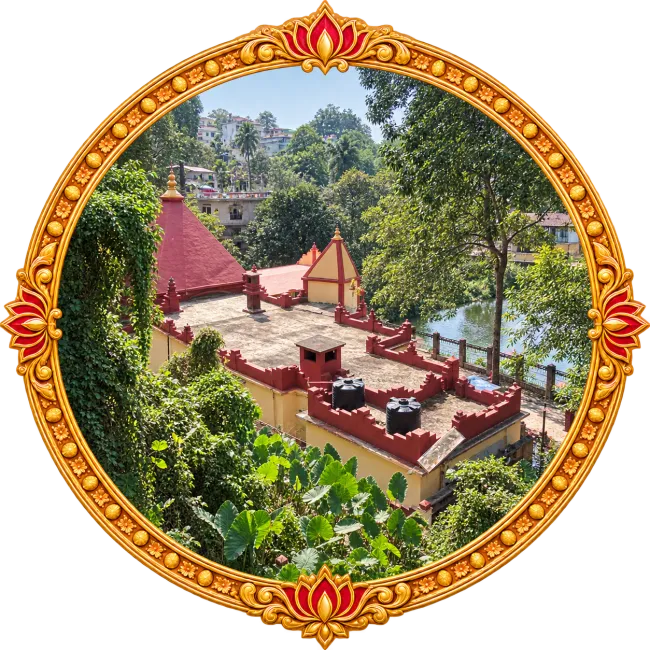
Bhairavi Temple, Guwahati, Assam
Visit Bhairavi Temple on Nilachal Hill in Guwahati, a sacred shrine dedicated to Maa Bhairavi, one of the ten Mahavidyas of the Shakta tradition. Situated south of Kamakhya Temple, the shrine forms part of the hill’s network of goddess temples.
Maa Bhairavi is associated with spiritual discipline, inner strength and the transformative power of divine wisdom. Devotees visit to offer prayers, receive darshan and explore the different expressions of Shakti worship preserved around Kamakhya.
About Bhairavi Temple
Bhairavi Temple, also called Maa Bhairavi Mandir, is located in the Kamakhya area of Nilachal Hill, Guwahati, Assam.
The presiding goddess is Maa Bhairavi, also known as Tripura Bhairavi. She is traditionally recognised as the fifth Mahavidya.
The shrine stands on the southern side of the main Kamakhya Temple. Its location allows devotees to include Bhairavi darshan within a wider pilgrimage around Nilachal Hill.
This article covers the Bhairavi shrine near Kamakhya in Guwahati. Assam’s Bhairabi Temple in Tezpur is a separate religious destination.
History and Religious Heritage
Bhairavi Temple belongs to the Shakta heritage of Nilachal Hill, where the Divine Mother is worshipped through several distinct forms.
Kamakhya is the principal shrine of this sacred area. Around it, individual temples honour goddesses including Kali, Tara, Bhuvaneshwari, Bhairavi, Chinnamasta, Dhumavati and Bagalamukhi.
These shrines preserve a tradition in which each goddess has a particular devotional identity while remaining an expression of the greater divine feminine power.
Bhairavi Temple’s importance lies within this continuing religious practice. Its place in the Mahavidya pilgrimage makes it a meaningful destination for devotees seeking a fuller understanding of Nilachal’s goddess traditions.
Who Is Goddess Bhairavi?
Goddess Bhairavi is revered as a powerful form of Shakti. Her name conveys an awe-inspiring presence, while her worship is associated with spiritual resolve and the courage to face difficult truths.
Within Mahavidya teachings, Bhairavi is connected with the radiance of consciousness and the transforming qualities of fire. This symbolism expresses the power of disciplined spiritual effort to overcome ignorance and distraction.
She is also associated with the power of speech. In this understanding, speech is more than everyday conversation: it represents the creative force of sacred sound and spiritual expression.
For devotees, Bhairavi offers a focus for prayer when seeking steadiness, clarity and commitment.
Traditional Form of Maa Bhairavi
Traditional descriptions portray Bhairavi with a radiant reddish complexion and red garments.
Her iconography includes objects associated with knowledge, spiritual practice and divine power. A book and prayer beads express learning and sustained devotion, while a gesture of reassurance represents protection.
These descriptions explain the goddess’s traditional symbolism. They should be understood separately from the particular sacred representation worshipped within an individual temple.
The combination of fierce and reassuring qualities reflects Bhairavi’s role as a deity who challenges spiritual weakness while supporting sincere devotion.
Religious Significance of Bhairavi Temple
Worship at Bhairavi Temple provides an opportunity to reflect on personal discipline and the strength needed to act with understanding.
Devotees may offer prayers for:
Courage during difficult circumstances.
Greater concentration.
Freedom from fear and confusion.
Patience in family life.
Commitment to spiritual practice.
Wisdom in important decisions.
The shrine can be approached through simple darshan and quiet prayer. Elaborate ritual arrangements are not necessary for a meaningful personal visit.
A respectful attitude towards the goddess, the sacred space and fellow worshippers is central to the experience.
Connection with the Dashamahavidyas
The Dashamahavidyas are ten great wisdom forms of the Divine Mother. They include Kali, Tara, Tripura Sundari, Bhuvaneshwari, Bhairavi, Chinnamasta, Dhumavati, Bagalamukhi, Matangi and Kamala.
Each form expresses a different aspect of divine power. Bhairavi’s identity is particularly associated with intensity, spiritual effort and transformation.
The presence of Mahavidya shrines around Kamakhya gives devotees an opportunity to explore these traditions through a pilgrimage between individual temples.
Rather than rushing between shrines, allow time to understand the deity worshipped at each one.
Temple Setting and Heritage
Bhairavi Temple is part of an area containing temples, sacred sites and historic sculptures.
The archaeological heritage of Nilachal includes a Bhairavi sculpture recorded near the Kamakhya complex. This is evidence of the goddess’s representation within the wider sacred landscape, although it should not be confused with a dated construction record for the present shrine.
For visitors, the setting is best appreciated through careful observation. Respect old stonework, avoid touching sculptures and leave narrow approaches clear.
The temple’s principal purpose remains worship, so architectural exploration should take place without interrupting religious activity.
Worship and Darshan
Begin your visit with a quiet prayer to Maa Bhairavi. Keep offerings ready before approaching the worship area and follow the arrangements in place for darshan.
If a ceremony is underway, remain in the designated visitor space. Avoid standing in doorways or using photography in a way that disturbs worshippers.
After darshan, move away from the immediate entrance before continuing personal prayers. This allows other devotees to approach comfortably.
A simple devotional intention might focus on gaining the patience to practise regularly, the courage to face difficulties or the clarity to fulfil responsibilities thoughtfully.
Offerings at Bhairavi Temple
For an ordinary devotional visit, keep offerings simple and easy to carry. Suitable choices for goddess worship may include:
Fresh flowers.
Fruits.
Sweets.
A small red cloth offering.
Present items only where accepted. Avoid placing offerings on steps, walls or historic stone surfaces.
Do not leave food or packaging along the pathways. If you are visiting several shrines, carry a small bag and keep your hands free when using steps.
Visitors without offerings can still receive darshan and express their devotion through prayer.
Festivals and the Nilachal Religious Calendar
Durga Puja
Durga Puja is a major occasion in the wider Kamakhya religious calendar. The celebrations bring increased devotional activity to Nilachal Hill and attract worshippers of the Divine Mother.
Visitors should allow additional time for queues and movement through the temple area.
Ambubachi Mela
Ambubachi is the principal annual gathering associated with Kamakhya. Observed during the monsoon, it honours the sacred relationship between the goddess, fertility and the earth.
The gathering affects travel and access throughout the surrounding pilgrimage area. Individual shrines retain their own ritual arrangements within this wider setting.
Planning Your Visit
Bhairavi Temple can be included with Kamakhya darshan and selected nearby Mahavidya shrines.
Keep the itinerary flexible enough for walking, rest and time spent in the main temple queue. Avoid scheduling several religious sites so closely that each visit becomes hurried.
Useful preparations include:
Carry drinking water.
Keep luggage light.
Wear clothing suitable for worship.
Use comfortable footwear for the approach.
Allow rest breaks for elderly family members.
Walk carefully on wet or uneven surfaces.
A daytime visit makes it easier to navigate unfamiliar paths and identify the different shrines.
How to Reach Bhairavi Temple
By Air
Lokpriya Gopinath Bordoloi International Airport serves Guwahati. Continue by taxi towards the Kamakhya Temple area on Nilachal Hill.
By Train
Kamakhya Railway Station is convenient for reaching the Nilachal pilgrimage area. Guwahati Railway Station is another major rail arrival point.
Continue from the station by local road transport.
By Road
Guwahati has road connections with destinations across Assam and neighbouring states. Travel towards the Kamakhya approach area, then complete the local journey to the shrine on foot.
Ask for Maa Bhairavi Mandir on the southern side of Kamakhya Temple to identify the correct destination.
Nearby Temples to Visit
Kamakhya Temple
The principal shrine of Nilachal Hill and the centre of the surrounding pilgrimage.
Kali and Tara Temples
Two important Mahavidya shrines that can be included in a wider goddess pilgrimage.
Bagalamukhi Temple
A separate shrine dedicated to Maa Bagalamukhi within the Nilachal religious area.
Chinnamasta and Dhumavati Temples
These shrines represent further forms of the Divine Mother worshipped around Kamakhya.
Bhuvaneshwari Temple
Another important goddess shrine on Nilachal Hill. Consider the approach and walking involved when adding it to your itinerary.
Important Visitor Guidelines
Remove footwear at the designated place.
Keep phones silent during worship.
Respect photography restrictions.
Leave entrances and pathways clear.
Avoid touching sacred objects without permission.
Treat historic sculptures with care.
Carry only manageable offerings.
Keep children close on steps and crowded paths.
Dispose of packaging properly.
Respect the privacy of individual worshippers.
Follow festival access arrangements.
Keep sufficient time for your return journey.
Conclusion
Bhairavi Temple is a meaningful part of the Mahavidya pilgrimage on Nilachal Hill. Its dedication to a goddess associated with spiritual resolve, sacred speech and transformation gives the shrine a distinct devotional character.
A thoughtful visit offers time for prayer and a deeper appreciation of the varied goddess traditions that continue around Kamakhya.