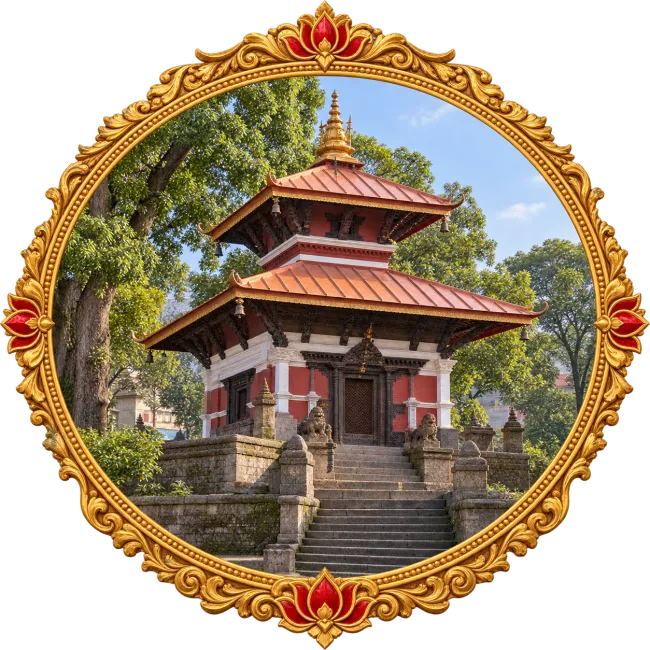
Bhadrakali Temple, Kathmandu, Nepal
Visit Bhadrakali Temple in Kathmandu, one of the city’s most revered temples dedicated to Goddess Bhadrakali. Located near Tundikhel and Shahid Gate, the temple is worshipped as the sacred abode of Lumadi Ajima, one of the principal guardian goddesses of Kathmandu.
Goddess Bhadrakali represents the protective and auspicious power of Adi Shakti. Devotees visit the temple to seek courage, protection, family prosperity and victory over difficulties. The shrine is especially crowded on Tuesdays, Saturdays, during Navratri and throughout the Dashain festival.
About Bhadrakali Temple
Bhadrakali Temple is located on a small elevated mound beside Tundikhel in central Kathmandu. The temple is easily accessible from Ratna Park, Shahid Gate, Dharahara and Kathmandu Durbar Square.
The presiding deity is Goddess Bhadrakali, a powerful manifestation of Goddess Durga and Kali. In the local Newar tradition, the goddess is known as Lumadi Ajima.
The title Ajima means grandmother and is used respectfully for ancient mother goddesses believed to protect Kathmandu and its communities.
The name Bhadrakali combines two spiritual qualities:
- Bhadra means auspicious, benevolent and protective.
- Kali represents the fierce power that destroys evil and ignorance.
Goddess Bhadrakali is therefore worshipped as a fierce destroyer of negative forces and a compassionate mother who protects sincere devotees.
History of Bhadrakali Temple
The religious history of Bhadrakali Temple is connected with the ancient tradition of guardian goddesses established around Kathmandu.
Local tradition associates Lumadi Ajima with King Gunakamadeva, who is believed to have organized Kathmandu and established protective deities around the city during the 10th century.
These mother goddesses were positioned near important routes and boundaries to protect the settlement from disease, enemies, natural disasters and negative influences.
The present temple complex developed through later periods, particularly under the Malla and Shah rulers. Its current structural form was expanded and renovated during the early 19th century.
Successive rulers, military institutions and local Newar communities continued to support the temple. Because of its location beside Tundikhel, Bhadrakali also became connected with military ceremonies and Ghode Jatra.
The shrine has undergone several repairs and renovations while preserving its identity as the sacred temple of Lumadi Ajima.
Mythology of Goddess Bhadrakali
Different Hindu traditions describe the appearance of Goddess Bhadrakali.
According to one tradition, the goddess appeared from the powerful anger of Adi Shakti to destroy demons who threatened the universe. Her fierce energy was directed towards evil, while her compassionate form protected devotees.
Another tradition associates Bhadrakali with Lord Shiva. When injustice and destruction increased, divine energy emerged in the form of Bhadrakali to restore balance.
The goddess is also associated with the battle against demons such as Chanda, Munda and Raktabija. Her fierce appearance represents the destruction of:
- Ego
- Fear
- Ignorance
- Injustice
- Negative thoughts
- Harmful forces
The word Bhadra emphasizes that even her fierce energy is ultimately auspicious and protective.
Lumadi Ajima and Kathmandu’s Guardian Goddesses
In the Newar tradition, Bhadrakali is worshipped as Lumadi Ajima. She forms part of a sacred network of mother goddesses protecting Kathmandu.
Ajima goddesses are treated as elderly female guardians of the community. They protect children, families, neighbourhoods and traditional city boundaries.
Lumadi Ajima has special importance because her temple stands near Tundikhel, an open ground historically used for royal, military and public ceremonies.
Devotees believe that the goddess protects central Kathmandu from disasters and harmful influences.
Religious Significance of Bhadrakali Temple
Bhadrakali Temple is an important centre of Shakti worship. The goddess is believed to grant courage and remove fear from the minds of devotees.
People visit the temple before beginning a new business, journey, job, examination or important family responsibility.
Devotees worship Goddess Bhadrakali for:
- Protection from negative forces
- Courage and confidence
- Victory over enemies
- Family peace and prosperity
- Recovery from illness
- Blessings for marriage and children
- Success in business and employment
- Protection during travel
- Removal of obstacles
- Freedom from fear and anxiety
- Justice in important matters
- Fulfilment of sincere wishes
Drivers and vehicle owners also visit the temple to pray for protection from accidents.
Main Deity of Bhadrakali Temple
The presiding deity is Goddess Bhadrakali or Lumadi Ajima. The sacred image is installed inside the main sanctum and decorated according to traditional Shakti customs.
The goddess is adorned with:
- Red cloth
- Vermilion
- Red flowers
- Marigold garlands
- Traditional jewellery
- Sacred ornaments
- Metal decorations
- Oil lamps
The temple complex also contains smaller images and sacred symbols associated with:
- Lord Shiva
- Bhairav
- Lord Ganesha
- Other mother goddesses
- Nag Devta
Devotees usually pray to Lord Ganesha before proceeding towards the principal sanctum.
Architecture of Bhadrakali Temple
Bhadrakali Temple is constructed in the traditional Nepalese pagoda style. The main shrine stands on an elevated platform reached by stone steps.
Important architectural features include:
- Traditional pagoda-style shrine
- Carved wooden supports
- Decorative wooden doors
- Metal roof elements and pinnacle
- Stone steps leading to the temple
- Sacred bells
- Oil-lamp stands
- Tridents and Shakti symbols
- Stone-paved courtyard
- Smaller surrounding shrines
- Ceremonial spaces for festival worship
The temple’s elevated location provides a clear view of Tundikhel and the surrounding central Kathmandu area.
Despite being located beside busy roads, the shrine maintains a strong devotional atmosphere.
Bhadrakali Temple Timings
The temple may follow extended hours during Navratri, Dashain, Ghode Jatra and Kali Puja.
Tuesdays and Saturdays experience the greatest number of regular visitors.
Morning Puja and Aarti
The temple opens at 5:00 AM. Priests clean the sanctum, light oil lamps and prepare the goddess for daily worship.
Morning Puja begins at 5:30 AM, followed by Aarti at 6:00 AM.
Goddess Bhadrakali is worshipped with:
- Red hibiscus flowers
- Marigold garlands
- Vermilion
- Sacred water
- Incense
- Oil lamps
- Rice and grains
- Fruits and sweets
- Red cloth
- Durga and Kali mantras
The period between 6:00 AM and 9:00 AM is ideal for peaceful darshan.
Special Puja
Special pujas are generally arranged between 6:30 AM and 11:00 AM.
Devotees may arrange worship for:
- Family protection
- Marriage
- Children
- Health
- Business growth
- Success in employment
- Vehicle protection
- Removal of negative influences
- Victory in difficult situations
A special Shakti Puja may include Sankalp, Kalash worship, Kumkum Archana, flower offerings, mantra recitation, lamps and Bhog.
All special ceremonies should be arranged through authorized priests.
Bhog and Afternoon Darshan
Bhog is offered to Goddess Bhadrakali at 12:00 PM. The offering may contain rice, fruits, sweets and traditional vegetarian preparations.
Afternoon darshan continues after the completion of Bhog. The temple generally remains less crowded during the early afternoon on regular weekdays.
Evening Puja and Aarti
Evening Puja begins at 6:30 PM, followed by Aarti at 7:00 PM.
Oil lamps are offered to Goddess Bhadrakali while devotees recite prayers, sing bhajans and ring temple bells.
Visitors should reach the shrine before 6:30 PM to attend the complete ceremony. The temple closes at 8:30 PM.
Connection with Ghode Jatra
Ghode Jatra is one of the most important festivals connected with Bhadrakali Temple. It is celebrated at Tundikhel, the large open ground beside the shrine.
According to local legend, a demon named Tundi terrorized the people of Kathmandu. After the demon was defeated, horses were made to run over the ground to prevent his spirit from returning.
The horse parade continues as part of Ghode Jatra. Nepalese military units perform horse races, exercises and ceremonial displays at Tundikhel.
Before the main events, prayers are offered to Goddess Bhadrakali for protection and successful completion of the ceremony.
Ghode Jatra also reflects the temple’s historic relationship with Kathmandu’s military traditions.
Bali Puja at Bhadrakali Temple
Bhadrakali Temple follows traditional Shakti worship customs. Bali Puja may be performed on Tuesdays, Saturdays and major festival days.
Some devotees traditionally offer goats, roosters or ducks after the fulfilment of a religious promise. Rituals are conducted only within designated areas.
Animal sacrifice is not compulsory. Devotees may offer vegetarian or symbolic items such as:
- Coconut
- Pumpkin
- Fruits
- Sweets
- Red flowers
- Vermilion
- Red cloth
- Incense
- Oil lamps
Visitors who do not wish to witness traditional Bali Puja should visit on Monday, Wednesday, Thursday or Friday.
Major Festivals Celebrated
Dashain
Dashain is the most important festival celebrated at Bhadrakali Temple. Goddess Bhadrakali is worshipped as a powerful manifestation of Durga.
Special rituals are conducted during:
- Ghatasthapana
- Phulpati
- Maha Ashtami
- Maha Navami
- Vijayadashami
Sharadiya Navratri
The nine forms of Goddess Durga are worshipped throughout Navratri. Devotees observe fasting and offer flowers, lamps and red cloth.
Chaitra Navratri
Special Shakti Puja and devotional programmes are organized during Chaitra Navratri.
Chaite Dashain
The goddess receives special worship for courage, protection and victory.
Ghode Jatra
Military ceremonies, horse parades and protective rituals are conducted at Tundikhel.
Kali Puja
The temple is illuminated with lamps, and special worship is performed for Goddess Kali.
Teej
Women visit the temple to pray for marital happiness, family prosperity and the well-being of their spouses.
Offerings and Prasad
Common offerings made to Goddess Bhadrakali include:
- Red hibiscus flowers
- Marigold garlands
- Red chunari
- Vermilion
- Bangles
- Cosmetic items
- Coconut
- Fruits and sweets
- Rice and grains
- Incense sticks
- Oil or ghee lamps
- Sacred red threads
- Bells and tridents
- Monetary donations
Women may offer traditional Shringar items while praying for marriage and family well-being.
Prasad may include fruits, sweets, flowers, vermilion and blessed sacred threads.
Entry Fee and Visit Duration
There is no entry fee for regular darshan at Bhadrakali Temple. Charges may apply for special Puja and ceremonial arrangements.
A regular visit requires 45–60 minutes. Visitors attending Aarti or exploring nearby places should keep one to two hours.
During Navratri, Dashain and Ghode Jatra, additional time is required because of large crowds and traffic restrictions.
Visitor Guidelines
- Wear modest and respectful clothing.
- Remove footwear before entering the main shrine.
- Follow the designated darshan queue.
- Keep mobile phones on silent mode.
- Ask permission before taking photographs.
- Do not photograph traditional rituals without consent.
- Use authorized priests for special pujas.
- Do not touch the principal deity or ornaments.
- Keep the temple courtyard clean.
- Take care while crossing nearby roads.
- Respect different forms of traditional worship.
- Avoid carrying large bags during festivals.
- Keep children and elderly devotees under supervision.
- Follow instructions from temple and security officials.
Best Time to Visit
October to March is the best period for visiting Bhadrakali Temple because Kathmandu experiences pleasant weather.
For peaceful darshan, visit between 6:00 AM and 9:00 AM on a regular weekday.
Navratri, Dashain and Ghode Jatra offer the most vibrant religious and cultural experiences, but the temple remains heavily crowded.
How to Reach Bhadrakali Temple
By Air
Tribhuvan International Airport is the nearest airport. Taxis and private vehicles are available from the airport.
From Thamel
Bhadrakali Temple is approximately 2.5 kilometres from Thamel. Visitors can walk or use a taxi or cycle-rickshaw.
From Ratna Park
The temple is located within walking distance of Ratna Park. Visitors can walk through the central city area towards Tundikhel and Shahid Gate.
From Kathmandu Durbar Square
Bhadrakali Temple is approximately 1.5 kilometres from Kathmandu Durbar Square. Walking, taxis and cycle-rickshaws are available.
By Local Bus
Local buses and minibuses stop near Shahid Gate, Ratna Park and Tundikhel.
From India
Indian visitors can reach Kathmandu by air or enter Nepal through road-border points such as Raxaul–Birgunj and Sunauli–Bhairahawa.
Indian citizens should carry a valid passport or voter identity card and confirm transportation requirements before departure.
Nearby Places to Visit
- Tundikhel
- Shahid Gate
- Dharahara
- Sankata Temple
- Mahankal Temple
- Rani Pokhari
- Ratna Park
- Kathmandu Durbar Square
- Taleju Bhawani Temple
- Kumari Ghar
- Ason Market
- Indra Chowk
Conclusion
Bhadrakali Temple is one of Kathmandu’s most important Shakti shrines and a sacred centre of guardian-goddess worship. Known locally as Lumadi Ajima, the goddess has protected Kathmandu and its communities for generations.
The temple’s historic connection with Tundikhel, Ghode Jatra, Dashain and Newar traditions gives it exceptional religious and cultural importance.
Worshipping Goddess Bhadrakali is believed to provide courage, protection and victory over difficulties. A visit to the temple offers devotees a powerful experience of Kathmandu’s living Shakti traditions.