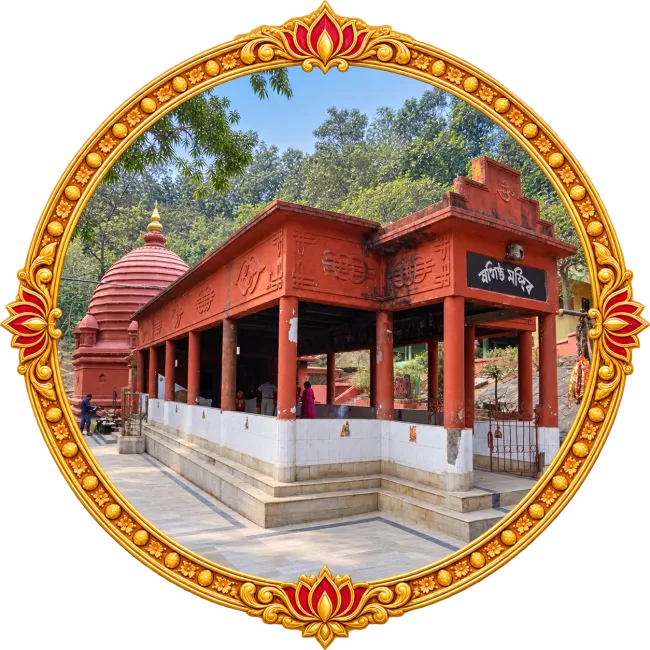
Basistha Temple, Guwahati
Basistha Temple, also known as Basistha Ashram, is an important spiritual and historical site situated in the southeastern part of Guwahati, Assam. Located at the foot of the forested Sandhyachal Hills, the temple is associated with Sage Vashishtha, one of the seven great sages of Hindu tradition.
The existing temple was built in 1764 CE by Ahom king Rajeswar Singha. The complex contains a Shiva shrine, sacred streams, natural rock formations and a cave traditionally connected with the meditation of Sage Vashishtha.
About Basistha Temple
Basistha Temple is located in the Basistha area of Guwahati, close to the Assam–Meghalaya hills. The shrine is surrounded by forest, rocks and flowing water, creating a peaceful environment for worship and meditation.
The site is associated primarily with Sage Vashishtha, the spiritual teacher of Lord Rama and the royal priest of the Ikshvaku dynasty. Lord Shiva is worshipped in the principal temple, while the entire area is revered as the ancient hermitage of the sage.
Three mountain streams traditionally known as Sandhya, Lalita and Kanta meet near the temple. Their combined flow becomes the Basistha River. Devotees consider the water sacred and use it for ritual purification.
When Was Basistha Temple Built and Who Built It?
The present Basistha Temple was constructed in 1764 CE by Ahom king Rajeswar Singha. The king ruled Assam from 1751 to 1769 and was an important patron of Hindu temples.
Rajeswar Singha arranged for the construction of a permanent stone shrine at the sacred place associated with Sage Vashishtha. He also granted land to support worship, maintenance and the activities of priests.
The spiritual history of the site is much older than the existing building. Local tradition maintains that Sage Vashishtha established his hermitage here and performed meditation long before the Ahom temple was constructed.
The shrine later underwent repairs because of earthquakes, weather and constant exposure to flowing water. Modern pathways, bridges, railings and pilgrim facilities were added while preserving the natural character of the Ashram.
Legend of Sage Vashishtha
Sage Vashishtha is one of the Saptarishis and a prominent figure in the Ramayana. He served as the teacher of Lord Rama and his brothers.
According to local tradition, Vashishtha travelled to the eastern region in search of a peaceful place for meditation. He reached the forested Sandhyachal Hills and established an Ashram beside the flowing streams.
The natural caves, forest and water provided an ideal setting for spiritual practice. The sage is believed to have meditated in a cave beyond the main temple.
His spiritual energy made the entire area sacred. The temple and surrounding streams continue to carry his name.
Legend of the Sacred Streams
Three streams descend from the Meghalaya hills and meet near Basistha Ashram. They are traditionally called:
Sandhya
Lalita
Kanta
The streams are believed to represent sacred feminine energies. After their confluence, the water flows as the Basistha River.
Devotees believe that bathing in or touching the water with respect helps purify the mind and body. However, bathing should only be undertaken in safe and permitted sections because rocks can become slippery and water levels may rise rapidly.
Religious Significance
Basistha Temple combines the worship of Lord Shiva with reverence for Sage Vashishtha. The site is important for devotees seeking peace, wisdom and spiritual discipline.
Visitors pray for:
Mental peace and emotional balance
Knowledge and spiritual guidance
Good health
Family welfare
Success in education
Protection from difficulties
Marital harmony
Relief from stress
Fulfilment of wishes
Progress in meditation
Students and spiritual seekers often visit to pray for concentration, wisdom and clarity.
Architecture of Basistha Temple
The temple reflects Ahom-period architecture. Its stone base, curved surfaces and dome-like superstructure resemble other temples built under Ahom royal patronage.
The main shrine houses a Shiva Lingam. The structure is compact and blends with the surrounding rocks, streams and forest.
The complex includes:
Main Shiva sanctum
Shrine associated with Sage Vashishtha
Sacred streams
Natural waterfall
Stone pathways
Meditation spaces
Smaller shrines
Bridges and viewing areas
Pilgrim courtyard
Forest trail towards the cave
The combination of built architecture and natural landscape gives Basistha Ashram its distinctive character.
Basistha Temple Timings
The temple follows a daily schedule for Puja and Aarti. Access to the forest trail and cave may be restricted according to weather and safety conditions.
During Mahashivratri, Shravan and special religious events, extended darshan arrangements may be introduced.
Morning Puja and Aarti
The day begins with purification of the sanctum and Mangal Puja. Morning Aarti is performed at 6:00 AM.
The morning rituals include:
Cleaning of the sanctum
Water and milk Abhishekam
Bilva leaf offering
Flowers and sandalwood
Mantra chanting
Incense and lamp offering
Naivedya
Morning Aarti
Devotees may offer water and Bilva leaves to the Shiva Lingam according to instructions from the priests.
Bhog and Evening Aarti
Bhog is offered to Lord Shiva at noon. Fruits, sweets and Satvik food form part of the ceremonial offering.
Evening Puja begins at 5:30 PM, followed by Aarti at 6:30 PM. The sound of bells and devotional chanting blends with the flowing streams and forest surroundings.
Shayan Puja is performed before the temple closes.
Vashishtha Cave
A natural cave associated with Sage Vashishtha is located beyond the main temple. It is traditionally regarded as the place where the sage performed meditation.
The route passes through a forested and rocky area. Access can be difficult during the monsoon or periods of high water. Visitors should use only permitted paths and follow local safety instructions.
The cave is valued more for meditation and spiritual association than elaborate architecture.
Major Festivals
Mahashivratri
Mahashivratri is the largest festival at Basistha Temple. Devotees offer water, milk, honey, flowers and Bilva leaves to Lord Shiva.
Special Abhishekam, Aarti, mantra chanting and night worship are organised.
Shravan Month
Mondays during Shravan attract large numbers of devotees. Special Shiva Puja and Rudrabhishek are performed.
Guru Purnima
Sage Vashishtha is honoured as a great teacher on Guru Purnima. Devotees pray for knowledge and guidance.
Kartik Purnima
Pilgrims visit the streams and temple for ritual bathing and worship.
Makar Sankranti
Devotees offer prayers and participate in religious bathing at safe sections of the streams.
Puja and Religious Services
Available ceremonies may include:
General Shiva Puja
Abhishekam
Rudrabhishek
Mahamrityunjaya Mantra Path
Shravan Monday Puja
Mahashivratri Puja
Guru Puja
Family welfare prayers
Marriage-related Puja
Health and protection prayers
Havan
Puja arrangements should be completed through authorised priests. Charges should be confirmed before beginning a special ceremony.
Offerings and Prasad
Common offerings include:
Water and milk
Bilva leaves
White flowers
Fruits
Coconut
Sandalwood paste
Incense
Clarified butter
Sweets
Sacred thread
Monetary donations
Prasad generally includes sweets, fruits, coconut and blessed flowers. Visitors should not place plastic, food packaging or ritual waste in the streams.
Dress Code and Temple Rules
There is no strict dress code, but visitors should wear clean and modest clothing. Comfortable footwear with a good grip is recommended for the rocky surroundings.
Important rules include:
Remove footwear before entering the shrine.
Follow the designated queue.
Be careful near wet rocks and flowing water.
Do not enter restricted forest areas.
Avoid bathing during high water levels.
Follow photography restrictions.
Do not throw waste into the streams.
Avoid alcohol, tobacco and non-vegetarian food.
Deposit donations only at authorised counters.
Do not disturb wildlife.
Entry Fee and Darshan Duration
General entry and darshan are free. Charges apply only to optional Pujas and ritual materials.
Temple darshan generally requires 20–40 minutes. Visitors exploring the streams and nearby walking paths should reserve one to two hours.
A visit to the cave requires additional time and depends on route access and weather conditions.
Best Time to Visit
October to March is the best period for visiting Basistha Temple. The weather remains comfortable, and the forest surroundings are pleasant.
Early morning between 7:00 AM and 10:00 AM is ideal for darshan and peaceful exploration.
The monsoon makes the streams and waterfall impressive, but rocks become slippery and water currents may be dangerous. Summer afternoons can be hot and humid.
How to Reach Basistha Temple
By Air
Lokpriya Gopinath Bordoloi International Airport is approximately 30 kilometres from the temple.
By Train
Guwahati Railway Station is approximately 12 kilometres away.
By Road
City buses, taxis, auto-rickshaws and app-based cabs connect Basistha with different parts of Guwahati.
Accommodation and Facilities
Hotels and guest houses are available in Basistha, Dispur, Beltola and central Guwahati.
Facilities near the temple include:
Parking
Drinking water
Toilets
Shoe-storage area
Puja shops
Food stalls
Local transport
Basic resting spaces
Security assistance
Nearby Places to Visit
Basistha Reserve Forest: A forested area surrounding the Ashram.
Garbhanga Reserve Forest: Known for greenery and wildlife.
Srimanta Sankardev Kalakshetra: A major centre for Assamese culture.
Kamakhya Temple: Guwahati’s principal Shakti Peetha.
Navagraha Temple: A historic shrine dedicated to the nine Grahas.
Ugratara Temple: An important Shakta temple near Jorpukhuri.
Umananda Temple: A Shiva shrine on Peacock Island.
Assam State Museum: Displays Assam’s cultural heritage.
Conclusion
Basistha Temple is a peaceful spiritual destination associated with Sage Vashishtha and Lord Shiva. Built by Ahom king Rajeswar Singha in 1764 CE, it combines historic architecture with sacred streams, forested hills and ancient legends.
The Shiva shrine, Vashishtha cave and confluence of the Sandhya, Lalita and Kanta streams create a distinctive pilgrimage environment. Devotees visit Basistha Ashram to seek wisdom, peace, protection and spiritual guidance.