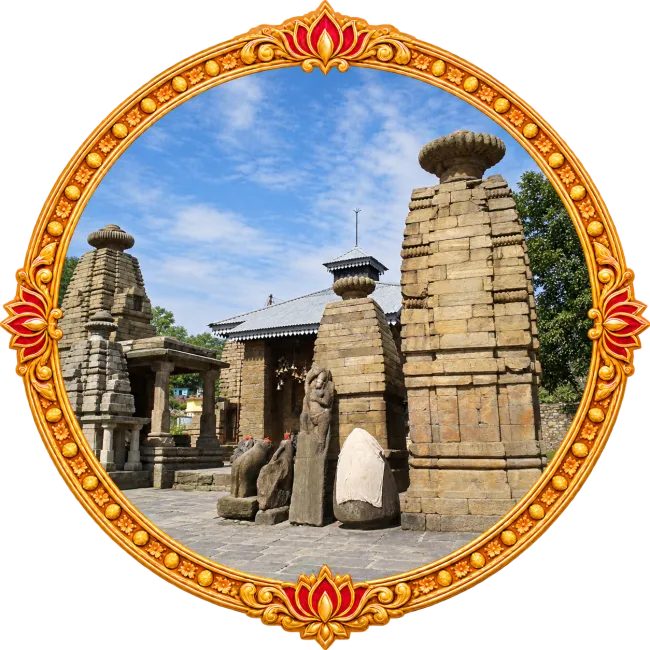
Baijnath Temple, Garur
Visit Baijnath Temple near Garur in Uttarakhand, an ancient temple complex dedicated to Lord Shiva as Vaidyanath, the Lord of Healing. Situated beside the Gomti River in the Katyur Valley, the shrine is an important part of Kumaon’s religious and architectural heritage.
The stone temples, beautifully carved image of Goddess Parvati and riverside setting give Baijnath a distinctive character. Devotees visit for darshan, prayers and a closer connection with the traditions of Shiva worship in the Himalayan region.
About Baijnath Temple
Baijnath Temple is located near Garur in Bageshwar district, Uttarakhand. The main shrine is dedicated to Lord Shiva, worshipped here as Baijnath or Vaidyanath.
The temple belongs to a larger group of historic stone shrines on the left bank of the Gomti River. Its setting in the Katyur Valley connects it with the Katyuri rulers, who supported temple construction and religious activity across Kumaon.
Baijnath is approximately 19 kilometres from Kausani and 26 kilometres from Bageshwar. This makes it a convenient pilgrimage stop for visitors travelling between these destinations.
One of the temple’s most treasured features is its ancient stone image of Goddess Parvati. The sculpture attracts both worshippers and visitors interested in Himalayan religious art.
History of Baijnath Temple
The Baijnath group of temples developed under the patronage of the Katyuri rulers. The surviving shrines belong broadly to the period between the 9th and 12th centuries.
Their construction reflects the importance of the Katyur Valley as a centre of political authority, craftsmanship and worship. Royal support helped establish a temple settlement where devotion to Shiva existed alongside the worship of other Hindu deities.
The complex forms part of India’s protected architectural heritage. Its main Shiva shrine and subsidiary temples preserve evidence of medieval temple building in the Kumaon Himalayas.
Baijnath’s importance extends beyond the age of its buildings. Worship continues within a historic setting, allowing visitors to experience the site as both a living shrine and a monument.
Legend of Lord Shiva and Goddess Parvati
Local religious tradition associates the meeting of the Gomti and Garur Ganga rivers with the marriage of Lord Shiva and Goddess Parvati.
This belief gives the surrounding landscape a sacred identity. The rivers, valley and temple are remembered together as part of the divine couple’s story.
For devotees, Shiva and Parvati represent the union of spiritual strength and nurturing energy. Their worship is associated with harmony, commitment and family well-being.
The marriage tradition belongs to the religious heritage of the region and contributes to Baijnath’s significance as a place of devotion to both deities.
Religious Significance of Baijnath Temple
Lord Shiva is worshipped here as Vaidyanath, a name associated with healing. Devotees offer prayers for good health, strength during difficulties and peace of mind.
The presence of Goddess Parvati adds to the importance of the shrine for worshippers seeking blessings for their families and married life.
A visit offers opportunities for:
Darshan of Lord Shiva and Goddess Parvati.
Quiet recitation of “Om Namah Shivaya.”
Prayer for the well-being of loved ones.
Reflection beside the Gomti River.
Appreciation of Kumaon’s continuing temple traditions.
The religious experience is closely connected with the surroundings. The old stone shrines and nearby water encourage visitors to slow down and spend time in prayer.
Main Deities of Baijnath Temple
The principal shrine is dedicated to Lord Shiva in his Vaidyanath form. The temple’s sculptural heritage also includes representations of Goddess Parvati and several other Hindu deities.
Images associated with the complex include Ganesha, Kartikeya, Vishnu as Narasimha, Brahma, Surya and Kubera. Together, these sculptures show the variety of religious themes represented by the craftsmen who worked here.
The Parvati image is especially significant for its detailed carving and devotional importance. Visitors should view sacred sculptures respectfully and avoid touching their surfaces.
Architecture of Baijnath Temple
Baijnath is recognised for its stone-built shrines and traditional Nagara-style architecture. The temple towers, compact sanctums and sculptural details reflect the adaptation of northern Indian temple design to the Himalayan region.
The principal shrine stands among smaller temples, creating a closely arranged sacred complex. Walking through the grounds reveals differences in the size, condition and detailing of individual structures.
Important features include:
Stone masonry.
Towered shrines.
Carved religious images.
A central place of worship surrounded by subsidiary temples.
Historic steps connecting the complex with the riverside.
The riverside stone steps are traditionally associated with the patronage of a Katyuri queen. They form a physical connection between the temple grounds and the Gomti.
Allow time to observe the architecture after darshan. The smaller shrines are an important part of the complex’s character.
Baijnath Temple Timings
Baijnath Temple opens at 6:00 AM and closes at 9:00 PM.
These hours provide access for both morning and evening visits.
For a visit combining darshan and architectural exploration, allow 45 minutes to one hour. Keep additional time if travelling during a major religious occasion.
Morning Puja and Darshan
Morning visitors can begin their darshan from 6:00 AM.
Start with prayer at the main shrine, then explore the other accessible parts of the complex. Keep offerings ready before entering the worship area so that the darshan queue can move smoothly.
A morning visit is useful for travellers continuing towards Kausani or Bageshwar later in the day. Carry a light warm layer during colder months, particularly when arriving early.
Evening Worship and Darshan
The temple remains open until 9:00 PM, allowing devotees to visit later in the day.
For visitors interested in the stonework and riverside surroundings, arriving before sunset allows more time to see the complex in natural light.
During worship, keep the entrance and passageways clear. Participate quietly and give space to devotees receiving darshan.
If returning to another town, arrange transport before your visit and allow sufficient time for the mountain journey.
Offerings at Baijnath Temple
Simple offerings suitable for Shiva worship include:
Bilva leaves.
Fresh flowers.
Fruits.
Clean water for permitted ritual use.
Sweets offered as bhog.
Offer items only in the designated worship area. Avoid placing oil, vermilion or other substances on historic carvings and subsidiary structures.
Keep offerings modest and remove any plastic wrapping before entering the shrine. Flowers and food should not be discarded in the river.
Festivals at Baijnath Temple
Maha Shivratri
Maha Shivratri is a major religious occasion at Baijnath. Devotees visit to worship Lord Shiva and observe the festival through prayer and devotion.
The occasion holds particular meaning at a shrine dedicated to Vaidyanath, bringing worshippers together in remembrance of Shiva.
Makar Sankranti
Makar Sankranti is another important occasion for pilgrimage to Baijnath. The festival forms part of the religious calendar of the wider Kumaon region.
Visitors planning a festival visit should allow extra time for darshan and local travel.
Best Time to Visit
Choose a clear-weather day if you want to combine temple darshan with sightseeing in the Katyur Valley.
Morning visits work well for travellers planning a longer day trip. An afternoon visit can also be convenient, provided enough daylight remains for viewing the temple’s architecture.
During rainy weather, walk carefully on stone surfaces and steps. In winter, carry warm clothing for the early morning and evening.
Maha Shivratri offers a festival experience, while an ordinary weekday is a practical choice for visitors seeking more time for quiet exploration.
How to Reach Baijnath Temple
By Air
Pantnagar Airport provides air access for a journey into this part of Kumaon. Continue towards Garur and Baijnath by road.
Allow substantial time for the onward hill journey rather than treating the airport transfer as a short local trip.
By Train
Kathgodam Railway Station is a useful railhead for reaching Baijnath. From there, continue by road through the Kumaon hills.
Taxis provide a practical option for families and travellers carrying luggage.
By Road
Baijnath is accessible from Garur, Kausani and Bageshwar. The temple lies close to the main road network serving the valley.
Common approaches include:
From Kausani: Travel towards Garur and Baijnath.
From Bageshwar: Follow the road towards Garur.
From Gwaldam: Continue towards the Baijnath–Garur area.
The visit involves a short approach within the temple grounds rather than a long mountain trek.
Nearby Places to Visit
Gomti Riverside
The riverside is part of Baijnath’s setting. Spend time enjoying the view while keeping away from slippery edges and restricted areas.
Kot Bhramari Devi Temple
This nearby shrine offers an opportunity to include goddess worship in a Baijnath pilgrimage.
Kausani
Kausani is a convenient extension for visitors interested in Himalayan scenery. Attractions include Anashakti Ashram and the area’s tea-growing landscape.
Bageshwar
Bageshwar is known for Bagnath Temple and the meeting of the Saryu and Gomti rivers. It can be included as a separate stop on a wider pilgrimage through the district.
Important Visitor Guidelines
Wear modest clothing suitable for temple worship.
Remove footwear before entering the designated sacred areas.
Walk carefully on old stone steps.
Do not climb on shrines or boundary structures.
Avoid touching or marking historic sculptures.
Respect photography restrictions.
Keep phones silent during worship.
Carry drinking water and suitable clothing.
Supervise children near the river.
Dispose of packaging in proper waste bins.
Leave entrances and narrow passages clear.
Plan onward mountain travel with sufficient daylight.
Conclusion
Baijnath Temple near Garur brings together worship of Lord Shiva, the artistic heritage of the Katyuri period and the riverside landscape of the Katyur Valley.
Its stone shrines and revered image of Goddess Parvati make it a meaningful stop for pilgrims and heritage travellers alike. Allowing time for both darshan and a quiet walk through the complex offers a fuller appreciation of this historic place of worship.