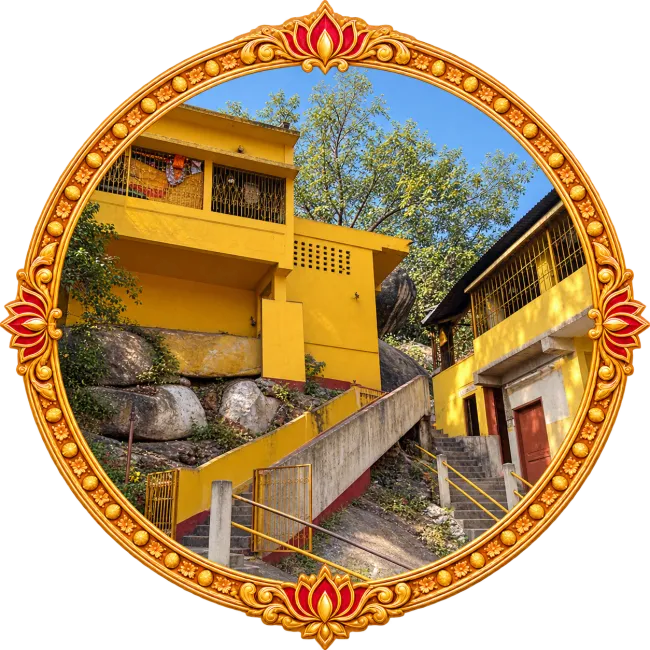
Bagalamukhi Temple, Guwahati, Assam
Visit Bagalamukhi Temple on Nilachal Hill in Guwahati, a sacred shrine dedicated to Maa Bagalamukhi, one of the ten Mahavidyas of the Shakta tradition. Situated near Kamakhya Temple, the shrine is associated with prayers for protection, self-control and the strength to overcome obstacles.
Also known as Bagala Devi Temple, it forms part of Nilachal’s network of goddess shrines. Devotees visit to receive blessings, offer prayers and explore the different forms of Shakti worship represented around Kamakhya.
About Bagalamukhi Temple
Bagalamukhi Temple is located on Bhubaneswari Road in the Kamakhya area of Guwahati, Assam. The shrine stands a few hundred metres east of the main Kamakhya Temple.
The presiding goddess is Maa Bagalamukhi, also called Bagala Devi and Pitambara. She is traditionally counted as the eighth Mahavidya.
The temple can be included in a pilgrimage to Kamakhya and the surrounding goddess shrines. Its location makes it a convenient stop for visitors exploring the religious sites of Nilachal Hill.
This article covers the Bagalamukhi shrine near Kamakhya. Guwahati also has other places dedicated to the goddess, so use the Nilachal Hill location when arranging your journey.
History and Religious Heritage
Bagalamukhi Temple belongs to the Shakta religious heritage of Nilachal Hill. This tradition recognises the Divine Mother through several forms, each associated with particular spiritual qualities.
The shrine has a connection with an older cave-like sacred space. Its temple structure developed above this earlier place of worship, preserving a relationship between the natural rock setting and the built shrine.
Its religious importance also comes from its place within the Mahavidya pilgrimage. Worshippers visit Bagalamukhi alongside other goddess temples surrounding Kamakhya.
The continuing use of these individual shrines gives Nilachal its character as a living religious landscape. Each temple has its own devotional identity while remaining connected with the broader worship of Shakti.
Who Is Goddess Bagalamukhi?
Goddess Bagalamukhi is associated with Stambhana, understood in her worship tradition as the power to restrain or bring harmful activity to a standstill.
She is commonly depicted holding a club and restraining an adversary’s tongue. This image is connected with control over harmful speech and hostile action.
Devotees also interpret her symbolism inwardly, as a reminder to restrain anger, impulsive words and destructive thoughts. Her worship therefore has a strong connection with discipline and thoughtful action.
The goddess is closely associated with yellow, reflected in her name Pitambara, meaning one who is clothed in yellow. Yellow flowers, garments and other offerings are prominent in Bagalamukhi devotion.
Religious Significance of Bagalamukhi Temple
Devotees approach Maa Bagalamukhi with prayers for protection during conflict and the courage to face difficult circumstances.
Her worship is traditionally associated with overcoming opposition, disputes and obstacles. Worshippers may also seek the ability to speak truthfully, remain composed and make careful decisions.
Prayers offered to the goddess may concern:
Protection from harmful intentions.
Strength during personal difficulties.
Restraint over anger and speech.
Peace within the family.
Clarity when facing disagreement.
Greater concentration in spiritual practice.
These intentions express the devotee’s faith. The temple offers a place for prayer and reflection without requiring every visitor to undertake elaborate rituals.
Connection with the Dashamahavidyas
The Dashamahavidyas are ten great wisdom forms of the Divine Mother. Bagalamukhi holds a distinctive place among them through her association with restraint and stillness.
The ten forms are Kali, Tara, Tripura Sundari, Bhuvaneshwari, Bhairavi, Chhinnamasta, Dhumavati, Bagalamukhi, Matangi and Kamala.
Their shrines around Kamakhya allow devotees to encounter different expressions of Shakti during a single pilgrimage. Bagalamukhi’s worship contributes to this diversity, alongside the protective, nurturing and transformative qualities represented by the other goddesses.
Architecture and Sacred Setting
Bagalamukhi Temple’s association with an older rock shelter is an important feature of its physical setting.
The site combines a natural sacred space with later temple construction. This gives the shrine a different character from temples established entirely within a purpose-built hall.
Visitors should approach the worship area carefully and keep entrances clear. The focus of the visit remains the sanctum and the goddess’s presence within the shrine.
After darshan, move to an appropriate place if you wish to sit quietly or continue personal prayers. Avoid disturbing people engaged in worship.
Bagalamukhi Temple Timings
A confirmed temple-authority schedule for this Nilachal shrine’s opening, closing and daily Aarti could not be established. Fixed ritual times are therefore omitted.
Worship and Darshan
A visit can begin with a simple prayer to Maa Bagalamukhi, followed by offerings where permitted.
Keep puja materials ready before approaching the sanctum. During a ceremony, stand in the designated visitor area and avoid interrupting the worship.
Devotees who wish to spend longer in prayer should leave the immediate darshan passage clear. This allows others to receive blessings without crowding the entrance.
For personal reflection, the goddess’s association with restraint offers a meaningful focus: consider how patience, careful speech and self-discipline can guide daily life.
Importance of Yellow in Bagalamukhi Worship
Yellow is closely associated with Maa Bagalamukhi and is an important part of her devotional identity.
Worshippers often choose yellow flowers or a yellow cloth offering. The colour is also reflected in traditional representations of the goddess.
Visitors may wear yellow as an expression of devotion, but respectful clothing and conduct remain the central considerations for an ordinary temple visit.
Keep offerings simple and manageable, especially when planning to walk between several shrines.
Offerings at Bagalamukhi Temple
Offerings associated with Bagalamukhi worship include:
Yellow flowers.
A yellow cloth or sari.
Fruits.
Yellow sweets.
Other puja materials accepted at the shrine.
Present offerings only in the designated area. Avoid placing food, cloth or lamps on pathways and surrounding structures.
Carry packaging back to a waste bin. A modest offering made respectfully is sufficient for a devotional visit.
Festivals and Religious Occasions
Goddess Worship During Durga Puja
Durga Puja is a major occasion in the wider Kamakhya pilgrimage area. The celebrations draw devotees of the Divine Mother and create a festive atmosphere across Nilachal.
Visitors combining several shrines should keep additional time for crowds and movement between temples.
Ambubachi Mela
Ambubachi is the principal annual religious gathering associated with Kamakhya. It takes place during the monsoon and honours the sacred relationship between the goddess, fertility and the earth.
The gathering affects travel and access throughout the surrounding area. Individual shrines retain their own ritual arrangements within this wider religious setting.
Planning Your Visit
Bagalamukhi Temple can be included in a day devoted to Nilachal’s goddess shrines.
Keep your itinerary flexible enough to accommodate the main Kamakhya queue, walking between temples and breaks for rest. Avoid trying to visit every shrine hurriedly.
For a comfortable pilgrimage:
Carry drinking water.
Use a small bag for offerings.
Wear footwear suitable for the approach roads.
Keep hands free on steps.
Allow elderly family members to set the walking pace.
Complete unfamiliar walking routes in daylight.
During rainy weather, move carefully on wet surfaces and leave additional time for road travel.
How to Reach Bagalamukhi Temple
By Air
Lokpriya Gopinath Bordoloi International Airport serves Guwahati. Continue by taxi towards the Kamakhya Temple area on Nilachal Hill.
By Train
Kamakhya Railway Station is convenient for the Nilachal pilgrimage. Guwahati Railway Station is another major rail arrival point.
From either station, continue by road towards Kamakhya.
By Road
Guwahati is connected with destinations across Assam and neighbouring states. Local transport provides access to the Kamakhya approach area.
Ask for Maa Bagalamukhi Temple on Bhubaneswari Road near Kamakhya. This identifies the Nilachal shrine clearly.
Nearby Temples to Visit
Kamakhya Temple
The principal shrine of Nilachal Hill and the centre of the wider pilgrimage.
Bhuvaneshwari Temple
An important goddess temple on the hill, suitable for inclusion as a separate stop.
Kali and Tara Temples
These shrines honour two other Mahavidyas and form part of the surrounding goddess pilgrimage.
Chinnamasta, Bhairavi and Dhumavati Shrines
These temples provide further opportunities to explore the Mahavidya tradition. Their approaches vary, so consider walking ability when planning your route.
Important Visitor Guidelines
Wear modest clothing appropriate for worship.
Remove footwear at the designated place.
Keep offerings small and easy to carry.
Respect photography restrictions.
Avoid blocking entrances and narrow passages.
Keep mobile phones silent during ceremonies.
Do not touch sacred objects without permission.
Respect people engaged in private prayer.
Dispose of packaging properly.
Allow extra time during major festivals.
Follow local queue and access arrangements.
Keep the temple surroundings clean.
Conclusion
Bagalamukhi Temple on Nilachal Hill offers a distinctive experience within Guwahati’s Shakta pilgrimage tradition. Its association with restraint, protection and disciplined speech gives the shrine a particular devotional meaning.
A thoughtful visit allows time for prayer and a deeper appreciation of the Mahavidya temples surrounding Kamakhya.