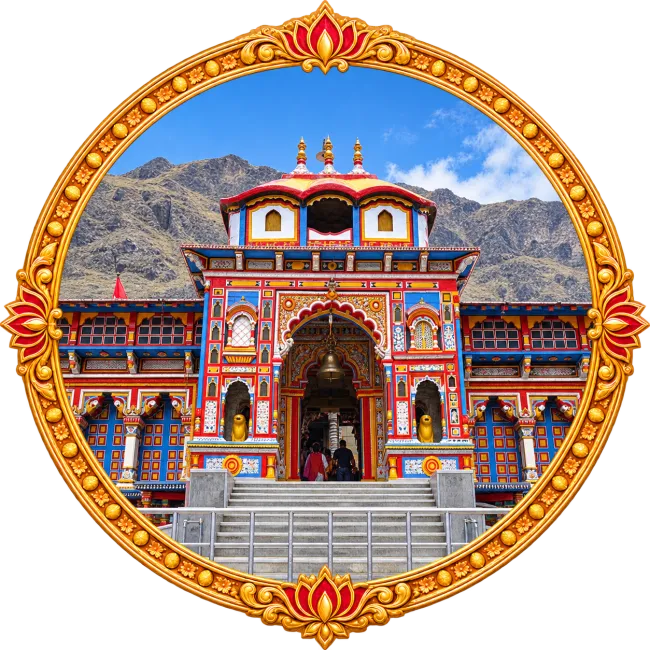
Badrinath Temple, Uttarakhand
Badrinath Temple, also known as Badrinarayan Temple, is one of India’s most sacred Vaishnava pilgrimage sites. Situated on the banks of the Alaknanda River in the Chamoli district of Uttarakhand, the shrine is dedicated to Lord Vishnu in his Badrinarayan form.
The temple forms part of both the greater Char Dham and Uttarakhand’s Chota Char Dham pilgrimage. It is also one of the 108 Divya Desams revered in the Sri Vaishnava tradition. Surrounded by the Nar and Narayan mountain ranges, Badrinath represents meditation, devotion and liberation.
About Badrinath Temple
Badrinath Temple is located at an elevation of approximately 3,133 metres. The shrine stands between the Nar and Narayan peaks, with the Neelkanth mountain forming a dramatic background.
The principal deity is a black stone image of Lord Badrinarayan seated in a meditative posture. The image is traditionally identified with Shaligram stone.
Other sacred figures inside the temple include:
Nar
Narayan
Uddhava
Kuber
Garuda
Goddess Lakshmi
Sage Narada
Navadurga
The temple remains open for approximately six months each year and closes during the snowbound winter.
When Was Badrinath Temple Built and Who Built It?
The sacred site is ancient and is mentioned in Hindu religious traditions associated with Nar and Narayan.
Adi Shankaracharya is credited with reviving Badrinath during the 8th century CE. According to tradition, he recovered the image of Lord Badrinarayan from Narad Kund and established it for worship.
The image was initially worshipped in a cave near Tapt Kund. The rulers of Garhwal later constructed and expanded a permanent temple.
The structure suffered damage from avalanches and earthquakes. It underwent repeated renovation, including major work after the 1803 Himalayan earthquake. The present building therefore reflects several phases of construction and restoration.
Legend of Lord Vishnu and Goddess Lakshmi
According to tradition, Lord Vishnu selected this Himalayan region for meditation. While he was absorbed in penance, severe cold and snowfall surrounded him.
Goddess Lakshmi protected Vishnu by assuming the form of a Badri tree, commonly associated with the Himalayan berry tree. She spread herself over him and sheltered him from the harsh weather.
Lord Vishnu named the place Badrika Ashram in her honour. He became known as Badrinath, the Lord of Badri.
The legend represents Lakshmi’s devotion and the spiritual unity of Vishnu and his divine consort.
Nar and Narayan
Nar and Narayan are twin sages regarded as manifestations of Lord Vishnu. They performed intense penance at Badrikashram for the welfare of creation.
The two mountains surrounding the temple are named Nar and Narayan. Their spiritual practices are believed to have made the entire valley sacred.
Religious Significance
Badrinath is one of the four principal Char Dham pilgrimage sites established in the four directions of India:
Badrinath in the north
Dwarka in the west
Jagannath Puri in the east
Rameswaram in the south
Devotees visit Badrinath to pray for:
Spiritual liberation
Forgiveness for past actions
Family welfare
Good health
Prosperity
Knowledge and devotion
Peace for ancestors
Protection during travel
Fulfilment of wishes
Pilgrims commonly perform ancestral ceremonies at Brahma Kapal after receiving darshan.
Architecture of Badrinath Temple
Badrinath Temple has a colourful facade and architectural elements influenced by North Indian and Himalayan traditions.
The building is divided into three principal sections:
Garbhagriha
Darshan Mandap
Sabha Mandap
The sanctum houses Lord Badrinarayan. The Darshan Mandap allows pilgrims to receive darshan, while the Sabha Mandap is used for gatherings and rituals.
The entrance has a brightly painted arched facade with multiple windows and decorative designs. A golden Kalasha crowns the temple.
Badrinath Temple Opening Season
The temple generally opens during April or May, close to Akshaya Tritiya. The opening date is declared annually according to Hindu calendrical calculations.
The shrine closes during October or November, usually after Diwali and near Bhai Dooj. Winter worship traditions continue at associated shrines in Pandukeshwar and Joshimath.
Badrinath Temple Timings
The following schedule applies during the regular pilgrimage season:
Weather, pilgrimage volume and special ceremonies can affect access. Visitors should follow the daily schedule displayed at Badrinath.
Morning Puja and Aarti
Morning worship begins before sunrise. The deity receives ceremonial bathing and detailed Puja before general darshan opens.
The rituals include:
Maha Abhishekam
Abhishek Puja
Vedic mantra chanting
Flower and Tulsi offering
Sandalwood
Incense and lamps
Naivedya
Morning Aarti
Selected morning Pujas require advance booking through authorised temple arrangements.
Evening Puja and Aarti
The temple reopens at 4:00 PM. Evening worship includes devotional recitation, lamps, hymns and Shringar.
Important evening ceremonies include:
Kapoor Aarti
Aarti
Geet Govind recitation
Shayan Aarti
The Lord is ceremonially prepared for rest before the temple closes.
Tapt Kund
Tapt Kund is a natural hot-water spring situated below the temple. Pilgrims traditionally bathe or wash before entering the shrine.
The water remains naturally warm despite the cold Himalayan climate. Visitors should use designated areas and exercise caution because the water can be hot and surfaces slippery.
Soap and chemical products should not be used in the sacred Kund.
Brahma Kapal
Brahma Kapal is a flat rock platform on the bank of the Alaknanda near the temple. It is an important place for Pind Daan, Tarpan and Shraddha.
Devotees perform rituals here for the peace and liberation of departed ancestors. Ceremonies should be arranged through authorised priests, with charges and materials confirmed beforehand.
Major Festivals
Opening-Day Ceremony
The temple doors are opened after elaborate Vedic rituals. The shrine is decorated with flowers, and thousands of devotees attend.
Badri-Kedar Utsav
Religious and cultural programmes celebrate the traditions of Badrinath and Kedarnath.
Mata Murti Ka Mela
This festival honours Mata Murti, the mother of Nar and Narayan. The ceremonial image is taken to Mata Murti Temple.
Krishna Janmashtami
Lord Krishna is worshipped through fasting, Bhajan and special Puja.
Closing-Day Ceremony
Before winter closure, special rituals are performed, and the sacred lamp is prepared to remain inside the closed sanctum.
Puja and Religious Services
Available services may include:
Maha Abhishekam
Abhishek Puja
Ved Path
Vishnu Sahasranama
Bhagavad Gita Path
Kapoor Aarti
Geet Govind
Shayan Aarti
Family welfare Puja
Ancestral ceremonies
Thanksgiving worship
Puja bookings should be made through authorised temple arrangements.
Offerings and Prasad
Traditional offerings include:
Tulsi leaves
Flowers
Fruits
Dry fruits
Sweets
Sandalwood
Saffron
Clarified butter
Monetary donations
Common prasad includes dry fruits, sugar balls and blessed Tulsi leaves.
Dress Code and Temple Rules
Visitors should wear modest and warm clothing. Thermal layers, waterproof jackets, woollen caps and gloves are advisable.
Important rules include:
Carry valid Yatra registration and identification.
Remove footwear before entering.
Follow queue and security instructions.
Do not photograph restricted areas.
Avoid touching the deity or sacred objects.
Do not carry alcohol, tobacco or non-vegetarian food.
Keep the Alaknanda and Kund clean.
Follow weather and road advisories.
Avoid unnecessary physical exertion at high altitude.
Entry Fee and Darshan Duration
General darshan is free. Charges apply to optional special Pujas and ancestral ceremonies.
Darshan generally requires one to three hours. Opening week, festivals, weekends and holidays attract heavier crowds.
Visitors should allow time for acclimatisation because of the high elevation.
Best Time to Visit
May to June and September to October are the best periods.
May and June have comparatively comfortable daytime temperatures but large crowds. September and October provide clearer mountain views and fewer monsoon disruptions.
July and August bring heavy rainfall and landslide risk. The temple remains closed during winter.
How to Reach Badrinath Temple
By Air
Jolly Grant Airport near Dehradun is the nearest major airport. Seasonal helicopter services may operate according to weather and official arrangements.
By Train
Rishikesh, Yog Nagari Rishikesh and Haridwar are the nearest convenient railway stations.
By Road
Badrinath is connected by mountain road with Joshimath, Pipalkoti, Chamoli, Rudraprayag and Rishikesh.
Accommodation and Facilities
Hotels, guest houses, Dharamshalas and tourist lodges are available in Badrinath. Additional accommodation can be found in Joshimath and Pandukeshwar.
Facilities include:
Medical assistance
Drinking water
Toilets
Cloakrooms
Food outlets
Puja counters
Police and disaster-response support
Parking
Local transport
Nearby Places to Visit
Tapt Kund
Brahma Kapal
Mana Village
Vyas Gufa
Ganesh Gufa
Bhim Pul
Saraswati River
Mata Murti Temple
Charan Paduka
Vasudhara Falls
Yogadhyan Badri, Pandukeshwar
Narsingh Temple, Joshimath
Conclusion
Badrinath Temple is one of Hinduism’s most sacred Vishnu shrines and an essential part of both the Char Dham and Chota Char Dham pilgrimages. Its revival by Adi Shankaracharya, meditative image of Badrinarayan and association with Nar–Narayan give it exceptional spiritual importance.
The colourful temple, Alaknanda River, Tapt Kund and Himalayan surroundings create a powerful pilgrimage experience. With proper registration, warm clothing and attention to altitude and weather, devotees can undertake a safe and meaningful Badrinath Yatra.