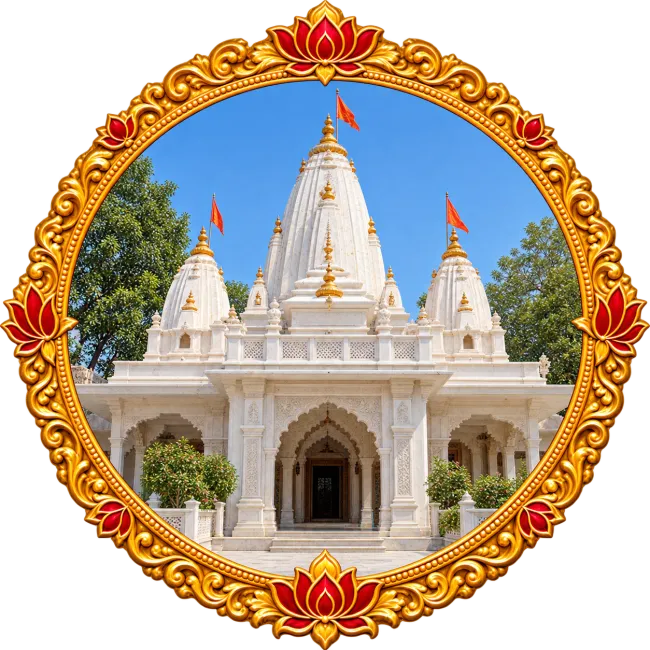
Baba Aughadnath Temple, Meerut
Visit Baba Aughadnath Temple in Meerut, one of the most revered Shiva temples in western Uttar Pradesh and an important landmark connected with the Indian Rebellion of 1857. Also known as Augharnath Mandir and Kali Paltan Mandir, this ancient Siddhpeeth houses a self-manifested Shivling worshipped as Baba Aughadnath.
Situated in the Meerut Cantonment area, the temple combines religious devotion with India’s freedom struggle. Indian soldiers stationed in Meerut used to visit this temple, and its premises became a meeting place where revolutionary ideas were discussed before the uprising of 10 May 1857. Today, devotees visit the temple for Shiva Darshan, Jalabhishek, Rudrabhishek, morning and evening aarti, and blessings for health, protection, prosperity, and fulfilment of wishes.
About Baba Aughadnath Temple Meerut
Baba Aughadnath Temple is a sacred Shiva temple situated near West End Road in the Sadar Bazaar area of Meerut Cantonment, Uttar Pradesh. It is considered an ancient Siddhpeeth and is among the most important religious destinations in Meerut.
The principal deity is Lord Shiva, worshipped here as Baba Aughadnath or Aughaddani Mahadev. The word Aughad represents the simple, compassionate, and easily pleased form of Lord Shiva. Devotees believe that Baba listens to sincere prayers and blesses worshippers without discrimination.
The small Shivling installed inside the sanctum is traditionally believed to be Swayambhu, meaning self-manifested. Devotees offer Ganga water, milk, flowers, Bilva leaves, honey, sandalwood paste, and sacred ash to the Shivling.
The temple is also known as Kali Paltan Mandir. During British rule, Indian soldiers serving in the army were referred to locally as the Kali Paltan, while paltan means a military regiment. Since the temple stood close to their barracks and was regularly visited by Indian soldiers, it became famous by this name.
History of Baba Aughadnath Temple
Baba Aughadnath Temple is one of the oldest places of Shiva worship in Meerut. The sacred Shivling is associated with an ancient local tradition and is believed to have manifested naturally.
Historical accounts connect the development of the shrine with the discovery of a Shivling beneath the ground in 1844. A simple place of worship existed here during the nineteenth century, and Indian soldiers stationed in the nearby military cantonment regularly visited it.
Maratha rulers and soldiers are also believed to have worshipped Lord Shiva at this sacred site while passing through the region. Over time, the shrine became an important centre of faith for residents, soldiers, and travellers.
The original shrine was much smaller than the present temple. A larger and more organised temple structure was constructed in 1968, replacing the older building. As the number of devotees increased, the complex continued to develop.
A new hexagonal prayer hall was constructed in 1987 to provide more space for religious ceremonies and devotees. In 2001, a Kalash made with approximately 4.5 kilograms of gold was installed on the temple spire. These developments gave the temple its present grand appearance while preserving its religious and historical identity.
Baba Aughadnath Temple and the Revolt of 1857
Baba Aughadnath Temple holds a special place in the history of India’s First War of Independence. During British rule, Meerut was one of the largest military cantonments in northern India. Indian soldiers serving in the British army lived and trained close to the temple.
The temple premises provided a peaceful and trusted meeting place for Indian soldiers. Revolutionaries, saints, local leaders, and soldiers are believed to have held secret discussions here about resisting British rule.
A historical well located within the temple premises was used by Indian soldiers for drinking water. According to the temple’s popular tradition, a priest refused to offer water to soldiers associated with the controversial cartridges because the new Enfield rifle cartridges were believed to have been greased with cow and pig fat.
The cartridges had to be bitten open before use. This offended the religious beliefs of both Hindu and Muslim soldiers. On 24 April 1857, soldiers of the 3rd Bengal Light Cavalry in Meerut refused to accept and use the cartridges.
Eighty-five soldiers were subsequently court-martialled, publicly humiliated, shackled, and imprisoned on 9 May 1857. The following day, 10 May 1857, Indian soldiers rose in rebellion, released their imprisoned companions, and marched towards Delhi. The uprising spread to other regions and developed into the First War of Indian Independence.
The historical well and memorial inside the temple complex preserve the memory of these events. A martyr memorial was established near the well, and tributes are paid to the freedom fighters every year on 10 May.
Because of this connection, Baba Aughadnath Temple is both a sacred Shiva temple and a national heritage site representing courage, unity, sacrifice, and resistance.
Religious Significance of Baba Aughadnath Temple
Baba Aughadnath Temple is regarded as a Siddhpeeth where sincere prayers are believed to receive the blessings of Lord Shiva. The Swayambhu Shivling is worshipped as a powerful and compassionate form of Mahadev.
Devotees believe that worshipping Baba Aughadnath can:
- Remove fear, stress, and negative thoughts.
- Protect devotees from difficulties and unseen obstacles.
- Bring peace and unity within the family.
- Bless unmarried devotees with a suitable life partner.
- Support good health and recovery from illness.
- Help devotees overcome financial and professional problems.
- Grant courage during challenging situations.
- Fulfil sincere and righteous wishes.
- Strengthen spiritual discipline and devotion.
Mondays are considered particularly auspicious for worshipping Lord Shiva. The temple receives a large number of devotees on every Monday, Pradosh Vrat, monthly Shivratri, Mahashivratri, and during the month of Shravan.
Architecture of Baba Aughadnath Temple
The present temple has been constructed mainly with white marble and reflects a blend of traditional North Indian temple architecture and modern design. Its clean exterior, decorated shikhara, spacious courtyard, and organised prayer hall create a peaceful devotional environment.
The main sanctum houses the sacred Shivling of Baba Aughadnath. Nandi, the divine vehicle and devoted attendant of Lord Shiva, is positioned facing the sanctum. Devotees traditionally offer prayers to Nandi before taking darshan of the Shivling.
The hexagonal prayer hall constructed in 1987 provides space for aarti, bhajan, Rudrabhishek, and other religious ceremonies. The temple spire is crowned by the gold Kalash installed in 2001.
The complex also includes shrines dedicated to Radha and Krishna and other Hindu deities. Decorative images, religious symbols, marble flooring, and a well-maintained courtyard enhance the beauty of the temple.
The historical well and memorial associated with the uprising of 1857 are among the most important features of the complex. They give visitors an opportunity to understand the temple’s contribution to India’s freedom struggle.
Baba Aughadnath Temple Timings
The regular darshan and aarti schedule of Baba Aughadnath Temple is as follows:
These are the regular published timings. The schedule may be extended or modified on Mondays, Mahashivratri, Shravan Shivratri, Pradosh Vrat, and during the Kanwar Yatra. On major Shiva festivals, the temple may remain accessible for longer hours to accommodate devotees arriving for Jalabhishek.
Daily Puja and Aarti
Daily worship begins at 6:00 AM with the opening of the sanctum and morning aarti. The Shivling is bathed with water and other sacred substances before being decorated with Bilva leaves, flowers, sandalwood paste, and sacred ash.
Devotees can perform Jalabhishek during the morning darshan session. Personal Rudrabhishek and other special pujas may be arranged through the authorised temple counter.
Afternoon aarti takes place at 1:00 PM before the midday interval. Regular darshan resumes at 3:00 PM.
Evening aarti is performed at 7:00 PM. Priests offer illuminated lamps before Baba Aughadnath while devotees chant:
“Om Namah Shivaya”
“Har Har Mahadev”
“Baba Aughadnath Ki Jai”
The sound of bells, conch shells, Shiva mantras, and devotional songs creates a powerful spiritual atmosphere. The evening aarti is one of the best times to visit the temple.
Major Festivals Celebrated at the Temple
Mahashivratri
Mahashivratri is the most important festival celebrated at Baba Aughadnath Temple. Thousands of devotees visit the temple to offer water, milk, Bilva leaves, flowers, honey, and fruits to the Shivling.
Special Rudrabhishek, night worship, bhajans, aarti, and Shiva mantra chanting are organised. Security and queue arrangements are introduced to manage the large gathering.
Shravan Month
The entire month of Shravan is dedicated to Lord Shiva. The temple receives a large number of devotees every day, especially on Shravan Mondays.
Devotees bring Ganga water from Haridwar and other sacred places and offer it to Baba Aughadnath. The temple is beautifully decorated, and special pujas are conducted throughout the month.
Kanwar Yatra and Shravan Shivratri
Baba Aughadnath Temple is one of the major destinations for Kanwariyas in western Uttar Pradesh. Large numbers of Shiva devotees walk from Haridwar carrying sacred Ganga water and perform Jalabhishek at the temple.
During Shravan Shivratri, special traffic, security, medical, drinking-water, and queue arrangements are made in the temple area.
Pradosh Vrat
Pradosh Vrat is observed twice every lunar month and is considered highly auspicious for Shiva worship. Devotees visit the temple during the evening and offer prayers for protection, health, and freedom from difficulties.
Kartik and Phalgun Shivratri
Monthly Shivratri observances are marked by Jalabhishek, Shiva mantra chanting, fasting, and evening worship.
10 May Commemoration
Every year on 10 May, the temple remembers the beginning of the 1857 uprising in Meerut. Tributes are offered to the freedom fighters at the memorial associated with the historical well.
Rudrabhishek and Special Puja
Rudrabhishek is one of the most important rituals performed at Baba Aughadnath Temple. During the ceremony, the Shivling is bathed with sacred substances while priests recite Vedic mantras and verses from the Rudram.
Items used during Rudrabhishek may include:
- Ganga water
- Milk
- Curd
- Honey
- Sugar
- Sugarcane juice
- Ghee
- Sandalwood paste
- Bilva leaves
- Flowers
- Bhasma
Devotees perform Rudrabhishek for health, peace, marital harmony, professional growth, protection, and fulfilment of wishes. Puja arrangements should be made through authorised temple representatives.
Offerings and Prasad
Devotees may offer the following items to Baba Aughadnath:
- Ganga water
- Fresh water
- Milk
- Bilva leaves
- White flowers
- Dhatura flowers and fruit
- Aak flowers
- Sandalwood paste
- Bhasma
- Honey
- Seasonal fruits
- Sweets
- Coconut
- Rudraksha
- Ghee lamps
Prasad commonly includes sweets, fruits, sugar crystals, or Panchamrit. Devotees should use the designated channels for Jalabhishek and avoid pouring excessive milk outside the sanctum.
Bilva leaves should be clean and undamaged. Kumkum and turmeric are generally not applied directly to a Shivling unless permitted by the temple priest.
Entry Fee and Visit Duration
There is no entry fee for general darshan at Baba Aughadnath Temple. Devotees can visit the principal shrine, historical well, and memorial without purchasing an entry ticket.
Charges may apply for Rudrabhishek, personal puja, bhog, or other special religious services. These should be booked only through authorised counters.
A regular visit requires 45 minutes to one hour. Visitors interested in attending aarti and exploring the historical memorial should reserve one to two hours.
Waiting time can increase considerably on Mondays, Mahashivratri, Shravan Shivratri, and during the Kanwar Yatra.
Best Time to Visit
The most comfortable months to visit Baba Aughadnath Temple are October to March. The weather remains suitable for darshan and local sightseeing.
The best daily darshan periods are:
- Morning: 6:30 AM – 9:00 AM
- Evening: 5:00 PM – 7:30 PM
- Evening Aarti: 7:00 PM
Monday is the principal day for Shiva worship, but it is also busier than other weekdays. Visitors seeking peaceful darshan should choose Tuesday to Friday during the early morning.
Shravan and Mahashivratri provide the grandest devotional experience, although devotees should be prepared for large crowds and longer queues.
Visitor Guidelines
- Wear modest and respectful clothing.
- Remove footwear at the designated place.
- Follow the prescribed queue for darshan and Jalabhishek.
- Carry only permitted puja items into the sanctum.
- Do not touch the Shivling unless temple arrangements permit it.
- Seek permission before taking photographs or videos.
- Photography may be prohibited near the sanctum.
- Use authorised counters for puja bookings and donations.
- Keep mobile phones on silent mode.
- Maintain cleanliness within the temple complex.
- Do not damage or touch the historical memorial.
- Avoid carrying tobacco, alcohol, leather items, or non-vegetarian food.
- Follow security instructions during festivals and the Kanwar Yatra.
- Elderly devotees should visit during less crowded hours.
How to Reach Baba Aughadnath Temple
By Air
Hindon Airport in Ghaziabad is the nearest airport with limited flight connectivity. Indira Gandhi International Airport in Delhi is the nearest major airport and is approximately 90 to 100 kilometres from Meerut.
Taxis, buses, and app-based cabs are available from Delhi and Ghaziabad to Meerut.
By Train
Meerut Cantonment Railway Station is the nearest railway station and is located a short distance from the temple. Meerut City Junction is the main railway station and is approximately 6 to 7 kilometres away.
Meerut has regular train connections with Delhi, Ghaziabad, Saharanpur, Dehradun, Haridwar, Ambala, and other cities. Auto-rickshaws, e-rickshaws, and taxis are available outside both stations.
By Road
Meerut is well connected with Delhi, Ghaziabad, Noida, Muzaffarnagar, Bijnor, Haridwar, and Saharanpur. The Delhi–Meerut Expressway provides convenient road access from Delhi and the National Capital Region.
After reaching Meerut, visitors can travel to West End Road or Sadar Bazaar in the Cantonment area by taxi, auto-rickshaw, e-rickshaw, or local transport.
Vehicles may be restricted close to the temple during Mahashivratri and the Kanwar Yatra. Visitors may need to walk from designated parking areas.
Nearby Places to Visit
Visitors can explore the following attractions near Baba Aughadnath Temple:
- Government Freedom Struggle Museum
- Shaheed Smarak
- Gandhi Bagh
- St. John’s Church
- Shahpeer’s Mausoleum
- Suraj Kund Park
- Mansa Devi Temple
- Bilveshwar Nath Temple
- Baleni Pura Mahadev Temple
- Hastinapur
- Digambar Jain Bada Mandir, Hastinapur
- Jambudweep Jain Temple
Conclusion
Baba Aughadnath Temple is one of the most significant religious and historical landmarks of Meerut. Its self-manifested Shivling, ancient Siddhpeeth tradition, daily Shiva worship, and connection with the uprising of 1857 give the temple a unique identity.
The development of the present structure in 1968, the construction of the hexagonal hall in 1987, and the installation of the gold Kalash in 2001 represent different stages in the temple’s modern history. At the same time, the historical well and martyr memorial preserve the inspiring story of the soldiers who challenged British rule.
Whether devotees visit for Jalabhishek, Rudrabhishek, morning aarti, evening worship, Mahashivratri, or to understand the history of India’s freedom struggle, Baba Aughadnath Temple offers a powerful experience of devotion, courage, sacrifice, and national pride.