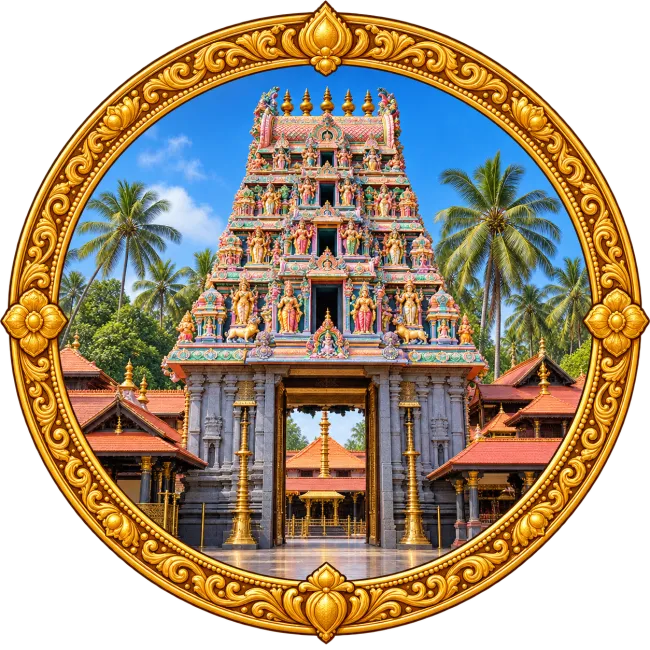
Attukal Bhagavathy Temple, Thiruvananthapuram
Attukal Bhagavathy Temple in Thiruvananthapuram, Kerala, is one of South India’s most revered temples dedicated to the Divine Mother. Goddess Bhagavathy is worshipped here as a powerful manifestation of Bhadrakali, Parvati and Kannaki.
The temple is popularly known as the “Sabarimala of Women” because of Attukal Pongala, an extraordinary annual festival in which women prepare a sacred offering in temporary hearths across the surrounding streets. The festival is recognised as one of the world’s largest religious gatherings of women.
About Attukal Bhagavathy Temple
Attukal Bhagavathy Temple is situated at Attukal in Thiruvananthapuram, a short distance from the city centre. The presiding deity is Goddess Attukalamma, worshipped as a compassionate mother and powerful protector.
The Goddess is closely associated with Kannaki, the central character of the Tamil epic Silappathikaram. She is also worshipped as Bhadrakali, the fierce form of the divine mother who destroys evil and protects devotees.
The temple combines elements of Kerala and Tamil temple traditions. Its colourful gopurams, detailed sculptures, murals and traditional sloping roofs give the complex a distinctive appearance.
Devotees visit Attukal to pray for family welfare, health, marriage, children, prosperity and protection from difficulties.
When and Who Built Attukal Temple?
The temple’s spiritual origin is connected with the legendary journey of Goddess Kannaki. The original shrine developed as a small sacred Kavu, or grove, where the Goddess is believed to have revealed her presence.
According to local tradition, the deity appeared in a dream and instructed a respected member of the Mulluveettil family to construct a shrine at the place where divine signs would be found.
A small temple was established at the sacred location. The shrine gradually attracted devotees from Thiruvananthapuram and surrounding regions.
The temple was expanded and renovated during later periods through the contributions of devotees and community administrators. The gopurams, mandapams, festival facilities and other structures were developed while preserving the shrine’s ancient connection with Kannaki and Bhadrakali.
The present temple is therefore the result of gradual development rather than construction by a single historical ruler.
Legend of Kannaki
The central legend of Attukal Temple comes from the Tamil epic Silappathikaram.
Kannaki was married to Kovalan, a wealthy merchant. After experiencing financial difficulties, Kovalan travelled with Kannaki to Madurai and attempted to sell one of her anklets.
The queen of Madurai had recently lost an anklet, and Kovalan was falsely accused of stealing it. Without conducting a proper investigation, the Pandya king ordered his execution.
Kannaki entered the royal court and proved her husband’s innocence. The queen’s anklet contained pearls, while Kannaki’s anklet contained rubies.
Realising his injustice, the king died from shock and remorse. Kannaki, overwhelmed by grief and righteous anger, cursed Madurai, and the city was consumed by fire.
After leaving Madurai, she travelled towards Kerala and eventually reached the region connected with present-day Attukal.
Appearance of the Goddess at Attukal
According to local tradition, Kannaki appeared near the Killi River in the form of a young girl.
She requested an elderly man from the Mulluveettil family to help her cross the river. The man returned home to prepare food and welcome the child, but she disappeared.
That night, the Goddess appeared in his dream and revealed her divine identity. She instructed him to search for three sacred lines in a nearby grove and build a shrine there.
The man followed the instructions, found the signs and established a place of worship. The divine girl came to be worshipped as Attukal Bhagavathy.
The legend expresses the transformation of Kannaki from a devoted wife into a powerful Goddess of justice and protection.
Bhagavathy as Bhadrakali
Attukalamma is also identified with Bhadrakali, a fierce form of Goddess Parvati.
Bhadrakali represents divine power used to destroy injustice, arrogance and negative forces. At the same time, she is worshipped as a compassionate mother who protects families and grants sincere wishes.
This dual nature is reflected in the temple’s worship. The Goddess may appear fierce in mythology, but devotees approach her as Amma—the loving mother.
Religious Significance
Attukal Bhagavathy is worshipped for courage, health and family welfare. Women have a particularly strong connection with the temple, though devotees from all sections of society visit throughout the year.
People pray here for:
Good health and recovery from illness
Marriage and marital harmony
Blessings for children
Family peace and prosperity
Protection from negative influences
Courage during difficult situations
Success in education and employment
Financial stability
Relief from fear and anxiety
Justice and protection
Spiritual strength
Fulfilment of vows
Tuesdays, Fridays, full-moon days and festival dates are considered especially auspicious for Goddess worship.
Main Deity and Other Shrines
Goddess Attukal Bhagavathy
The principal deity is Goddess Bhagavathy, identified with Kannaki and Bhadrakali. She is decorated with silk garments, flowers, gold ornaments and sacred weapons.
Lord Ganesha
Lord Ganesha is worshipped before beginning important rituals. Devotees seek his blessings for the removal of obstacles.
Lord Shiva
Lord Shiva has an important place in the temple’s wider sacred tradition as the divine consort of Parvati.
Other deities and sacred figures include:
Madan Thampuran
Nagaraja
Nagayakshi
Lord Vishnu
Guardian deities
Different forms of Shakti
The temple’s subsidiary shrines should be visited after receiving darshan of the principal Goddess.
Architecture of Attukal Temple
Attukal Temple combines Kerala and Tamil architectural styles.
Gopurams
The entrance towers contain colourful sculptures of gods, goddesses, celestial beings and episodes from Hindu mythology.
The sculptural details include stories connected with Kannaki, Bhadrakali, Shiva, Vishnu and the Goddess traditions of South India.
Sreekovil
The Sreekovil is the sanctum housing Attukal Bhagavathy. It follows Kerala temple design, with a compact sacred chamber and protective sloping roof.
Traditional lamps illuminate the interior. The deity is decorated according to the daily and festival ritual calendar.
Chuttambalam
The Chuttambalam surrounds the main sanctum and contains pathways, ritual areas and spaces for lamps.
Temple Murals
Paintings and sculptural panels depict mythological stories and different forms of the Divine Mother.
Pongala Grounds
During Attukal Pongala, the area extending far beyond the temple becomes a sacred worship space. Roads, courtyards and public areas are organised into rows of temporary hearths.
Attukal Bhagavathy Temple Timings
The regular daily schedule is:
The schedule may be extended or reorganised during Attukal Pongala, Navaratri, Mandala season and other special festival days.
Morning Puja and Deepa Aradhana
The temple opens at 4:30 AM with Palliyunarthu, the ceremonial awakening of the Goddess.
Nirmalya Darshan is available at 5:00 AM. Devotees see Attukalamma with the previous night’s floral decorations before the new day’s rituals begin.
Morning Abhishekam is performed at 5:30 AM, followed by Deepa Aradhana at 6:00 AM.
Usha Puja is conducted at 6:40 AM. Kalabhabhishekam and special Archana are performed from 7:30 AM to 9:00 AM according to the day’s ritual programme.
The best morning darshan period is from 6:00 AM to 9:30 AM.
Ucha Puja
Ucha Puja is performed at 11:30 AM. The ceremony includes Archana, Naivedyam and sacred lamps.
Madhyahna Deepa Aradhana takes place at 12:00 PM. The morning darshan session ends at 12:30 PM.
Devotees wishing to attend the midday worship should enter the temple before 11:15 AM.
Evening Puja and Deepa Aradhana
The temple reopens at 5:00 PM. Evening Deepa Aradhana is performed at 6:30 PM.
The best evening darshan period is from 5:00 PM to 7:00 PM. Rows of traditional lamps create a beautiful devotional atmosphere.
Athazha Puja, the main night worship, is conducted at 7:30 PM. Final Deepa Aradhana is offered at 8:00 PM, and the temple closes at 8:30 PM.
Attukal Pongala
Attukal Pongala is the temple’s most famous annual festival. It is celebrated during the Malayalam month of Kumbham.
Women gather across Thiruvananthapuram and prepare Pongala in temporary clay or brick hearths. The principal ingredients include:
Rice
Jaggery
Coconut
Ghee
Banana
Cardamom
The ritual begins after the sacred fire is brought from the temple. Priests later bless the Pongala prepared by devotees.
The offering represents gratitude, surrender and a personal bond with the Goddess. Women participate to pray for health, family welfare, marriage, children and fulfilment of wishes.
The gathering extends across roads, courtyards, institutional grounds and private spaces surrounding the temple.
Pongala Preparation Guidelines
Devotees participating in Pongala should:
Reach the allotted area early
Use the permitted stove and fuel arrangement
Carry clean vessels and ingredients
Keep drinking water available
Wear simple, comfortable clothing
Follow fire-safety instructions
Keep emergency routes clear
Avoid plastic waste
Remain until the offering is blessed
Follow police and temple announcements
Children and elderly participants should remain protected from heat and smoke.
Kuthiyottam
Kuthiyottam is an important ritual performed during the Attukal Pongala festival.
Young boys symbolically represent the wounded soldiers of Goddess Bhadrakali. They observe prescribed discipline, participate in prayers and receive ritual preparation under temple supervision.
The ceremony represents devotion, endurance and surrender to the Goddess.
Families participating in Kuthiyottam must register through the authorised temple system and follow all ritual and health instructions.
Thalappoli
Thalappoli is a ceremonial procession in which girls and women carry decorated plates containing lamps, flowers, rice and other sacred items.
The procession honours Goddess Bhagavathy and represents prosperity, purity and divine protection.
Participants wear traditional Kerala clothing and follow the organised procession route.
Major Festivals
Attukal Pongala Festival
The annual festival extends over several days and concludes with the grand Pongala offering.
Kappukettu
Kappukettu marks the ceremonial beginning of the festival. The Goddess is invoked, and special ritual restrictions begin.
Kuruthi Tharpanam
Kuruthi Tharpanam is an important concluding ritual associated with Bhadrakali worship.
Navaratri
The Goddess is worshipped through special Puja, Alankaram and cultural programmes during Navaratri.
Vijayadashami
Vidyarambham ceremonies may be organised for children beginning education.
Mandala Season
Special worship is offered during the Mandala period. Devotees visit before or after pilgrimage to other Kerala temples.
Other observances include Vishu, Karthika days, full-moon worship and important Bhagavathy festival dates.
Sevas and Offerings
Important temple Sevas include:
Archana
Kumkumarchana
Bhagavathy Seva
Kalabhabhishekam
Pushpabhishekam
Ganapati Homam
Mrityunjaya Homam
Thalappoli
Vidyarambham
Pongala offering
Deepa Seva
Annadanam donation
Festival sponsorship
Flowers, coconuts, fruits, turmeric, kumkum, silk garments and sacred lamps are common offerings.
Seva tickets should be purchased only from authorised counters.
Prasadam
Common prasadam may include:
Pongala
Payasam
Appam
Sacred kumkum
Turmeric
Flowers
Blessed sandalwood paste
Pongala becomes sacred prasadam after being blessed by temple priests.
Devotees should carry prasadam carefully and avoid wasting food. Plastic and disposable waste must be placed in designated collection areas.
Dress Code and Temple Rules
Visitors should wear clean and modest clothing. Traditional Kerala or Indian attire is recommended.
Men may wear a mundu, dhoti, kurta-pyjama or full-length trousers with a shirt. Women may wear a saree, set mundu, salwar kameez or another modest outfit.
Specific inner areas may require traditional dress. Visitors should follow instructions displayed at the entrance.
Footwear must be removed before entering. Mobile phones, cameras and large bags may be restricted near the sanctum.
Photography and videography are prohibited in designated worship areas.
Alcohol, tobacco, leather articles and non-vegetarian food must not be carried inside.
Entry Fee and Visit Duration
General darshan is available without an entry fee. Separate charges apply to special Pujas, Abhishekam, Archana and other Sevas.
A regular visit requires 1 to 1½ hours. Devotees attending a special ritual should keep 2 hours available.
During Attukal Pongala, visitors must reserve an entire day because roads are restricted and very large crowds gather throughout the city.
Best Time to Visit
October to February is the most comfortable period for visiting Thiruvananthapuram.
For peaceful darshan, visit between 6:00 AM and 9:00 AM on a weekday. Evening darshan between 5:00 PM and 7:00 PM provides an opportunity to attend Deepa Aradhana.
Attukal Pongala offers the grandest festival experience, but participants should prepare for heat, smoke, crowds and traffic restrictions.
How to Reach Attukal Temple
By Air
Thiruvananthapuram International Airport is the nearest airport. Taxis, buses and local vehicles are available from the airport.
By Train
Thiruvananthapuram Central Railway Station is the nearest major railway station. It has extensive connections with Kerala, Tamil Nadu and other Indian states.
Auto-rickshaws, taxis and buses are available from the station.
By Road
Attukal Temple is located within Thiruvananthapuram city and is connected by local buses, taxis and auto-rickshaws.
During Pongala, private vehicles are restricted across large parts of the city. Visitors should use designated public transport and parking arrangements.
Nearby Places to Visit
Visitors may also explore:
Sree Padmanabhaswamy Temple
Pazhavangadi Ganapathy Temple
Kuthiramalika Palace Museum
East Fort
Chalai Market
Napier Museum
Sri Chitra Art Gallery
Kanakakunnu Palace
Vellayani Devi Temple
Kovalam Beach
Azhimala Shiva Temple
Poovar
Visitor Guidelines
Arrive early on Tuesdays, Fridays and festival days. Purchase Seva tickets only from authorised counters.
Deposit footwear, mobile phones and large bags at designated facilities. Preserve the deposit token carefully.
During Pongala, carry sufficient water, protect yourself from heat and follow fire-safety instructions.
Keep roads and emergency paths clear. Do not place hearths in unauthorised or unsafe locations.
Maintain cleanliness and avoid plastic. Follow all directions given by temple volunteers, police, health teams and fire personnel.
Conclusion
Attukal Bhagavathy Temple is a powerful centre of Goddess worship and one of Kerala’s most distinctive pilgrimage destinations. Its connection with Kannaki, Bhadrakali and the sacred Pongala tradition gives it exceptional cultural and spiritual importance.
The temple represents courage, justice, motherly compassion and protection. Attukal Pongala transforms much of Thiruvananthapuram into a vast sacred space where women worship together with faith and discipline.
A visit to Attukal Bhagavathy Temple offers devotees an opportunity to seek health, family welfare, strength and the compassionate blessings of Attukalamma.