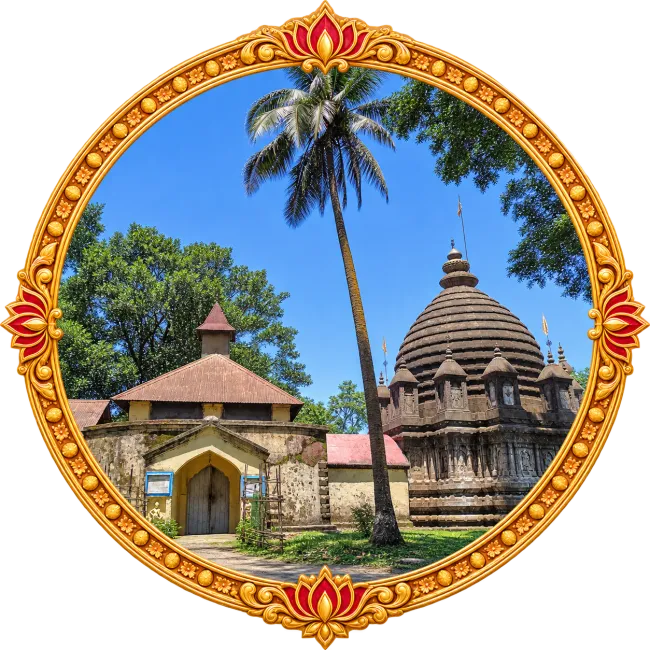
Aswaklanta Temple, North Guwahati
Aswaklanta Temple, also written as Ashwaklanta Temple, is a historic Vaishnava shrine situated on the northern bank of the Brahmaputra River in North Guwahati, Assam. Located on a scenic hill near Rajaduar, the temple is dedicated to Lord Vishnu and is closely connected with Lord Krishna’s battle against the demon king Narakasura.
The temple was built in 1720 CE by Ahom king Siva Singha. Its riverside location, ancient stone sculptures and two principal Vishnu shrines make it an important religious and heritage destination.
About Aswaklanta Temple
Aswaklanta Temple stands on a hill overlooking the Brahmaputra. The complex contains two important shrines situated at different elevations:
Kurma Janardana Temple
Anantasayi Vishnu Temple
Lord Vishnu is worshipped in his Kurma-associated Janardana form in one shrine. In the other, he is represented reclining on the serpent Ananta or Shesha.
The peaceful hill, stone steps and river views give the temple a distinctive atmosphere. Devotees visit to pray for protection, prosperity, family welfare and spiritual peace.
When Was Aswaklanta Temple Built and Who Built It?
Aswaklanta Temple was constructed in 1720 CE by Ahom king Siva Singha. He was a major patron of Hindu temples and supported both Shakta and Vaishnava traditions.
The king built a permanent temple complex at the sacred site and granted land for regular worship, festivals and maintenance.
The great Assam earthquake of 1897 damaged parts of the temple. The upper portions of the structure were later reconstructed, while surviving sculptures and architectural fragments were preserved.
Subsequent repairs added pathways, railings and facilities for visitors. The complex continues to retain its association with Ahom-period architecture.
Legend of Lord Krishna and the Tired Horses
The name Aswaklanta is connected with Lord Krishna’s battle against Narakasura, the powerful ruler of ancient Pragjyotishpura.
The word can be divided into:
Ashwa, meaning horse
Klanta, meaning tired or exhausted
According to local tradition, Lord Krishna travelled through this region while pursuing Narakasura. His horses became tired, so he stopped on the hill to allow them to rest.
The place became known as Ashwaklanta—the location where the horses rested. Over time, the pronunciation developed into Aswaklanta.
After recovering, Krishna continued his campaign and defeated Narakasura, freeing the people and restoring righteousness.
Another Interpretation of the Name
Another traditional interpretation connects the name with an attempt to mislead Lord Krishna.
It is said that Narakasura tried to convince Krishna that his horses were tired and that the pursuit should end. Krishna recognised the deception and continued the battle.
Both traditions connect the location with Krishna, his horses and the defeat of Narakasura.
Religious Significance
Aswaklanta Temple is an important Vaishnava shrine in the ancient Kamrupa region. Devotees worship Lord Vishnu as the protector and preserver of the universe.
People visit the temple to pray for:
Protection during journeys
Family peace and prosperity
Good health
Success in education and employment
Marriage and children
Relief from difficulties
Mental peace
Devotion and spiritual progress
Fulfilment of wishes
The shrine is especially important during Janmashtami, Doul Utsav and other festivals dedicated to Vishnu and Krishna.
Kurma Janardana Temple
The lower shrine is dedicated to Lord Vishnu as Kurma Janardana. Kurma refers to the tortoise incarnation of Vishnu, while Janardana means the Lord who protects people from evil.
The image contains characteristics associated with both the Kurma Avatar and the cosmic form of Vishnu. Devotees offer Tulsi leaves, flowers, fruits and sweets.
The Kurma symbolism represents stability, patience and support. It recalls the story of the churning of the ocean, during which Vishnu took the form of a giant tortoise to support Mount Mandara.
Anantasayi Vishnu Temple
The upper shrine contains a representation of Lord Vishnu reclining on the serpent Ananta or Shesha.
Anantasayi Vishnu rests upon the cosmic serpent in the ocean of creation. This form represents the state of divine balance between creation and dissolution.
The image is an important example of religious sculpture associated with Assam’s medieval artistic traditions. Lord Brahma is traditionally shown emerging from the lotus connected with Vishnu, while Goddess Lakshmi remains near his feet.
Architecture of Aswaklanta Temple
The temple displays characteristics of Ahom-period architecture combined with older sculptural elements.
The shrines have stone foundations, thick walls and dome-shaped superstructures. Several carved stones depict Vishnu, divine attendants and other Hindu figures.
The complex includes:
Kurma Janardana shrine
Anantasayi Vishnu shrine
Stone stairways
Hilltop pathways
Ancient sculptures
Temple courtyard
Brahmaputra viewpoints
Offering counters
Smaller sacred structures
The elevated site offers wide views of the Brahmaputra and Guwahati.
Aswaklanta Temple Timings
The temple follows a daily schedule for Puja, Bhog and Aarti. Access may be regulated during severe weather or high river levels.
Festival programmes can affect the ordinary schedule. Visitors should follow the daily information displayed at the temple.
Morning Puja and Aarti
The day begins with Mangal Puja and cleaning of the sanctum. Morning Aarti is performed at 6:00 AM.
The rituals include:
Sanctum purification
Offering of fresh clothes
Tulsi and flower decoration
Sandalwood paste
Mantra chanting
Incense and lamp offering
Naivedya
Morning Aarti
Devotees can visit both principal shrines after the morning worship has been completed.
Bhog and Evening Aarti
Bhog is offered to Lord Vishnu at noon. It generally includes rice, lentils, vegetables, fruits and sweets prepared according to Vaishnava customs.
Evening Puja begins at 5:30 PM, followed by Aarti at 6:30 PM. Devotional songs and the chanting of Vishnu’s names form part of the ceremony.
Shayan Puja is performed before the temple closes.
Major Festivals
Krishna Janmashtami
Janmashtami is one of the most important celebrations at Aswaklanta Temple. Special Puja, Bhajan, Kirtan and readings from Krishna’s life are organised.
Doul Utsav
Doul Utsav celebrates the divine love of Radha and Krishna. Devotees participate in Naam-Kirtan, processions and traditional colour celebrations.
Rasa Purnima
The Rasa Lila of Lord Krishna is remembered through special worship and devotional performances.
Kartik Purnima
Devotees offer lamps and prayers during the sacred month of Kartik. The Brahmaputra riverbank receives additional visitors.
Vaikuntha Ekadashi
Special Vishnu worship and fasting are observed on Vaikuntha Ekadashi.
Diwali
The temple is illuminated with lamps, and Lord Vishnu is worshipped for prosperity and protection.
Puja and Religious Services
Available religious services may include:
General Vishnu Puja
Janardana Puja
Tulsi offering
Vishnu Sahasranama recitation
Bhagavata Path
Naam-Kirtan
Janmashtami Puja
Family welfare prayers
Marriage-related Puja
Child-blessing ceremony
Thanksgiving worship
Puja arrangements should be completed through authorised priests or temple counters.
Offerings and Prasad
Traditional offerings include:
Tulsi leaves
Flowers and garlands
Fruits
Coconut
Sweets
Sandalwood paste
Incense
Clarified butter
Clothes for the deity
Monetary donations
Prasad generally includes sweets, fruits, coconut and blessed Tulsi leaves. Only vegetarian offerings should be brought into the temple.
Dress Code and Temple Rules
There is no strict dress code, but visitors should wear clean and modest clothing. Comfortable footwear is recommended for climbing the stone steps.
Important rules include:
Remove footwear before entering the shrines.
Follow the designated path.
Be cautious on steep or wet steps.
Do not touch the ancient sculptures.
Follow photography restrictions.
Keep the hill and riverbank clean.
Avoid alcohol, tobacco and non-vegetarian food.
Deposit donations only at authorised counters.
Follow directions from priests and temple staff.
Entry Fee and Darshan Duration
General entry and darshan are free. Charges may apply to optional Pujas and ritual materials.
Darshan generally requires 30–45 minutes. Visitors exploring both shrines, sculptures and river viewpoints should reserve one to two hours.
Waiting time increases during Janmashtami and Doul Utsav.
Best Time to Visit
October to March is the best period for visiting Aswaklanta Temple. The weather is comfortable for climbing the hill and enjoying the river views.
Early morning between 7:00 AM and 10:00 AM is suitable for peaceful darshan. Evening provides attractive views of the Brahmaputra, but visitors should leave before it becomes dark.
The monsoon makes the steps slippery, and high water levels can affect access near the riverbank.
How to Reach Aswaklanta Temple
By Air
Lokpriya Gopinath Bordoloi International Airport is approximately 28 kilometres away by road.
By Train
Guwahati Railway Station is the nearest major railway station. Visitors can continue by road or cross the Brahmaputra by ferry.
By Ferry
Ferry services connect central Guwahati with North Guwahati. Local vehicles are available from the northern ferry points to the temple.
By Road
The temple is connected through the road network leading to Rajaduar and North Guwahati.
Accommodation and Facilities
Basic guest houses are available in North Guwahati. Guwahati city offers a wider range of hotels.
Facilities near the temple include:
Parking
Drinking water
Shoe-storage space
Puja shops
Basic toilets
Local transport
Resting areas
River viewpoints
Nearby Places to Visit
Doul Govinda Temple: A major Krishna shrine at Rajaduar.
Dirgheswari Temple: A historic Shakti shrine on Sitachal Hill.
IIT Guwahati surroundings: Known for scenic hills and lakes.
Umananda Temple: A Shiva shrine on Peacock Island.
Kamakhya Temple: Guwahati’s principal Shakti Peetha.
Sukreswar Temple: A historic Shiva temple beside the Brahmaputra.
Madan Kamdev: An archaeological complex containing ancient temple remains.
Conclusion
Aswaklanta Temple is a historic Vaishnava shrine associated with Lord Krishna, Lord Vishnu and the defeat of Narakasura. Built by Ahom king Siva Singha in 1720 CE, it preserves important elements of Assam’s religious and architectural heritage.
The Kurma Janardana and Anantasayi Vishnu shrines, stone sculptures and panoramic Brahmaputra views create a memorable pilgrimage experience. Devotees visit Aswaklanta to seek protection, prosperity, family harmony and spiritual devotion.