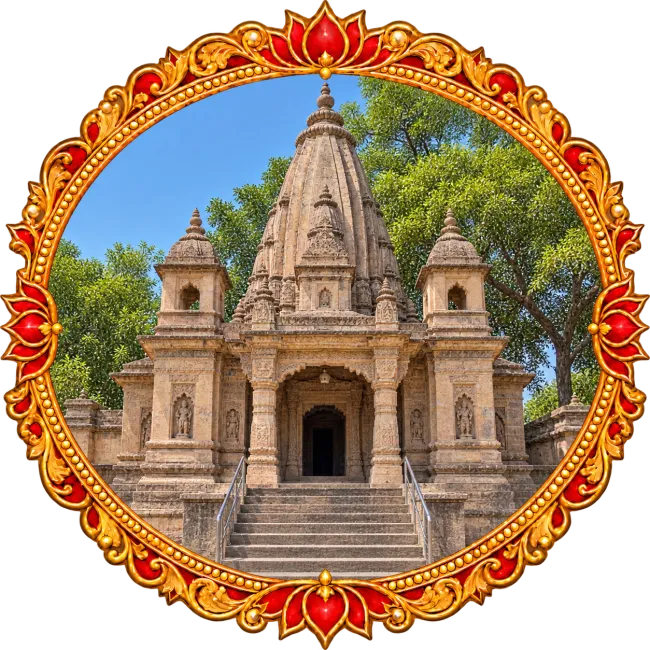
Annapurna Temple Kannauj
Annapurna Temple in Kannauj is an ancient Siddhpeeth situated in Tirwa town of Kannauj district, Uttar Pradesh. Originally constructed as a shrine of Maa Tripura Sundari, the temple is now widely known as Maa Annapurna Temple. Goddess Annapurna is worshipped as the divine provider of food, nourishment, prosperity and household well-being.
Built during the sixteenth century by the former rulers of the Tirwa estate, the temple is admired for its wheat-coloured stone, detailed carvings and unusual architectural arrangement based on the sacred Shri Yantra. The stone elephants surrounding the structure have also earned it the local identity of the “Elephant Temple.”
The temple attracts devotees throughout the year, with the largest gatherings occurring during Chaitra Navratri and Sharad Navratri. People visit to pray for prosperity, good health, food security, successful harvests and protection from difficulties.
About Annapurna Temple Kannauj
Maa Annapurna Temple is one of the most important historical and religious places in Kannauj district. It is located in Tirwa, a town historically associated with the former Tirwa estate.
The principal deity was originally worshipped as Maa Tripura Sundari, a powerful manifestation of Goddess Shakti. Over time, the deity became popularly known as Maa Annapurna because devotees worshipped her as the provider of food, wealth and prosperity.
“Anna” means food or grain, while “Purna” means complete or abundant. Maa Annapurna therefore represents the divine power that nourishes every living being. Farmers, traders, families and people seeking financial stability visit the temple to pray for abundance and protection from scarcity.
The temple is regarded as a Siddhpeeth by local devotees. It is believed that prayers offered here with faith grant happiness, prosperity and good health. The sacred Shri Yantra installed beneath the central structure gives the temple additional importance in Shakti worship.
Location of Annapurna Temple
Annapurna Temple is situated in Tirwaganj, commonly known as Tirwa, in Kannauj district of Uttar Pradesh. It stands near the Tirwa–Thathia Road and is an important landmark of the town.
Address: Maa Annapurna Temple, Tirwaganj, Tirwa, Kannauj district, Uttar Pradesh – 209732
Tirwa is connected with Kannauj city, Thathia, Gursahaiganj, Kanpur, Farrukhabad and nearby towns through regional roads. Auto-rickshaws, e-rickshaws and local taxis are available within Tirwa.
The temple is located approximately 16 kilometres by road from Kannauj Railway Station, depending on the route used.
History of Annapurna Temple Kannauj
Annapurna Temple was constructed during the sixteenth century by the former rulers of the Tirwa estate. The temple was originally dedicated to Maa Tripura Sundari and was established to seek divine protection, prosperity and stability for the kingdom.
The name Tripura Sundari refers to the goddess who represents supreme beauty, spiritual knowledge and the power governing the three worlds. According to the temple’s traditional history, Tirwa was once associated with the name Tripur Nagar or Tripura Nagari because of the presence of the goddess. With the passage of time, the name gradually evolved into Tirwa.
The rulers intended the shrine to protect their state from natural calamities and grant wealth, prosperity and food security to the people. The temple was constructed using a distinctive wheat-coloured stone brought from outside the region. Skilled artisans carved decorative designs across the stone surfaces.
The deity was installed through Vedic rituals on a sacred Shri Yantra. The Shri Yantra is an important geometrical representation of the Divine Mother and is closely associated with prosperity, spiritual energy and Goddess Lakshmi.
Stone elephants were arranged around the temple and symbolically connected to the Shri Yantra. According to local tradition, this arrangement was created to protect the sacred yantra from damage. These elephants remain among the most recognisable architectural features of the temple.
Although the shrine was originally known as the Tripura Sundari Temple, it gradually became famous as Maa Annapurna Temple. The transformation reflects the local belief that the goddess protects the region from hunger and blesses devotees with food, health and prosperity.
Who Built Annapurna Temple Kannauj?
The temple was built during the sixteenth century by the former royal family of the Tirwa estate. It was commissioned as a shrine of Maa Tripura Sundari for the protection and prosperity of the kingdom.
The rulers invited skilled artisans and used wheat-coloured stone in the construction. The deity was ceremonially installed over a Shri Yantra through Vedic mantras and rituals.
The temple has undergone repairs, restoration and additions over the centuries. A development and beautification project has also been planned to improve facilities for devotees while preserving the shrine’s historical character.
Religious Significance of Annapurna Temple
Maa Annapurna is worshipped as the goddess of food, nourishment and abundance. According to Hindu belief, every grain of food is a form of divine grace, and wasting food is considered disrespectful to the goddess.
At Tirwa, the deity is also connected with Maa Tripura Sundari. Therefore, the temple combines the traditions of Annapurna worship and Shri Vidya, in which the Divine Mother is worshipped through the Shri Yantra.
Devotees pray here for:
- An uninterrupted supply of food
- Prosperity in the home
- Successful crops and agricultural growth
- Good health and freedom from disease
- Protection from financial hardship
- Family happiness
- Success in business and employment
- Relief from natural calamities
- Fulfilment of family vows
- Spiritual strength and inner peace
Tuesdays and Fridays are considered important days for worshipping the goddess. Navratri attracts the largest number of devotees.
Annapurna Temple Kannauj Timings
The temple remains open every day. The regular darshan and worship schedule is as follows:
During Chaitra and Sharad Navratri, the temple may open earlier and remain accessible beyond its regular closing time. Ritual timings may also be adjusted according to festival programmes and crowd arrangements.
Morning Puja and Aarti
The temple opens at 5:00 AM. The morning rituals begin with the cleaning of the sanctum and preparation of the goddess for worship. The deity is offered flowers, clothes, ornaments, incense and traditional food items.
Morning aarti is performed at 6:00 AM. Devotees participate by lighting lamps, chanting prayers and seeking blessings for prosperity and good health.
The period between 6:30 AM and 9:00 AM is suitable for a peaceful darshan on regular weekdays. Tuesdays, Fridays and Navratri days are generally more crowded.
Evening Puja and Aarti
Evening worship begins at 6:30 PM. Lamps are lit throughout the sanctum, and the goddess is offered flowers, incense and bhog.
The evening aarti is performed at 7:30 PM. Devotees sing prayers dedicated to Maa Annapurna and Maa Durga while bells are rung inside the temple. The illuminated stone architecture and decorated sanctum create a deeply devotional atmosphere.
Visitors wishing to attend the evening aarti should reach the temple before 7:15 PM.
The Shri Yantra of Annapurna Temple
One of the most important features of the temple is its sacred Shri Yantra. The central shrine was established upon a Shri Yantra through Vedic rituals.
The Shri Yantra consists of interlocking triangles representing Shiva and Shakti. It symbolises the creation of the universe, divine energy, prosperity and spiritual progress. In the Shri Vidya tradition, it is considered one of the most powerful representations of the Divine Mother.
The temple’s association with the Shri Yantra strengthens its identity as a Siddhpeeth. Devotees pray for material stability as well as spiritual growth.
Stone Elephants and Their Significance
The stone elephants surrounding the temple are among its most distinctive features. The temple is consequently also described as the Elephant Temple of Tirwa.
According to local tradition, the elephants were ritually connected with the Shri Yantra to protect the sacred structure. In Hindu symbolism, elephants represent royal power, stability, rainfall, fertility and prosperity.
Their placement around the temple also reflects the royal origins of the shrine. The elephants create a protective visual boundary while adding grandeur to the architecture.
Visitors should avoid climbing on or damaging these historic stone figures.
Architecture of Annapurna Temple
The temple is an impressive example of sixteenth-century regional craftsmanship. Wheat-coloured stone was used in its construction, giving the building a warm golden-brown appearance.
Important architectural features include:
- Detailed carvings on the stone surfaces
- A sanctum built over the sacred Shri Yantra
- Stone elephants surrounding the temple
- Decorated pillars and entrances
- Traditional Hindu religious motifs
- A spacious courtyard for gatherings
- Areas for parikrama and devotional activities
- A temple pond near the premises
The carvings cover much of the visible stonework. Floral patterns, sacred symbols and decorative forms demonstrate the skill of the artisans who worked on the structure.
The stone elephants, sacred geometry and carved surfaces make the temple important both as a place of worship and as a part of Kannauj’s architectural heritage.
Temple Pond and Sacred Surroundings
An old pond is situated near the temple complex. Such water bodies traditionally supported ritual bathing, temple ceremonies and the daily requirements of pilgrims.
Visitors should use the pond only according to local instructions. Bathing, entering the water or throwing offerings into it should be avoided unless specifically permitted.
The open surroundings and historic temple structure make the area especially attractive during early morning and evening.
Special Soil Tradition
A local tradition connects the soil near Annapurna Temple with agricultural prosperity. Some farming families take a small quantity of soil as a sacred blessing and mix it with the soil of their fields before sowing crops.
They believe that Maa Annapurna’s blessings protect the harvest and increase agricultural abundance. The practice reflects the deep relationship between the goddess, food and farming communities.
Visitors should take soil only if the temple authorities permit it. Digging, removing stones or disturbing any protected part of the temple grounds should be avoided.
Major Festivals Celebrated
Chaitra Navratri
Chaitra Navratri is one of the most important festivals at the temple. The goddess receives elaborate shringar, while special pujas, aartis and devotional programmes are organised.
Sharad Navratri
Sharad Navratri attracts a large number of devotees from Kannauj and neighbouring districts. The temple is decorated with flowers and lights, and long queues may form from early morning.
Durga Ashtami and Maha Navami
Special worship, havan, kanya pujan and prasad distribution are organised on Ashtami and Navami. These are among the busiest days at the temple.
Annapurna Jayanti
Annapurna Jayanti celebrates the appearance of Goddess Annapurna. Devotees offer food grains and pray that no member of their family suffers from hunger or scarcity.
Annakut and Govardhan Puja
A variety of food preparations may be offered to the goddess during Annakut. The festival expresses gratitude for food and agricultural abundance.
Annual Fair
A traditional fair is associated with the temple and attracts visitors from different parts of the region. Religious programmes, local shops and community activities form part of the celebration.
Offerings and Prasad
Because Maa Annapurna is the goddess of food, grains are considered especially appropriate offerings.
Devotees commonly offer:
- Rice
- Wheat
- Pulses
- Flour
- Jaggery
- Fruits
- Coconut
- Sweets
- Kheer
- Puri
- Halwa
- Flowers and garlands
- Red chunari
- Sindoor and kumkum
Grain-based offerings may be used for prasad or community meals. Devotees should submit large quantities of grain only at authorised temple counters.
Mundan and Family Ceremonies
Families from Kannauj and nearby areas visit the temple for mundan ceremonies and other important religious occasions. Parents seek the goddess’s blessings for the health, nourishment and long life of their children.
Prior arrangements may be required for ceremonies involving a priest, havan or a large family group. Visitors should contact the temple administration locally before finalising a date.
Entry Fee and Visit Duration
There is no general entry fee for darshan. Donations and charges for special pujas are separate.
A regular visit generally requires 30 to 45 minutes. Visitors interested in the carvings, stone elephants, pond and surrounding complex may spend approximately one hour.
During Navratri, Ashtami and Navami, waiting time can increase significantly.
Best Time to Visit
October to March is the most comfortable time to visit because the weather is pleasant. For peaceful darshan, devotees should arrive between 6:30 AM and 9:00 AM on a regular weekday.
Navratri is the best period for experiencing the temple’s festive atmosphere, but it is also the most crowded. Elderly visitors and families with small children should avoid peak hours on Ashtami and Navami.
Visitor Guidelines
- Wear modest and respectful clothing.
- Remove footwear at the designated place.
- Do not touch the deity or enter restricted areas.
- Follow the queue during festivals.
- Ask permission before taking photographs.
- Do not climb on the historic stone elephants.
- Avoid scratching or touching the carved stone surfaces.
- Do not remove soil, stones or other material without permission.
- Keep the temple and pond surroundings clean.
- Use authorised priests for special rituals.
- Avoid wasting food or prasad inside the temple.
- Keep children close during crowded Navratri celebrations.
How to Reach Annapurna Temple Kannauj
By Train
Kannauj Railway Station and Kannauj City Railway Station are the main railheads serving the district. Kannauj is connected by train with Kanpur, Lucknow, Farrukhabad, Kasganj and nearby cities.
Tirwa is approximately 16 kilometres by road from Kannauj Railway Station. Visitors can hire an auto-rickshaw, taxi or local vehicle to reach the temple.
Jalalpur Panwara is another nearby railway halt, but train availability is limited compared with Kannauj Railway Station.
By Road
Tirwa is connected with Kannauj, Kanpur, Farrukhabad, Etawah and Lucknow through regional roads. State transport and private buses operate to Kannauj and Tirwa.
The temple can be reached from Tirwa bus stand by e-rickshaw, auto-rickshaw or local transport.
By Air
Kanpur Airport is the nearest airport with limited flight connectivity. Chaudhary Charan Singh International Airport in Lucknow provides broader domestic connections.
From Kanpur or Lucknow, visitors can travel to Tirwa by taxi, bus or train via Kannauj.
Nearby Places to Visit
Visitors can also explore:
- Dauleshwar Mahadev Temple, Tirwa
- Tirwa Palace and historic estate area
- Archaeological Museum Kannauj
- Gauri Shankar Temple
- Baba Gauri Shankar Temple
- Maa Phoolmati Devi Temple
- Lakh Bahosi Bird Sanctuary
- Kannauj perfume market
- Ancient Kannauj archaeological sites
Conclusion
Annapurna Temple in Tirwa is one of the most important historical temples of Kannauj district. Constructed by the former rulers of Tirwa during the sixteenth century, the shrine was originally dedicated to Maa Tripura Sundari and later became widely known as Maa Annapurna Temple.
Its sacred Shri Yantra, wheat-coloured stone, intricate carvings and protective stone elephants give it a distinctive architectural and spiritual identity. The traditions of offering grains, praying for agricultural prosperity and seeking the goddess’s blessings for food and family welfare remain central to the temple.
A visit to Annapurna Temple offers devotees an opportunity to worship the Divine Mother while experiencing the religious history and artistic heritage of Tirwa and Kannauj.