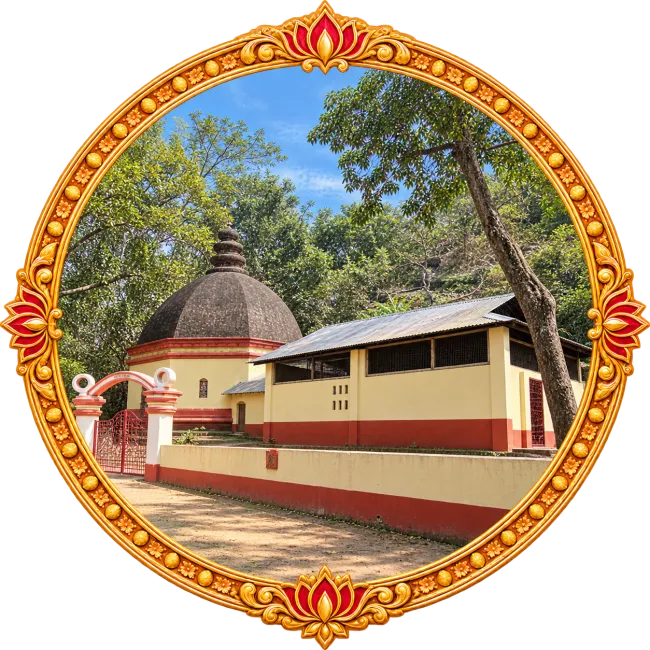
Amratokeswar Temple, Guwahati, Assam
Visit Amratokeswar Temple in Guwahati, a sacred shrine dedicated to Lord Shiva and associated with the Kamakhya pilgrimage landscape. Also written as Amratokeswara or Amratokeshwara Temple, it belongs to the Shiva shrines of the Nilachal area.
Its location beside the Brahmaputra River gives the temple a distinctive setting. Devotees can include the shrine in a journey that brings together Shiva worship, the goddess temples of Nilachal Hill and the sacred riverfront of Guwahati.
About Amratokeswar Temple
Amratokeswar Temple is dedicated to Lord Shiva and forms part of the wider religious complex associated with Kamakhya. The shrine is also referred to as Tokreshwar or Tokeswara.
The temple stands beside the Brahmaputra and is connected by a motorable road. This riverside location distinguishes it from shrines reached through downhill walking routes from the main Kamakhya temple.
A visit provides an opportunity to explore the religious importance of the lower Nilachal area while offering prayers to Lord Shiva.
Religious Background of Amratokeswar Temple
Amratokeswar belongs to the Shiva worship tradition of Nilachal. The sacred area includes temples dedicated to the Divine Mother, different forms of Shiva and other Hindu deities.
The shrine is counted among the Shiva temples associated with the Kamakhya pilgrimage landscape. Its importance lies in this continuing relationship with the wider sacred region.
The temples, natural water sources, ponds and riverbank together form an interconnected place of pilgrimage. Amratokeswar’s riverside position is one part of this larger religious setting.
Main Deity of Amratokeswar Temple
The presiding deity is Lord Shiva, worshipped as Amratokeswar. Within descriptions of the Nilachal Shiva shrines, this form is associated with Sadyojata Shiva.
Sadyojata is one of Shiva’s traditional five aspects. In Shaiva thought, these aspects express different dimensions of divine presence and activity.
For devotees, worship can centre on remembering Lord Shiva with humility and seeking wisdom, patience and steadiness in everyday life. The visit can remain simple, with a quiet prayer and respectful participation in the worship taking place.
Religious Significance of Amratokeswar Temple
Amratokeswar Temple represents Shiva devotion within a region widely known for the worship of Goddess Kamakhya. This relationship reflects the close connection between Shaiva and Shakta traditions.
In Hindu spiritual understanding, Shiva and Shakti are inseparable. Shiva is associated with consciousness, while Shakti expresses divine energy and creative power.
Devotees may approach Lord Shiva with prayers for:
Peace and clarity of mind.
Harmony within the family.
Patience during difficult circumstances.
Strength to fulfil responsibilities.
Freedom from excessive attachment.
Progress in spiritual practice.
Compassion towards others.
These prayers express personal faith and intention. A temple visit can also offer time to reflect on one’s actions and renew a commitment to thoughtful living.
Connection with the Brahmaputra River
The Brahmaputra is an important part of the geography and cultural life of Assam. At Amratokeswar, the river also forms part of the temple’s immediate setting.
The wider Kamakhya landscape extends from the hill towards the river, bringing together shrines, sacred ponds and places associated with water. Visiting the riverside temple helps pilgrims appreciate this connection between worship and the natural surroundings.
Take time to observe the river from a safe place. Respect for the sacred setting includes keeping the riverbank clean and avoiding the disposal of flowers, food or plastic in the water.
The river’s presence can offer a focus for gratitude and reflection without requiring visitors to enter the water.
Temple Setting and Approach
Amratokeswar’s motorable approach is a useful feature when planning a visit. Travellers can organise a road journey towards the riverside shrine rather than assuming that every temple in the Kamakhya area requires a hill trek.
The temple belongs to the broader Nilachal pilgrimage area, but its location should be treated as a separate stop when arranging transport.
Keep the final approach manageable, especially when travelling with elderly relatives or children. Road access does not necessarily mean that every part of the worship area is free of steps or uneven surfaces.
Carry only essential belongings so that moving through the temple area remains comfortable.
Worship and Devotional Practices
A visit can include darshan, quiet prayer and remembrance of Lord Shiva. Devotees may mentally recite “Om Namah Shivaya” while waiting or standing in the prayer area.
A simple devotional approach can include:
Entering respectfully and removing footwear where required.
Offering a prayer with attention and humility.
Expressing gratitude for family, support and opportunities.
Reflecting on the qualities associated with Lord Shiva.
Allowing others enough space to worship.
The value of the visit does not depend on elaborate arrangements. Sincerity, concentration and considerate behaviour can make the experience meaningful.
Offerings at Amratokeswar Temple
Bilva leaves, flowers and water are customary offerings in Shiva worship generally. At Amratokeswar, present offerings according to the arrangements followed within the shrine.
Keep them modest and easy to carry. Avoid placing loose materials in pathways or leaving packaging beside the worship area.
Respectful offering practices include:
Keeping flowers and other items clean.
Placing offerings only in designated locations.
Avoiding independent pouring of liquids.
Leaving ritual objects undisturbed.
Keeping entrances clear.
Taking personal waste away after the visit.
A quiet prayer is also a complete expression of personal devotion.
Important Religious Occasions
Mahashivratri
Mahashivratri is one of the principal occasions associated with Lord Shiva. Devotees traditionally observe it through prayer, fasting, mantra recitation and spiritual reflection.
For those undertaking a Shiva pilgrimage, the occasion offers a particular focus on devotion and self-discipline.
Shravan
The month of Shravan holds an important place in Shiva worship. Many devotees dedicate this period to prayer, restraint and acts of service.
A visit to a Shiva shrine can form part of an individual or family’s religious observance during this month.
Mondays
Monday is traditionally associated with Lord Shiva. Some devotees mark the day through temple visits, prayer or fasting as part of their regular practice.
Ambubachi at Kamakhya
Ambubachi brings large numbers of pilgrims to the wider Kamakhya area. Visitors combining Amratokeswar with other Nilachal shrines during this period should allow additional time for travel and crowd management.
The observance belongs to Kamakhya’s religious calendar and should not be treated as a separate Amratokeswar ritual schedule.
How to Reach Amratokeswar Temple
By Air
Lokpriya Gopinath Bordoloi International Airport serves Guwahati. From the airport, continue by road towards the Nilachal and Kamakhya area, arranging the final journey to the riverside shrine.
By Train
Kamakhya Railway Station is a convenient arrival point for the wider pilgrimage area. Guwahati Railway Station is another major option for travellers coming from other cities.
Continue by taxi or suitable local transport towards the temple.
By Road
Guwahati has road connections with other parts of Assam and neighbouring states. Amratokeswar Temple has a motorable approach beside the Brahmaputra.
When arranging transport, identify the destination as Amratokeswar or Tokreshwar Temple near the Brahmaputra in the Nilachal pilgrimage area.
From Kamakhya Temple
Include Amratokeswar as a separate riverside stop in your itinerary. Plan the road journey between the main hilltop temple area and the shrine rather than assuming they share the same entrance.
Nearby Temples to Include in Your Pilgrimage
Other places of worship associated with Nilachal include:
Kamakhya Temple: The principal shrine dedicated to the Divine Mother.
Kameswar Temple: A Shiva shrine within the main Kamakhya area.
Siddheswar Temple: A Shiva shrine approached by a downhill walk.
Aghor Shrine: Associated with Shiva in the Aghora form.
Kautilinga Temple: Another Shiva shrine of Nilachal.
Tara Temple: Dedicated to Goddess Tara.
Kali Temple: Associated with Mahakali worship.
Bhairavi Temple: Dedicated to Goddess Bhairavi.
Bhuvaneshwari Temple: Situated on a higher part of the hill.
These shrines occupy different locations. Visiting them requires a combination of road travel and walking, depending on the route chosen.
Important Visitor Guidelines
Wear modest, comfortable clothing.
Remove footwear at the designated sacred area.
Walk carefully on uneven or wet surfaces.
Keep mobile phones silent during worship.
Respect photography restrictions.
Avoid touching ritual objects without permission.
Keep pathways and entrances clear.
Assist children and elderly companions.
Carry drinking water and essential medicines.
Stay away from unsafe river edges.
Do not enter the river where access is restricted or conditions are unsafe.
Keep offerings and packaging out of the Brahmaputra.
Leave the temple and riverbank clean.
Conclusion
Amratokeswar Temple connects Shiva devotion with the riverside setting of the Brahmaputra and the wider Kamakhya pilgrimage landscape.
Its association with Sadyojata Shiva and its place among Nilachal’s Shiva shrines give it religious significance beyond the main hilltop temple. A visit offers devotees an opportunity for prayer, gratitude and reflection while exploring the sacred traditions of Guwahati.