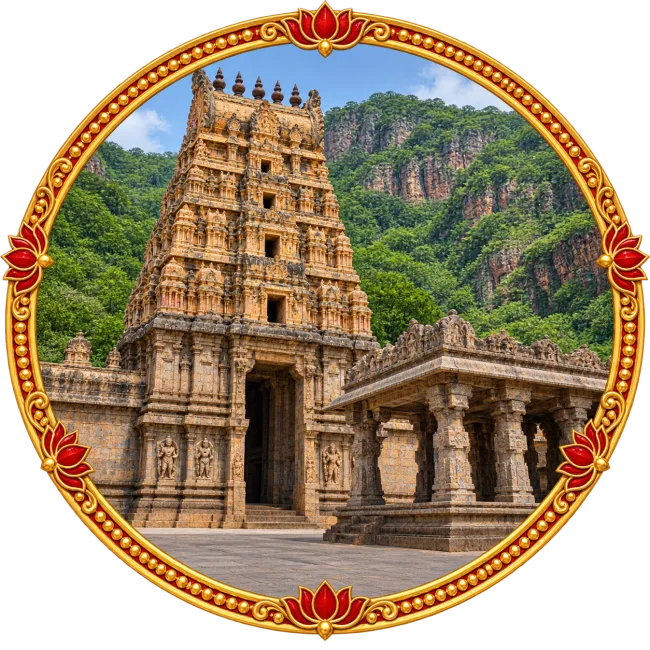
Ahobilam Narasimha Temples
Ahobilam in Andhra Pradesh is one of India’s most sacred pilgrimage centres dedicated to Lord Narasimha, the man-lion incarnation of Lord Vishnu. Located amid the dense Nallamala Hills, Ahobilam is famous for the Nava Narasimha Temples, where the Lord is worshipped in nine different forms.
The pilgrimage area is divided into Lower Ahobilam and Upper Ahobilam. Some temples can be reached easily by road, while others require walking through forests, rocky paths, streams and steep hill sections. The natural landscape, ancient shrines and association with Prahlada and Hiranyakashipu make Ahobilam a deeply powerful spiritual destination.
About Ahobilam Narasimha Temples
Ahobilam is situated in the Allagadda region of Nandyal district, Andhra Pradesh. It is regarded as the sacred place where Lord Vishnu appeared as Narasimha to protect Prahlada and destroy the demon king Hiranyakashipu.
The region contains nine principal Narasimha temples, collectively called the Nava Narasimha Kshetras. Each shrine represents a different form, emotion or divine quality of Lord Narasimha.
The nine forms are:
Bhargava Narasimha
Yogananda Narasimha
Chatravata Narasimha
Ahobila Narasimha
Krodha Narasimha
Karanja Narasimha
Malola Narasimha
Jwala Narasimha
Pavana Narasimha
Lower Ahobilam also contains the prominent Prahlada Varada Lakshmi Narasimha Temple. Although this shrine is the principal temple for many visitors, it is separate from the traditional list of nine Narasimha forms.
Meaning of the Name Ahobilam
According to tradition, the gods witnessed the extraordinary form and strength of Lord Narasimha when he destroyed Hiranyakashipu. Amazed by his divine power, they exclaimed, “Aho Balam,” meaning “What extraordinary strength!”
The name Ahobilam is believed to have developed from this expression.
Another interpretation connects the name with “Aho Bila.” The word “Bila” means cave. Since Lord Narasimha is worshipped in a cave shrine at Upper Ahobilam, the name may also mean “the wonderful cave.”
Both interpretations reflect the fierce, mysterious and powerful nature of the sacred region.
History of Ahobilam Temples
Ahobilam has been a centre of Narasimha worship since ancient times. The shrines developed at natural caves, forest locations and sacred water bodies associated with the Narasimha legend.
Different South Indian dynasties supported the temples over several centuries. The Chalukyas, Kakatiyas and Vijayanagara rulers contributed to their construction, renovation and religious services.
The Vijayanagara Empire made important additions to the temple complex. Inscriptions associated with rulers such as Krishnadevaraya record patronage and offerings made to the Ahobilam shrines.
Ahobilam also has a close connection with the Sri Vaishnavite tradition and the Ahobila Math. Sri Adivan Satakopa Jeeyar, the first pontiff of Ahobila Math, established an organised tradition of Narasimha worship during the fourteenth century.
Successive pontiffs preserved the temples, conducted religious services and spread devotion to Lakshmi Narasimha throughout India. Malola Narasimha became the principal travelling deity of Ahobila Math.
Legend of Prahlada and Hiranyakashipu
The central legend of Ahobilam is narrated in the Bhagavata Purana.
Hiranyakashipu performed severe penance and received a boon that he could not be killed by a human or animal, indoors or outdoors, during the day or night, on the ground or in the sky, or by any weapon.
Believing himself invincible, he ordered everyone to worship him. His son Prahlada, however, remained devoted to Lord Vishnu.
Hiranyakashipu attempted to kill Prahlada through poison, fire, elephants, snakes and other methods, but Lord Vishnu protected the child every time.
Finally, Hiranyakashipu pointed to a pillar and asked Prahlada whether Vishnu was present within it. Prahlada replied that the Lord was present everywhere.
Hiranyakashipu struck the pillar, and Lord Vishnu emerged as Narasimha—a form that was neither completely human nor completely animal. At twilight, which was neither day nor night, Narasimha placed the demon on his lap at the palace threshold and destroyed him with his claws.
Ahobilam is traditionally regarded as the region where this divine appearance took place.
Religious Significance
Ahobilam is considered one of the most important Narasimha Kshetras in India. Devotees believe that completing darshan of all nine Narasimha forms provides protection, courage and spiritual strength.
People visit Ahobilam to pray for:
Protection from enemies and danger
Relief from fear and anxiety
Courage and confidence
Recovery from illness
Relief from debts and financial difficulties
Success in education and employment
Family peace and prosperity
Marriage and marital happiness
Blessings for children
Relief from planetary difficulties
Victory in legal or professional matters
Spiritual discipline and devotion
The nine Narasimha forms are also associated with the Navagrahas. Worshipping all nine shrines is believed to reduce planetary afflictions.
Nava Narasimha Temples
1. Bhargava Narasimha Temple
Bhargava Narasimha Temple is associated with Sage Parashurama, also known as Bhargava Rama. The sage is believed to have performed penance here and received the darshan of Lord Narasimha.
The temple is situated near the sacred Akshaya Tirtha. The deity is represented in the act of destroying Hiranyakashipu.
The shrine can be approached using a local vehicle followed by a short walk, depending on road conditions.
2. Yogananda Narasimha Temple
Lord Narasimha is worshipped here in a calm yogic posture. According to tradition, the Lord taught Prahlada the principles of yoga and spiritual knowledge at this location.
The shrine represents self-control, meditation and inner peace. Students and spiritual seekers visit Yogananda Narasimha for concentration and wisdom.
The temple is located near Lower Ahobilam and is accessible by road.
3. Chatravata Narasimha Temple
Chatravata Narasimha is worshipped beneath a sacred tree. The name is associated with the umbrella-like shade created by the surrounding trees.
According to tradition, celestial musicians known as the Gandharvas worshipped the Lord here through music. The deity is therefore connected with music, arts and creative ability.
The temple is accessible by road followed by a short walk.
4. Ahobila Narasimha Temple
Ahobila Narasimha, also known as Ugra Narasimha, is the principal deity of Upper Ahobilam. The shrine is located within a natural cave beneath the hills.
The deity represents the fierce form of Narasimha immediately after the destruction of Hiranyakashipu. Goddess Chenchu Lakshmi is also associated with the shrine.
The cave, stone structures and surrounding cliffs create a powerful spiritual atmosphere.
5. Krodha Narasimha Temple
Krodha Narasimha is also known as Varaha Narasimha because the deity displays features connected with Varaha, the boar incarnation of Lord Vishnu.
The shrine is situated near Upper Ahobilam and is reached through a forest path. The deity is worshipped with Goddess Lakshmi.
This form represents the Lord’s power to rescue devotees and restore righteousness.
6. Karanja Narasimha Temple
Karanja Narasimha is worshipped beneath a Karanja tree. The deity holds a bow, a feature traditionally associated with Lord Rama.
The shrine is connected with Hanuman. According to tradition, Hanuman wished to see Lord Rama, and Narasimha appeared in a form carrying a bow.
The temple lies beside the road between Lower and Upper Ahobilam, making it one of the more accessible Nava Narasimha shrines.
7. Malola Narasimha Temple
Malola Narasimha represents the peaceful and compassionate form of the Lord seated with Goddess Lakshmi.
The name “Malola” is interpreted as “the beloved of Goddess Lakshmi.” While several Ahobilam forms display the Lord’s fierce power, Malola Narasimha represents love, grace and harmony.
Malola Narasimha is the principal worshipped deity of Ahobila Math. The temple is reached through a hill trail from Upper Ahobilam.
8. Jwala Narasimha Temple
Jwala Narasimha represents the intensely fierce form of the Lord at the moment of destroying Hiranyakashipu.
The temple is situated deep within the hills and is reached by a demanding trek. Nearby places are associated with the blood of Hiranyakashipu and the emergence of Narasimha.
Jwala Narasimha is one of the most spiritually powerful and geographically challenging shrines in Ahobilam.
9. Pavana Narasimha Temple
Pavana Narasimha is worshipped as the purifier who frees devotees from sins and suffering. The temple is situated deep within the forest.
The route requires a long trek or a suitable local off-road vehicle, depending on weather and forest conditions.
Devotees believe that darshan of Pavana Narasimha completes the Nava Narasimha pilgrimage.
Prahlada Varada Temple, Lower Ahobilam
Prahlada Varada Lakshmi Narasimha Temple is the principal temple in Lower Ahobilam. The Lord is worshipped as the protector and benefactor of Prahlada.
The shrine has a traditional Dravidian entrance tower, pillared mandapams, sculptures and shrines dedicated to various Vaishnavite deities and saints.
Most pilgrims begin their Ahobilam journey at this temple. It also serves as the primary centre for daily worship, festivals and organised religious services.
Ugra Stambham
Ugra Stambham is a tall rocky formation situated above the Jwala Narasimha area. It is traditionally identified as the pillar from which Lord Narasimha emerged.
Reaching Ugra Stambham requires a steep and physically demanding trek over rocky terrain. The route should be attempted only during daylight and suitable weather.
Elderly visitors, small children and people with heart, breathing, knee or mobility problems should not attempt this climb. A local guide is strongly recommended.
Prahlada Mettu
Prahlada Mettu is a cave and rock shelter associated with Prahlada’s education and devotion. Images and inscriptions connected with Prahlada can be seen at the site.
The route involves walking over uneven ground. Visitors should wear suitable footwear and follow local guidance.
Architecture of Ahobilam Temples
The temples display a mixture of natural cave architecture and traditional Dravidian construction.
Lower Ahobilam contains more elaborate structures, including gopurams, pillared halls and sculpted walls. Upper Ahobilam and the forest shrines use natural caves, rock formations and compact sanctums.
The sculptures portray:
Lord Narasimha in different forms
Prahlada
Hiranyakashipu
Goddess Lakshmi
Garuda
Alwar saints
Vijayanagara-period warriors and donors
Animals, flowers and mythological figures
The architecture blends harmoniously with the forests, waterfalls, streams and cliffs of the Nallamala Hills.
Ahobilam Narasimha Temple Timings
Because the shrines are spread across Lower Ahobilam, Upper Ahobilam and forest routes, they do not follow one common schedule.
Lower Ahobilam – Prahlada Varada Temple
Upper Ahobilam – Ahobila Narasimha Temple
Forest and Hill Shrines
Priests may move between smaller shrines, and access can be affected by rain, stream levels, forest restrictions and trail conditions. Visitors should confirm the day’s route at Lower Ahobilam before beginning the pilgrimage.
Morning Puja and Harathi
At Prahlada Varada Temple, morning worship begins at 6:30 AM, followed by Harathi at 7:00 AM. The best morning darshan period is from 7:00 AM to 10:00 AM.
At Upper Ahobilam, morning Puja and Harathi are performed at 7:00 AM. Pilgrims planning to visit Jwala, Malola, Krodha or Ugra Stambham should begin early after completing darshan.
Starting early provides sufficient daylight and helps visitors avoid afternoon heat.
Evening Puja and Harathi
Evening Puja and Deepa Harathi at Lower Ahobilam are performed at 6:30 PM. Ekanta Seva takes place at 7:30 PM, and the temple closes at 8:00 PM.
At Upper Ahobilam, evening Harathi is performed at 5:30 PM, and the temple closes at 6:00 PM.
Visitors should not remain on remote forest trails after sunset. Complete the hill pilgrimage before returning to Lower Ahobilam for evening worship.
Major Festivals
Narasimha Jayanti
Narasimha Jayanti celebrates the appearance of Lord Narasimha. Special Abhishekam, Homam, Archana and processions are organised.
Annual Brahmotsavam
Brahmotsavam includes Vahana Sevas, Kalyanotsavam, processions, Vedic chanting and cultural programmes.
Kalyanotsavam
The divine wedding of Lord Narasimha and Goddess Lakshmi is celebrated with traditional Vaishnavite rituals.
Swati Nakshatra
Swati Nakshatra is considered especially auspicious for Narasimha worship. Special Abhishekam and Archana may be performed.
Vaikuntha Ekadashi
Devotees observe fasting, chant Vishnu Sahasranama and attend special darshan.
Other celebrations include Ugadi, Deepavali, Krishna Janmashtami and festivals connected with the Alwar saints.
Sevas and Offerings
Available worship services may include:
Abhishekam
Sahasranama Archana
Ashtottara Archana
Kalyanotsavam
Sudarshana Narasimha Homam
Tulasi Archana
Special Harathi
Vahana Puja
Annadanam donation
Festival sponsorship
Tulasi leaves, flowers, coconuts, fruits and silk garments are common offerings. Seva tickets should be purchased through authorised temple counters.
Prasadam
Laddu, pulihora and other blessed food items may be available at Lower Ahobilam. Tulasi and sacred items distributed after worship should be accepted respectfully.
Food availability is limited near the remote forest shrines. Pilgrims should carry sufficient drinking water and light vegetarian food without littering.
Dress Code and Entry Rules
Visitors should wear modest and comfortable clothing. Traditional Indian attire is recommended for temple worship.
For trekking, wear clothes that permit safe movement and strong footwear with good grip. Carry a cap, rain protection and necessary medicines.
Footwear must be removed before entering each shrine. Photography may be restricted near the sanctums.
Alcohol, tobacco, non-vegetarian food and plastic waste should not be carried into the sacred forest areas.
Entry Fee and Visit Duration
General darshan is available without an entry fee. Charges apply to special sevas, local transport and guide services.
Lower Ahobilam can be visited in 2 to 3 hours. Completing all nine Narasimha temples generally requires two days.
Physically fit visitors may cover several Upper Ahobilam shrines in one day, but attempting the entire circuit in a rushed schedule is not recommended.
Best Time to Visit
October to February is the best period for visiting Ahobilam. The weather is suitable for trekking and temple visits.
The monsoon makes the forests beautiful, but trails can become slippery and streams may rise. Summer temperatures can make long treks difficult.
Begin forest routes between 6:30 AM and 7:30 AM. Avoid remote trails after 4:00 PM.
How to Reach Ahobilam
By Air
Kadapa Airport is one of the nearest airports. Kurnool Airport and Tirupati Airport are other options depending on flight availability.
By Train
Nandyal Railway Station is the nearest major railway station. Kadapa and Tadipatri can also be used depending on the traveller’s route.
Buses and taxis are available from Nandyal to Allagadda and Ahobilam.
By Road
Ahobilam is connected by road with Allagadda, Nandyal, Kurnool, Kadapa and Tirupati. Allagadda is the nearest major town for regular bus services and supplies.
Local jeeps are available for selected shrines and forest routes. Only vehicles suitable for rough roads should be used on difficult sections.
Accommodation and Food
Temple guesthouses, Ahobila Math facilities and private lodges are available in Lower Ahobilam. Accommodation options are limited during festivals and weekends, so advance booking is advisable.
Basic vegetarian meals are available near Lower Ahobilam. Food options become limited in Upper Ahobilam and on forest trails.
Carry sufficient water, but avoid disposable plastic wherever possible.
Visitor Guidelines
Hire an experienced local guide for Jwala Narasimha, Pavana Narasimha, Ugra Stambham and unfamiliar forest routes.
Start the pilgrimage early and return before sunset. Do not enter restricted forest areas or leave marked trails.
Carry water, light food, a first-aid kit, necessary medicines and a fully charged phone. Mobile connectivity may be weak in the hills.
Do not feed wild animals or disturb the forest. Keep the sacred landscape clean and carry all waste back to Lower Ahobilam.
Conclusion
Ahobilam Narasimha Temples offer a unique combination of devotion, mythology, adventure and natural beauty. The nine forms of Narasimha represent divine anger, protection, compassion, meditation and purification.
The cave shrines, forest trails, Ugra Stambham and Prahlada-related legends make Ahobilam unlike any ordinary temple pilgrimage. Completing the Nava Narasimha Yatra with patience and devotion offers worshippers an opportunity to seek courage, protection and the powerful blessings of Lord Lakshmi Narasimha.