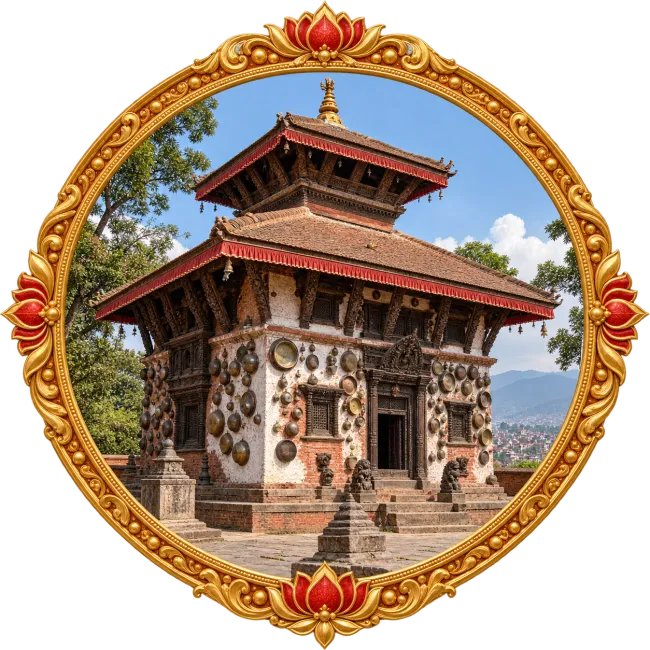
Adinath Lokeshwar Temple, Chobhar, Kathmandu
Visit Adinath Lokeshwar Temple in Chobhar, one of the Kathmandu Valley’s most distinctive shared pilgrimage sites for Hindus and Buddhists. Situated on a hill overlooking Chobhar Gorge, the temple is dedicated to Adinath Lokeshwar, a compassionate deity worshipped by Buddhists as Avalokiteshvara and associated by Hindus with Lord Shiva and Matsyendranath.
The temple is famous for a unique tradition in which devotees, particularly newly married couples, offer metal household utensils and attach them to the temple’s walls. These offerings are made for marital harmony, family prosperity and protection of the household.
About Adinath Lokeshwar Temple
Adinath Lokeshwar Temple is located on a hill in Chobhar, southwest of central Kathmandu. The temple stands near Chobhar Gorge, where the Bagmati River flows out of the Kathmandu Valley.
The deity is known by several names:
- Adinath Lokeshwar
- Anandadi Lokeshwar
- Chobhar Lokeshwar
- Avalokiteshvara
- Karunamaya
Buddhist devotees worship Lokeshwar as Avalokiteshvara, the Bodhisattva of infinite compassion. Hindu devotees associate the deity with Matsyendranath and the compassionate form of Lord Shiva.
The shared worship traditions make the temple an important symbol of harmony between Hinduism and Buddhism in the Kathmandu Valley.
History of Adinath Lokeshwar Temple
The religious history of Adinath Lokeshwar Temple is connected with the medieval Newar civilization of the Kathmandu Valley.
The present pagoda-style shrine developed during the Malla period, between the 15th and 17th centuries. The Malla rulers and local Newar communities supported the worship of Lokeshwar because the deity was believed to protect the valley and provide compassion, rainfall and prosperity.
Chobhar was already considered sacred because of its connection with Manjushri, the Bodhisattva believed to have drained the ancient lake that once covered the Kathmandu Valley.
The Adinath Lokeshwar shrine became an important pilgrimage destination for communities living in Chobhar, Kirtipur and central Kathmandu.
The temple was renovated several times because of age, earthquakes and exposure to hilltop weather. Local Guthi organizations and residents continue to preserve its rituals, architecture and annual Jatra.
Legend of Manjushri and Chobhar Gorge
According to Buddhist tradition, the Kathmandu Valley was once covered by a vast lake. A self-manifested lotus containing divine light appeared upon the water at Swayambhu.
Bodhisattva Manjushri travelled from China or Tibet after receiving a vision of the sacred lotus. He wanted the valley to become accessible to pilgrims and human settlements.
Using his sword of wisdom, Manjushri cut through the hill at Chobhar. Water flowed out through the newly formed gorge, creating the Kathmandu Valley.
The sacred lotus remained at Swayambhu, while Chobhar Gorge became a symbol of Manjushri’s wisdom and compassion.
Adinath Lokeshwar Temple overlooks this spiritually important landscape. The deity represents the same compassionate intention to free living beings from suffering.
Religious Significance of Adinath Lokeshwar
Adinath Lokeshwar represents compassion, wisdom, protection and service to all living beings.
Buddhists worship the deity for freedom from suffering and progress on the path of compassion. Hindus pray for the blessings of Shiva, family prosperity and a peaceful married life.
Devotees visit the temple for:
- Marital harmony
- Family peace and prosperity
- Blessings for newly married couples
- Health and protection of children
- Long life
- Recovery from illness
- Development of compassion and patience
- Removal of obstacles
- Safe travel
- Protection of the household
- Spiritual progress
- Fulfilment of sincere wishes
The temple is especially significant for couples beginning their married life.
Main Deity of Adinath Lokeshwar Temple
The principal deity is Adinath Lokeshwar, worshipped as a compassionate form of Avalokiteshvara.
The sacred image is installed inside the main sanctum and decorated with:
- Traditional crown
- Sacred jewellery
- Flower garlands
- Colourful garments
- Metal ornaments
- Ritual cloth
- Seasonal decorations
The deity’s calm expression represents compassion, wisdom and freedom from fear.
Hindu and Buddhist priests perform worship according to traditional Newar customs. Devotees may offer flowers, incense, lamps and household utensils.
Tradition of Offering Metal Utensils
The most distinctive feature of Adinath Lokeshwar Temple is the large number of metal utensils attached to its walls and wooden structures.
These may include:
- Plates
- Bowls
- Cups
- Spoons
- Cooking pots
- Water vessels
- Small household tools
Newly married couples traditionally offer utensils while praying for a stable and prosperous household.
Families may also make these offerings after:
- A marriage
- The birth of a child
- Recovery from illness
- Completion of a religious promise
- Fulfilment of a wish
- Beginning construction of a new home
The utensils represent daily family life. Offering them to the deity symbolizes placing the household under the protection of Adinath Lokeshwar.
Visitors should not remove, touch or rearrange these ritual objects.
Hindu and Buddhist Worship
Adinath Lokeshwar Temple reflects the religious traditions of both Hinduism and Vajrayana Buddhism.
Buddhist Worship
Buddhists honour the deity as Avalokiteshvara, who hears the cries of suffering beings. Butter lamps, incense and compassion mantras are offered.
Hindu Worship
Hindus associate Adinath with Lord Shiva and Matsyendranath. They offer flowers, lamps, fruits and prayers for family prosperity.
Shared Newar Tradition
Newar communities participate in temple festivals regardless of strict religious divisions. This shared worship has continued for generations.
Architecture of Adinath Lokeshwar Temple
Adinath Lokeshwar Temple is constructed in the traditional Newari pagoda style. The main shrine stands within a stone-paved courtyard on Chobhar Hill.
Important architectural features include:
- Multi-tiered pagoda roof
- Traditional brick construction
- Carved wooden doors and windows
- Decorated wooden roof supports
- Ornamental Torana
- Metal roof elements and pinnacle
- Buddhist Chaityas
- Sacred bells
- Prayer wheels
- Oil and butter-lamp stands
- Metal utensils attached to the walls
- Views of Chobhar Gorge and Kathmandu Valley
The utensils covering parts of the temple give the shrine a distinctive appearance not commonly found at other temples.
Adinath Lokeshwar Temple Timings
The temple may follow extended timings during Adinath Lokeshwar Jatra, Buddha Jayanti and other important Newar festivals.
Morning Puja and Aarti
The temple opens at 5:30 AM. Priests clean the shrine and prepare the deity with fresh clothes, flowers and ornaments.
Morning Puja begins at 6:00 AM, followed by Aarti and ceremonial lamp offering at 6:30 AM.
The deity is worshipped with:
- Flowers and garlands
- Incense
- Butter lamps
- Oil lamps
- Sacred water
- Rice and grains
- Fruits and sweets
- White or colourful cloth
- Hindu and Buddhist prayers
The period between 6:30 AM and 9:00 AM is suitable for peaceful darshan and clear views from Chobhar Hill.
Special Puja
Special pujas are generally arranged between 7:00 AM and 11:00 AM.
Devotees may arrange prayers for:
- Marital harmony
- Family prosperity
- Children
- Long life
- Recovery from illness
- Safe travel
- Removal of obstacles
- Compassion and wisdom
- Protection of a new home
- Fulfilment of wishes
A special ceremony may include Sankalp, mantra recitation, flower offerings, butter lamps, Bhog and presentation of household utensils.
Special pujas should be arranged through authorized priests or temple caretakers.
Bhog and Afternoon Darshan
Bhog is offered to Adinath Lokeshwar at 12:00 PM. It may contain rice, fruits, sweets and traditional Newari vegetarian dishes.
Afternoon darshan continues after the Bhog ceremony. Visitors can also explore the courtyard, Chaityas and surrounding viewpoints.
Evening Puja and Aarti
Evening Puja begins at 5:30 PM, followed by Aarti and lamp offering at 6:00 PM.
Oil and butter lamps are offered while priests recite prayers. The temple’s hilltop setting becomes peaceful during the evening ceremony.
Visitors should reach before 5:30 PM to attend the complete worship. The temple closes at 7:00 PM.
Adinath Lokeshwar Jatra
The annual Adinath Lokeshwar Jatra is the temple’s most important community festival.
The deity receives special worship, garments and ornaments. Local residents participate in religious processions, traditional music and community ceremonies.
The festival includes:
- Special bathing of the deity
- New garments and ornaments
- Butter-lamp offerings
- Newari music
- Religious processions
- Community worship
- Traditional food offerings
- Distribution of prasad
The Jatra strengthens the cultural relationship between Chobhar’s Hindu and Buddhist communities.
Other Major Festivals
Buddha Jayanti
Buddhist devotees offer butter lamps, incense and prayers to Avalokiteshvara.
Gunla
Newar Buddhists visit temples and Chaityas during the sacred month of Gunla.
Maha Shivaratri
Hindu devotees worship Adinath in connection with Lord Shiva and Matsyendranath.
Janai Purnima
Special prayers and sacred thread ceremonies are performed.
Dashain
Hindu families visit the temple for protection and household prosperity.
Purnima
Full-moon days are considered auspicious for Lokeshwar worship and lamp offerings.
Newar Community Festivals
The temple hosts traditional ceremonies managed by local Guthi organizations throughout the year.
Offerings and Prasad
Common offerings made at Adinath Lokeshwar Temple include:
- White and colourful flowers
- Flower garlands
- Incense
- Butter lamps
- Oil lamps
- Rice and grains
- Fruits and sweets
- White cloth
- Prayer flags
- Sacred threads
- Metal household utensils
- Monetary donations
Prasad may include fruits, sweets, flowers, blessed water and sacred threads.
Metal utensils should be offered only through the designated process. Visitors should not attach objects to the temple without permission.
Entry Fee and Visit Duration
There is no entry fee for regular darshan at Adinath Lokeshwar Temple. Charges may apply for special Puja, lamp offerings and ceremonial arrangements.
A regular visit requires one to two hours. Visitors exploring Chobhar Gorge, Jal Binayak Temple and nearby viewpoints should keep three to four hours.
Visitor Guidelines
- Wear modest and respectful clothing.
- Remove footwear before approaching the main shrine.
- Maintain silence during Puja and meditation.
- Ask permission before photographing the deity.
- Do not touch or remove the metal utensils.
- Offer utensils only through authorized caretakers.
- Keep mobile phones on silent mode.
- Use designated stands for oil and butter lamps.
- Respect both Hindu and Buddhist worship practices.
- Do not touch ancient carvings or Chaityas.
- Keep the courtyard and hill clean.
- Walk carefully on stone steps during rain.
- Keep children under supervision near hill edges.
- Follow instructions from priests and temple caretakers.
Best Time to Visit
October to March is the best period for visiting Adinath Lokeshwar Temple because the weather remains pleasant and views are clearer.
Spring from March to May is also suitable, with comfortable mornings and greener surroundings.
For peaceful darshan and better views, visit between 6:30 AM and 9:00 AM. Evening visitors should reach between 4:30 PM and 5:30 PM.
How to Reach Adinath Lokeshwar Temple
By Air
Tribhuvan International Airport is the nearest airport. Visitors can hire a taxi or private vehicle to Chobhar.
From Central Kathmandu
Chobhar is located southwest of central Kathmandu. Taxis, local buses and private vehicles are available.
From Thamel
Adinath Lokeshwar Temple is approximately 8 kilometres from Thamel. The journey passes through central Kathmandu and Kirtipur-side roads.
From Kirtipur
The temple is located a short drive from Kirtipur. Local buses, taxis and shared vehicles are available.
By Local Bus
Local buses travelling towards Chobhar, Kirtipur and Dakshinkali provide access to the area. A short uphill walk may be required.
From India
Indian visitors can reach Kathmandu by air or enter Nepal through road-border points such as Raxaul–Birgunj and Sunauli–Bhairahawa.
Indian citizens should carry a valid passport or voter identity card and confirm transportation requirements before departure.
Nearby Places to Visit
- Chobhar Gorge
- Jal Binayak Temple
- Manjushree Park
- Taudaha Lake
- Kirtipur
- Bagh Bhairab Temple
- Uma Maheshwar Temple
- Dakshinkali Temple
- Shesh Narayan Temple
- Pharping
- Tribhuvan Park
- Kathmandu Durbar Square
Conclusion
Adinath Lokeshwar Temple is one of Chobhar’s most distinctive spiritual and cultural landmarks. Its shared Hindu-Buddhist identity, Malla-period architecture and association with Avalokiteshvara make it an important pilgrimage destination.
The tradition of offering household utensils gives the temple a unique visual appearance and reflects the importance of marriage, family and daily life within Newar religious culture.
Worshipping Adinath Lokeshwar is believed to bring compassion, marital harmony and household prosperity. A visit to the temple also provides an opportunity to experience Chobhar Gorge and the sacred landscape connected with the formation of the Kathmandu Valley.