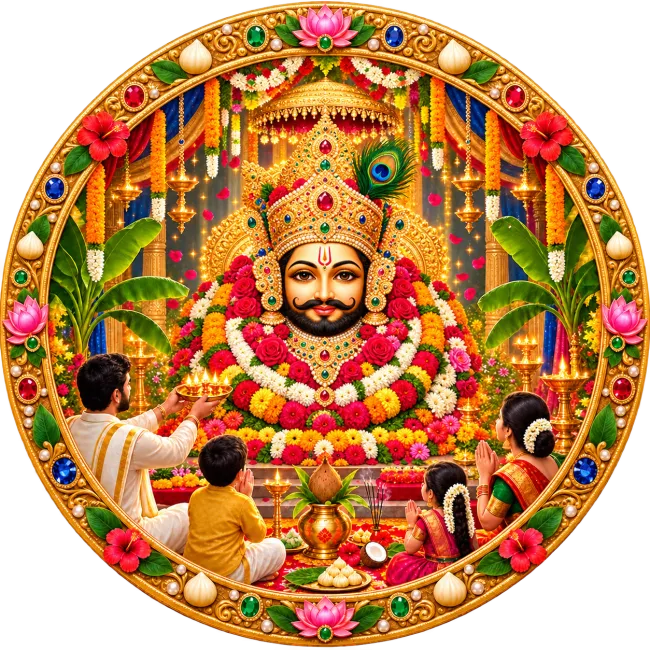
Shri Khatu Shyam Ji Sheesh Daan Katha
Shri Khatu Shyam Ji Sheesh Daan Katha recounts the extraordinary sacrifice of Barbarik, who is revered as Shyam Baba in the Khatu Shyam devotional tradition. In this popular narrative, Barbarik approaches the battlefield of Kurukshetra with three powerful arrows and a promise to support the weaker side. Shri Krishna recognizes that this pledge, combined with Barbarik’s immense strength, would repeatedly change the balance of the battle and could ultimately lead to the destruction of both armies.
When Krishna asks for his head as an offering, Barbarik accepts with courage, humility, and devotion. Before making the sacrifice, he expresses his wish to witness the Mahabharata war. Krishna grants this request, allowing him to observe the battle from an elevated position. This supreme act of giving is remembered through the title “Sheesh Ke Daani”—the one who donated his head.
Krishna honours Barbarik’s devotion by blessing him to be worshipped as Shyam in Kali Yuga. The Sheesh Daan Katha carries a message of selflessness, surrender, and freedom from pride. For devotees, it represents the willingness to place faith in divine wisdom and approach life with compassion and humility.
Shri Khatu Shyam Ji Sheesh Daan Katha holds a special place in the devotional traditions associated with Shyam Baba. It centres on Barbarik’s offering of his head to Shri Krishna before the war at Kurukshetra. While details differ among popular retellings, the story consistently celebrates his exceptional generosity, unwavering resolve, and deep devotion.
Barbarik, traditionally described as the son of Ghatotkacha and grandson of Bhima, is a warrior of remarkable ability. Armed with three powerful arrows, he sets out to witness and participate in the war, having pledged to support whichever side is weaker. His intention reflects compassion for those facing defeat, but the consequences of his promise are more complex than they first appear.
Shri Krishna, commonly described as meeting him in the guise of a Brahmin, questions Barbarik about his abilities and commitment. Their exchange reveals that whichever army receives Barbarik’s support would become stronger, making its opponent the weaker side. Bound by his promise, he would then have to change sides, continuing a cycle that could destroy both armies.
The central moment comes when Krishna requests Barbarik’s head as an offering. Recognizing Krishna’s divine identity, Barbarik agrees and asks only that he be allowed to watch the battle. Krishna fulfils this wish, and Barbarik’s head is placed at a vantage point overlooking the battlefield. His sacrifice earns him the devotional name “Sheesh Ke Daani,” honouring his wholehearted generosity and surrender.
In the Khatu Shyam tradition, Krishna blesses Barbarik to be worshipped by the name Shyam in Kali Yuga. Devotees remember this blessing as an expression of the bond between sincere devotion and divine grace. The story encourages reflection on humility, the limits of personal pride, and the importance of wisdom alongside strength.
Shri Khatu Shyam Ji Sheesh Daan Katha continues to inspire prayer, devotional storytelling, and bhajan gatherings. Its enduring spiritual message encourages devotees to practise generosity, help those in need, and meet life’s difficulties with patience and faith.