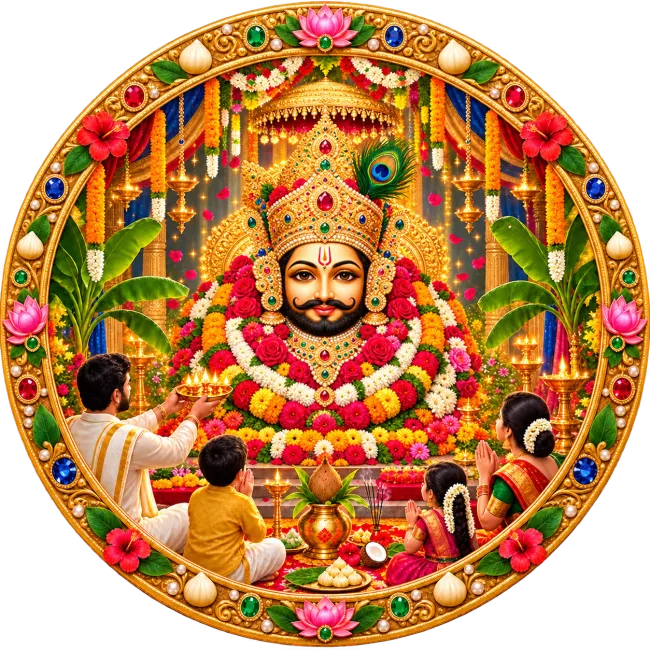
Shri Khatu Shyam Ji Puja Vidhi
Shri Khatu Shyam Ji Puja Vidhi explains the devotional practice of worshipping Shyam Baba with sincerity, respect, and gratitude. It guides devotees through preparing a clean worship space, arranging an image or idol of Baba, offering flowers and bhog, lighting a diya, and expressing devotion through prayers, naam jap, bhajans, and aarti. The purpose of worship is to strengthen one’s spiritual connection with Baba and create time for peaceful remembrance.
Devotees offer their prayers to seek guidance, express thankfulness, and find encouragement during difficult times. The materials and sequence of worship may vary according to family customs and local traditions. A simple puja performed with heartfelt devotion is meaningful; elaborate arrangements are not essential.
The spirit of Shri Khatu Shyam Ji Puja Vidhi extends beyond ritual offerings. It encourages humility, kindness, self-discipline, and service to others. Whether performed as part of daily worship or on a special devotional occasion, the puja offers an opportunity to reflect, nurture faith, and bring compassion into everyday life.
Shri Khatu Shyam Ji Puja Vidhi provides a devotional framework for honouring Shyam Baba at home or participating respectfully in worship at a temple. Devotees lovingly approach Baba with their hopes, concerns, and gratitude, remembering him as a source of spiritual support. The worship centres on sincere prayer and a willingness to cultivate humility, patience, and generosity.
Preparations generally begin with bathing, wearing clean clothes, and cleaning the worship area. An image or idol of Shri Khatu Shyam Ji is placed on a clean, stable surface, and offerings are arranged nearby. Depending on household tradition, these may include flowers, drinking water, incense, a diya, fruit, and sweets. Devotees can keep the arrangements simple and use suitable materials available to them.
The puja may begin with an invocation to Shri Ganesh Ji, followed by remembrance of Shyam Baba and a personal sankalp, or devotional intention. Devotees then offer flowers, light the diya and incense, and present bhog with respect. Customs differ, so the order and offerings can follow the practice observed within the family or devotional community.
Naam jap, prayers, and bhajan singing form an important part of the worship. Devotees may recite a familiar prayer or devotional text, or simply speak to Baba in their own words. This time allows them to express gratitude, pray for the well-being of loved ones, and seek strength to act with honesty and compassion.
The worship commonly concludes with aarti and a final prayer. Devotees may ask forgiveness for unintentional mistakes made during the puja and spend a few moments in quiet remembrance. The offered food is then received and shared as prasad, extending the spirit of devotion to family members and others.
Shri Khatu Shyam Ji Puja Vidhi reminds devotees that worship also finds expression in daily conduct. Helping someone in difficulty, speaking kindly, and fulfilling responsibilities with integrity give practical meaning to prayer. Through regular remembrance and thoughtful actions, devotees seek to carry Baba’s teachings of faith, humility, and service into their lives.