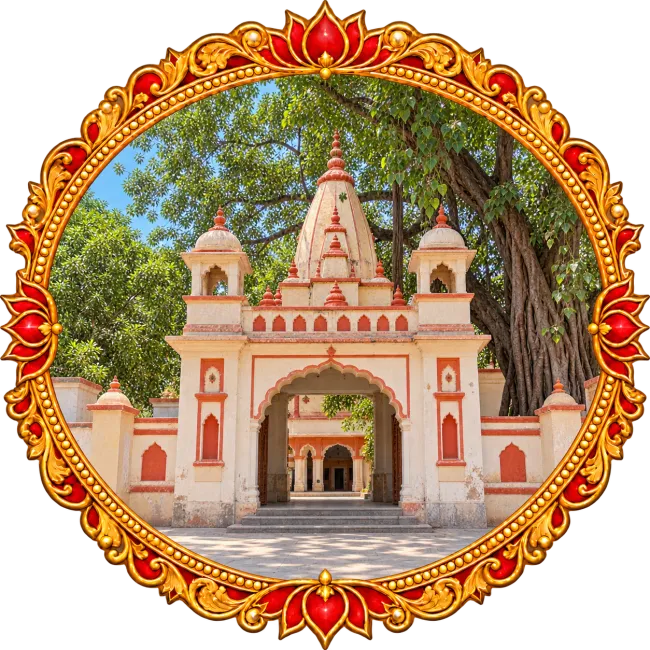
Sakhi Hanumanji Temple Jhansi
Sakhi Hanumanji Temple in Jhansi is an ancient and distinctive shrine where Lord Hanuman is worshipped in a rare feminine form. Popularly known as Shri Shri 1008 Sakhi Ke Hanumanji Temple, the shrine is believed to be approximately 500 years old. Unlike the familiar powerful or warrior-like images of Bajrangbali, the deity here is decorated as a sakhi, or female companion, of Mata Sita.
Located near Bundelkhand University and the Ansal Palm Court area, the temple attracts devotees from Jhansi, Bundelkhand and other parts of India. It is particularly popular among couples praying for children and devotees seeking relief from difficulties. Tuesdays, Saturdays and Hanuman Jayanti are the busiest occasions at the temple.
About Sakhi Hanumanji Temple Jhansi
Sakhi Hanumanji Temple is dedicated to Lord Hanuman in an exceptional female appearance. The deity is dressed and adorned like a woman but carries a mace in both hands, preserving the symbols of Hanumanji’s divine power.
The word “Sakhi” means a close female companion. According to the temple’s religious tradition, Lord Hanuman assumed the form of a woman to serve Mata Sita as her companion. Because Hanumanji is worshipped in that form at this shrine, the temple became known as Sakhi Ke Hanuman Mandir.
The shrine is also associated with a saint known as Sakhi Baba, who is traditionally credited with establishing the deity approximately five centuries ago. Devotees believe that worshipping here with faith grants courage, protection, family happiness and the fulfilment of sincere wishes.
Apart from Sakhi Hanumanji, the temple complex contains shrines or images of Lord Rama, Mata Sita, Lord Krishna, Radha Rani, Lord Shiva, Goddess Parvati and other Hindu deities.
Location of Sakhi Hanumanji Temple
Sakhi Hanumanji Temple is situated in the Bajrang Colony area of Jhansi, close to Bundelkhand University and Ansal Palm Court. The temple can be approached from the Jhansi–Kanpur highway and other major roads within the city.
Location: Near Bundelkhand University and Ansal Palm Court, Bajrang Colony, Jhansi, Uttar Pradesh
The temple is accessible by auto-rickshaw, e-rickshaw, taxi and private vehicle. Local passengers can mention “Sakhi Ke Hanuman Mandir” or “Sakhi Ke Hanuman Bus Stop” to reach the area.
History of Sakhi Hanumanji Temple Jhansi
Sakhi Hanumanji Temple is believed to be approximately 500 years old. According to the traditional account, a saint named Sakhi Baba lived in the Orchha region. He was a devoted worshipper of Lord Hanuman.
One night, Sakhi Baba had a divine dream in which he saw Lord Hanuman in a feminine form. The saint was directed to locate the sacred image and establish it at an appropriate place for worship.
Sakhi Baba found the image and placed it on a bullock cart. While travelling through the Jhansi region, evening fell, and he stopped beneath a peepal tree to rest. He placed the sacred image near the tree.
When the saint attempted to continue his journey, the wheel of his bullock cart came off. He had to remain at the location for another day. During this stay, he again received a divine indication that the deity wished to remain at that place near the kingdom of Ram Raja in Orchha.
Accepting this as a command from Lord Hanuman, Sakhi Baba installed the image at the location. A shrine gradually developed around the deity and came to be known as Sakhi Hanumanji Temple.
In March 2026, the temple observed a Panch Shatabdi Mahotsav, marking its five-century religious tradition. The celebrations began with a grand Kalash Yatra in which thousands of devotees participated. Vedic rituals, bhajans, religious discourses and a bhandara were also organised.
Who Established Sakhi Hanumanji Temple?
According to the temple’s traditional history, the shrine was established by a saint named Sakhi Baba approximately 500 years ago, during the sixteenth century.
Sakhi Baba installed the unusual image of Lord Hanuman after receiving divine guidance through a dream. The temple derives its popular name both from the saint and from Hanumanji’s appearance as a sakhi of Mata Sita.
The temple has been renovated and expanded over time to accommodate the increasing number of devotees. The original religious identity, however, remains centred on the worship of Hanumanji in the Sakhi form.
Why Is Hanumanji Worshipped in a Feminine Form?
The temple’s central religious tradition connects the deity with an episode in which Lord Hanuman assumed a female appearance to serve Mata Sita closely.
According to this tradition, Hanumanji took the form of a companion named Charushila. As a sakhi, he could remain in the company of Mata Sita and continue his devoted service. This form represents complete surrender, humility and selfless devotion rather than physical strength alone.
At Sakhi Hanumanji Temple, the deity is therefore decorated with garments, ornaments and other elements associated with a feminine appearance. However, the maces held in the hands continue to represent Hanumanji’s strength, courage and protective power.
This combination makes the deity different from the more commonly worshipped forms of Veer Hanuman, Bal Hanuman, Panchmukhi Hanuman and Sankat Mochan Hanuman.
Religious Significance of the Temple
Sakhi Hanumanji Temple is regarded as a place where devotees can pray for relief from sorrow, fear, obstacles and family difficulties. Lord Hanuman is traditionally worshipped as the embodiment of courage, loyalty, discipline and devotion.
The Sakhi form carries the additional spiritual message that true devotion is free from pride. Hanumanji willingly adopted an entirely different appearance to serve Mata Sita, demonstrating that service to God is greater than personal identity.
Devotees visit the temple to pray for:
- Courage and protection
- Relief from fear and negative influences
- Family harmony
- Success in work and education
- Marriage-related blessings
- Blessings for children
- Recovery from difficult circumstances
- Fulfilment of vows
- Spiritual strength and devotion
The temple is especially popular among couples seeking the blessing of parenthood. This belief is associated with a traditional five-Tuesday worship observed by devotees.
Sakhi Hanumanji Temple Timings
The temple remains open throughout the week. Tuesdays, Saturdays and festival days receive the highest number of visitors.
Special worship, festival processions and large gatherings can affect the regular ritual schedule on Hanuman Jayanti, Ram Navami, Tuesdays and Saturdays.
Morning Puja and Aarti
The temple opens at 5:30 AM with the preparation of the deity for daily worship. The morning rituals include cleaning the sanctum, offering flowers, applying sindoor and decorating Hanumanji in the traditional Sakhi form.
Morning aarti is performed at 6:00 AM. Devotees chant Hanuman Chalisa, Hanuman Ashtak and the name of Lord Rama. Lamps, incense and flowers are offered to the deity.
The best time for peaceful morning darshan is between 6:30 AM and 8:30 AM on ordinary weekdays. Tuesdays and Saturdays may be crowded from the time the temple opens.
Evening Puja and Aarti
The evening worship begins at 6:30 PM, followed by aarti at 7:00 PM. The deity is offered lamps, incense and bhog, while devotees sing Hanumanji’s aarti and chant “Jai Shri Ram” and “Bajrangbali Ki Jai.”
Evening is one of the most beautiful times to visit because the temple is illuminated and collective bhajans create a devotional atmosphere. Visitors planning to attend aarti should enter the temple before 6:45 PM.
Five-Tuesday Worship Tradition
One of the best-known religious practices at Sakhi Hanumanji Temple is the five-Tuesday worship. It is particularly observed by couples praying for the blessing of a child and by devotees seeking the fulfilment of an important wish.
According to the tradition, devotees visit the temple on five consecutive Tuesdays. A coconut wrapped in red cloth is offered with prayers to Hanumanji. Some devotees also offer flowers, sindoor, sweets and a sacred thread.
The exact procedure should be performed according to the guidance of the temple priest. After fulfilment of the wish, devotees commonly return to offer thanks, distribute prasad or organise a bhandara.
This practice represents a religious belief and should be understood as an expression of faith rather than a replacement for medical consultation or treatment.
Main Deity and Other Shrines
Sakhi Hanumanji
The principal deity is Lord Hanuman in the form of a woman. The image is traditionally decorated with colourful clothes and ornaments. The presence of a mace in each hand identifies the deity with Bajrangbali’s protective power.
Lord Rama, Mata Sita and Lakshmana
The presence of the Ram Darbar reflects Hanumanji’s eternal devotion to Lord Rama and Mata Sita. Devotees often worship the Ram Darbar before or after visiting the main shrine.
Radha Rani and Lord Krishna
Radha and Krishna represent divine love and complete devotion. Their presence adds a Vaishnava character to the temple complex.
Lord Shiva and Goddess Parvati
Lord Shiva and Maa Parvati are also worshipped within the complex. Hanumanji is traditionally regarded as an incarnation or divine manifestation connected with Lord Shiva.
Architecture of Sakhi Hanumanji Temple
The temple follows a traditional North Indian Hindu architectural style. Its most important feature is not monumental stonework but the unique form and decoration of the principal deity.
The complex has been expanded over different periods. It now includes:
- The main sanctum of Sakhi Hanumanji
- Shrines dedicated to other deities
- Prayer and assembly spaces
- Areas for bhajan and kirtan
- Space for havan and religious ceremonies
- Facilities for bhandara and prasad distribution
- Parking and footwear storage areas
The temple is decorated with flowers, fabrics, lamps and lights during Hanuman Jayanti, Ram Navami and the anniversary celebrations.
Major Festivals Celebrated
Hanuman Jayanti
Hanuman Jayanti is the principal festival of the temple. A two-day celebration is organised with special shringar, puja, aarti, bhajans, religious programmes and bhandara. Large numbers of devotees visit for darshan.
Ram Navami
Lord Rama’s birth anniversary holds special importance because Hanumanji is the greatest devotee of Lord Rama. Ram Naam, bhajans, Ramcharitmanas recitation and special aarti are organised.
Panch Shatabdi Mahotsav
The temple celebrated its five-century tradition through a Panch Shatabdi Mahotsav in 2026. The programme included a Kalash Yatra, Vedic worship, religious discourses, bhajans and community meals.
Tuesdays and Saturdays
Every Tuesday and Saturday is treated as a special day for Hanuman worship. Devotees offer sindoor, oil, flowers, coconuts and sweets. Hanuman Chalisa and Sundarkand are also recited.
Chaitra and Sharad Navratri
Because the deity is worshipped in a feminine Sakhi form, Navratri also has devotional significance. Special decoration and prayers may be organised during these sacred periods.
Offerings and Prasad
Common offerings at the temple include:
- Coconut wrapped in red cloth
- Sindoor
- Jasmine oil
- Red flowers
- Red cloth
- Sacred thread
- Laddoos
- Boondi
- Bananas and seasonal fruits
- Incense sticks
- Ghee or oil lamps
- Tulsi leaves for the Ram Darbar
Laddoos and boondi are commonly distributed as prasad. Bhandaras are organised during Hanuman Jayanti, religious anniversaries and special programmes.
Devotees should consult the temple priest before beginning the five-Tuesday worship or making a specialised offering.
Entry Fee and Visit Duration
There is no general entry fee for darshan. Donations are voluntary. Separate charges may apply when devotees arrange a special puja, havan, Sundarkand recitation or bhandara.
A normal temple visit requires 30 to 45 minutes. Visitors who attend aarti or explore the entire complex may need approximately one hour. On Tuesdays, Saturdays and Hanuman Jayanti, waiting time may be considerably longer.
Best Time to Visit
October to March is suitable for visiting Jhansi because the weather is comparatively pleasant. For a peaceful darshan, visitors should reach between 6:30 AM and 8:30 AM on a weekday.
Hanuman Jayanti is the best occasion to experience the temple’s grand celebrations. However, devotees should be prepared for crowds, longer queues and traffic arrangements.
Visitor Guidelines
- Wear clean and respectful clothing.
- Remove footwear at the designated counter.
- Maintain silence near the main sanctum.
- Do not touch the deity or decorations.
- Follow the queue on Tuesdays and Saturdays.
- Ask permission before taking photographs.
- Use authorised priests for special worship.
- Keep the temple premises free from plastic and litter.
- Do not place oil or sindoor outside designated areas.
- Keep children and elderly visitors close during festivals.
- Follow temple instructions during aarti and bhandara.
How to Reach Sakhi Hanumanji Temple
By Train
Virangana Lakshmibai Jhansi Junction is the nearest major railway station. It is connected with Delhi, Agra, Gwalior, Bhopal, Kanpur, Lucknow, Mumbai and several other cities.
Visitors can hire an auto-rickshaw, e-rickshaw or taxi from the railway station to the Bundelkhand University or Ansal Palm Court area.
By Road
Jhansi is well connected with Gwalior, Orchha, Datia, Lalitpur, Kanpur and nearby cities. Local transport is available from Jhansi bus stand and other parts of the city.
Travellers using a private vehicle can approach the temple through the Jhansi–Kanpur highway and follow the route towards Bajrang Colony or Bundelkhand University.
By Air
Gwalior Airport is the nearest major operational airport. From Gwalior, visitors can reach Jhansi by train, bus or taxi. Khajuraho Airport is another option for travellers visiting several destinations in Bundelkhand.
Nearby Places to Visit
Visitors can also explore:
- Bundelkhand University
- Siddheshwar Temple
- Jhansi Fort
- Rani Mahal
- Panchkuian Temple
- Ganesh Mandir
- Mahalakshmi Temple
- Government Museum Jhansi
- Ram Raja Temple, Orchha
- Chaturbhuj Temple, Orchha
Conclusion
Sakhi Hanumanji Temple is one of the most distinctive religious sites in Jhansi. Its approximately 500-year-old tradition, association with Sakhi Baba and rare depiction of Lord Hanuman in a feminine form make it different from conventional Hanuman temples.
The shrine expresses Hanumanji’s complete devotion to Mata Sita and Lord Rama. Its five-Tuesday worship, Hanuman Jayanti celebrations, daily aartis and tradition of praying for children continue to attract devotees from different regions. A visit to Sakhi Hanumanji Temple offers an opportunity to witness a unique form of Bajrangbali and experience the living spiritual traditions of Jhansi and Bundelkhand.