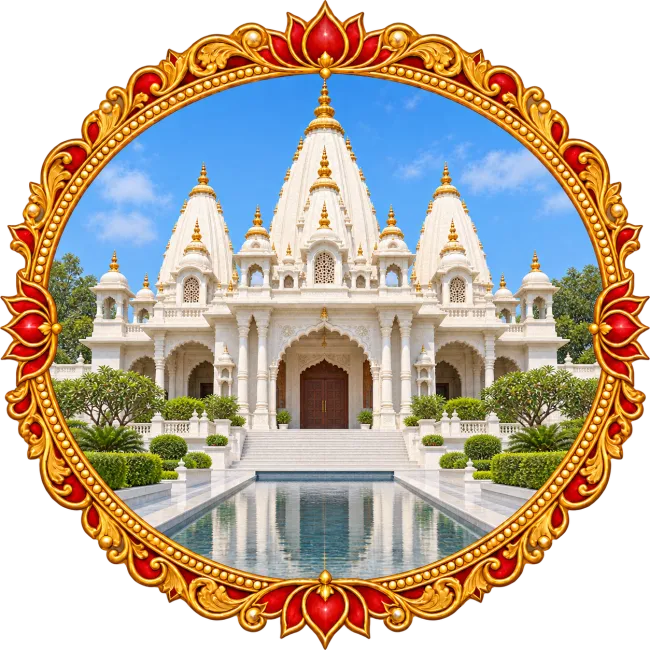
JK Radha Krishna Temple Kanpur
Visit JK Radha Krishna Temple Kanpur, a magnificent Hindu temple dedicated primarily to Shri Radha and Lord Krishna. Officially known as Shri Radhakrishna Temple and Juggilal Kamlapat Temple, it is one of Kanpur’s most prominent spiritual and architectural landmarks.
The temple was built by the JK Charitable Trust under the guidance of industrialist Sir Padampat Singhania. Its foundation stone was laid on 1 July 1941, and the deities were consecrated on 2 May 1960. Spread across 17 acres, the temple contains five beautiful shrines dedicated to Shri Radha-Krishna, Shri Lakshmi-Narayan, Shri Ardhanarishwar, Shri Narmadeshwar and Shri Hanuman.
Its grand marble architecture, spacious gardens, peaceful prayer halls and evening aarti attract devotees, tourists, photographers and architecture enthusiasts throughout the year.
About JK Radha Krishna Temple Kanpur
JK Radha Krishna Temple is situated in Kamla Nagar near Sarvodaya Nagar, Kanpur, Uttar Pradesh. It is commonly known as JK Temple because it was constructed and continues to be maintained by the JK Charitable Trust associated with the Singhania family and JK Organisation.
The temple’s full name is Shri Radhakrishna Temple. Shri Radha and Lord Krishna occupy the central and principal shrine. Their divine relationship represents the eternal bond between the individual soul and the Supreme.
The temple complex extends across approximately 17 acres of landscaped land. Its well-maintained gardens, water features, broad pathways and impressive white structure provide a peaceful environment within the busy city of Kanpur.
Unlike a temple devoted to only one deity, JK Temple contains five separate shrines. These represent important Vaishnava and Shaiva traditions within Hinduism.
The five principal shrines are dedicated to:
- Shri Radha and Lord Krishna
- Shri Lakshmi and Lord Narayan
- Shri Ardhanarishwar
- Shri Narmadeshwar Mahadev
- Shri Hanuman Ji
This combination allows followers of Lord Krishna, Lord Vishnu, Lord Shiva, Goddess Shakti and Lord Hanuman to worship within the same complex.
History of JK Radha Krishna Temple
The idea for constructing Shri Radhakrishna Temple originated with Ram Pyari Devi, wife of Lala Kamlapat Singhania and matriarch of the Singhania family.
Ram Pyari Devi was a devoted worshipper of Lord Krishna and regularly travelled to Vrindavan. According to the temple’s history, Lord Krishna appeared in her dream and blessed her. She interpreted this experience as a divine instruction to establish a grand Krishna temple in Kanpur.
She shared her desire with her son, Sir Padampat Singhania. Kanpur already had a Dwarkadhish Temple in which Lord Krishna was worshipped with Rukmini. Therefore, Ram Pyari Devi requested that the new temple be dedicated to Krishna with his beloved Radha.
Sir Padampat Singhania accepted his mother’s wish and began planning the temple. He travelled to various parts of India, studied different temple designs and selected architectural elements that could be combined into a unique structure.
The land belonged to a trust established by the Singhania family and was selected because of its size and peaceful setting. The foundation stone was laid on 1 July 1941.
Construction began in 1944 but was interrupted by World War II because cement, steel and other construction materials were rationed. Work resumed after two years and continued under the personal supervision of Sir Padampat Singhania.
The deities of Shri Radha-Krishna were consecrated by Ram Pyari Devi on 2 May 1960. The temple was subsequently opened to the public and became one of Kanpur’s defining landmarks.
Who Built JK Temple Kanpur?
JK Temple was constructed by the JK Charitable Trust under the direction of Sir Padampat Singhania. The temple fulfilled the spiritual wish of his mother, Ram Pyari Devi.
Sir Padampat Singhania was closely involved in planning, design, material selection and construction. He regularly visited the site and personally reviewed the work.
High-quality marble was required in large quantities. To ensure a consistent supply, marble was obtained from Makrana in Rajasthan. A special marble-cutting facility was established inside the premises of JK Cotton Mills in Kanpur.
The marble was cut and polished according to the temple’s design before being transported to the site. Coloured stones were also obtained from Rajasthan, while bricks, cement, mortar and sand were largely sourced locally.
The result was a temple combining devotion, craftsmanship, engineering and detailed artistic planning.
Consecration of the Deities
The original proposal included shrines for Radha-Krishna, Lord Rama, Hanuman, Shiva, Durga and Ganesha. Before finalising the layout, Sir Padampat Singhania consulted a scholar knowledgeable in Hindu Shastras.
The scholar recommended changes so that the positioning and hierarchy of the deities complied with traditional religious principles. These recommendations were accepted.
The final five shrines were dedicated to:
- Shri Radha-Krishna
- Shri Narmadeshwar Mahadev
- Shri Ardhanarishwar
- Shri Lakshmi-Narayan
- Shri Hanuman Ji
The principal idols were crafted from Ashtadhatu, a sacred alloy traditionally formed from eight metals. Different proportions were used to achieve the desired colour and appearance for each deity.
Most of the idols were cast at Anantram Dharmashala near Kamla Tower. The idol of Lord Hanuman was cast within the temple premises.
Religious Significance of Shri Radha-Krishna
Radha and Krishna represent divine love, devotion and complete spiritual surrender. In Vaishnava philosophy, Shri Radha is regarded as the personification of pure devotion, while Krishna is the Supreme Lord who attracts every living being.
Their worship inspires devotees to develop:
- Unconditional love
- Devotion to God
- Compassion
- Humility
- Selfless service
- Inner peace
- Spiritual wisdom
- Freedom from material attachment
Devotees visit the central shrine for family harmony, marriage-related blessings, prosperity, peace and the development of sincere devotion.
The temple’s other shrines express the unity of Hindu spiritual traditions. Lakshmi-Narayan represent prosperity and preservation, Narmadeshwar represents Lord Shiva, Ardhanarishwar symbolises the unity of Shiva and Shakti, and Hanuman Ji represents courage and devotion.
Architecture of JK Temple Kanpur
JK Temple is famous for its harmonious combination of ancient and modern architecture. Its design incorporates elements from North Indian and South Indian temple styles while also using modern engineering principles.
The complex contains five large Shikharas corresponding to its five shrines. The central and tallest Shikhara belongs to Shri Radha-Krishna.
The Kalash-topped towers contain detailed mouldings and carvings inspired partly by Odisha temple architecture. The temple’s white marble exterior gives the structure a regal and timeless appearance.
The Mandapas have high, level roofs designed to provide natural light and ventilation. This feature keeps the interior spacious and comfortable while allowing sunlight to illuminate the deities.
Architectural highlights include:
- Five prominent marble Shikharas
- Spacious and ventilated Mandapas
- Carved pillars and arches
- Makrana marble surfaces
- Traditional Kalash designs
- Broad courtyards
- Landscaped gardens
- Decorative ponds and water features
- Symmetrical planning
- Modern structural engineering
The temple looks especially impressive during sunset and evening illumination. The white marble reflects the lights, giving the building a peaceful and radiant appearance.
Five Main Shrines
Shri Radha-Krishna Shrine
This is the central and most important shrine. Shri Radha and Krishna are decorated with flowers, garments, ornaments and garlands. Janmashtami and Radhashtami are celebrated with special grandeur here.
Shri Lakshmi-Narayan Shrine
Lord Narayan is worshipped with Goddess Lakshmi. Devotees pray for prosperity, family welfare, protection and spiritual progress.
Shri Ardhanarishwar Shrine
Ardhanarishwar depicts Lord Shiva and Goddess Parvati united in one form. The deity symbolises the inseparable relationship between masculine and feminine divine energy.
Shri Narmadeshwar Shrine
The shrine contains the sacred form of Lord Shiva as Narmadeshwar. Devotees offer water, milk, bel leaves and flowers, especially on Mondays, Maha Shivaratri and during Shravan.
Shri Hanuman Shrine
Lord Hanuman is worshipped as the embodiment of strength, devotion and selfless service. Tuesdays and Saturdays are important days for worship at this shrine.
JK Radha Krishna Temple Kanpur Timings
The regular darshan and aarti schedule is:
Timings may be extended or modified during Janmashtami, Radhashtami, Maha Shivaratri, Nauka Vihar and the temple’s anniversary celebrations. Visitors wishing to attend a specific special aarti should confirm the same-day schedule at the temple.
Best Time for Darshan
The best morning darshan time is between 7:00 AM and 10:00 AM. The premises remain peaceful, and visitors can comfortably visit all five shrines.
Evening between 6:00 PM and 8:00 PM is particularly beautiful. The temple is illuminated, the gardens become cooler and devotees can participate in the 7:00 PM aarti.
October to March provides pleasant weather for exploring the outdoor campus. Summers can be hot, so visitors should choose early morning or evening hours.
Janmashtami is the most festive time to visit, but heavy crowds and longer waiting periods should be expected.
Daily Pujas and Sevas
Morning Puja
Morning worship begins with the ceremonial preparation of the shrines. The deities are offered fresh garments, flowers, garlands and food.
Pushp Shringar Seva
Under Pushp Shringar Seva, the deities and shrines are decorated with fresh flowers. Elaborate floral decorations are arranged during festivals and special occasions.
Bhog Seva
Fresh vegetarian food is prepared in the temple kitchen and offered to the deities. After the offering, it becomes prasad.
Poshak Seva
Devotees may support the offering of garments to the deities. Special Poshak is prepared for Janmashtami, Radhashtami and other festivals.
Phool Bangla Seva
During Phool Bangla Seva, the shrines are transformed using elaborate flower arrangements. This seva is especially popular during summer festivals.
Evening Aarti
The principal evening aarti is performed at 7:00 PM. Devotees gather before the Radha-Krishna shrine while priests offer lamps and recite traditional prayers.
Yagya Seva
The temple organises Vedic Yagyas for spiritual welfare, family peace and special occasions. Priests perform the ritual according to traditional Vidhi.
Gau Seva
The temple encourages devotees to participate in cow protection through Gau Seva and support for feeding and caring for cows.
Major Festivals Celebrated
Krishna Janmashtami
Janmashtami is the largest festival at JK Temple. The entire complex is illuminated and decorated with flowers. Krishna Leela, bhajans, Jhankis and special midnight worship are organised.
Radhashtami
Radhashtami celebrates the appearance of Shri Radha. The central shrine receives special Shringar, flowers and ceremonial offerings.
Nauka Vihar Utsav
During Nauka Vihar, the Utsav deities of Radha and Krishna are placed in a beautifully decorated boat in the temple pond. Lamps, flowers, devotional music and cultural performances form part of the celebration.
Jhulan Utsav
Radha and Krishna are seated on a decorated swing during the monsoon season. Devotees offer flowers and sing traditional songs.
Maha Shivaratri
Special puja and Abhishekam are performed at the Narmadeshwar shrine. Devotees offer milk, water, honey and bel leaves.
Ram Navami
Prayers, bhajans and religious programmes are organised to celebrate the appearance of Lord Rama.
Hanuman Jayanti
The Hanuman shrine is decorated with flowers and sindoor. Hanuman Chalisa, Sundarkand and special aarti are performed.
Temple Anniversary
The anniversary of the consecration is celebrated with continuous chanting, special puja, cultural programmes and prasadam distribution.
Vijayadashami
Ramleela and symbolic Ravan Dahan programmes are organised to represent the victory of righteousness over evil.
Temple Library and Vedic Education
A library was established within the temple campus in 1986. It contains books related to Hindu philosophy, scriptures, history, spirituality and Indian culture.
The temple also supports Vedic education through the Radha-Krishna Veda Vidyalaya. Students receive instruction in Sanskrit, Vedic chanting, rituals and traditional values.
Special Yagya and Saraswati Puja programmes are organised during Basant Panchami to encourage learning, knowledge and cultural preservation.
Offerings and Prasad
Devotees may offer:
- Flowers and garlands
- Tulsi leaves
- Fruits
- Makhan and mishri
- Sweets
- Coconut
- Deity garments
- Lamps
- Milk for Shiva Abhishekam
- Bel leaves
- Sindoor at the Hanuman shrine
- Bhog Seva
- Pushp Shringar Seva
- Gau Seva
Food offered to the deities is distributed as prasad. Visitors should receive it respectfully and avoid wasting it.
Entry Fee and Visit Duration
There is no entry fee for visiting JK Temple. Darshan and ordinary entry to the premises are free.
Separate contributions may apply for special pujas, Shringar, Yagya, Abhishekam and personal religious ceremonies.
A normal visit requires one to two hours. Visitors interested in exploring all five shrines, gardens and architectural features should keep two hours available.
Photography and Visitor Guidelines
- Wear clean and respectful clothing.
- Remove footwear before entering the temple.
- Keep mobile phones on silent mode.
- Photography inside the shrine area is generally restricted.
- Avoid using flash near the deities.
- Do not touch idols, altars or decorative objects.
- Maintain silence during puja and aarti.
- Follow instructions issued by temple staff.
- Do not carry tobacco, alcohol or non-vegetarian food.
- Pets are not permitted inside the temple.
- Keep the gardens and pathways clean.
- Do not damage plants or water features.
- Supervise children near the pond and staircases.
- Use designated counters for personal belongings.
How to Reach JK Temple Kanpur
By Air
Kanpur Airport is the nearest airport. Taxis and app-based cabs are available from the airport to Kamla Nagar and Sarvodaya Nagar.
Chaudhary Charan Singh International Airport in Lucknow provides wider domestic and international connectivity.
By Train
Kanpur Central Railway Station is approximately 5–7 kilometres from the temple. Autos, taxis and app-based cabs are easily available.
By Metro
LLR Hospital Metro Station is a convenient station for reaching JK Temple. Visitors can continue by auto-rickshaw or e-rickshaw to the temple entrance.
By Road
The temple is located in Kamla Nagar near Sarvodaya Nagar and Govind Nagar Road. It is easily accessible from Swaroop Nagar, Kakadeo, Lajpat Nagar, Motijheel and central Kanpur.
City buses, autos, e-rickshaws and taxis operate regularly in this area.
Nearby Places to Visit
Visitors may also explore:
- Motijheel
- Kanpur Zoological Park
- Ganga Barrage
- Anandeshwar Temple
- ISKCON Temple Kanpur
- Panki Hanuman Temple
- Tapeshwari Devi Temple
- Bara Devi Temple
- Phool Bagh
- Nana Rao Park
- Green Park Stadium
- Kanpur Memorial Church
Conclusion
JK Radha Krishna Temple is one of Kanpur’s most beautiful spiritual and architectural landmarks. The idea for the temple originated with Ram Pyari Devi after she experienced a divine dream of Lord Krishna. Her son, Sir Padampat Singhania, transformed that vision into a magnificent temple through years of careful planning and construction.
The foundation stone was laid on 1 July 1941, and the Radha-Krishna deities were consecrated on 2 May 1960. Constructed by the JK Charitable Trust, the temple preserves both Vaishnava and Shaiva traditions through its five shrines.
Its Makrana marble, five towering Shikharas, spacious Mandapas, landscaped gardens and peaceful atmosphere make it an ideal destination for worship and spiritual reflection. The evening aarti at 7:00 PM offers visitors an especially memorable experience as the illuminated temple fills with bells, prayers and devotion.