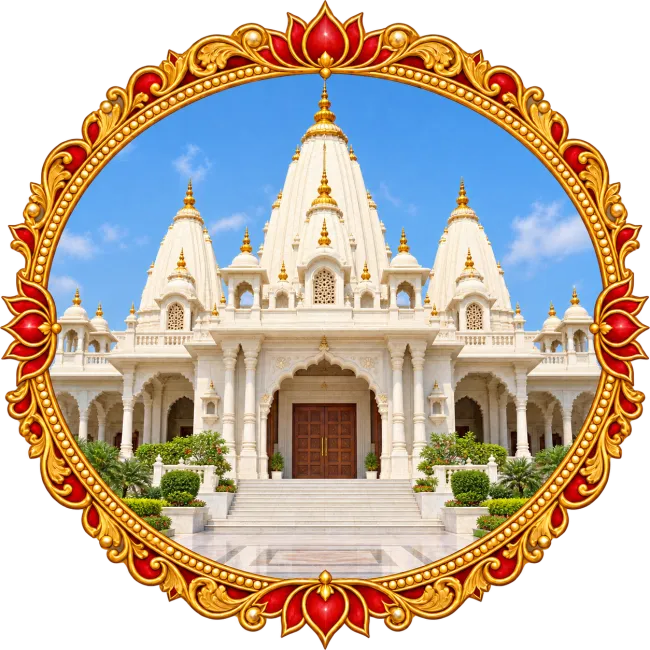
ISKCON Temple Kanpur
Visit ISKCON Temple Kanpur, officially known as Sri Sri Radha Madhava Mandir, a magnificent spiritual and cultural centre dedicated to Radha and Lord Krishna. Located on Mainavati Marg along Bithoor Road, the temple is known for its grand architecture, beautiful deities, melodious kirtans, daily Bhagavad Gita classes and sanctified vegetarian prasadam.
The temple was inaugurated on 3 October 2014 during Rama Vijaya Dashami. It follows the Gaudiya Vaishnava tradition established globally by A.C. Bhaktivedanta Swami Srila Prabhupada. Its peaceful surroundings, spacious prayer hall, gardens, goshala and regular spiritual programmes make it one of the most important Krishna temples in Kanpur.
About ISKCON Temple Kanpur
ISKCON Temple Kanpur is situated at Hare Krishna Land on Mainavati Marg, Bithoor Road, Kanpur, Uttar Pradesh. It is popularly known as Sri Sri Radha Madhava Mandir because Sri Sri Radha Madhava are its presiding deities.
ISKCON stands for the International Society for Krishna Consciousness. The organisation was founded in New York City in 1966 by His Divine Grace A.C. Bhaktivedanta Swami Prabhupada.
Srila Prabhupada spread the teachings of the Bhagavad Gita, Srimad Bhagavatam and Chaitanya Mahaprabhu throughout the world. He presented Bhakti Yoga as a practical spiritual process based on chanting the holy names of God, studying scripture, serving the deities and distributing sanctified food.
ISKCON Kanpur follows these principles through:
- Daily deity worship
- Hare Krishna Sankirtan
- Bhagavad Gita classes
- Srimad Bhagavatam discourses
- Prasadam distribution
- Youth programmes
- Cow protection
- Spiritual education
- Festival celebrations
- Community welfare activities
The temple welcomes people from all backgrounds. Visitors do not need to be registered members of ISKCON to attend darshan, aarti, kirtan or spiritual classes.
History of ISKCON Temple Kanpur
Srila Prabhupada desired that an important ISKCON centre should be established in Kanpur. The city’s position as a major industrial and educational centre made it suitable for spreading the teachings of Krishna consciousness among families, professionals and students.
A devotee donated land for the worship of Sri Sri Radha Madhava. A temporary but beautifully arranged temple was opened on Vasant Panchami in 2009, allowing devotees to begin regular worship and spiritual programmes.
A Bhumi Puja for the grand temple was performed in February 2011. Senior ISKCON leaders and devotees participated in the ceremony, after which construction of the larger temple complex progressed.
The grand Sri Sri Radha Madhava Temple was inaugurated on 3 October 2014, on the auspicious occasion of Rama Vijaya Dashami. The opening celebrations continued for several days and were attended by senior ISKCON leaders, public representatives and thousands of devotees.
The temple was inaugurated in the presence of Uttar Pradesh Governor Ram Naik and Nagaland Governor P.B. Acharya. Senior spiritual leaders, including Gopal Krishna Goswami, also participated in the celebrations.
At the time of its inauguration, the temple was described as one of the largest ISKCON temple complexes in the world. Developed across a large campus, the complex includes the principal temple, landscaped areas, a goshala, kitchens, spiritual education facilities and spaces for festivals and community programmes.
Founder-Acharya Srila Prabhupada
A.C. Bhaktivedanta Swami Prabhupada was born in Kolkata in 1896. Following the instruction of his spiritual teacher, he travelled to the United States in 1965 to spread the teachings of Lord Krishna.
At the age of 69, he began the Hare Krishna movement in New York. He formally established ISKCON in 1966 and subsequently travelled around the world, opening temples and translating important Vedic scriptures.
Srila Prabhupada translated and wrote commentaries on texts such as:
- Bhagavad Gita As It Is
- Srimad Bhagavatam
- Sri Chaitanya Charitamrita
- Nectar of Devotion
- Sri Ishopanishad
ISKCON Kanpur preserves his teachings through daily classes, book distribution, chanting, deity worship and prasadam service. His sacred Murti is installed within the temple, where devotees offer flowers and seek his blessings.
Main Deities of ISKCON Kanpur
Sri Sri Radha Madhava
Sri Sri Radha Madhava are the presiding deities of the temple. Lord Madhava is a name of Krishna meaning the Lord of Lakshmi or the beloved of Radha.
The deities are decorated every day with colourful clothes, jewellery, flowers and seasonal ornaments. Shringar Darshan at 7:30 AM is one of the best times to see their elaborate decoration.
Sri Sri Gaura-Nitai
Sri Chaitanya Mahaprabhu and Nityananda Prabhu are worshipped as Gaura-Nitai. They spread the congregational chanting of the holy names of Krishna as the simplest spiritual process for the present age.
Jagannath, Baladeva and Subhadra
Lord Jagannath is worshipped with his elder brother Baladeva and sister Subhadra. Their annual Rath Yatra is one of ISKCON’s most joyful public festivals.
Sita, Rama, Lakshmana and Hanuman
Lord Rama is worshipped with Mata Sita, Lakshmana and Lord Hanuman. Ram Navami and Rama Vijaya Dashami are celebrated with special prayers and devotional programmes.
Lord Narasimha and Prahlada
Lord Narasimha represents divine protection. Devotees pray to him for courage, freedom from fear and protection from spiritual obstacles.
Spiritual Significance of the Temple
ISKCON Kanpur teaches that the purpose of human life is to understand one’s eternal relationship with Lord Krishna. The temple follows the Bhakti Yoga tradition, in which devotion is expressed through hearing, chanting, remembering and serving God.
The Hare Krishna Mahamantra is central to the temple’s spiritual practices:
“Hare Krishna Hare Krishna, Krishna Krishna Hare Hare,
Hare Rama Hare Rama, Rama Rama Hare Hare.”
Devotees believe that chanting this mantra cleanses the mind, develops devotion and brings a person closer to Krishna.
Visitors come to the temple for:
- Mental peace
- Spiritual knowledge
- Relief from stress
- Family well-being
- Devotional association
- Guidance from the Bhagavad Gita
- Participation in kirtan
- Blessings of Radha-Krishna
- Sanctified vegetarian prasadam
- Development of a disciplined spiritual life
Architecture of ISKCON Temple Kanpur
ISKCON Kanpur is built in a grand contemporary temple style with traditional Vaishnava architectural elements. The spacious campus provides a peaceful atmosphere away from the congestion of central Kanpur.
The main temple building has large domes, decorative arches, tall pillars and a spacious congregation hall. The white and cream-coloured exterior gives the temple a serene appearance.
The main altar is the visual and spiritual centre of the prayer hall. The deities are installed on beautifully decorated marble platforms and illuminated with carefully arranged lights.
The large prayer hall accommodates devotees during aarti, Bhagavatam classes, kirtans and festivals. The open space allows visitors to sit, meditate and participate in congregational chanting.
The complex also contains:
- Landscaped gardens
- A goshala
- Prasadam facilities
- Spiritual book counters
- Puja and gift shops
- Festival grounds
- Classrooms and activity areas
- Community-service facilities
- Residential and administrative sections
The temple is especially beautiful in the evening when the domes, pathways and main hall are illuminated.
ISKCON Temple Kanpur Timings
The official daily worship schedule is:
The altar curtains may remain closed at certain times while the deities are being dressed or offered food. Timings may also be modified during Janmashtami, Radhashtami, Gaura Purnima and other major festivals.
Daily Aartis and Spiritual Programmes
Mangala Aarti
Mangala Aarti is performed at 4:30 AM. It is the first worship of the day and is ideal for devotees seeking a peaceful and deeply meditative experience.
Tulsi Aarti
Tulsi Maharani is worshipped because she is especially dear to Lord Krishna. Devotees sing prayers and walk respectfully around the Tulsi plant.
Guru Puja
Guru Puja is performed in honour of Srila Prabhupada. Devotees offer flowers and sing the Guru Vandana prayer.
Shringar Darshan
At 7:30 AM, the altar opens after the deities have been dressed and decorated. Visitors can see Sri Sri Radha Madhava in their fresh daily Shringar.
Srimad Bhagavatam Class
The morning programme includes a discourse based on Srimad Bhagavatam. The speaker explains how Vedic teachings can be applied to daily life.
Raj Bhog Aarti
Raj Bhog Aarti is performed at 12:30 PM after an elaborate food offering is presented to the deities. The temple closes for the afternoon after this worship.
Sandhya or Gaura Aarti
Sandhya Aarti is performed at 7:00 PM. It includes energetic kirtan, lamps, conch shells, mridanga and kartals. This is one of the most popular programmes for families and first-time visitors.
Shayan Aarti
Shayan Aarti is performed at 8:30 PM before the deities ceremonially rest and the temple closes.
Major Festivals Celebrated
Krishna Janmashtami
Janmashtami is the grandest festival at ISKCON Kanpur. The temple is decorated with flowers and lights, while devotees participate in kirtan, Abhishekam, spiritual discourses and midnight aarti.
Radhashtami
Radhashtami celebrates the appearance of Srimati Radharani. Special Abhishekam, flower decorations, kirtan and prasadam are organised.
Gaura Purnima
Gaura Purnima marks the appearance of Sri Chaitanya Mahaprabhu. Devotees participate in Sankirtan, Abhishekam and special discourses.
Jagannath Rath Yatra
The deities of Lord Jagannath, Baladeva and Subhadra are taken out in a decorated chariot. Devotees pull the chariot while chanting the Hare Krishna Mahamantra.
Govardhan Puja
A large hill made from food preparations is offered to Lord Krishna in remembrance of his lifting of Govardhan Hill. Annakut Darshan and prasadam distribution are organised.
Narasimha Chaturdashi
Lord Narasimha’s appearance is celebrated through Abhishekam, kirtan and the narration of Prahlada Maharaja’s devotion.
Ram Navami
Ram Navami is celebrated through worship of Lord Rama, Mata Sita, Lakshmana and Hanuman. Ramayana discourses and kirtans are organised.
Jhulan Yatra
During Jhulan Yatra, Radha and Krishna are seated on a beautifully decorated swing. Devotees offer flowers and participate in devotional singing.
Holi
Holi is celebrated with flower offerings, kirtan and devotional festivities centred on the loving pastimes of Radha and Krishna.
Sunday Feast Programme
The Sunday programme is an excellent introduction to ISKCON for new visitors. It generally includes:
- Hare Krishna kirtan
- Bhagavad Gita discourse
- Question-and-answer session
- Aarti
- Congregational chanting
- Vegetarian prasadam
Families, students and visitors interested in spiritual learning can participate. The programme schedule may vary during festivals.
Goshala and Cow Protection
Cow protection is an important part of the temple’s activities. The temple maintains a goshala where cows are cared for and provided with food, shelter and medical attention.
Devotees can participate in Gau Seva by feeding cows or supporting their care. Children visiting the temple can also learn about the religious and environmental significance of cow protection.
Food for Life and Annadan
ISKCON Kanpur operates prasadam and food-distribution programmes inspired by Srila Prabhupada’s desire that no person near an ISKCON temple should remain hungry.
The temple distributes sanctified vegetarian meals to students, visitors and people in need. Its Annadan initiative serves large numbers of meals every month.
Because the food is first offered to Lord Krishna, it is considered prasadam rather than ordinary food.
Offerings and Prasad
Devotees may offer:
- Tulsi leaves
- Flowers and garlands
- Fruits
- Makhan and mishri
- Milk preparations
- Dry fruits
- Sweets
- Deity garments
- Lamps
- Raj Bhog
- Annadan
- Gau Seva
Only pure vegetarian food prepared without onion, garlic, eggs, meat, fish or alcohol is offered to the deities.
Visitors may receive prasadam after temple programmes. Packaged prasadam, books, incense, devotional items and gifts may also be available within the complex.
Entry Fee and Visit Duration
There is no entry fee for visiting ISKCON Temple Kanpur. Daily darshan and regular aartis are open to everyone.
Donations and paid sevas are voluntary. Special Abhishekam, flower offerings, Raj Bhog, Annadan and festival sevas may have specified contribution amounts.
A normal visit requires one to two hours. Visitors attending Sandhya Aarti, a spiritual class and prasadam distribution should keep two to three hours available.
Dress Code and Visitor Guidelines
- Wear clean, modest and respectful clothing.
- Remove footwear before entering the temple hall.
- Wash your hands before entering the worship area.
- Keep mobile phones on silent mode.
- Avoid talking during aarti and scripture classes.
- Do not touch the deities or altar.
- Follow instructions regarding photography.
- Avoid bringing outside food into the temple.
- Do not carry tobacco, alcohol or non-vegetarian food.
- Respect devotees engaged in meditation and chanting.
- Do not waste prasadam.
- Follow queue arrangements during festivals.
- Supervise children inside the prayer hall.
- Maintain cleanliness throughout the campus.
How to Reach ISKCON Temple Kanpur
By Air
Kanpur Airport is the nearest airport. Taxis and app-based cabs are available for Mainavati Marg and Bithoor Road.
Travellers may also use Chaudhary Charan Singh International Airport in Lucknow and continue to Kanpur by train, bus or taxi.
By Train
Kanpur Central is the main railway station. The temple is situated approximately 8–10 kilometres from the railway station, depending on the route used.
Taxis, autos and app-based cabs are available from Kanpur Central.
By Metro
Visitors can use the Kanpur Metro for part of the journey and continue towards Mainavati Marg by auto-rickshaw or taxi. Direct metro connectivity to the temple entrance is not available.
By Road
The temple is located at Sri Sri Radha Madhava Mandir, Mainavati Marg, Bithoor Road, Kanpur. It is accessible from Nawabganj, Kalyanpur, Azad Nagar and Bithoor.
Private vehicles, taxis, autos and city buses can reach the temple area. Parking facilities are available within or near the campus, subject to festival arrangements.
Nearby Places to Visit
Visitors may also explore:
- Valmiki Ashram, Bithoor
- Brahmavart Ghat
- Dhruva Teela
- Patthar Ghat
- Sudhanshu Ji Maharaj Ashram
- Ganga Barrage
- Kanpur Zoological Park
- JK Temple
- Anandeshwar Temple
- Panki Hanuman Temple
- Tapeshwari Devi Temple
- Bara Devi Temple
Conclusion
ISKCON Temple Kanpur is a grand centre of Krishna devotion, spiritual education and community service. The present Sri Sri Radha Madhava Mandir was inaugurated on 3 October 2014, fulfilling the desire to establish a significant Krishna consciousness centre in Kanpur.
Its beautiful deities, disciplined daily worship, melodious kirtans, scripture classes, goshala and Annadan programmes make it much more than a place of ritual worship. The temple provides visitors with a practical opportunity to experience Bhakti Yoga.
Whether attending the peaceful Mangala Aarti at 4:30 AM, viewing the deities during Shringar Darshan or participating in the energetic Sandhya Aarti at 7:00 PM, devotees can experience an atmosphere filled with devotion and joy.
The constant chanting of the Hare Krishna Mahamantra reminds every visitor that spiritual peace can be found through sincere devotion, service and remembrance of Lord Krishna.