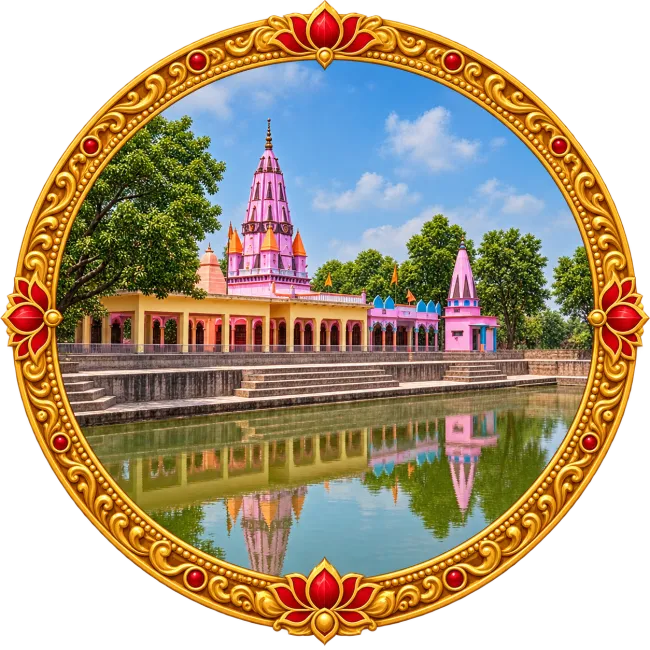
Trilochan Mahadev Temple, Jaunpur
Visit Trilochan Mahadev Temple in Jaunpur, an ancient and highly revered Shiva shrine known for its self-manifested Shivling, sacred Pilpila Sarovar and fascinating local legends. Situated in Rehti village near Jalalpur, the temple attracts devotees throughout the year, particularly during Maha Shivaratri, the month of Shravan and Sawan Mondays. The peaceful surroundings and powerful spiritual atmosphere make Trilochan Mahadev Temple one of the most important Shiva pilgrimage destinations in the Jaunpur district.
About Trilochan Mahadev Temple
Trilochan Mahadev Temple is an ancient Hindu shrine dedicated to Lord Shiva in his “Trilochan” form. The word Trilochan means “the three-eyed one” and refers to the three eyes of Lord Shiva—the Sun, the Moon and the divine fire of spiritual knowledge.
The temple is located in Rehti village in the Jalalpur area of Jaunpur district, Uttar Pradesh. It stands close to the Jaunpur–Varanasi route and is visited by devotees from Jaunpur, Varanasi and neighbouring districts.
The principal deity is a naturally manifested Shivling, locally worshipped as Swayambhu Trilochan Mahadev. Devotees believe that the Shivling emerged from beneath the earth and extends deep into the ground. Because of this belief, it is also described as a Patal-bhedi Shivling.
The shrine is closely connected with the sacred geography of the ancient Kashi region. Local religious traditions associate it with references found in the Skanda Purana. However, Trilochan Mahadev Temple in Jaunpur should not be confused with Trilochaneshwar Mahadev Temple at Trilochan Ghat in Varanasi. Both are separate Shiva shrines.
History of Trilochan Mahadev Temple
According to religious tradition, Trilochan Mahadev Temple has existed since the Treta Yuga. A popular belief states that Lord Brahma performed a sacred yajna at this place and requested Lord Shiva to manifest for the welfare of devotees. Lord Shiva then appeared here in the form of a Shivling.
The present temple developed around the ancient self-manifested Shivling. According to local tradition, villagers constructed the original shrine after discovering the Shivling. The temple complex was subsequently repaired, expanded and renovated by devotees and local communities over different generations.
Therefore, the temple is not associated with a single historical king or builder. Its formation is connected with the collective devotion of the residents of Rehti and nearby villages.
Story of the Cow and the Swayambhu Shivling
One of the most famous legends associated with the temple concerns a cow and her owner. It is said that a farmer or cowherd noticed that one of his cows returned home every evening without any milk.
The owner followed the cow into the forest and saw her standing at a particular location. The cow released all her milk over the ground without being milked by anyone. Surprised by this event, the farmer informed the villagers.
When the villagers excavated the spot, they discovered a Shivling beneath the ground. They continued digging but were unable to reach its base. The villagers concluded that the Shivling extended deep into the earth and was a Patal-bhedi manifestation of Lord Shiva.
A shrine was constructed at that location, and the deity became known as Trilochan Mahadev.
Legend of the Tilted Shivling
Another well-known story is related to a boundary dispute between Rehti and a neighbouring village, referred to in local accounts as Lahengpur, Dingurpur or a nearby settlement.
After the Shivling was discovered and the temple was constructed, residents of both villages claimed that the shrine stood within their respective village boundaries. When the disagreement could not be resolved, village elders decided to leave the matter to Lord Shiva.
Both groups prayed before the deity, locked the temple and returned home. When the doors were opened the following morning, the Shivling was reportedly found leaning towards Rehti village. The villagers accepted this as the decision of Lord Shiva, and the temple became associated with Rehti.
The Shivling is still seen in a slightly tilted position, which devotees consider a reminder of this sacred legend.
Who Built Trilochan Mahadev Temple?
According to the temple’s traditional history, the original shrine was built by the villagers after the self-manifested Shivling was discovered. No single ruler is regarded as the sole builder of the temple.
The temple structure visible today represents several phases of construction, renovation and expansion supported by priests, devotees and local communities. The sacred Shivling is believed to be far older than the surrounding building.
Religious tradition connects the shrine with the Treta Yuga, while the present temple complex developed gradually over generations.
Religious Significance of Trilochan Mahadev
Lord Shiva is worshipped here as Trilochan—the three-eyed form of Mahadev. His right eye represents the Sun, the left eye represents the Moon and the third eye represents divine knowledge and the destruction of ignorance.
Devotees worship Trilochan Mahadev for:
- Protection from difficulties and negative influences
- Peace, health and family welfare
- Courage and emotional strength
- Success in personal and professional life
- Relief from fear and mental disturbance
- Happiness in married life
- Fulfilment of righteous wishes
- Spiritual knowledge and freedom from ignorance
The temple is especially important for Rudrabhishek, Jalabhishek and prayers performed during Shravan. Kanwariyas carrying sacred water visit the temple in large numbers and offer water, milk, bel leaves and flowers to the Shivling.
Pilpila Sarovar
A sacred water body known as Pilpila Sarovar is situated near the temple. It remains one of the most distinctive features of Trilochan Mahadev Dham.
Local tradition believes that the sarovar has an underground connection with nearby sacred water sources. Devotees traditionally bathe or wash their hands and feet in the water before worshipping Lord Shiva.
The water of the sarovar is also traditionally associated with relief from skin-related problems. This is a religious belief and should not be treated as a substitute for medical diagnosis or treatment.
During Chhath Puja, women and families gather near the sarovar to offer arghya to the setting and rising Sun. The temple and water body are decorated with lights during the celebration.
Architecture of Trilochan Mahadev Temple
The architecture of the temple follows the traditional style commonly seen in North Indian Shiva shrines. The sanctum houses the ancient Shivling, which forms the spiritual centre of the complex.
The main temple includes a raised shikhara above the sanctum and a space where devotees can perform darshan and offer water to the Shivling. Nandi, the sacred bull and vehicle of Lord Shiva, is positioned facing the principal deity.
The complex also contains smaller shrines dedicated to Hindu deities such as Lord Ganesha, Lord Hanuman and Lord Vishwakarma. Dharamshalas and open spaces are available for pilgrims, religious gatherings, community meals and ceremonial functions.
The temple becomes particularly colourful during Shravan and Maha Shivaratri, when it is decorated with flowers, saffron flags, lights and devotional banners.
Trilochan Mahadev Temple Timings
Regular Days
Sawan Monday Timings
On regular Mondays, the temple generally opens at 04:00 AM. During Sawan Mondays and Maha Shivaratri, the doors may be opened at 02:30 AM or 03:00 AM due to the large number of kanwariyas and other devotees. Festival schedules are announced separately by the temple administration.
Daily Puja and Rituals
Daily worship begins with the cleaning and purification of the sanctum. The Shivling is bathed and decorated before the morning aarti.
The principal rituals performed at the temple include:
- Jalabhishek
- Doodh Abhishek
- Panchamrit Abhishek
- Rudrabhishek
- Shiva mantra chanting
- Recitation of Shiva Chalisa
- Mahamrityunjaya Mantra Jaap
- Morning and evening aarti
- Offering of bhog
- Distribution of prasadam
Devotees commonly chant “Om Namah Shivaya” and offer water while circumambulating the sanctum.
Offerings at Trilochan Mahadev Temple
The following items are commonly offered to Lord Trilochan Mahadev:
- Sacred water or Gangajal
- Milk and Panchamrit
- Bel leaves
- White flowers
- Datura flowers or fruit
- Akshat
- Sandalwood paste
- Honey and sugar
- Fruits and sweets
- Incense sticks
- Ghee lamps
Visitors should use the designated area for Jalabhishek and follow the instructions of the temple priests. Plastic containers and waste should not be left near the temple or Pilpila Sarovar.
Major Festivals
Maha Shivaratri
Maha Shivaratri is the most important festival celebrated at Trilochan Mahadev Temple. Devotees begin arriving during the night, and special puja, Rudrabhishek, mantra chanting and aarti continue for extended hours.
Large queues form for Jalabhishek, and the district administration makes special arrangements for security, barricading, medical support and crowd management.
Shravan Month
The entire month of Shravan is highly significant. Thousands of Shiva devotees visit the temple to offer water, milk and bel leaves. Every Sawan Monday witnesses particularly large crowds.
Many kanwariyas carry sacred water on foot and offer it to the Swayambhu Shivling.
Trilochanashtami
Trilochanashtami is observed on the Ashtami of Shukla Paksha during the Hindu month of Jyeshtha. Special prayers are offered to the three-eyed form of Lord Shiva.
Chhath Puja
Chhath Puja is celebrated near Pilpila Sarovar. Devotees offer prayers to Surya Dev while standing near the sacred water. The area is cleaned and illuminated for the occasion.
Kartik Purnima
Devotees light lamps, bathe in the sacred water and worship Lord Shiva on Kartik Purnima. The day is considered auspicious for charity and spiritual purification.
Best Time to Visit
October to March is suitable for a comfortable visit because the weather remains pleasant. Devotees wishing to experience the temple’s grand celebrations may visit during Maha Shivaratri or Shravan.
For peaceful darshan, visitors should reach between 06:00 AM and 08:00 AM on an ordinary weekday. Mondays are generally more crowded, while Sawan Mondays and Maha Shivaratri attract the largest gatherings.
The usual visit duration is one to two hours. More time may be required during festivals and special abhishek ceremonies.
How to Reach Trilochan Mahadev Temple
By Road
The temple is located in Rehti village near Jalalpur on the Jaunpur–Varanasi route. It is approximately 22–25 kilometres from Jaunpur city and can be reached by bus, taxi, auto-rickshaw or private vehicle.
Travellers coming from Varanasi can follow the highway towards Jaunpur and continue to the Trilochan or Jalalpur area.
By Train
Trilochan Mahadev Railway Station is the nearest railway station and is approximately two kilometres from the temple. Local auto-rickshaws and e-rickshaws are available from the station.
Jalalganj Railway Station is another nearby option. Travellers arriving through major trains may use Jaunpur Junction, Jaunpur City or Varanasi Junction and continue by road.
By Air
Lal Bahadur Shastri International Airport at Babatpur, Varanasi, is the nearest airport. It is approximately 35–40 kilometres from the temple. Taxis and private vehicles are available from the airport.
Nearby Places to Visit
- Pilpila Sarovar
- Sheetala Mata Chaukiya Dham
- Shahi Qila, Jaunpur
- Shahi Bridge
- Atala Masjid
- Jama Masjid, Jaunpur
- Maa Sharda Shakti Peeth
- Jaunpur city and Gomti River ghats
Visitor Guidelines
- Wear clean and respectful clothing.
- Remove footwear before entering the temple.
- Carry water in a proper vessel for Jalabhishek.
- Do not use soap or chemical products in Pilpila Sarovar.
- Follow the designated queues during Sawan and Maha Shivaratri.
- Avoid pushing near the sanctum.
- Keep the temple and sarovar surroundings clean.
- Take permission before photographing the sanctum.
- Elderly visitors should avoid peak hours on Sawan Mondays.
- Keep children close during festivals and crowded events.
- Park vehicles only in designated areas.
Conclusion
Trilochan Mahadev Temple is one of the most sacred Shiva shrines in Jaunpur. Its Swayambhu and Patal-bhedi Shivling, sacred Pilpila Sarovar and legends associated with Rehti village give the temple a unique religious identity.
According to tradition, the Shivling was discovered after a cow was seen offering her milk at the site. Villagers subsequently constructed a shrine, which was expanded and renovated over generations. The tilted form of the Shivling is associated with the belief that Lord Shiva personally resolved a boundary dispute between two neighbouring villages.
Today, the temple remains an important destination for Jalabhishek, Rudrabhishek and Shiva worship. Maha Shivaratri, Shravan and Sawan Mondays transform the entire complex into a vibrant centre of devotion. A visit to Trilochan Mahadev Temple offers devotees an opportunity to experience ancient faith, local tradition and the peaceful spiritual presence of Lord Shiva.