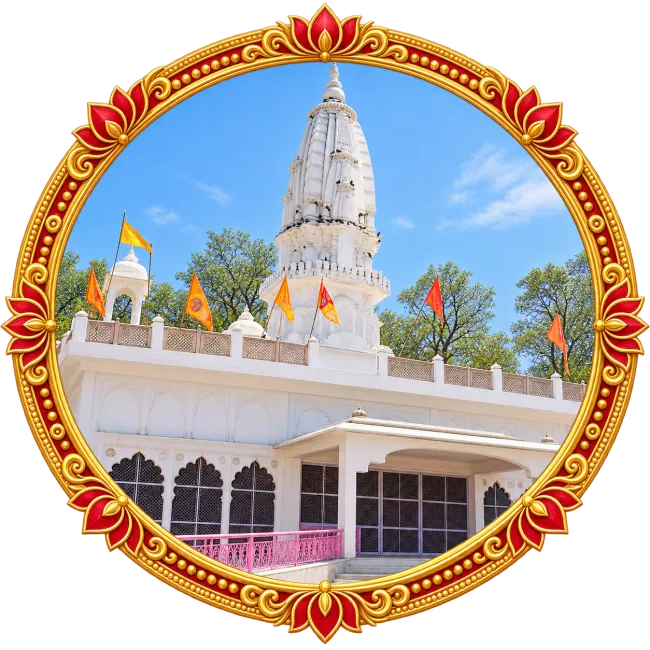
Bhartrihari Temple, Alwar
Visit Bhartrihari Temple in Alwar, one of Rajasthan’s most respected spiritual destinations associated with Raja Bhartrihari, the legendary king of Ujjain who renounced his kingdom and became a Nath yogi. Situated amid the scenic Aravalli Hills near Sariska, the temple houses the sacred samadhi of Baba Bhartrihari Nath. Its peaceful surroundings, continuously burning sacred flame, ancient caves and strong connection with the Nath tradition attract devotees throughout the year.
About Bhartrihari Temple
Bhartrihari Temple, popularly known as Baba Bhartrihari Dham or Yogi Bhartrihari Nath Temple, is located in Alwar district of Rajasthan. It stands near the Sariska forest region, approximately 36–38 kilometres from Alwar city.
The temple is dedicated to Baba Bhartrihari Nath, who is remembered in North Indian tradition as a former king, saint, poet and yogi. According to popular belief, he renounced royal life, became a disciple of Guru Gorakhnath and performed severe penance in the forests and caves of the Alwar region.
The temple complex contains the sacred samadhi of Baba Bhartrihari, a traditional dhuni, prayer halls, caves and smaller shrines. It is especially important to followers of the Nath Sampradaya.
Thousands of pilgrims from Rajasthan, Haryana, Delhi, Uttar Pradesh, Punjab and nearby regions visit the temple to seek blessings, spiritual peace and relief from personal difficulties.
History of Bhartrihari Temple
The history of Bhartrihari Temple is closely connected with the traditional life story of Raja Bhartrihari of Ujjain. He is remembered as the elder brother of King Vikramaditya and the husband of Queen Pingala.
According to popular tradition, Raja Bhartrihari ruled Ujjain before renouncing his kingdom. Different versions of his story describe how certain incidents made him understand the temporary nature of wealth, relationships and royal power.
After becoming disillusioned with worldly life, Bhartrihari handed over the kingdom to his younger brother Vikramaditya. He accepted Guru Gorakhnath as his spiritual teacher and joined the Nath tradition.
Bhartrihari travelled to different parts of India and performed meditation and penance in remote forests and caves. The region near present-day Alwar is believed to be one of the principal places where he practised severe austerities.
The shrine developed around the sacred place associated with his meditation and samadhi. Nath yogis, local devotees and religious communities expanded the temple complex over successive generations.
The present structure contains architectural elements from different periods rather than belonging to one construction phase. The samadhi and ancient spiritual traditions form the oldest and most important parts of the pilgrimage site.
Who Built Bhartrihari Temple?
Bhartrihari Temple developed around the sacred samadhi and meditation place of Baba Bhartrihari Nath. Nath yogis and local devotees gradually constructed and expanded the present temple complex.
Its historical development includes:
- Raja Bhartrihari’s traditional association with the Alwar forest region
- Establishment of a sacred meditation and samadhi site
- Maintenance of the site by Nath yogis
- Construction of prayer halls and shelters for devotees
- Addition of Rajasthani-style gateways, pillars and shikharas
- Development of facilities for pilgrims attending the annual fair
- Later repairs and renovation by local communities and temple organizations
The temple is therefore a living spiritual complex developed through the devotion of several generations.
Who Was Raja Bhartrihari?
Raja Bhartrihari is a major figure in the folk and spiritual traditions of northern India. He is commonly described as the king of Ujjain and the elder brother of Vikramaditya.
Numerous folk stories describe how he left his royal position after understanding that worldly wealth, beauty and relationships are temporary. Following his renunciation, he became a disciple of Guru Gorakhnath.
As a Nath yogi, Bhartrihari practised:
- Meditation
- Hatha Yoga
- Renunciation
- Control over the senses
- Detachment from material possessions
- Service to his guru
- Spiritual discipline
- Contemplation on the impermanence of life
He is also traditionally associated with Sanskrit poetry dealing with love, ethics and renunciation. Collections such as Shringara Shataka, Niti Shataka and Vairagya Shataka are popularly linked with the name Bhartrihari.
In Rajasthan’s oral traditions, he is respected as Baba Bhartrihari Nath, a powerful yogi who attained spiritual realization through the guidance of Guru Gorakhnath.
Story of Raja Bhartrihari and Queen Pingala
A well-known folk story describes how Raja Bhartrihari received a miraculous fruit believed to preserve youth or grant immortality. The king gave the fruit to Queen Pingala because he wished her to remain young.
According to the story, the fruit passed through several people and eventually returned to the king. This incident revealed to him the uncertainty of worldly relationships.
Deeply affected by the experience, Bhartrihari began reflecting on the temporary nature of royal power and material attachment. He eventually renounced his throne and became a spiritual seeker.
Other versions describe Guru Gorakhnath teaching Bhartrihari that worldly appearances and emotional attachments are temporary. These stories differ in detail, but their central message remains the same: genuine peace comes through wisdom, detachment and spiritual realization.
Connection with Guru Gorakhnath
Baba Bhartrihari holds an important position in the Nath Sampradaya. He is traditionally regarded as a disciple of Guru Gorakhnath, one of the most influential yogis in Indian spiritual history.
Guru Gorakhnath is believed to have guided Bhartrihari from royal attachment toward renunciation and self-realization. Under his guidance, Bhartrihari practised yoga, meditation and spiritual discipline.
The temple remains connected with Nath traditions such as:
- Guru worship
- Sacred dhuni
- Yogic meditation
- Use of sacred ash
- Recitation of Nath prayers
- Service to wandering saints
- Community meals
- Respect for renunciation and simplicity
Nath yogis and Kanphata sadhus visit the temple, particularly during its annual fair.
Sacred Samadhi
The samadhi of Baba Bhartrihari is the spiritual centre of the temple complex. Devotees bow before it, offer flowers and pray for protection and guidance.
A samadhi shrine honours a realized saint who is believed to remain spiritually present after leaving the physical body. Devotees consider the area highly sacred and approach it with silence and devotion.
People pray at the samadhi for:
- Relief from personal difficulties
- Protection from negative influences
- Family happiness
- Good health
- Success in important work
- Mental peace
- Spiritual progress
- Fulfilment of sincere wishes
Devotees may also perform circumambulation of the sacred area where permitted.
Sacred Dhuni and Akhand Jyoti
A sacred dhuni is maintained as an important part of the Nath tradition. The dhuni represents yogic discipline, purification and the continuous presence of spiritual knowledge.
A continuously burning sacred lamp is also associated with the shrine. Devotees consider the flame a symbol of Baba Bhartrihari’s spiritual power and eternal blessings.
Sacred ash from the dhuni may be offered to devotees as a blessing. Visitors should not touch the fire, lamps or ritual objects without permission.
Architecture of Bhartrihari Temple
The temple complex combines traditional Rajasthani architecture with features commonly found in Nath monasteries and samadhi shrines.
Entrance Gateway
The main entrance is decorated with religious symbols and traditional designs. During festivals, the gateway is adorned with flowers, flags and colourful fabric.
Pillared Halls
The temple contains pillared galleries and prayer halls where devotees assemble for bhajans, aarti and spiritual gatherings.
The pillars contain floral patterns and traditional decorative elements.
Shikhara
The temple’s shikharas rise above the sacred sections of the complex. Their painted and carved surfaces make the temple visible against the surrounding hills.
Samadhi Chamber
The samadhi chamber is the most sacred part of the temple. It has a comparatively simple arrangement intended to create an atmosphere suitable for prayer and meditation.
Cave and Meditation Areas
The hills surrounding the temple contain places traditionally connected with Baba Bhartrihari’s meditation. Certain caves and natural areas are treated as sacred.
Visitors should enter only those areas that are officially open and safe.
Natural Surroundings
The temple is surrounded by the rocky landscape of the Aravalli Hills. Seasonal streams, greenery and small waterfalls may be visible during and after the monsoon.
The peaceful natural setting is considered suitable for meditation and spiritual reflection.
Bhartrihari Temple Timings
The temple remains open continuously for general darshan from 6:00 AM to 7:00 PM. During the annual fair and major religious occasions, worship and visitor arrangements may be extended or modified.
Best Time for Darshan
The best time for darshan is between 7:00 AM and 9:00 AM. The temple is comparatively peaceful, and the weather remains suitable for walking through the complex.
Visitors who wish to attend the evening aarti should reach before 6:15 PM. This provides enough time to complete darshan before Sandhya Aarti begins.
The best months to visit are from October to March. The weather is pleasant and suitable for exploring the surrounding attractions.
The monsoon season brings greenery to the Aravalli Hills, but visitors should remain cautious because paths can become slippery and wildlife movement may increase near the forest area.
Daily Puja and Aarti
Daily worship at Bhartrihari Temple generally includes:
- Opening of the samadhi shrine
- Lighting of the sacred lamps
- Cleaning and preparation of the prayer area
- Morning Mangala Aarti
- Offering of flowers and incense
- Guru worship
- Recitation of Nath prayers
- Bhajan and devotional singing
- Maintenance of the sacred dhuni
- Distribution of sacred ash
- Evening Sandhya Aarti
- Closing prayers
Devotees commonly chant the name of Baba Bhartrihari Nath and Guru Gorakhnath. The sound of bells, drums and devotional songs creates a powerful atmosphere during aarti.
Bhartrihari Fair
The Bhartrihari Fair, also called Bhartrihari Lakkhi Mela, is the most important annual event associated with the temple.
The fair is held during the Hindu month of Bhadrapada, particularly around Shukla Ashtami. It normally falls during August or September.
The celebration generally continues for three days and attracts a large number of pilgrims.
Important features of the fair include:
- Special darshan of Baba Bhartrihari
- Worship at the sacred samadhi
- Nath yogi gatherings
- Bhajan and kirtan
- Traditional folk music
- Religious discourses
- Community meals
- Temporary stalls
- Rural markets
- Local cultural activities
- Devotional processions
During the fair, traffic restrictions and special parking arrangements may be introduced. Visitors may need to walk from the designated parking area to the temple.
Other Important Festivals
Guru Purnima
Devotees honour Guru Gorakhnath, Baba Bhartrihari and the Nath guru tradition. Special prayers and spiritual programmes are organized.
Mahashivratri
Because the Nath tradition is closely associated with Lord Shiva, Mahashivratri is celebrated with devotion, fasting and night prayers.
Navratri
Devotees visit the temple during Navratri for spiritual worship and blessings.
Holi
Holi is celebrated with devotional gatherings and traditional activities in the region.
Diwali
The temple is illuminated with lamps, and devotees pray for happiness, peace and prosperity.
Offerings at Bhartrihari Temple
Devotees may offer:
- Flowers and garlands
- Coconut
- Incense
- Ghee or oil lamps
- Sweets
- Fruits
- Sacred cloth
- Mustard oil
- Monetary donations
- Food supplies for community meals
- Donations for saints and pilgrims
Offerings should be handed to authorized temple attendants or placed only in designated areas.
Devotees should avoid leaving plastic packaging, food waste or other materials near the samadhi and natural surroundings.
Entry Fee and Visit Duration
During the annual fair, parking may be arranged farther from the main temple due to heavy crowds.
How to Reach Bhartrihari Temple
By Air
Jaipur International Airport is the nearest major airport. It is approximately 150 kilometres from the temple.
Taxis and buses are available from Jaipur to Alwar and the Sariska region.
Delhi’s Indira Gandhi International Airport is another option for visitors travelling from distant cities.
By Train
Alwar Junction is the nearest major railway station. It is connected with Delhi, Jaipur, Rewari, Bandikui, Ahmedabad and other cities.
The temple is approximately 36–40 kilometres from Alwar Junction. Taxis and private vehicles are available outside the station.
By Road
Bhartrihari Temple is situated near the Sariska region on the Alwar–Jaipur route. It can be reached by:
- Private car
- Taxi
- Local bus
- Shared vehicle
- Pilgrimage bus
Road conditions and forest-area restrictions should be checked during the monsoon and annual fair.
Nearby Places to Visit
Visitors can combine the temple journey with:
- Sariska Tiger Reserve
- Pandupol Hanuman Temple
- Neelkanth Mahadev Temple
- Naldeshwar Temple
- Bala Quila
- Alwar City Palace
- Moosi Maharani Ki Chhatri
- Siliserh Lake
- Vijay Mandir Palace
- Karni Mata Temple, Alwar
- Jagannath Temple, Alwar
- Bhangarh Fort
Entry to wildlife areas may require a separate permit and must follow forest department regulations.
Visitor Guidelines
- Remove footwear before entering sacred areas.
- Wear modest and comfortable clothing.
- Maintain silence near the samadhi.
- Do not touch the sacred flame or dhuni.
- Ask permission before taking photographs.
- Avoid photography during puja and aarti.
- Do not enter closed caves or restricted forest areas.
- Keep children under supervision.
- Do not feed monkeys or wild animals.
- Avoid carrying alcohol, tobacco or non-vegetarian food.
- Place offerings only in designated areas.
- Keep the temple and surrounding hills clean.
- Carry drinking water during summer.
- Follow parking and traffic instructions during the fair.
- Avoid travelling through isolated forest routes after dark.
- Follow all instructions issued by temple and forest authorities.
Conclusion
Bhartrihari Temple is one of Alwar’s most significant spiritual and cultural destinations. Situated amid the Aravalli Hills near Sariska, the temple preserves the sacred samadhi, meditation tradition and teachings associated with Baba Bhartrihari Nath.
The story of a powerful king who renounced his kingdom and became a yogi continues to inspire devotees to understand the temporary nature of worldly possessions. The temple’s sacred dhuni, peaceful prayer halls, natural surroundings and connection with Guru Gorakhnath make it especially important to followers of the Nath tradition.
A visit to Bhartrihari Temple offers devotees an opportunity to seek blessings, attend morning or evening aarti and experience the spiritual heritage of Rajasthan in the peaceful landscape of Alwar.