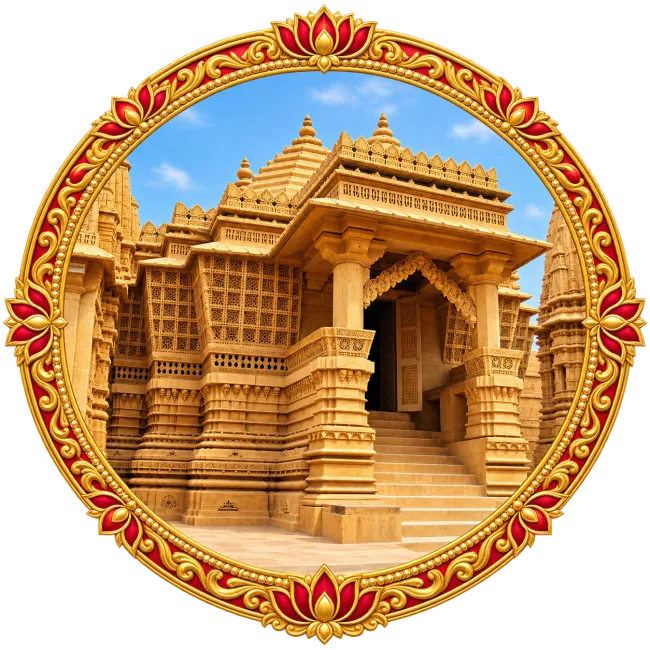
Jain Temples of Chittorgarh Fort
Visit the Jain Temples of Chittorgarh Fort, a remarkable group of ancient shrines representing Rajasthan’s rich Jain religious and architectural heritage. Situated within the vast fort complex, these temples are dedicated to Jain Tirthankaras such as Lord Adinatha, Lord Shantinatha and Lord Mahavira. Their intricately carved pillars, domed ceilings, ornamental gateways, sculpted walls and peaceful sanctums make them important places of pilgrimage as well as architectural attractions.
The Jain monuments of Chittorgarh include the famous Satbees Deori Jain Temple, Shringar Chauri, smaller Tirthankara shrines and Kirti Stambh—the magnificent victory tower dedicated to Lord Adinatha.
About the Jain Temples of Chittorgarh Fort
Chittorgarh Fort contains several historic Jain temples constructed and expanded during different periods. These shrines demonstrate the important role played by Jain merchants, ministers, scholars and religious communities in the cultural development of medieval Mewar.
The temples are mainly associated with the Digambara and Shwetambara traditions of Jainism. They are dedicated to different Tirthankaras, the spiritually liberated teachers who showed humanity the path of truth, non-violence and freedom from worldly attachment.
Prominent Jain religious monuments inside the fort include:
- Satbees Deori Jain Temple
- Adinatha Temple and its subsidiary shrines
- Shringar Chauri Jain Temple
- Mahavira and other Tirthankara shrines
- Kirti Stambh
- Smaller Jain sculptures and sacred remains
These structures were built and restored between the 11th and 15th centuries under the patronage of prosperous Jain families and local rulers.
History of Jainism in Chittorgarh
Chittorgarh has been an important centre of Jainism for many centuries. Jain merchants were active in trade, administration, education and charitable work throughout the Mewar region.
The prosperous merchant community supported the construction of temples, monastic centres, libraries and memorial structures. Several Jain scholars and teachers were also connected with Chittorgarh and neighbouring areas.
The Jain temples inside the fort were constructed during different periods rather than as one planned complex. Each shrine was established by a particular merchant, family or community and was dedicated to a Jain Tirthankara.
Chittorgarh Fort faced several major sieges and battles. Consequently, some of its Jain temples were damaged, altered or partially destroyed. Surviving structures were repaired by Jain communities and local rulers.
The remaining temples, pillars, sculptures and inscriptions continue to provide evidence of Chittorgarh’s once-flourishing Jain population.
Who Built the Jain Temples?
The Jain temples inside Chittorgarh Fort were built by different Jain merchants, ministers and community leaders between the 11th and 15th centuries. Therefore, the group does not have one common founder.
Important patrons associated with the Jain monuments include:
- Jain merchants belonging to the Bagherwal community
- Officials serving the rulers of Mewar
- Wealthy trading families of Chittorgarh
- Velaka, who commissioned Shringar Chauri
- Jijaji Bagherwal, associated with the construction of Kirti Stambh
- Jain religious organizations that supported later restoration
The rulers of Mewar permitted and supported the construction of religious monuments within the fort. Their patronage contributed to the coexistence of Hindu and Jain traditions at Chittorgarh.
Satbees Deori Jain Temple
Satbees Deori is one of the most prominent Jain temple complexes inside Chittorgarh Fort. The name “Satbees Deori” means “twenty-seven shrines” or “twenty-seven sacred chambers.”
The complex is known for its arrangement of multiple sanctums, pillared halls and subsidiary shrines. Its principal temple is traditionally associated with Lord Adinatha, the first Jain Tirthankara.
The main shrine is surrounded by smaller devakulikas containing images of Jain Tirthankaras and associated deities. This arrangement creates a sacred enclosure in which devotees can worship several Tirthankaras during a single visit.
The temple’s pillars, ceilings and exterior walls display detailed carvings. The balanced arrangement of its halls and shrines reflects the architectural principles followed in medieval Jain temple construction.
Adinatha Temple
Lord Adinatha, also known as Rishabhanatha, is the first Jain Tirthankara. He occupies an especially important position in Jain philosophy and religious tradition.
The Adinatha shrine inside Chittorgarh Fort is associated with a larger arrangement of subsidiary sanctums. Historical descriptions mention an Adinatha temple surrounded by 52 devakulikas or smaller shrines.
Lord Adinatha is generally identified by the bull symbol shown beneath or near his image. Devotees worship him as the first spiritual teacher of the present cosmic cycle.
The temple’s architecture includes:
- Main sanctum
- Pillared mandapa
- Circumambulatory passage
- Subsidiary shrines
- Carved ceilings
- Images of Tirthankaras
- Ornamental doorways
The arrangement allows devotees to perform darshan and pradakshina while viewing multiple sacred images.
Shringar Chauri Jain Temple
Shringar Chauri is another important Jain monument inside Chittorgarh Fort. It was constructed in 1448 CE by Velaka, the son of Kola, who served as a treasurer during the reign of Maharana Kumbha.
The temple was dedicated to Lord Shantinatha, the 16th Jain Tirthankara. Although parts of the original structure have been damaged, the surviving temple remains notable for its stone carvings and historical importance.
The name “Shringar Chauri” is connected with the building’s beautifully decorated appearance. Its surviving pillars, platform, doorways and sculptural panels demonstrate the skill of 15th-century craftsmen.
Lord Shantinatha is associated with peace, spiritual balance and freedom from worldly conflict. His symbol is the deer.
Kirti Stambh
Kirti Stambh is one of the most recognizable Jain monuments inside Chittorgarh Fort. The tower is dedicated to Lord Adinatha and represents the glory of Jain teachings.
It was constructed during the 12th century by Jijaji Bagherwal, a prosperous Jain merchant. It was built under the political environment of the contemporary rulers of Chittorgarh.
Kirti Stambh rises to a height of approximately 22 metres and consists of several storeys. Its exterior is covered with sculptures of Jain Tirthankaras, religious teachers and associated figures.
Important features include:
- Multi-storey construction
- Images of Lord Adinatha
- Sculptures of Jain Tirthankaras
- Carved balconies
- Narrow internal staircase
- Decorative pillars
- Religious inscriptions
- Ornamental niches
Large images of Lord Adinatha are placed on different sides of the tower. The monument symbolizes spiritual victory, religious knowledge and the eternal teachings of the Tirthankaras.
Access to the internal staircase may remain restricted for conservation and visitor safety.
Religious Significance
The Jain temples of Chittorgarh Fort represent the core principles of Jainism:
- Ahimsa or non-violence
- Satya or truthfulness
- Asteya or non-stealing
- Brahmacharya or control over desires
- Aparigraha or non-attachment
- Compassion toward every living being
- Self-discipline
- Freedom from anger, pride, deceit and greed
Devotees visit the temples to meditate, recite the Navkar Mantra and honour the spiritual qualities of the Tirthankaras.
The Tirthankaras are not worshipped as creators of the universe. Instead, they are respected as liberated spiritual teachers who demonstrated the path to moksha.
The peaceful environment of the temples encourages visitors to reflect on non-violence, simplicity, self-control and compassion.
Architecture of the Jain Temples
The Jain temples of Chittorgarh display elements of the Maru-Gurjara architectural tradition. This style is recognized for its detailed stone carvings, ornamental pillars, symmetrical plans and elaborate ceilings.
Entrance Gateways
The temple entrances are decorated with carved borders, floral patterns and images of sacred figures. The doorways separate the outer world from the spiritually purified temple interior.
Pillared Mandapas
The mandapas served as prayer and gathering halls. Their stone pillars contain decorative bands, floral motifs, miniature figures and religious symbols.
Carved Ceilings
The ceilings are arranged in concentric circles, lotus patterns and geometric formations. Many designs become smaller toward the central pendant, creating an impression of depth.
Devakulikas
Devakulikas are smaller shrines built around the principal temple. Each one may contain an image of a Tirthankara or associated Jain deity.
The arrangement allows devotees to worship multiple Tirthankaras while completing a circumambulation of the main temple.
Shikharas
The sanctums are crowned by towers that rise vertically above the sacred images. The original shikharas of some temples were damaged during attacks, while others were repaired during later periods.
Sculptures
The temples contain carvings of:
- Jain Tirthankaras
- Yakshas and Yakshinis
- Celestial beings
- Musicians and dancers
- Floral patterns
- Geometric designs
- Animals and mythical creatures
- Devotees and religious teachers
The Tirthankara images are generally represented in seated meditation or standing kayotsarga posture.
Jain Temples of Chittorgarh Fort Timings
The shrines follow their individual ritual arrangements, so puja timings may differ between Satbees Deori and the smaller Jain temples. Festival-day timings can also change.
Because these temples are situated inside Chittorgarh Fort, general visitors should follow the fort’s entry and closing schedule.
Best Time for Darshan
The best time to visit is between 9:00 AM and 11:00 AM. The weather is comfortable, the temple interiors receive natural light and visitors have sufficient time to explore nearby monuments.
The best season is from October to March. Chittorgarh experiences intense heat from April to June, making afternoon sightseeing uncomfortable.
Jain devotees wishing to participate in religious worship should confirm the current ritual schedule with the caretaker after entering the fort.
Daily Worship and Rituals
Regular Jain worship may include:
- Darshan of the Tirthankaras
- Cleaning and preparation of the sanctum
- Abhishek where permitted
- Chaityavandan
- Recitation of the Navkar Mantra
- Ashtaprakari Puja
- Meditation
- Scripture reading
- Circumambulation
- Incense and lamp offerings
- Evening Aarti
Ashtaprakari Puja traditionally includes eight symbolic offerings:
- Jal – water
- Chandan – sandalwood
- Pushpa – flowers
- Dhoop – incense
- Deep – lamp
- Akshat – rice
- Naivedya – food offering
- Phal – fruit
Full ritual worship may be regulated according to the religious tradition followed by each shrine.
Major Festivals
Mahavir Jayanti
Mahavir Jayanti celebrates the birth of Lord Mahavira, the 24th Jain Tirthankara. Devotees participate in prayers, processions, scripture readings and charitable activities.
Paryushan Parva
Paryushan is one of the most sacred periods in Jainism. Devotees observe fasting, meditation, self-discipline and spiritual study.
Samvatsari
Samvatsari is dedicated to forgiveness. Devotees seek forgiveness for any harm caused knowingly or unknowingly.
Diwali
In Jain tradition, Diwali marks the nirvana of Lord Mahavira. Lamps are lit, prayers are offered and religious teachings are recited.
Kartik Purnima
Kartik Purnima is considered an auspicious day for pilgrimage, temple worship and charitable activities.
Ayambil Oli
Ayambil Oli is observed through fasting and disciplined eating. The festival emphasizes simplicity, purification and control over taste.
Offerings at the Jain Temples
Depending on the rules of the individual shrine, devotees may offer:
- Rice grains
- Sandalwood paste
- Saffron
- Flowers
- Incense
- Lamps
- Fruits
- Monetary donations
- Contributions for temple maintenance
- Donations for religious and charitable programmes
Visitors should not expect conventional food prasadam at every Jain temple. Jain worship follows strict principles concerning purity, non-violence and the preparation of food.
Entry Fee and Visit Duration
Current fort ticket rates should be checked at the authorized entrance counter.
How to Reach the Jain Temples
Location Inside Chittorgarh Fort
The Jain temples are distributed across different parts of Chittorgarh Fort. Satbees Deori and Kirti Stambh are among the principal locations visited during a fort tour.
Visitors can travel inside the fort by:
- Local auto-rickshaw
- Hired taxi
- Private vehicle
- Authorized sightseeing vehicle
- Walking between nearby monuments
Because the fort covers a large area, hiring a local vehicle can save time.
By Air
Maharana Pratap Airport in Udaipur is the nearest airport. It is approximately 90–100 kilometres from Chittorgarh.
Taxis and buses are available from Udaipur to Chittorgarh.
By Train
Chittorgarh Junction is the nearest railway station. It is connected with Udaipur, Jaipur, Ajmer, Kota, Delhi and Ratlam.
Auto-rickshaws and taxis are available from the station to Chittorgarh Fort.
By Road
Chittorgarh is connected by road with Udaipur, Jaipur, Kota, Ajmer, Bhilwara, Bundi and Neemuch.
Government buses, private buses and taxis operate regularly. From Chittorgarh city, visitors can hire an auto-rickshaw or taxi to reach the fort.
Nearby Places to Visit
Visitors can explore the following attractions during the same trip:
- Kirti Stambh
- Vijay Stambh
- Samadhisvara Temple
- Gaumukh Kund
- Kalika Mata Temple
- Meera Temple
- Kumbha Shyam Temple
- Rana Kumbha Palace
- Padmini Palace
- Fateh Prakash Palace Museum
- Ratan Singh Palace
- Jauhar Sthal
- Tulja Bhawani Temple
- Fort viewpoints
Visitor Guidelines
- Remove footwear before entering the temple.
- Wear modest clothing covering the shoulders and legs.
- Do not carry leather items into restricted areas.
- Avoid carrying non-vegetarian food, alcohol or tobacco.
- Maintain silence near the sanctums.
- Do not touch the idols or ancient carvings.
- Ask permission before taking photographs.
- Photography may be prohibited inside certain sanctums.
- Do not climb on temple walls or monuments.
- Avoid eating inside the temple complex.
- Follow the instructions of temple caretakers.
- Keep the surroundings clean.
- Carry drinking water while exploring the fort.
- Supervise children near steps and elevated platforms.
- Respect devotees engaged in meditation or worship.
- Allow sufficient time to exit before the fort closes.
Conclusion
The Jain Temples of Chittorgarh Fort are an important part of Rajasthan’s religious, cultural and architectural heritage. Constructed between the 11th and 15th centuries, these shrines preserve the spiritual legacy of the Jain merchants, officials and communities who contributed to the prosperity of medieval Mewar.
Satbees Deori, the historic Adinatha shrines, Shringar Chauri and Kirti Stambh display remarkable stone craftsmanship and deep religious symbolism. Their carved pillars, domed ceilings, sacred images and peaceful prayer halls reflect the Jain ideals of non-violence, discipline, compassion and liberation.
A visit to these temples allows devotees to seek the blessings of the Tirthankaras while giving travellers an opportunity to experience the diverse spiritual heritage of Chittorgarh Fort.