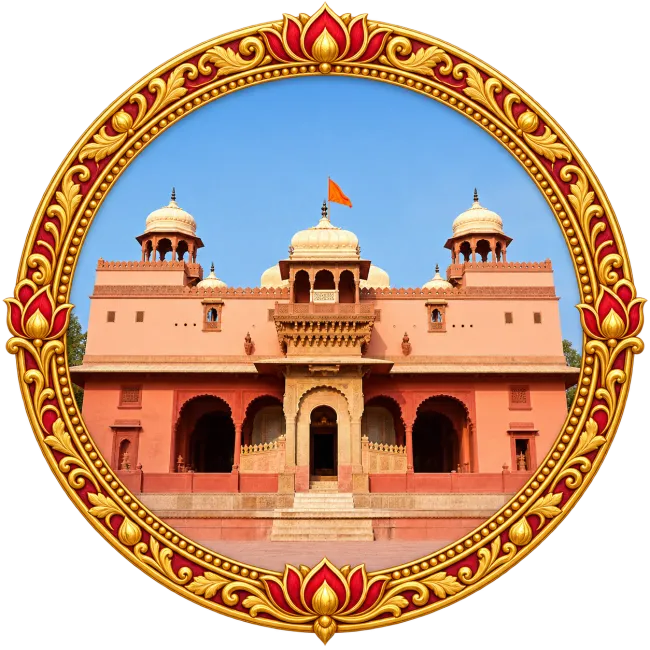
Shivbari Temple, Bikaner
Visit Shivbari Temple in Bikaner, a peaceful nineteenth-century shrine dedicated to Lord Shiva. Also known as Shri Laleshwar Mahadev Temple, it was built in 1880 by Maharaja Dungar Singh in memory of his father, Maharaja Lal Singh. Constructed from red sandstone and surrounded by high protective walls, the temple is known for its four-faced black-marble image of Lord Shiva, sacred Shiva Lingam, bronze Nandi, traditional paintings and two historic water reservoirs.
About Shivbari Temple, Bikaner
Shivbari Temple is situated in the Shivbari area of Bikaner, approximately six kilometres from the main city centre. It is one of the most prominent Shiva temples in the region and is popularly known as Laleshwar Mahadev Mandir.
The temple is dedicated to Lord Shiva and was developed as a memorial to Maharaja Lal Singh, the father of Maharaja Dungar Singh. The name Laleshwar Mahadev is therefore connected with both Lord Shiva and the memory of Maharaja Lal Singh.
Unlike many temples situated in Bikaner’s crowded old city, Shivbari Temple stands inside a spacious, fortified complex. Its high walls, peaceful courtyards, red-sandstone structures and devotional atmosphere make it suitable for prayer, meditation and quiet reflection.
The temple contains a sacred Shiva Lingam, a four-faced black-marble image of Lord Shiva and a bronze image of Nandi. Lord Krishna and the gopis are also represented in the temple’s decorative artwork, reflecting the broader religious traditions of Rajasthan.
Devotees visit the shrine throughout the year, but it receives the largest gatherings during Maha Shivaratri, Shravan Mondays and Pradosh Vrat.
History of Shivbari Temple
Shivbari Temple was constructed in 1880 during the reign of Maharaja Dungar Singh of Bikaner. Maharaja Dungar Singh ruled the princely state of Bikaner from 1872 to 1887.
The temple was built in memory of his father, Maharaja Lal Singh. It was named Laleshwar Mahadev Temple, combining the name of Maharaja Lal Singh with Ishwar, a name for Lord Shiva.
The construction reflected the Bikaner royal family’s devotion to Lord Shiva and the nineteenth-century tradition of creating religious monuments in memory of respected ancestors.
Local artisans used red sandstone, the material associated with many historic structures in Bikaner. They constructed the temple with high surrounding walls, domes, pavilions, pillars, carved details and spacious courtyards.
The complex was designed not only as a shrine but also as a place for spiritual learning, meditation and gatherings. Water reservoirs were created within the temple grounds to support religious rituals and visitors in the dry desert environment.
Over time, Shivbari became a recognised religious centre. The locality surrounding the temple also became known by the name Shivbari.
Today, the temple continues to serve as an active place of Shiva worship while preserving the architectural character of nineteenth-century Bikaner.
Who Built Shivbari Temple?
Shivbari Temple was built by Maharaja Dungar Singh of Bikaner in 1880. He constructed it in memory of his father, Maharaja Lal Singh.
The temple was dedicated to Lord Shiva under the name Laleshwar Mahadev. The name honours Maharaja Lal Singh while identifying the presiding deity as Mahadev.
The construction was completed by traditional artisans using locally available red sandstone. Later temple caretakers and devotees contributed to its maintenance and the continuation of daily worship.
Religious Significance of Shivbari Temple
Shivbari Temple is dedicated to Lord Shiva, worshipped as Laleshwar Mahadev. Lord Shiva represents transformation, meditation, detachment and the destruction of ignorance.
Devotees worship the Shiva Lingam as an eternal representation of the formless divine. The Lingam and its base are also interpreted as the harmonious union of Shiva and Shakti, the complementary energies behind creation.
The four-faced image of Lord Shiva represents his all-seeing presence and divine authority in every direction. The faces may also be understood as expressions of Shiva’s different cosmic functions.
The bronze Nandi faces the Shiva Lingam. Nandi is Lord Shiva’s vehicle and devoted attendant. He symbolises loyalty, patience, strength and complete surrender to the divine.
Devotees visit the temple to pray for:
- Good health
- Protection from difficulties
- Mental peace
- Family welfare
- Marital harmony
- Success in important work
- Relief from fear
- Spiritual development
- Courage and self-control
Many worshippers whisper their prayers near Nandi’s ear, believing that he carries sincere requests to Lord Shiva.
Architecture of Shivbari Temple
Shivbari Temple is an impressive example of nineteenth-century Rajasthani temple architecture. The entire complex is built primarily from red sandstone and is surrounded by high protective walls.
The enclosed appearance gives the temple a fort-like character. Once visitors enter the main gateway, they find open courtyards, pillared spaces and religious structures.
Important architectural features include:
- High fortified walls
- Red-sandstone construction
- Traditional gateways
- Domed pavilions
- Stone pillars and arches
- Main sanctum containing the Shiva Lingam
- Four-faced black-marble image of Lord Shiva
- Bronze image of Nandi
- Two historic water reservoirs
- Traditional wall paintings
- Spacious courtyards
- Smaller worship areas
The domes, columns and pavilions display the architectural style associated with Bikaner’s royal period. Carved details and geometric patterns decorate different parts of the complex.
The temple is also known for religious paintings. Some artwork portrays Nandi facing the Shiva Lingam, while other decorative scenes are associated with Lord Krishna and the gopis.
The two water reservoirs, locally identified as bawaris or sacred tanks, are important features of the complex. Their presence reflects the importance of water conservation in the desert environment of Bikaner.
Main Deity and Other Sacred Images
The principal object of worship is the Shiva Lingam enshrined in the main sanctum. Devotees perform Jalabhishek and offer water, milk and bilva leaves.
A four-faced black-marble image of Lord Shiva is another important attraction. The image represents Mahadev’s presence in every direction.
A bronze image of Nandi faces the Shiva Lingam. According to Shaiva tradition, devotees should have darshan of Nandi before entering the main sanctum.
Other sacred images and paintings within the temple complex may include:
- Goddess Parvati
- Lord Ganesha
- Lord Kartikeya
- Lord Hanuman
- Lord Krishna and the gopis
- Sacred serpents associated with Shiva
- Images connected with the royal patrons
Shivbari Temple Timings
The temple follows separate morning and evening darshan sessions.
Timings may be extended during Maha Shivaratri and Shravan Mondays. Seasonal changes may also affect the evening aarti schedule.
Visitors interested in sightseeing and architecture should visit between 7:00 AM and 12:00 PM, when sufficient natural light is available.
Best Time for Darshan
The best time for a peaceful darshan is between 6:00 AM and 8:00 AM. Visitors can attend the morning aarti, offer Jalabhishek and explore the temple before the day becomes hot.
Evening darshan between 6:30 PM and 8:00 PM provides a peaceful experience. Devotees gather for bhajans and the 7:30 PM aarti.
Monday is considered particularly auspicious for Lord Shiva worship, but it is also busier than other weekdays. Shravan Mondays attract large gatherings.
October to March is the most comfortable season for visiting Bikaner. Summer afternoons should be avoided because temperatures can become extremely high.
Maha Shivaratri provides the grandest religious atmosphere, while regular weekday mornings are more suitable for quiet darshan.
Daily Puja and Aarti
The temple’s daily worship begins early in the morning. The sanctum is cleaned, and the Shiva Lingam is prepared for puja.
Morning Puja and Aarti
Morning puja and aarti are performed at 6:00 AM. The rituals may include:
- Jalabhishek with water
- Milk offering
- Application of sandalwood paste
- Offering of bilva leaves
- Flowers and white garlands
- Incense and lamps
- Recitation of Shiva mantras
Devotees chant “Om Namah Shivaya” and offer prayers for peace, health and protection.
Daytime Worship
Regular darshan continues during the morning. Individual devotees may perform simple Jalabhishek according to temple rules.
Special Rudrabhishek and other pujas may require advance arrangements with the temple priests.
Evening Aarti
Evening aarti is performed at 7:30 PM. Lamps are offered to Lord Shiva while devotees chant prayers, ring bells and sing traditional aarti.
The illuminated sanctum, devotional singing and peaceful courtyard create a calm spiritual atmosphere.
Common prayers recited at the temple include:
- Om Namah Shivaya
- Maha Mrityunjaya Mantra
- Shiva Chalisa
- Shiva Panchakshara Stotram
- Lingashtakam
- Rudrashtakam
- Shiv Tandav Stotram
- Om Jai Shiv Omkara
Major Festivals Celebrated at Shivbari Temple
Maha Shivaratri
Maha Shivaratri is the principal festival of Shivbari Temple. Devotees observe fasts, perform Abhishek and chant Lord Shiva’s name throughout the day and night.
The Shiva Lingam is worshipped with water, milk, curd, honey, ghee, sugar and bilva leaves. Special aarti, bhajans and religious programmes are organised.
Shravan Month
The Hindu month of Shravan is dedicated to Lord Shiva. Every Monday attracts a large number of devotees.
Kanwariyas and local worshippers offer sacred water to the Shiva Lingam. Rudrabhishek and collective chanting may also be organised.
Pradosh Vrat
Pradosh Vrat is observed twice every lunar month. Evening worship is considered especially auspicious on this day.
Kartik Purnima
Devotees visit the temple for prayer, lamp offerings and religious ceremonies on Kartik Purnima.
Diwali
During Diwali, lamps illuminate the temple complex. Devotees pray for the removal of darkness and ignorance.
Holi
Holi is celebrated through traditional worship, devotional singing and community gatherings.
Abhishek and Offerings
Devotees can offer traditional Shiva puja materials at the temple.
Common offerings include:
- Water
- Milk
- Bilva leaves
- White flowers
- Fruits
- Coconut
- Sandalwood paste
- Sacred ash
- Rudraksha
- Ghee for lamps
- Incense sticks
- Sweets
Visitors should follow the instructions of the priests while performing Abhishek. Large quantities of milk or other materials should not be poured without permission.
Devotees should avoid offering prohibited materials or leaving plastic packets near the sanctum.
Two Sacred Water Reservoirs
Shivbari Temple contains two large water reservoirs, commonly described as bawaris. These reservoirs form an important part of the temple complex.
In the desert landscape of Bikaner, collecting and preserving water was essential. The reservoirs demonstrate how religious architecture was combined with practical water-management systems.
Water from the temple’s traditional sources may have been used historically for ritual purification, maintenance and the needs of resident priests or visitors.
Visitors should not enter the reservoirs, throw objects into them or pollute the water.
Entry Fee and Visit Duration
There is no entry fee for regular darshan at Shivbari Temple. Devotees may make voluntary donations through authorised donation boxes.
A regular visit requires 30–45 minutes. Visitors wishing to attend aarti, explore the architecture and spend time in meditation should reserve one to two hours.
During Maha Shivaratri and Shravan Mondays, darshan may take longer because of heavy crowds.
How to Reach Shivbari Temple
By Air
Nal Airport, also known as Bikaner Airport, is approximately 20 kilometres from the temple. Taxis are available from the airport.
Jodhpur Airport is another major option and is approximately 250 kilometres from Bikaner.
By Train
Bikaner Junction is approximately 5–6 kilometres from Shivbari Temple. The station has train connections with Delhi, Jaipur, Jodhpur, Ahmedabad, Kolkata and other cities.
Auto-rickshaws and taxis are available outside the station.
By Road
Shivbari Temple is located near Jai Narayan Vyas Colony and is accessible by auto-rickshaw, taxi, city bus and private vehicle.
Bikaner is connected by road with Jaipur, Jodhpur, Jaisalmer, Ajmer, Delhi and Sri Ganganagar.
Parking is generally available near the temple, subject to crowd conditions during festivals.
Nearby Places to Visit
National Research Centre on Camel
This research centre is dedicated to camel breeding, conservation and research. Visitors can learn about different camel breeds and desert life.
Junagarh Fort
Junagarh Fort contains royal palaces, courtyards, museums, weapons, paintings and decorative halls.
Lalgarh Palace
Lalgarh Palace combines Rajput, Mughal and European architecture. Part of the complex houses the Sadul Museum.
Prachina Museum
Situated within Junagarh Fort, Prachina Museum displays royal costumes, textiles, jewellery and traditional decorative arts.
Shri Lakshminath Temple
Shri Lakshminath Temple is one of Bikaner’s oldest temples and is dedicated to Lord Vishnu and Goddess Lakshmi.
Bhandasar Jain Temple
Bhandasar Jain Temple is famous for its frescoes, gold-leaf artwork, mirror decoration and historic architecture.
Visitor Guidelines
- Wear clean and modest clothing.
- Remove footwear before entering the temple.
- Maintain silence near the Shiva Lingam.
- Follow the queue during Abhishek.
- Do not touch sacred images without permission.
- Offer only materials permitted by the temple.
- Avoid wasting milk, water or food offerings.
- Do not enter or pollute the temple reservoirs.
- Ask permission before taking photographs.
- Photography may be prohibited inside the sanctum.
- Use authorised donation boxes.
- Keep plastic and other waste out of the temple.
- Carry drinking water during summer.
- Arrive early during Maha Shivaratri and Shravan Mondays.
- Senior citizens should avoid peak festival crowds.
Conclusion
Shivbari Temple is one of Bikaner’s most peaceful and historically important Shiva shrines. Built in 1880 by Maharaja Dungar Singh in memory of his father Maharaja Lal Singh, the temple is also known as Shri Laleshwar Mahadev Mandir.
Its red-sandstone architecture, fortified walls, four-faced black-marble Shiva image, bronze Nandi, sacred Shiva Lingam and historic water reservoirs give it a distinctive identity.
The temple combines royal history with Shaiva devotion and the practical traditions of desert architecture. Whether visitors come for morning Jalabhishek, evening aarti, Maha Shivaratri celebrations or architectural exploration, Shivbari Temple offers a calm and meaningful spiritual experience in Bikaner.