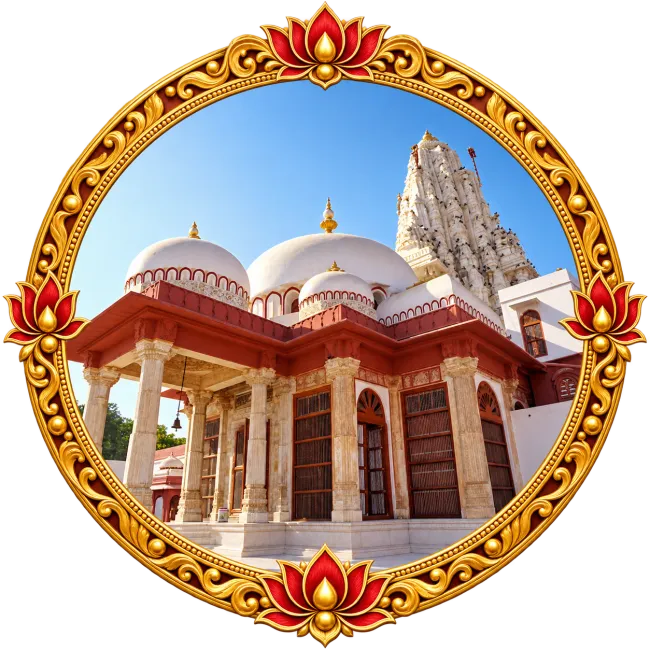
Shri Lakshminath Temple, Bikaner
Visit Shri Lakshminath Temple in Bikaner, one of the city’s oldest and most revered Vaishnava temples. Dedicated to Lord Vishnu and Goddess Lakshmi, the temple is closely connected with the foundation and royal history of Bikaner. The rulers of Bikaner regarded Lord Lakshminath as the true king of their state and considered themselves his Dewans or ministers. Constructed from red sandstone and white marble, the temple is known for its silver-decorated entrance, sacred deities, traditional paintings and deeply devotional atmosphere.
About Shri Lakshminath Temple, Bikaner
Shri Lakshminath Temple is situated in the old city of Bikaner, close to Bhandasar Jain Temple and Bika Ji Ki Tekri. The shrine is dedicated to Lord Vishnu, worshipped here as Lakshminath, along with Goddess Lakshmi, the goddess of prosperity and abundance.
The temple is among the earliest major religious structures associated with the rulers of Bikaner. Its history began during the period of Rao Bika, who founded the city, and the complex was substantially developed during the reign of his son Rao Lunkaran.
Lord Lakshminath held a special position in the Bikaner royal tradition. The rulers considered the deity to be the actual sovereign of the state. They described themselves as servants and administrators acting on behalf of Lord Lakshminath.
This belief gave the temple importance beyond ordinary family worship. Royal ceremonies, public festivals and important events were conducted after seeking the blessings of Lakshminath Ji.
The temple continues to attract devotees during Janmashtami, Ram Navami, Diwali, Nirjala Ekadashi, Gita Jayanti and other Vaishnava festivals. Its location near Bhandasar Jain Temple makes both shrines an important part of Bikaner’s old-city heritage circuit.
History of Shri Lakshminath Temple
The history of Shri Lakshminath Temple is connected with Rao Bika, the founder of Bikaner. Rao Bika established an independent kingdom in the region of Jangladesh and formally founded Bikaner in 1488.
The early royal settlement developed near the area now associated with Bika Ji Ki Tekri. As the new capital took shape, a shrine dedicated to Lord Vishnu and Goddess Lakshmi was established for the spiritual protection and prosperity of the kingdom.
Traditional accounts associate the beginning of the shrine with Rao Bika. The major construction and development of the present temple are credited to his son and successor, Rao Lunkaran, who ruled Bikaner from 1505 to 1526.
Rao Lunkaran expanded Bikaner’s territory and strengthened the political and religious institutions of the young kingdom. During his reign, Shri Lakshminath Temple developed into an important royal shrine.
The rulers of Bikaner accepted Lakshminath Ji as the symbolic ruler of the kingdom. The Maharajas viewed themselves as Dewans responsible for administering the state under the deity’s divine authority.
The temple remained closely connected with the royal family even after the construction of Junagarh Fort between 1589 and 1594. Successive rulers supported its worship, celebrations and maintenance.
Over the centuries, paintings, silver decoration and architectural details were added to the structure. The temple survived political changes and the expansion of Bikaner and continues to function as an active place of worship.
Who Built Shri Lakshminath Temple?
The establishment of Shri Lakshminath Temple is traditionally connected with Rao Bika, the founder of Bikaner. Its principal construction and development are credited to Rao Lunkaran, who ruled from 1505 to 1526.
Rao Bika established the religious tradition of worshipping Lord Lakshminath as the protector and sovereign of the newly founded state. Rao Lunkaran subsequently developed the temple into a prominent royal shrine.
Therefore, the temple was created through more than one phase. Rao Bika is associated with its initial foundation and royal tradition, while Rao Lunkaran is recognised for constructing and expanding the historic temple complex.
Later rulers of Bikaner contributed to its decoration, silver work, maintenance and religious ceremonies.
Religious Significance of Shri Lakshminath Temple
The temple is dedicated to Lord Vishnu and Goddess Lakshmi. Lord Vishnu is regarded as the preserver and protector of the universe, while Goddess Lakshmi represents prosperity, auspiciousness, beauty and abundance.
Together, Lakshmi and Vishnu symbolise a balance between material prosperity and righteous conduct. The name Lakshminath means the Lord or divine consort of Goddess Lakshmi.
Devotees visit the temple to pray for:
- Family welfare and harmony
- Financial stability
- Success in business and employment
- Protection from difficulties
- Peace and prosperity
- Wisdom and righteous conduct
- Good health
- Blessings for marriage and children
The temple’s royal tradition gives it special significance for the people of Bikaner. Lord Lakshminath is regarded not merely as a deity enshrined in the temple but as the divine guardian and symbolic ruler of the city.
Many local families visit the shrine before beginning important work, organising marriages or celebrating major family occasions.
Architecture of Shri Lakshminath Temple
Shri Lakshminath Temple combines traditional Rajput and Vaishnava architectural features. It is constructed using red sandstone and white marble, two materials commonly found in the historic buildings of Bikaner.
The contrast between red stone and white marble gives the temple an attractive appearance. The structure includes an entrance gateway, courtyard, prayer hall, sanctum and subsidiary worship areas.
Important architectural features include:
- Red-sandstone construction
- White-marble decoration
- Silver ornamentation on the entrance
- Traditional arches and pillars
- Carved doorways
- Decorative wall paintings
- Vaishnava religious symbols
- Spacious courtyard
- Elevated temple platform
- Shikhara above the sanctum
The entrance is known for its silver work. Floral designs and religious motifs decorate portions of the doorway and interior.
The temple walls contain paintings depicting religious themes and episodes connected with Lord Vishnu and his incarnations. Decorative patterns also display the artistic traditions of Bikaner.
The central sanctum contains the images of Lord Lakshminath and Goddess Lakshmi. The deities are dressed in beautiful garments and decorated with jewellery, flowers and seasonal ornaments.
The temple complex provides an open space for devotees to gather during aarti and festivals. Its elevated location also offers views of parts of Bikaner’s old city.
Main Deities of Lakshminath Temple
The principal deities are Lord Lakshminath and Goddess Lakshmi. They are worshipped together in the main sanctum.
Lord Lakshminath represents Lord Vishnu as the protector of the universe. Goddess Lakshmi represents prosperity, good fortune and auspiciousness. Their combined worship teaches that wealth should be accompanied by righteousness, compassion and devotion.
The appearance and clothing of the deities change according to the season and festival. Special shringar is performed on Janmashtami, Diwali, Ram Navami and important Ekadashi dates.
Other images and religious symbols associated with Lord Vishnu and his incarnations may be seen within the temple complex.
Shri Lakshminath Temple Timings
The temple generally follows separate morning and evening darshan sessions.
Timings may be extended or modified during Janmashtami, Diwali, Nirjala Ekadashi, Ram Navami and other major celebrations.
Best Time for Darshan
The best time for peaceful darshan is between 6:00 AM and 8:00 AM. The weather remains comfortable, and the temple is less crowded than during the evening.
Devotees wishing to attend the first aarti should reach before 5:00 AM. Morning worship offers a calm experience and an opportunity to see the deity’s first darshan of the day.
The evening period between 5:30 PM and 7:00 PM is suitable for attending aarti and seeing the illuminated temple. Local families frequently visit during this time, so the atmosphere is more active and devotional.
October to March is the most comfortable season for visiting Bikaner. Summer temperatures can become extremely high, making early morning darshan preferable from April to June.
Janmashtami and Diwali provide the most festive experience but also attract large crowds.
Daily Puja and Aarti
The temple’s daily worship follows traditional Vaishnava rituals. The day begins with the opening of the sanctum and morning preparation of the deities.
Morning Aarti
Morning aarti is performed from 5:00 AM to 5:30 AM. Lamps, incense, flowers and sacred hymns are offered to Lord Lakshminath and Goddess Lakshmi.
After aarti, devotees receive darshan and offer tulsi leaves, flowers and fruits.
Shringar
The deities are dressed in fresh garments and decorated with jewellery, flowers and sacred ornaments. Shringar changes according to the season and religious calendar.
Bhog and Rajbhog
Food is ceremonially offered to the deities before the afternoon closure. The sanctum may remain closed while Rajbhog and rest rituals are performed.
Evening Aarti
Evening puja and aarti take place from 5:30 PM to 6:00 PM. The sound of bells, conch shells and devotional singing fills the temple courtyard.
Darshan continues after the evening aarti until the temple closes.
Popular prayers recited by devotees include:
- Om Namo Bhagavate Vasudevaya
- Vishnu Sahasranama
- Shri Lakshmi Ashtakam
- Lakshmi Narayan Aarti
- Shri Hari Stotram
- Gajendra Moksha
- Bhagavad Gita verses
- Hare Krishna Maha Mantra
Major Festivals Celebrated at the Temple
Janmashtami
Janmashtami is one of the grandest celebrations at Shri Lakshminath Temple. It marks the birth of Lord Krishna, an incarnation of Lord Vishnu.
The temple is decorated with flowers, lights and traditional fabrics. Special shringar, bhajans, kirtan and midnight worship are organised.
Diwali
Diwali has special importance because Goddess Lakshmi is the deity of prosperity and auspiciousness. The temple is illuminated with lamps, and devotees offer prayers for peace, happiness and financial well-being.
Nirjala Ekadashi
Nirjala Ekadashi is observed through fasting, prayer and Vishnu worship. A large number of devotees visit the temple for darshan and charitable activities.
Ram Navami
Ram Navami celebrates the birth of Lord Rama, an incarnation of Lord Vishnu. Special recitations, bhajans and aarti are organised.
Gita Jayanti
Gita Jayanti commemorates the sacred teachings of the Bhagavad Gita. Devotees participate in scripture recitation and religious discussions.
Holi
Holi is celebrated with devotional songs and traditional Vaishnava rituals. The deities receive colourful festive shringar.
Vaikuntha Ekadashi
Vaikuntha Ekadashi is an important occasion for Lord Vishnu worship. Devotees observe fasts and pray for spiritual progress.
Offerings and Prasad
Devotees can offer Vaishnava puja materials to Lord Lakshminath and Goddess Lakshmi.
Common offerings include:
- Tulsi leaves
- Flowers and garlands
- Fruits
- Mishri
- Dry fruits
- Coconut
- Yellow cloth
- Sweets
- Ghee for lamps
- Donations for temple services
Tulsi leaves hold special importance in the worship of Lord Vishnu. Devotees should present offerings according to instructions given by the priests.
Prasad may be distributed after selected worship ceremonies and festivals. Visitors should use authorised counters and avoid purchasing puja services from unauthorised individuals.
Royal Connection of Lakshminath Temple
The most distinctive aspect of Shri Lakshminath Temple is its relationship with the rulers of Bikaner.
The Maharajas believed that Lord Lakshminath was the real king of Bikaner. They governed the kingdom as his Dewans and sought his blessings before important administrative, military and family decisions.
This concept represented the belief that political authority should remain accountable to divine principles. The ruler was expected to protect the people and administer justice as a servant of the deity.
Royal processions and festival ceremonies frequently included worship at Lakshminath Temple. The tradition strengthened the shrine’s importance among the residents of Bikaner.
Entry Fee and Visit Duration
There is no entry fee for regular darshan at Shri Lakshminath Temple. Devotees may make voluntary donations through authorised donation boxes.
A regular visit requires 30–45 minutes. Visitors wishing to attend aarti, observe the artwork and explore the nearby Bhandasar Jain Temple should reserve two to three hours for the combined visit.
During Janmashtami and Diwali, darshan may take significantly longer because of large crowds.
How to Reach Shri Lakshminath Temple
By Air
Nal Airport, also known as Bikaner Airport, is approximately 15 kilometres from the temple. Taxis are available from the airport.
Jodhpur Airport is another major option and is approximately 250 kilometres from Bikaner.
By Train
Bikaner Junction is approximately 2.5 kilometres from the temple. The station is connected with Delhi, Jaipur, Jodhpur, Ahmedabad, Kolkata and other major cities.
Auto-rickshaws, e-rickshaws and taxis are available outside the railway station.
By Road
Bikaner has regular government and private bus connections with Jaipur, Jodhpur, Jaisalmer, Ajmer, Delhi and Sri Ganganagar.
The temple is located in the old-city area. Since some surrounding lanes are narrow, visitors may need to use an auto-rickshaw or walk the final distance.
Nearby Places to Visit
Bhandasar Jain Temple
Located close to Lakshminath Temple, this historic Jain shrine is famous for its gold-leaf paintings, frescoes, mirror work and red-sandstone architecture.
Bika Ji Ki Tekri
Bika Ji Ki Tekri contains remains and memorials connected with Rao Bika and the early rulers of Bikaner.
Rampuria Havelis
The Rampuria Havelis are recognised for their carved red-sandstone facades, balconies and traditional merchant architecture.
Junagarh Fort
Junagarh Fort contains royal palaces, museums, courtyards, paintings, weapons and decorative halls.
Kote Gate
Kote Gate is a historic entrance and commercial area known for traditional textiles, handicrafts, sweets and Bikaneri snacks.
Lalgarh Palace
Lalgarh Palace combines Rajput, Mughal and European architectural styles and contains a museum connected with Bikaner’s royal history.
Visitor Guidelines
- Wear clean and modest clothing.
- Remove footwear before entering the temple.
- Maintain silence near the main sanctum.
- Do not touch the deities or sacred objects.
- Follow the designated darshan queue.
- Photography may be restricted inside the sanctum.
- Ask permission before photographing religious ceremonies.
- Use authorised counters for donations and offerings.
- Do not bring alcohol, tobacco or non-vegetarian food into the temple.
- Keep the courtyard and surrounding lanes clean.
- Arrive early during Janmashtami and Diwali.
- Senior citizens should avoid peak evening crowds during festivals.
- Check special festival timings before visiting.
- Respect priests, devotees and ongoing worship.
Conclusion
Shri Lakshminath Temple is one of Bikaner’s most important religious and historical landmarks. Its establishment is associated with Rao Bika, while its principal construction and development took place under Rao Lunkaran during the early sixteenth century.
The temple’s significance extends beyond its red-stone and marble architecture. Lord Lakshminath was regarded as the true ruler of Bikaner, while the Maharajas considered themselves his ministers. This royal tradition made the temple an important centre of political symbolism, public devotion and Vaishnava worship.
Its sacred images of Lord Vishnu and Goddess Lakshmi, silver-decorated entrance, religious paintings and vibrant festivals continue to attract devotees. Combined with nearby Bhandasar Jain Temple, Bika Ji Ki Tekri and the old-city havelis, Shri Lakshminath Temple offers a meaningful experience of Bikaner’s faith, history and cultural heritage.