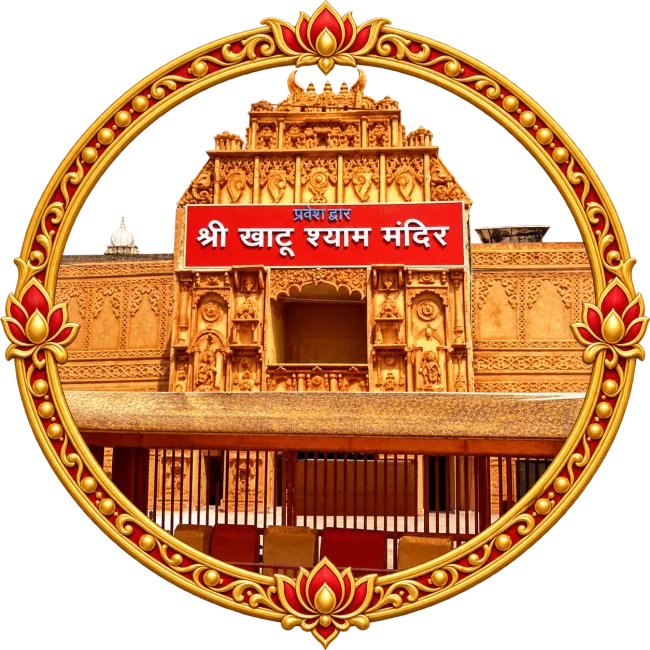
Khatu Shyam Ji Temple
Visit Khatu Shyam Ji Temple in Rajasthan, one of India’s most revered pilgrimage destinations associated with Barbarika, the great warrior of the Mahabharata. Worshipped as Shyam Baba, Haare Ka Sahara and Teen Baan Dhari, the deity is believed to bless devotees who surrender with faith, humility and devotion.
Situated in Khatu town of Sikar district, the temple is famous for its sacred Sheesh, magnificent marble architecture, five daily aartis, Shyam Kund, Nishan Yatra and grand Phalguna Lakhi Mela.
About Khatu Shyam Ji Temple
Khatu Shyam Ji Temple is a prominent Hindu temple located in Khatu, 43 kilometres from Sikar and 17 kilometres from Ringas. The temple is dedicated to Barbarika, the grandson of Bhima and son of Ghatotkacha, who received a divine blessing from Lord Krishna.
According to religious tradition, Lord Krishna granted Barbarika the boon that he would be worshipped by Krishna’s own name, “Shyam,” during Kaliyuga. He is therefore worshipped as Khatu Shyam Ji.
Unlike temples containing a complete human-shaped idol, the principal object of worship here is the sacred Sheesh, or head, of Barbarika. The deity is beautifully decorated with flowers, jewellery, a crown and colourful garments.
The popular expression “Haare Ka Sahara, Baba Shyam Hamara” means that Shyam Baba supports those who have lost hope or feel defeated by life’s circumstances.
Names of Khatu Shyam Ji
Devotees worship Baba Shyam by several names:
- Khatu Shyam Ji
- Shyam Baba
- Haare Ka Sahara
- Teen Baan Dhari
- Sheesh Ke Daani
- Morvinandan
- Lakhdatar
- Kalyug Ke Krishna
- Khatu Naresh
- Leele Ke Aswar
Each name refers to an aspect of Barbarika’s bravery, sacrifice, generosity or divine blessing from Lord Krishna.
Story of Barbarika and Lord Krishna
Barbarika was the son of Ghatotkacha and Maurvi and the grandson of Pandava Bhima. From childhood, he was an exceptionally skilled warrior.
He received three infallible arrows and became famous as Teen Baan Dhari. According to tradition, the three arrows were sufficient to identify, destroy and restore any selected target. He also took a vow to support the weaker side in every battle.
Before the Mahabharata war began, Barbarika travelled towards Kurukshetra. Lord Krishna understood that his vow could create an endless cycle. Whichever side Barbarika supported would become stronger, forcing him to change sides repeatedly.
Disguised as a Brahmin, Lord Krishna approached Barbarika and questioned him about his abilities. Krishna then tested his arrows by asking him to pierce all the leaves of a peepal tree. Krishna secretly hid one leaf beneath his foot, but Barbarika’s arrow circled Krishna’s foot, waiting to pierce the concealed leaf.
Lord Krishna realised that Barbarika’s power was genuine. He then asked Barbarika for charity. Barbarika promised to give anything, after which Krishna requested his head.
Barbarika understood the divine purpose and agreed to donate his head. Before doing so, he requested permission to witness the Mahabharata war. Lord Krishna placed his head on an elevated location from where he observed the entire battle.
Why Is Barbarika Worshipped as Shyam?
After the Mahabharata war, the Pandavas began debating who deserved credit for their victory. Lord Krishna asked Barbarika’s head to give an impartial judgment because he had witnessed the entire battle.
Barbarika replied that he had seen only the Sudarshan Chakra of Lord Krishna destroying the unrighteous forces and the Divine Goddess consuming their blood. His answer demonstrated that divine power, rather than individual warriors, had guided the outcome.
Pleased with Barbarika’s sacrifice and wisdom, Lord Krishna blessed him that he would be worshipped by the name “Shyam” in Kaliyuga. Devotees approaching him with sincere faith would receive support and protection.
History of Khatu Shyam Ji Temple
Barbarika’s sacred head was buried in the Khatu region after the Mahabharata period.
Many centuries later, a cow reportedly began releasing milk at a particular location every day. When the area was excavated, the sacred head was discovered.
The ruler of Khatu, Roop Singh Chauhan, and his wife Narmada Kanwar received divine instructions in a dream to construct a temple and install the sacred Sheesh.
The original temple was constructed in 1027 CE by Roop Singh Chauhan and Narmada Kanwar. In 1720 CE, Diwan Abhay Singh renovated and reconstructed the temple under the patronage of the ruler of Marwar.
Subsequent renovations and expansions added marble surfaces, silver-covered doors, queue facilities and infrastructure for the increasing number of devotees.
Who Built Khatu Shyam Ji Temple and When?
The present structure reflects multiple phases of reconstruction, expansion and modern crowd-management development.
Religious Significance
Khatu Shyam Ji symbolises sacrifice, courage, humility and unconditional devotion. His willingness to donate his head earned him the title Sheesh Ke Daani.
Devotees believe that Shyam Baba supports people who have exhausted every worldly option and approach him with complete surrender.
Worshippers pray for:
- Courage during difficult circumstances
- Relief from financial problems
- Success in employment and business
- Health and recovery
- Peace in family life
- Blessings for marriage and children
- Protection from negative influences
- Strength to overcome disappointment
- Fulfilment of wishes
- Spiritual devotion and humility
Many devotees return to Khatu after the fulfilment of a wish to offer a Nishan, organise a Bhandara or present special flowers and decorations.
Architecture of Khatu Shyam Ji Temple
The temple is built primarily using marble, stone and decorative metalwork. Its bright exterior and richly decorated sanctum create an impressive devotional setting.
Main Entrance
The entrance contains decorative arches, carved motifs and religious symbols. Queue corridors guide devotees towards the principal sanctum.
Marble Construction
White marble is extensively used in the temple’s floors, walls and pillars. Floral patterns and mythological motifs decorate several portions of the complex.
Silver-Covered Doors
The entrance to the sanctum has beautifully decorated silver-covered doors. Their detailed designs add to the temple’s ceremonial appearance.
Main Sanctum
The sanctum contains the sacred Sheesh of Shyam Baba. The deity is decorated daily with flowers, garments, jewels and a crown.
Fresh flowers form an essential part of the daily Shringar. The decoration changes according to the festival, season and religious occasion.
Prayer and Queue Areas
The temple has organised queue routes and holding areas to manage large numbers of devotees. During the Phalguna fair, temporary barricades and extended routes are used for crowd control.
Khatu Shyam Ji Temple Timings
The temple follows separate schedules during summer and winter.
Summer Timings
April to September
Winter Timings
October to March
On Ekadashi, Shukla Paksha Dwadashi, Phalguna Mela and other special occasions, the temple may remain open for extended hours. Temporary closures are also announced for Tilak, special Shringar and internal rituals.
Five Daily Aartis
Mangala Aarti
Mangala Aarti is the first ceremony of the day and is performed when the temple opens. Devotees consider the first darshan especially auspicious.
Shringar Aarti
During Shringar Aarti, Baba Shyam is decorated with fresh flowers, jewellery, garments and a crown. This is one of the most popular darshan periods.
Bhog Aarti
Bhog Aarti is performed at midday when food preparations and sweets are ceremonially offered to the deity.
Sandhya Aarti
Sandhya Aarti takes place during the evening. Temple bells, devotional music and collective singing create a powerful atmosphere.
Shayan Aarti
Shayan Aarti is the final ceremony before the temple closes. It marks the completion of the day’s worship.
Best Time for Darshan
For peaceful darshan, visit on an ordinary weekday between 5:30 AM and 7:00 AM. Weekends, Ekadashi and festival days attract much larger crowds.
Visitors who want to experience Shringar Aarti should reach before 7:00 AM in summer or 8:00 AM in winter.
October to March is the most comfortable season. However, the period surrounding Phalguna Ekadashi is extremely crowded because of the annual Lakhi Mela.
Devotees seeking a less crowded visit should avoid:
- Saturday and Sunday
- Ekadashi
- Dwadashi
- Public holidays
- Shyam Baba’s birthday
- Phalguna Lakhi Mela
Shyam Kund
Shyam Kund is the sacred water tank traditionally believed to be the place where Barbarika’s Sheesh was discovered.
Pilgrims visit the kund before or after temple darshan. Bathing in its water is considered spiritually auspicious, particularly during the Phalguna fair.
Visitors should follow local safety and hygiene rules. Soap, shampoo and activities that pollute the water should be avoided.
Nishan Yatra
Nishan Yatra is one of the most important devotional traditions associated with Khatu Shyam Ji. Devotees carry triangular religious flags to the temple as expressions of faith and gratitude.
Many pilgrims begin their Nishan Yatra from Ringas and walk approximately 17 kilometres to Khatu.
The Nishan is commonly decorated with:
- Shyam Baba’s name
- Peacock feathers
- Sacred symbols
- Flowers
- Saffron or blue cloth
- Images associated with Krishna
The flag should be carried respectfully and submitted only at the designated temple counter or location.
Phalguna Lakhi Mela
The Phalguna Lakhi Mela is the temple’s largest annual celebration. It is held during the bright fortnight of the Hindu month of Phalguna and culminates around Ekadashi and Dwadashi.
Millions of devotees may visit Khatu during the festival. Many complete the Nishan Yatra from Ringas on foot.
The celebration includes:
- Continuous darshan
- Special flower decoration
- Bhajans and kirtans
- Nishan processions
- Bhandaras
- Religious camps
- Special transport services
- Extended temple timings
During the principal fair period, the temple may remain open for 24-hour darshan. VIP access may be suspended so that devotees use the common queue system.
Other Festivals Celebrated
Shyam Baba Janmotsav
Shyam Baba’s birthday is celebrated on Kartik Shukla Ekadashi. The temple is decorated with flowers and lights, and a large gathering of devotees attends.
Ekadashi
Every Ekadashi is considered important at Khatu. Shukla Paksha Ekadashi generally attracts the largest regular monthly crowd.
Holi
Holi is closely associated with the Phalguna festival season. Devotees celebrate with devotional colours, flowers and bhajans.
Janmashtami
Since Shyam Baba received Lord Krishna’s name and blessing, Janmashtami is celebrated with devotion.
Diwali
The temple is illuminated during Diwali, and devotees pray for prosperity, protection and family happiness.
Offerings and Prasad
Devotees commonly offer:
- Roses and flower garlands
- Nishan
- Coconut
- Mishri
- Churma
- Peda
- Dry fruits
- Ittar
- Decorative garments
- Donations through authorised counters
Flowers and garlands are central to Shyam Baba’s daily Shringar. Offerings should be submitted at designated locations rather than carried directly into the sanctum.
Prasad should be purchased from authorised counters or trusted shops.
Entry Fee and Darshan Arrangements
General entry and darshan are free.
Devotees should be cautious of websites or agents claiming to provide paid VIP darshan. Only announcements from the Shri Shyam Mandir Committee should be followed.
How to Reach Khatu Shyam Ji Temple
By Air
Jaipur International Airport is the nearest major airport, approximately 80–90 kilometres from Khatu. Taxis and buses are available from Jaipur.
By Train
Ringas Junction is the nearest major railway station, approximately 17 kilometres from the temple.
Buses, shared jeeps, taxis and auto-rickshaws operate between Ringas and Khatu. Many pilgrims also walk from Ringas as part of the Nishan Yatra.
By Bus
Regular buses connect Khatu with:
- Jaipur
- Sikar
- Ringas
- Delhi
- Rewari
- Jhunjhunu
- Chomu
- Neem Ka Thana
Additional buses are operated during the Phalguna Mela and major festivals.
By Road
Khatu is well connected with Jaipur, Sikar, Delhi and Haryana. Private vehicles may be diverted to temporary parking areas during crowded occasions.
Approximate distances are:
Nearby Places to Visit
Shyam Kund
The sacred kund is associated with the discovery of Barbarika’s Sheesh.
Shyam Bagichi
Shyam Bagichi is a peaceful garden associated with Baba Shyam’s devotees and religious traditions. The samadhi of a revered saint connected with the temple is also located here.
Gaurishankar Temple
The Gaurishankar Temple is dedicated to Lord Shiva and is situated near the principal Shyam Temple.
Ringas
Ringas is the principal railway gateway to Khatu and the starting point of many Nishan Yatras.
Jeen Mata Temple
Jeen Mata Temple is an important Shakti shrine in Sikar district and can be included in a combined pilgrimage.
Salasar Balaji Temple
Salasar Balaji is a famous Hanuman temple and is often included with Khatu Shyam and Jeen Mata in a Rajasthan pilgrimage circuit.
Visitor Guidelines
- Check temple announcements before travelling.
- Wear clean and modest clothing.
- Use designated footwear counters.
- Carry minimal luggage.
- Follow the official queue route.
- Avoid agents promising VIP or shortcut darshan.
- Keep children and senior citizens close in crowds.
- Carry water during the Ringas–Khatu walk.
- Do not push inside the queue.
- Deposit Nishan only at the designated place.
- Use official donation counters.
- Keep mobile phones and cameras according to current security rules.
- Do not pollute Shyam Kund.
- Book accommodation early during festivals.
- Follow police traffic diversions during the Lakhi Mela.
- Avoid carrying valuables during heavily crowded periods.
Conclusion
Khatu Shyam Ji Temple is a powerful symbol of sacrifice, devotion and divine support. Its spiritual identity originates from Barbarika, the Mahabharata warrior who donated his head to Lord Krishna and received the blessing of being worshipped as Shyam in Kaliyuga.
The original temple was constructed in 1027 CE by Roop Singh Chauhan and Narmada Kanwar and was reconstructed in 1720 CE by Diwan Abhay Singh. Today, it is one of Rajasthan’s largest centres of popular devotion.
The sacred Sheesh, five daily aartis, Shyam Kund, Nishan Yatra and Phalguna Lakhi Mela make Khatu a distinctive pilgrimage destination. Devotees visit with the belief that when every worldly path appears closed, Haare Ka Sahara Baba Shyam continues to provide courage, hope and spiritual strength.